









Sewerage & underground infrastructure
Mayor, what can you do if extreme droughts keep coming?
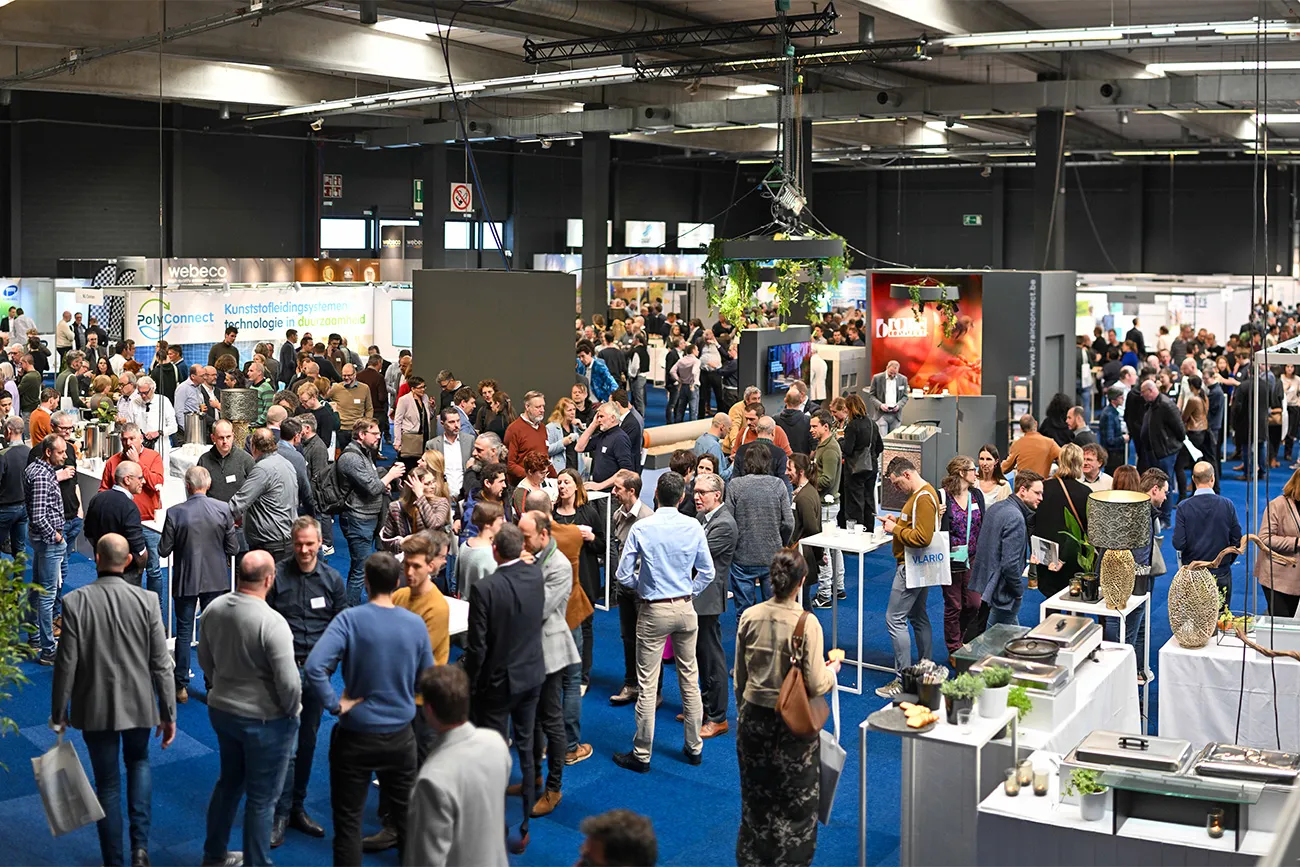
The 30th VLARIO Day was the best-attended edition ever: on 28 March, 1,088 participants and 50 exhibitors gathered at Antwerp Expo for an engaging programme and an innovative sewerage exhibition. This year’s theme: Mayor, where does your sanitation contribution go?
Flemish Minister for the Environment Zuhal Demir opened the day and congratulated VLARIO on its 30th anniversary and the large turnout. The minister reflected on the recent UN Water Conference and outlined the challenges facing Flanders: a densely populated region with limited water resources and consequently high water stress. Combined with climate change, the loss of wetlands and the creation of extensive paved surfaces, this makes the situation precarious.
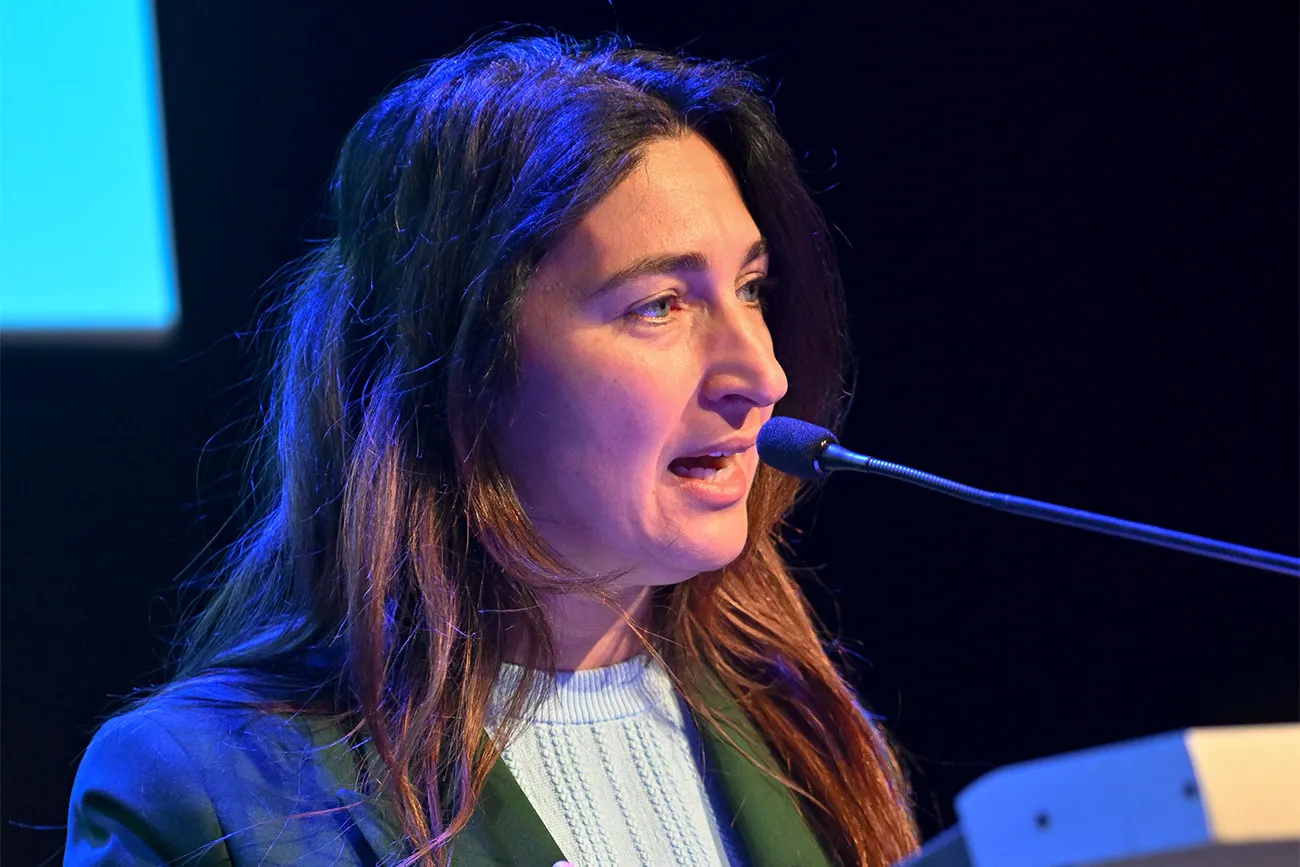
The minister expressed her particular appreciation for the efforts of Professor and VLARIO Chair Patrick Willems and others who put forward solutions in the Weerbaar Waterland report. Through the Blue Deal, the Flemish Government has made a strong commitment to this, by enhancing the sponge function and promoting circular water use. This work is now being stepped up through the Flemish Adaptation Plan. Similar initiatives to a Blue Deal are also now being considered at European level. The minister then highlighted three challenges:
- reforming watercourse managers to achieve more unified governance;
- reforming the drinking water sector: the minister wants to move towards a single drinking water company for all of Flanders;
- the need to speed up investment in sewerage. The minister called on sewer managers to take action and announced that she would work with Minister Lydia Peeters to improve coordination with the Department of Mobility and Public Works.
Sponge landscapes
Professor Patrick Willems made clear in turn that more droughts and more flooding are the ‘new normal’ in Flanders. Restoring sponge landscapes in both urban and rural areas is therefore essential, because the ‘end-of-pipe’ approach, which focuses on end-of-pipe measures, is simply not effective enough. He recalled the proposals in Weerbaar Waterland for making progress in rural areas too, by setting targets and working with area-based coalitions.
Using a clear calculation, Professor Willemens showed that households, public authorities, farmers and businesses will all have to make considerable efforts to cope with the effects of climate change. The professor made a strong case for placing greater emphasis in rainwater and drought plans on disconnecting rainwater from the sewer network and on local infiltration, for seeking opportunities to link this with erosion policy, and for coordinating with (green) landscape visions for built-up areas. He concluded by saying that a cultural shift is needed, moving from an individual ‘right to drain rainwater’ to a collective ‘duty to retain as much as possible’.
Green-blue score 2.0
Vincent Wolfs (Chair of the VLARIO Concept and Calculation working group) presented Green-blue score 2.0. This is an easy-to-use online tool for citizens, experts and public authorities who want to make a plot climate-resilient. The first version, for plots and projects, was launched in 2021. The tool assigns a label indicating how sustainable the
plot is in terms of (rain)water and greenery, and also provides advice on additional measures tailored to the plot. New features in version 2.0 include expansion to public spaces, the addition of more measures and, finally, a number of functions for professional use. The tool is aligned with the new Regional Urban Planning Regulation and can also be used to monitor obligations under the Local Energy and Climate Pact (LEKP).
Debate on project lead times
The focus of the seminars was a debate on what the sector itself can do to deliver projects faster. Kathy Vandenmeerschau (Director-General of the Agency for Roads and Traffic), Jan Goossens (Director of Aquafin), Kris Snijkers (Director-General of VVSG) and Carl Verelst (Chair of the VLARIO Project Management working group) joined presenter Lode Roels for the discussion. Projects currently take an average of 8 years, just as long as they did 5 years ago. Efforts have been made, but they have not yet been successful enough. The debate brought forward several options that can be implemented now, while also making clear that the current regulatory framework needs to be amended if further progress is to be made.
Rapid transition
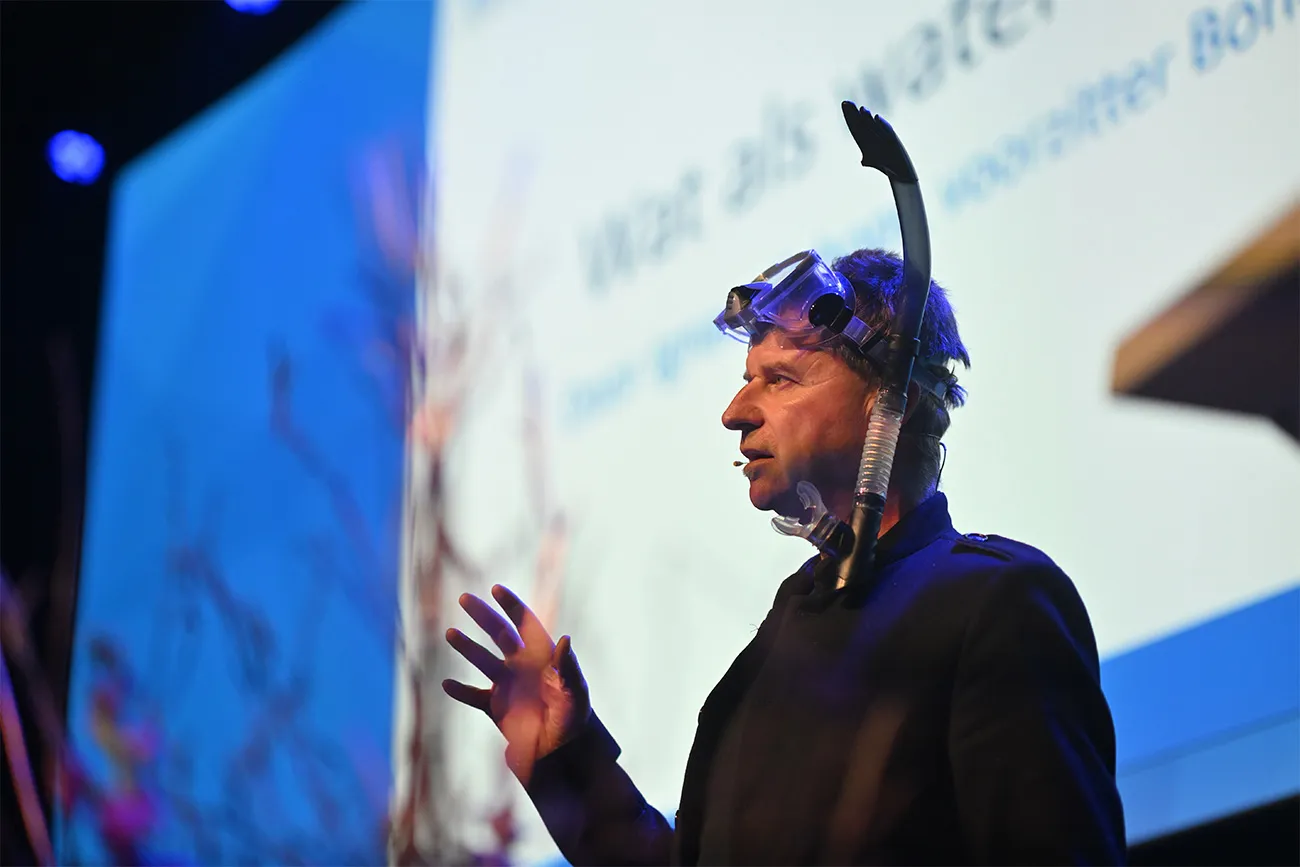
Ignace Schops (Chair of Bond Beter Leefmilieu) brought the morning to a close with a well-received reflection on the relationship between water, biodiversity and climate change. He stressed the need for a rapid transition to stop the current climate and biodiversity crises, while also highlighting humanity’s ability to achieve such an earthshot, as demonstrated during the coronavirus crisis. The most important prerequisite, to paraphrase VLARIO co-founder Jean-Pierre Matthijs, is that you have to believe it can be done.
The four nominees for the 2023 VLARIO Innovation Award also presented their projects, and the audience was able to vote. The winner was the ‘Infiltratie T20 onder de wegenis’ project by Aquafin and the city of Turnhout.
Question about this story? Ask your question
Keep following this
Get an email when a new story is published. No account needed.
- ThemeRenewing pipelines and sewers
- SubjectSewerage & underground infrastructure







