









Sewerage & underground infrastructure
Major sewerage and roadworks in Zoutelaan in full swing
Text Niels Rouvrois Beeld Persyn / Vanlerberghe
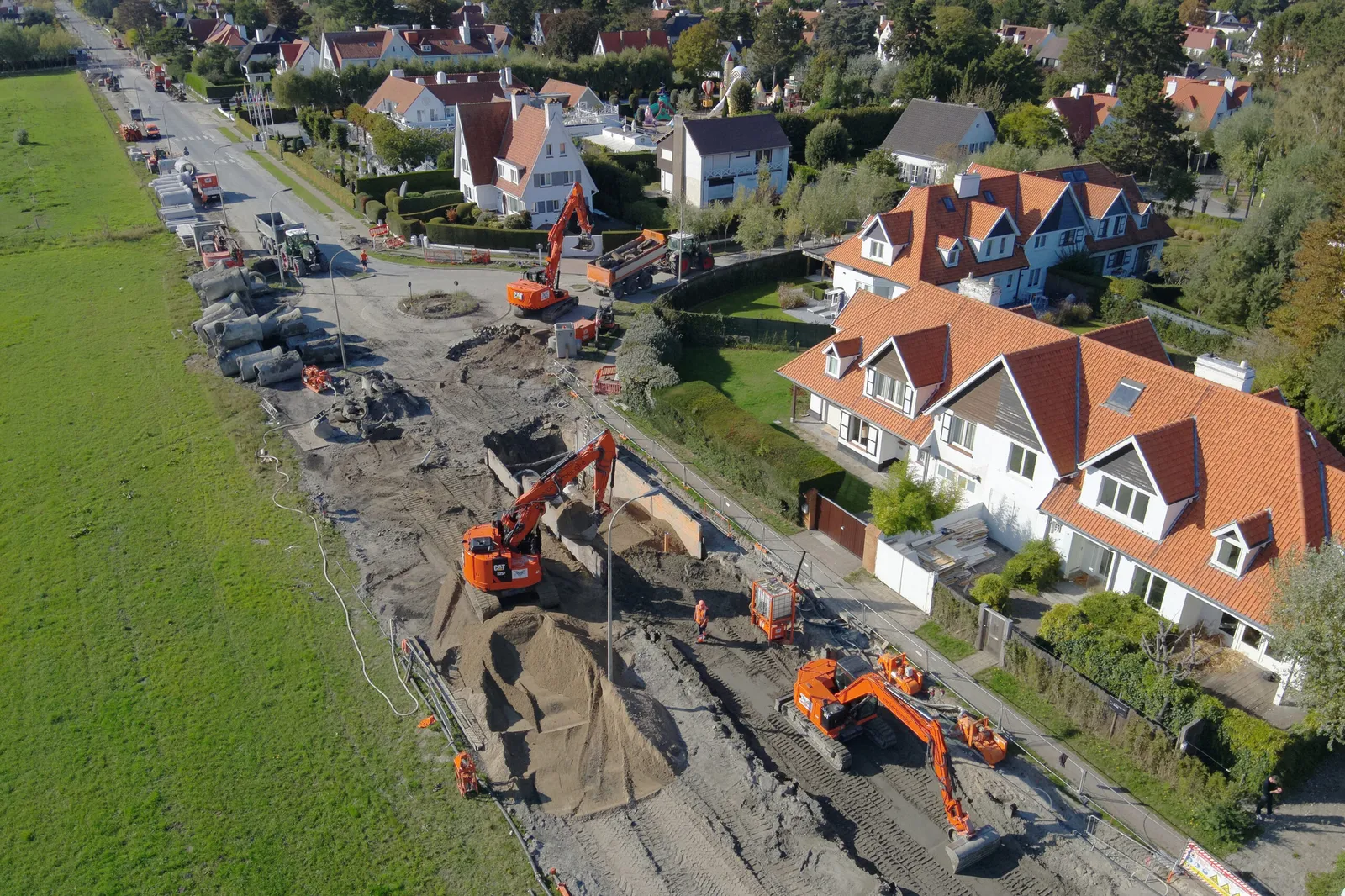
Aquafin, the municipal authority and AGSO-Waterbedrijf Knokke-Heist have joined forces to carry out extensive sewerage and roadworks in the Het Zoute district. The old sewer, dating from the 1920s and 1930s, is in urgent need of renewal. Experienced contractors Aannemingen Vanlerberghe and Persyn are undertaking this huge project as a temporary joint venture. The works will take around 5 years and will be carried out in several phases. They have a budget of 35 million euros.
The project in Knokke-Heist is essential to modernising the sewerage system, protecting the environment and managing water sustainably. The works will continue until at least 2029 and make this one of Aquafin’s largest projects in Flanders, with a total investment of 35 million euros. The sewer in Zoutelaan is around 100 years old, making major works necessary. Doing nothing was not an option: the sewerage system in Het Zoute is worn out, and further delays would mean a future marked by sewer collapses, subsidence in the road surface and environmental damage.
Overloading and overflow
The district was originally developed by Compagnie Het Zoute, which at the time built Belgium’s first wastewater treatment plant in Hazegrasstraat. This system, with small-diameter pipes and pumping stations at Konijnendreef, ’t Zwitsers Pad and Alfred Verweeplein, collected wastewater and pumped it to the treatment plant. Rainwater largely infiltrated into the ground, helping to replenish the water table naturally and prevent salinisation. From the 1960s onwards, this changed dramatically. Rapid urbanisation led to ditches being drained and large sewer pipes being laid to carry both wastewater and rainwater. This system, which seemed efficient at the time, is now causing problems. Rainwater, which would be beneficial if allowed to infiltrate, is pumped to the treatment plant along with wastewater, leading to overloading and overflows into the Paulusvaart. This has a negative impact on water quality and the environment.
Infrastructure completely renewed
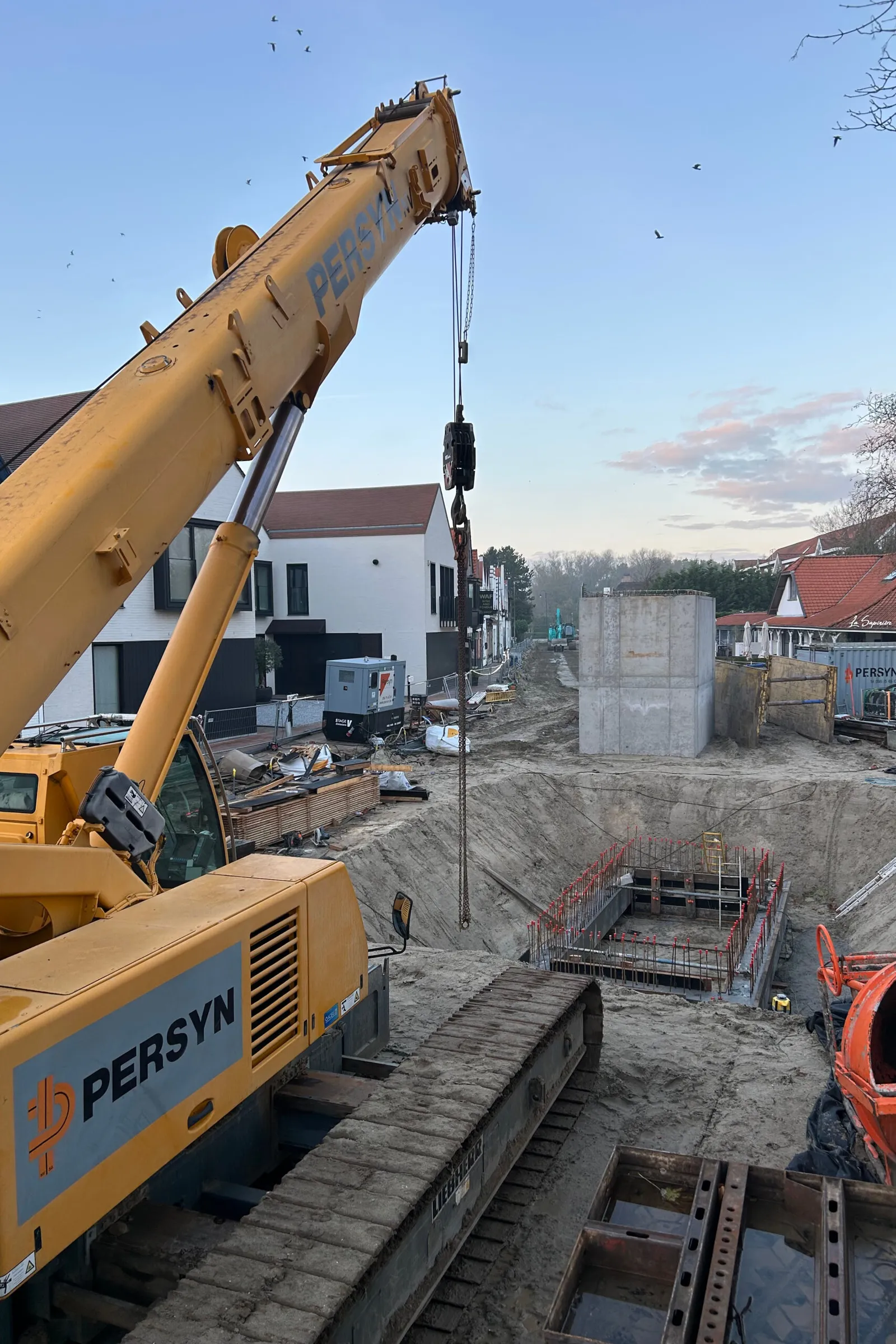
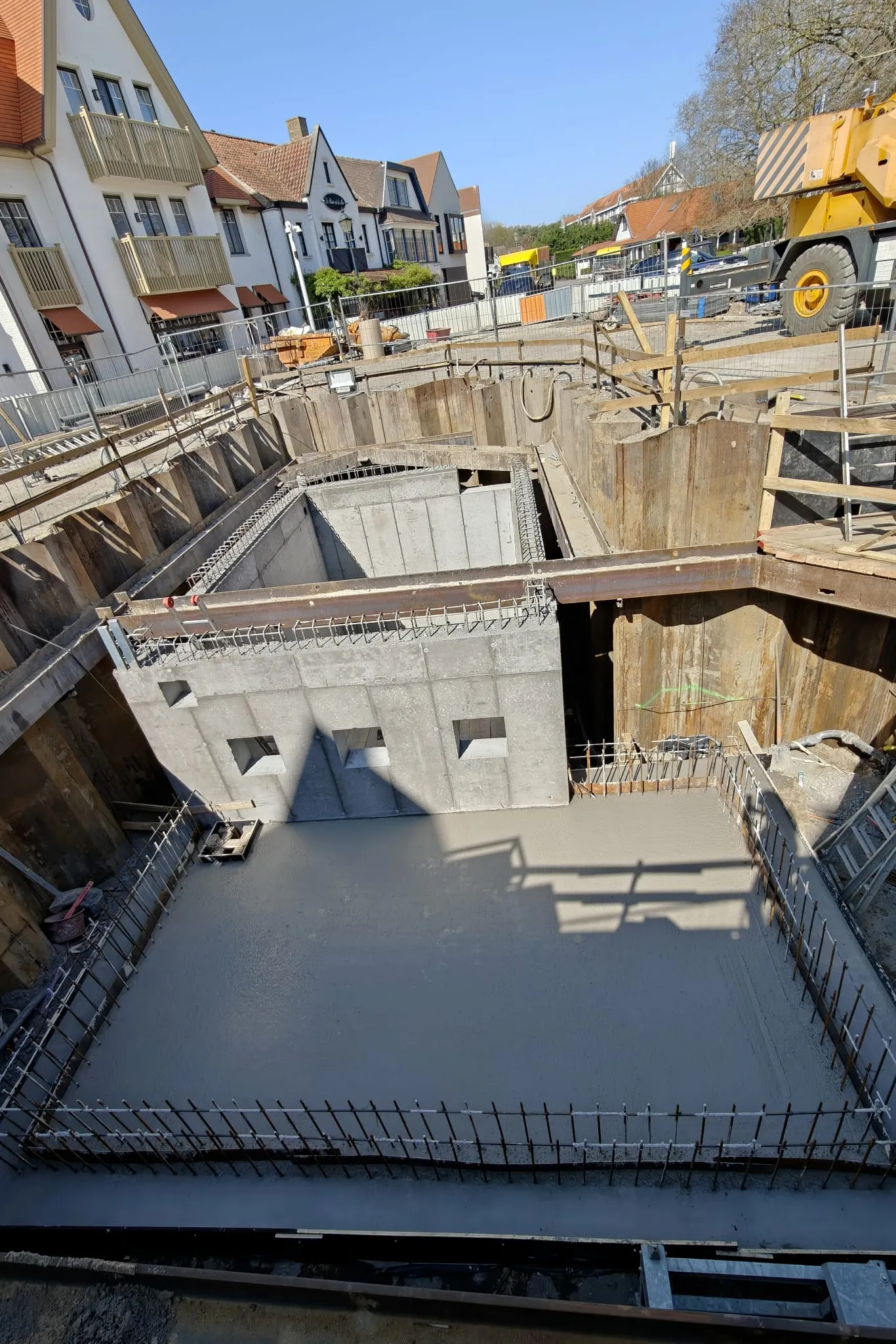
All the infrastructure in Het Zoute is being renewed, and a separate sewerage system is being installed. This means wastewater and rainwater will be carried away separately, increasing the efficiency of wastewater treatment and drastically reducing overflows into the Paulusvaart. A new pumping station is also being built at Oosthoekplein to replace the ageing pumping station at Jagerspad and Spaanse Laan. In addition, the Paulusvaart is being restored ecologically through silt removal and the construction of buffer areas, allowing rainwater to be discharged into the watercourse in a controlled manner.
“Aannemingen Vanlerberghe and Persyn are joining forces on this project,” says Lode Provoost of Persyn. “The type of work is certainly familiar to us, but it will still be a challenge. This is a particularly large sewerage project involving rising mains, the construction of pumping stations and specialist shoring techniques. We are talking about large-diameter pipes laid at considerable depths. The complexity is what makes this project so exceptional.”
A technical tour de force
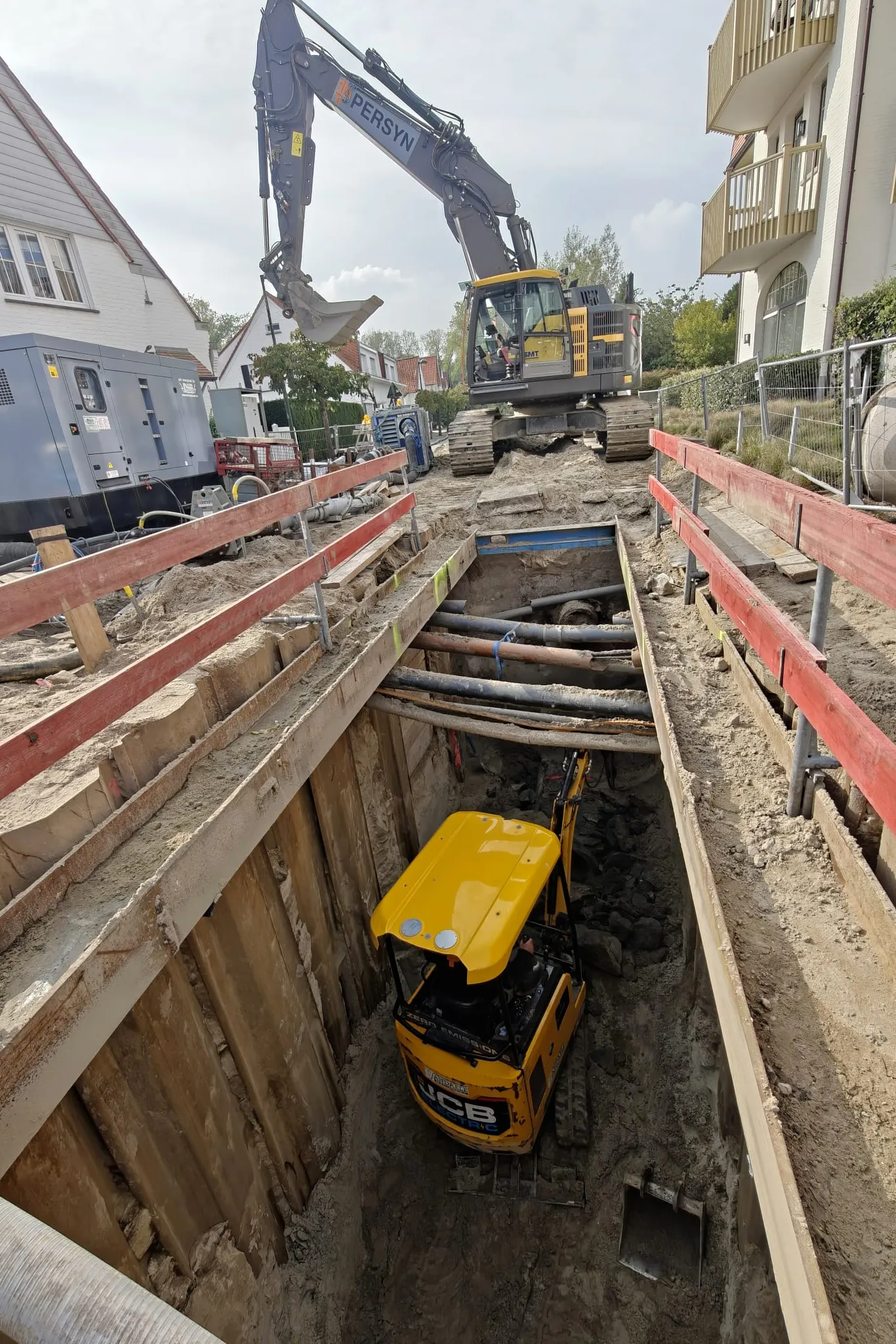
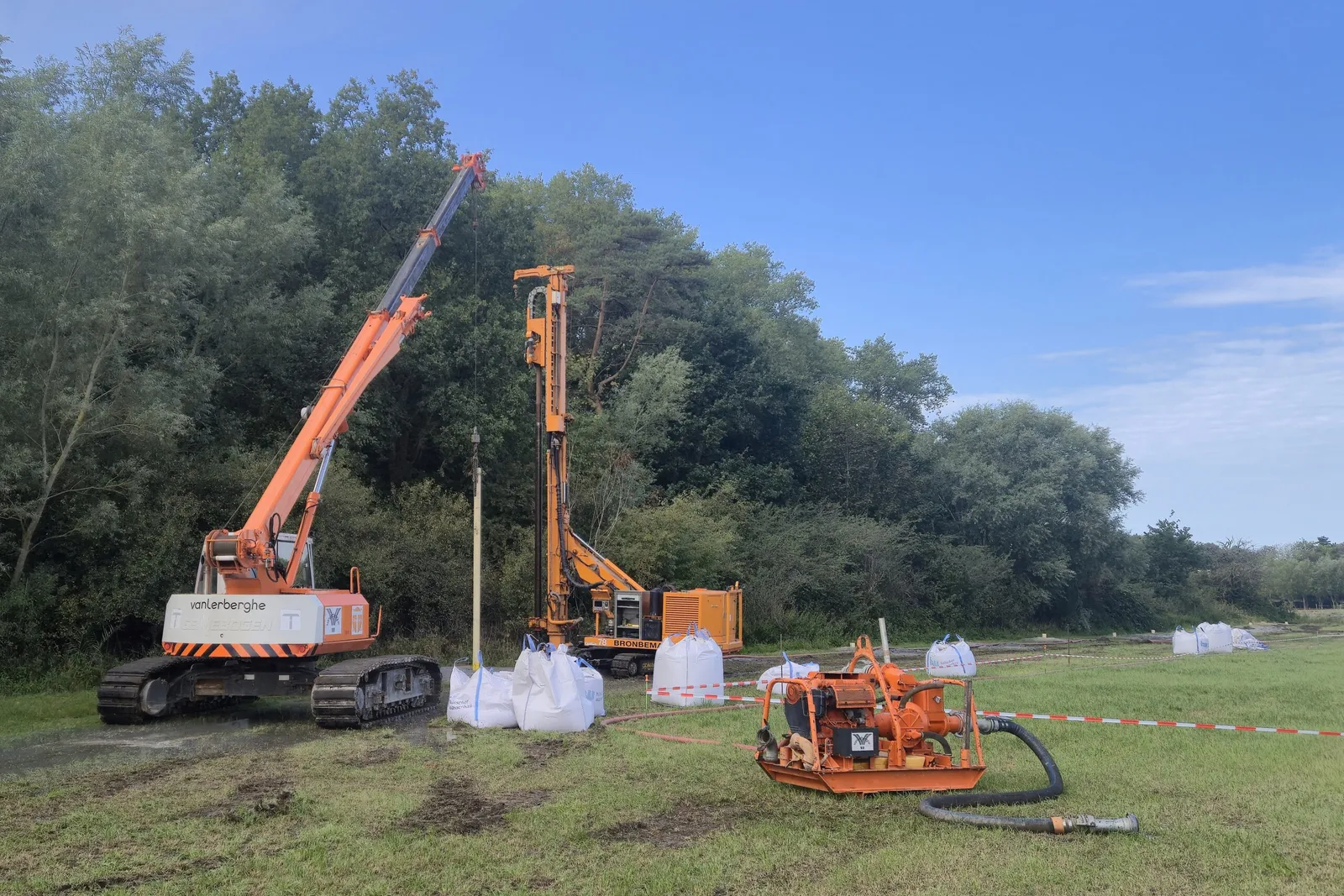
The works in Zoutelaan are a technical tour de force. The depth of the pipes, the presence of protected areas and utility services make this a complex operation. The existing sewerage system will remain in service throughout the works, as will the connection to Aquafin’s wastewater treatment plant. Hendrik Vanlerberghe of Aannemingen Vanlerberghe says: “One of the challenges is to ensure water continues to be carried away and to keep the existing rising main intact. Temporary pumping installations have been provided for this purpose. We are also close to the Zwin, which makes groundwater lowering particularly sensitive. The entire dewatering operation is therefore continuously monitored, including groundwater levels and flow rates. Dewatering was initially entrusted to a subcontractor, but Aannemingen Vanlerberghe has since taken responsibility for all dewatering on the project, including deep wells and return pumping.”
The planned foundation techniques were also carried out in-house by subsidiary Omni-Tech. Hendrik Vanlerberghe says: “Installing the water-retaining screens in the narrow Konijnendreef is a tour de force, with reinforced CSM walls extending to a depth of 17 m. The restricted working area has shown the benefits of cooperation between our in-house companies: pre-trenching, installing the reinforcement, removing the spoil, and keeping the existing sewer and property connections in service were all perfectly coordinated.”
Down to a depth of 5 metres
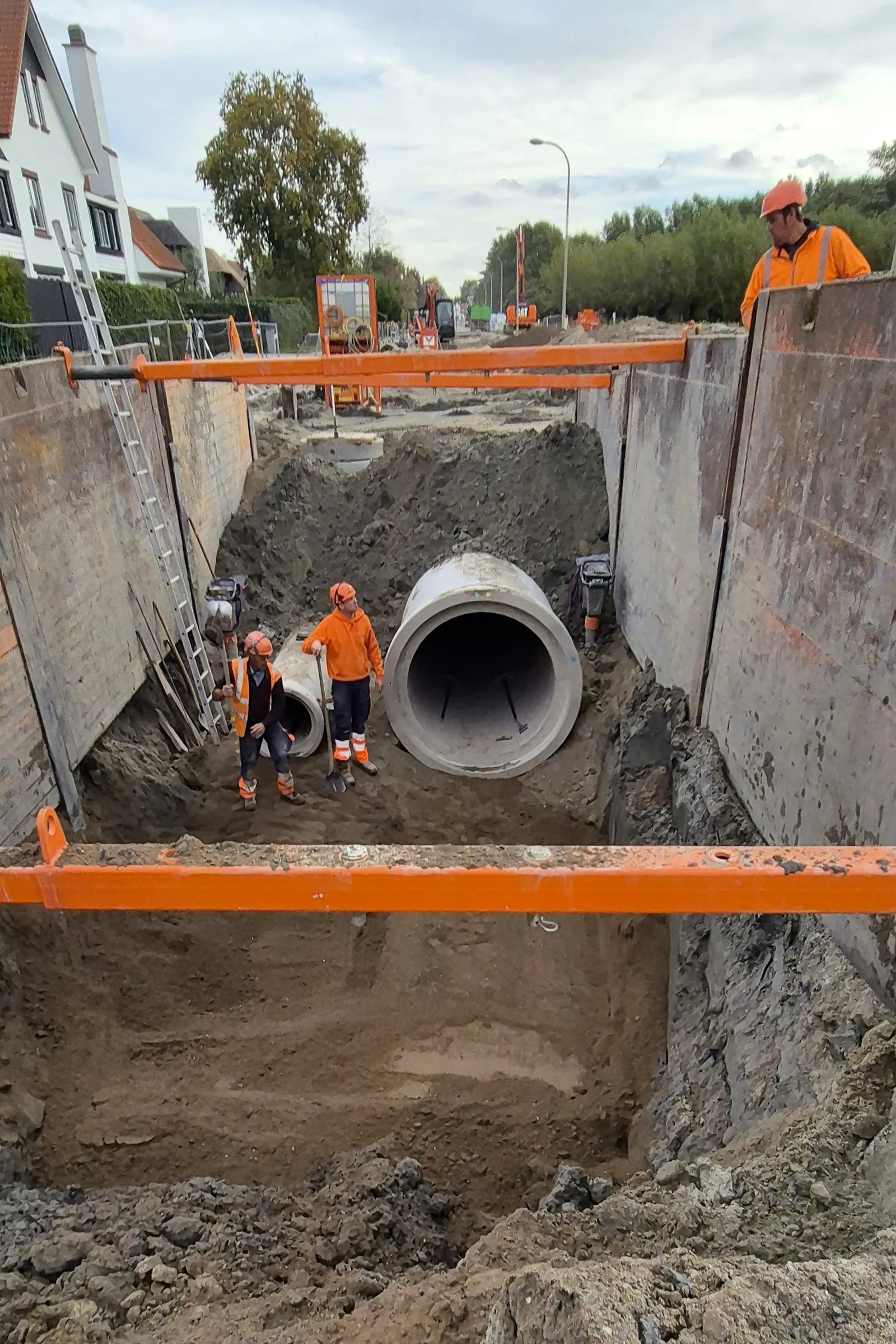
The sewer is laid at considerable depths, of up to 5 metres. This too presents a challenge for the two experienced contractors. Lode Provoost says: “That makes removing the old sewer a major undertaking. Some of the pipes also contain asbestos. The works must therefore be carried out under strict safety measures.”
The works are scheduled each year from September to June so that the tourist season in July and August is not disrupted. By the end of June, the surfacing, including finishing work, must be complete for each phase. Lode Provoost says: “So far, we are meeting those deadlines comfortably. Everyone in the team knows their trade. We have the necessary experience in deep sewerage works, and we also have everything above ground in-house: kerbs, paving blocks, exposed aggregate concrete …
We do almost everything ourselves, even producing the asphalt. That means we have the entire process under control.”
Progress
Given the considerable age of the existing pipes, their exact location is not always known. Hendrik Vanlerberghe says: “During the works, we regularly come across unexpected pipes and structures. These require further investigation, but so far we have managed to locate and connect everything. Fortunately, the project becomes less complex as it progresses. The highest flow rates for dewatering were also in the early phases. By the end of spring, the most complex areas will be behind us, particularly now that the largest pumping station is already operational. That is a major step forward. We must not tempt fate, as weather conditions have been particularly favourable over the past eight months, which has certainly helped us make progress.”
The ideal partners
This project is part of a broader programme of municipal investment in strategic rainwater routes, including projects at Albertlaan, Gemeenteplein and Oude Tramweg. Together, these initiatives will ensure Knokke-Heist is prepared for the future with sustainable, long-term water management. With these ambitious works, Knokke-Heist is taking an important step towards a resilient and sustainable water management system. The disruption is a necessary inconvenience that will ultimately result in a robust, climate-resilient sewerage network, taking account of both ecology and urban development.
Within this approach, Aannemingen Vanlerberghe and Persyn are ideally suited to deliver the project as a temporary joint venture. “The core of this contract is laying large-diameter sewers at considerable depths. It is highly specialised work, a niche market in which both Vanlerberghe and Persyn have extensive expertise. We are working at great depth, laying pipes with a diameter of 1.60 m in sandy soil. This requires not only expertise, but also heavy plant and the right techniques. Being able to carry out the entire project entirely in-house is a major benefit for the client,” concludes Hendrik Vanlerberghe.
Question about this story? Ask your question
Keep following this
Get an email when a new story is published. No account needed.
- ThemeFuture-proofing roads and railways
- SubjectSewerage & underground infrastructure







