









Sewerage & underground infrastructure
Large-scale remediation works at Fort Sint-Filips site nearly complete
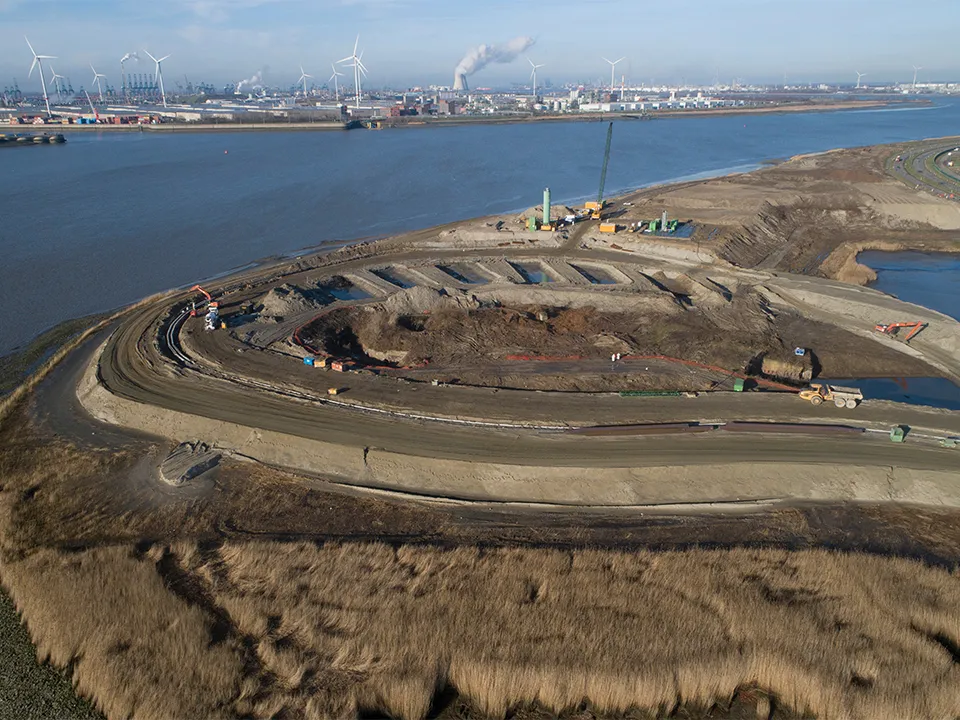
The Fort Sint-Filips site, north of Antwerp, will have undergone a major transformation by the end of this year. Large-scale remediation works, among the biggest ever carried out in Flanders, are in full swing.
The contaminated historic site will then be transformed into a valuable nature reserve. Recognised soil remediation expert ABO nv carried out all the preliminary soil investigations, developed the remediation approach and is now closely monitoring the works. The biggest hurdle, containing the contamination with a cement-bentonite wall, has already been overcome. The retention basin will also be fully refurbished by the summer.
Fort Sint-Filips is one of the oldest forts around Antwerp. It dates back to the 16th century, but in the 19th century it made way for an armoured brick structure, which was partially blown up during the First World War. In the years that followed, the site became heavily contaminated. Port of Antwerp and De Vlaamse Waterweg are tackling the pollution and transforming the site into a valuable nature reserve.
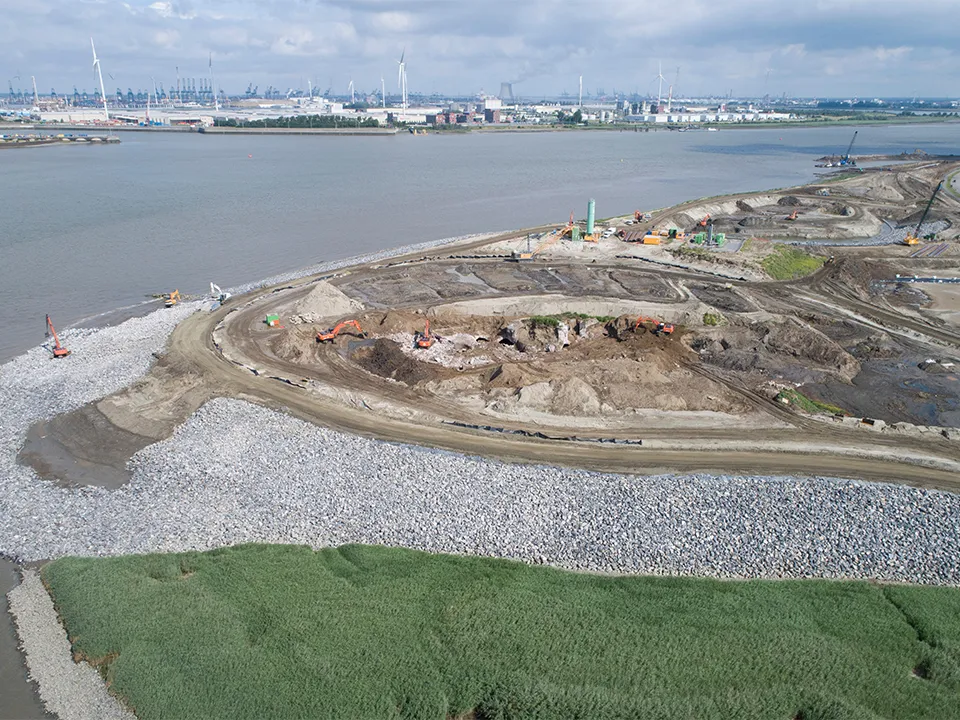
Containing the contamination
ABO nv, part of ABO-Group, was appointed by Port of Antwerp in 2012 to carry out the soil investigations. “It soon became clear that the scale of the contamination was exceptional. An estimated 1.2 million m³ of soil was contaminated, to a depth of 30 m. With around 40,000 m³ of contaminated sediment, the adjacent retention basin also had to be remediated,” says Toon Moeskops, project manager at ABO nv.
Based on the soil investigations, ABO nv developed a remediation approach. It was decided to contain the contamination in and beneath the fort using a cement-bentonite wall. The Boom Clay below and a capping layer effectively create a sarcophagus around it. The discharge pond is being remediated in a similar way. The contaminated sediment will remain in place but will be encapsulated to prevent further spread.
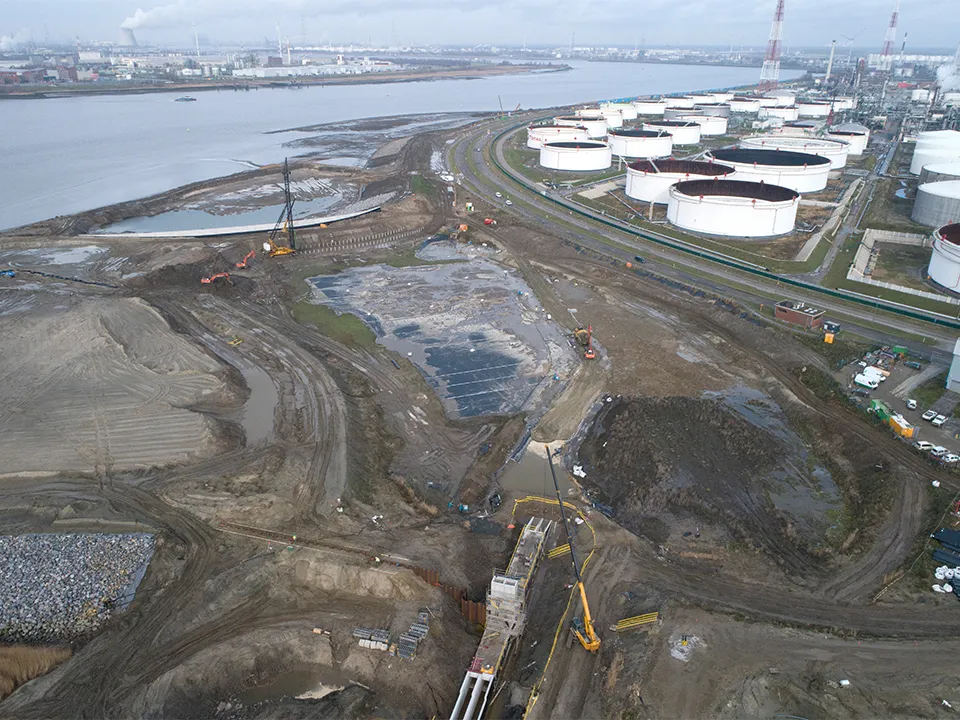
A technical challenge
Work began at the end of 2019. The Jan De Nul-Envisan-DEC consortium is carrying out the works. “The first task was to build the cement-bentonite wall, into which we installed an HDPE membrane as an additional barrier,” says Toon Moeskops. “This was a major technical feat given the considerable depth of 30 m. The ground also contained obstructions. At an early stage, it soon became clear that the soil was even more heavily contaminated than expected, to the extent that laboratories could no longer measure the high levels of contamination. This created a number of challenges, but thanks to the commitment of everyone involved, we successfully contained the contamination.”
The fort itself was then fully excavated and its voids filled. “The capping layer has yet to be installed, but all the contamination in the fort area has already been safely contained,” says Toon Moeskops. “The contaminated sediment in the retention basin has also been encapsulated. Once several other work packages have been completed, including an outfall structure to the Scheldt, the basin will be safely capped with clay mats and a layer of fatty soil.”
A nature reserve with added historic value
“Remediation of the site is already 90 % complete, so there are no longer any risks,” stresses Astrid Verheyen, project manager at Port of Antwerp. “Now we are looking forward to the next stage of development. The nature reserve is already taking shape. The fort will remain a feature of the landscape through the creation of mounds. Photos and 3D visualisations will allow the public to fully appreciate the historic value of the site.”
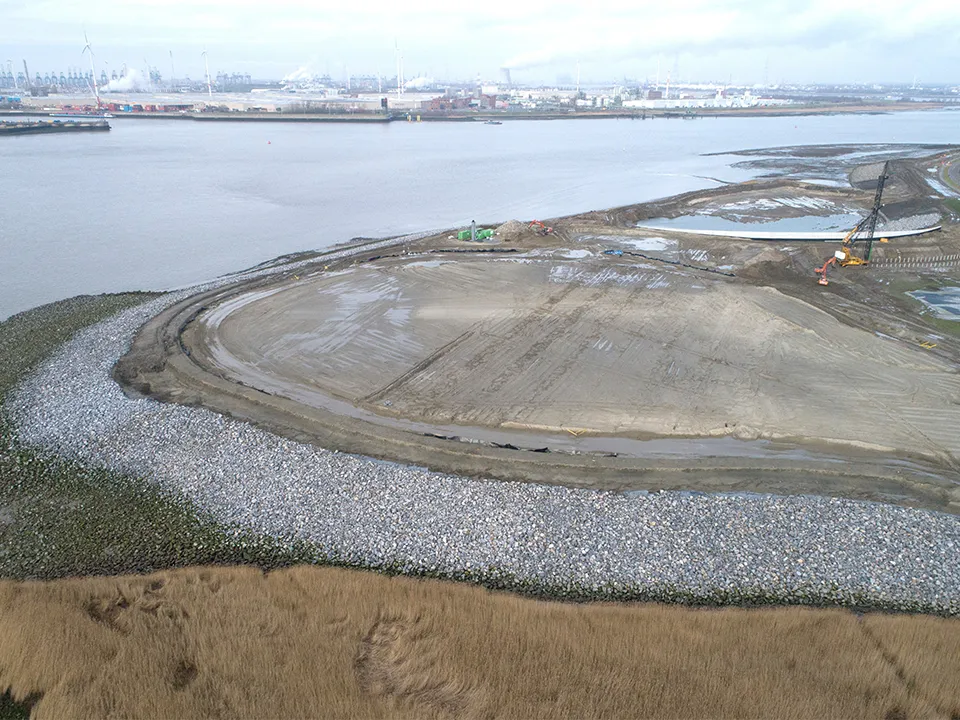
From black spot to green spot
ABO nv not only carried out the soil investigations, but is also closely monitoring the remediation works and continuously taking control samples. “They are essentially our eyes and ears on site. We are therefore pleased to have found a reliable partner in ABO nv, one we can trust implicitly,” says Astrid Verheyen.
“It is our knowledge and experience that will enable us to bring this challenging project to a successful conclusion. Once the nature reserve is complete, everyone involved will be able to feel proud of it. When I think of what the site was like when I first saw it in 2012, this is an incredible achievement,” says Toon Moeskops. “With Fort Sint-Filips, we are transforming a black spot into a green spot with rich biodiversity, where its heritage value can also be fully appreciated. The contrast with how the site used to look could hardly be greater,” concludes Astrid Verheyen.
Question about this story? Ask your question
Keep following this
Get an email when a new story is published. No account needed.
- ThemeUsing and protecting the subsurface
- SubjectSewerage & underground infrastructure







