









Sewerage & underground infrastructure
Impressive drinking water project built on precision and collaboration
Text Joris Hendrickx Beeld Deschacht
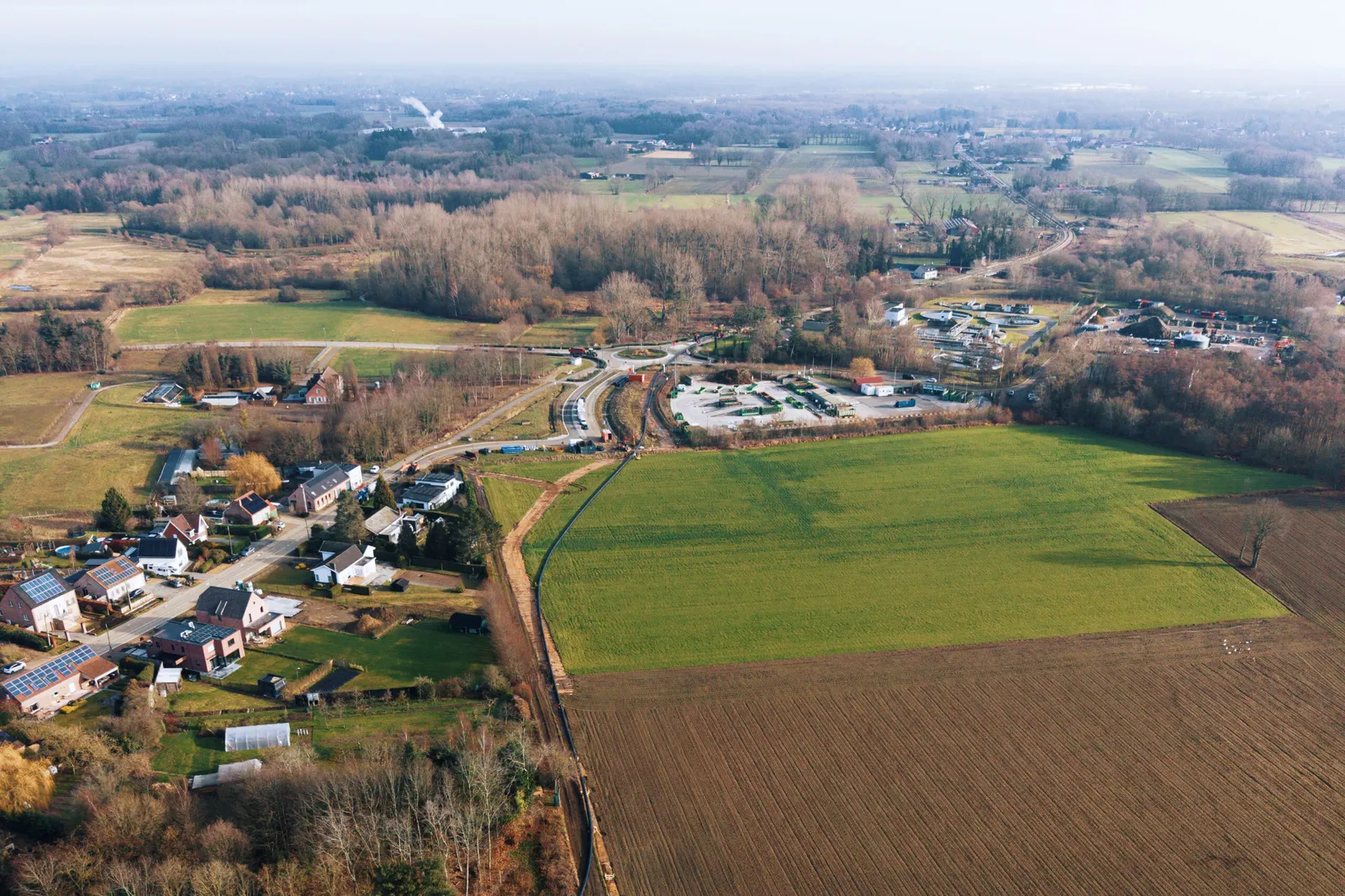
In Hulsthout, an ageing drinking water supply main is being completely replaced with a future-proof solution. The project combines innovative drilling techniques with strict quality control and a smart logistics approach. Both Pidpa and Deschacht play a key role. The scale, techniques selected and logistical complexity make this project a benchmark for infrastructure works in Flanders.
Ageing main replaced with a future-proof solution
Pidpa’s systematic monitoring of water mains enables it not only to detect problems, but also to plan ahead. This helps the water company avoid unexpected outages and maintain security of supply. “This existing asbestos cement supply main, with an internal diameter of 350 millimetres, has been in place for around fifty years. It is a crucial transmission main for the region, running from the water production centre in Westerlo all the way to Heist-op-den-Berg,” says Bart Goetschalckx, project manager at Pidpa. “Our proactive inspections of the pipes made it clear that a complete replacement was needed to continue guaranteeing security of supply.”
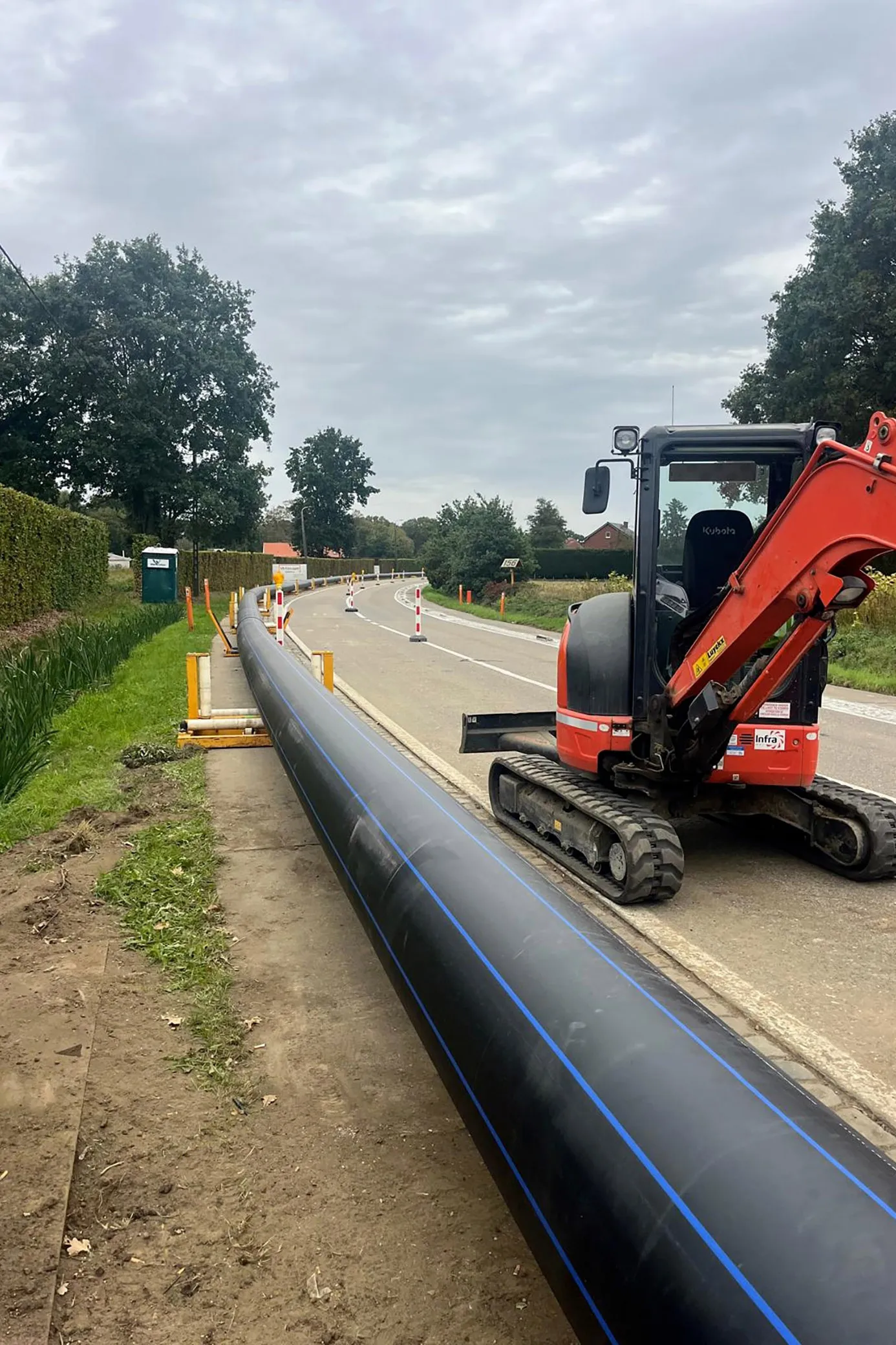
The chosen replacement is a larger-diameter PE main, specifically HDPE P100RC pipes (560 SDR11), which offer excellent strength, reliability and a long service life. “The larger diameter of 560 millimetres reduces resistance in the main and improves efficiency. As a result, the pumps will use less energy. As well as the sustainability benefits, this will also translate into lower maintenance costs in the long term,” Goetschalckx explains.
Conventional open-cut installation was not an option. The main runs through village centres where the verges are already congested with underground services. “You come across sewers, cables and pipes, among other things. Installing it beneath the carriageway itself would be far too costly and would compromise future sewer works. It would also cause considerable disruption to residents and local traffic, both in terms of duration and scale.”
Underground drilling limits disruption at the surface
Following thorough studies by Pidpa’s in-house teams, Horizontal Directional Drilling (HDD) emerged as the most suitable solution. This involves drilling underground over long distances without excavating the entire road. This approach limits the impact on the surrounding area to the drilling locations, making it an ideal fit with the ‘less disruption’ policy adopted by an increasing number of local authorities. Pidpa entrusted Canalco, a specialist in underground utility infrastructure, with the complex work.
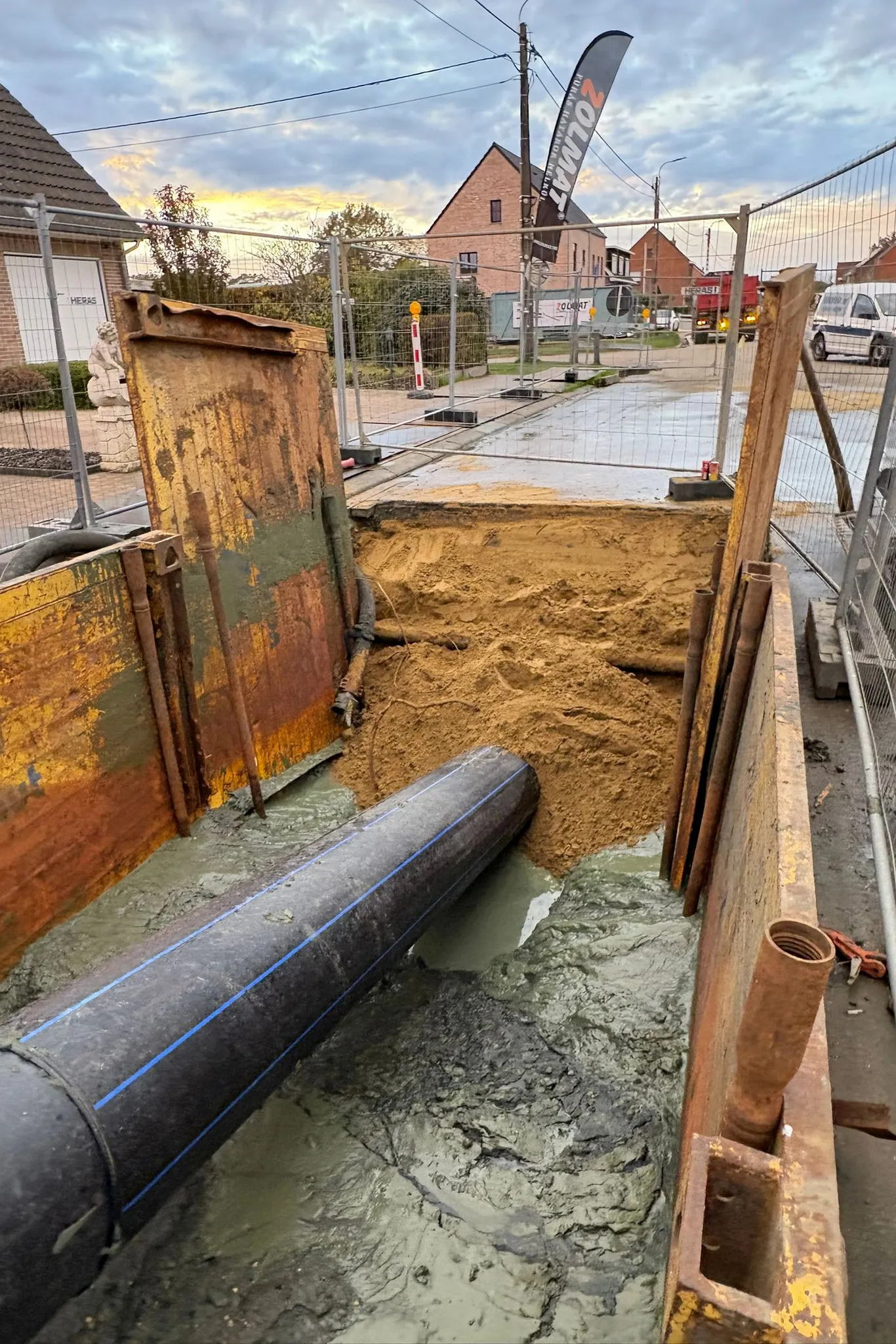
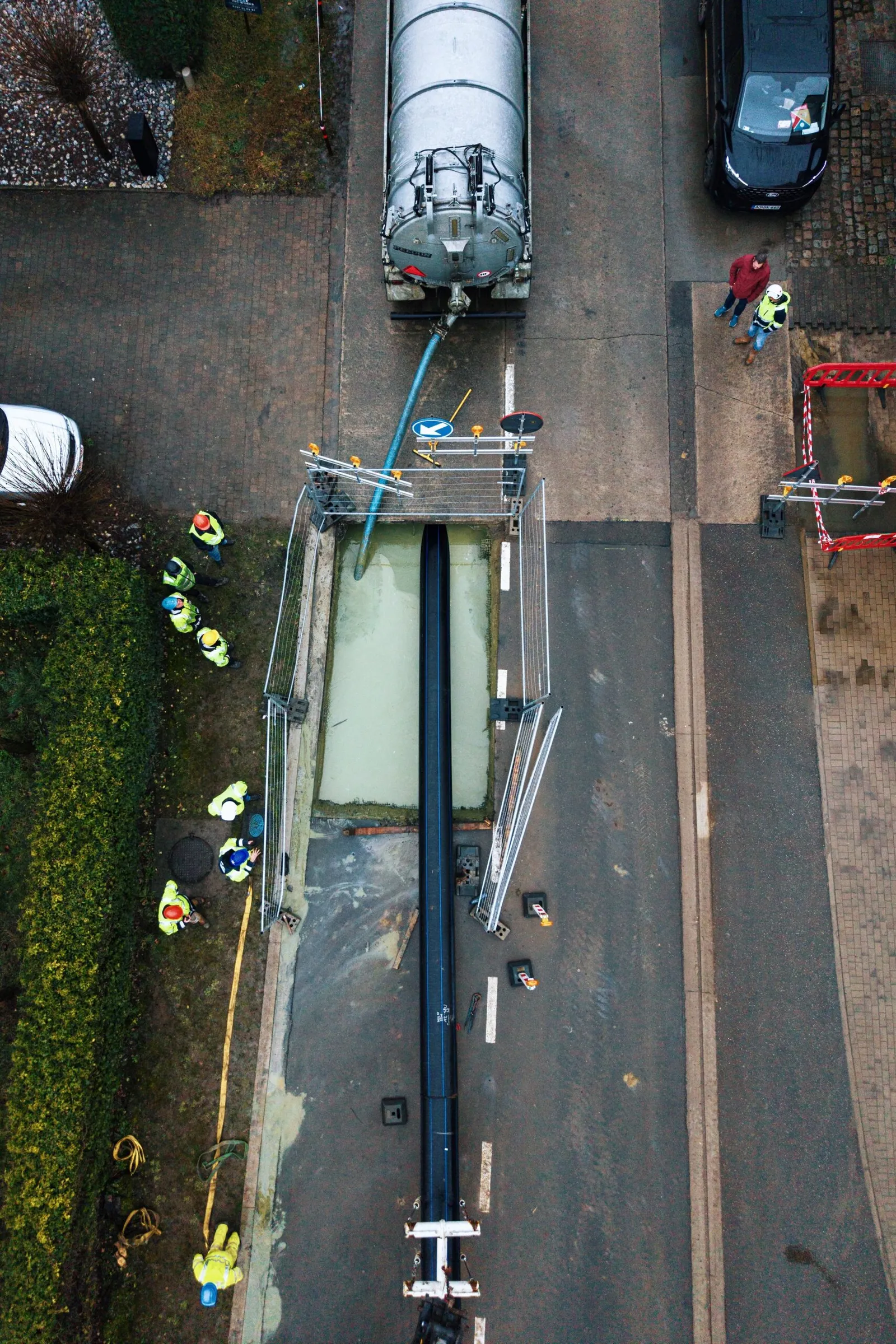
“They are carrying out fifteen drill shots, ranging in length from 320 to as much as 760 metres. Between each pair of drill shots there is a short open trench where we connect the supply pipe to the distribution network,” Goetschalckx explains. “This calls for exceptional precision and careful preparation. You have to emerge exactly where planned.” The main is laid at a depth of around fifteen metres. Large drilling rigs carry out the work. “Every drill shot is nerve-racking. You are working underground, so you cannot see what is happening with your own eyes.” ¢
Unusual, but the best fit for this project
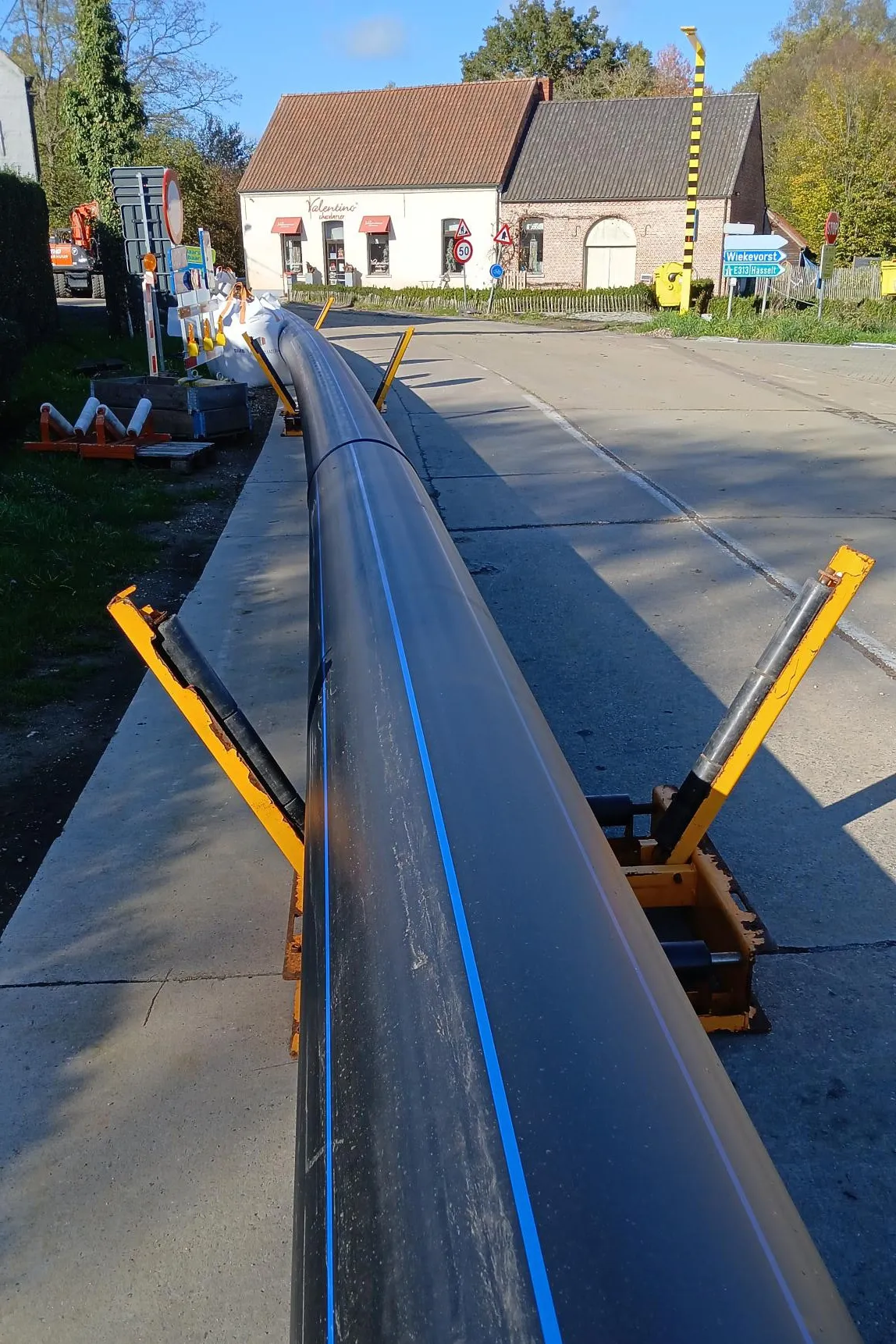
Deschacht is supplying the pipes for the project. Jeroen Walgraeve, Business Unit Manager Nutsleidingen, emphasises its scale. “It involves an eight-kilometre route with pipes measuring 560 millimetres in diameter. That is exceptional in Belgium.” HDPE pipes are the material of choice for long-distance HDD thanks to their high flexibility and resistance to tensile forces. Deschacht also supplies a wide range of complementary products, such as casing pipes and cable protection ducts, ideally suited to the needs of projects of this kind.
Rigorous inspections and checks
The inspection process leading up to accreditation takes around a year and a half and includes several audits. “Drinking water pipes have to meet specific standards,” says Walgraeve. “For De Watergroep, AquaFlanders therefore monitors production very closely, both at the production site in Poland and at our depot in Hamme. Inspectors check not only the finished products from each production batch, but also the manufacturing process. This ensures consistent quality throughout.”
Once approved, each pipe receives a unique label. This enables Pidpa’s site supervisors to track it on site and rules out errors. Walgraeve says: “That way, we know for certain that only approved material is installed, and if any problems arise, we can immediately trace them back to their source or cause.”
Goetschalckx says: “Pidpa also carries out rigorous checks on the pipes before they go into the ground. We perform an air test to check watertightness and inspect every weld. After installation, we test watertightness again and check the water quality.”
Smart, flexible logistics key to keeping work on track
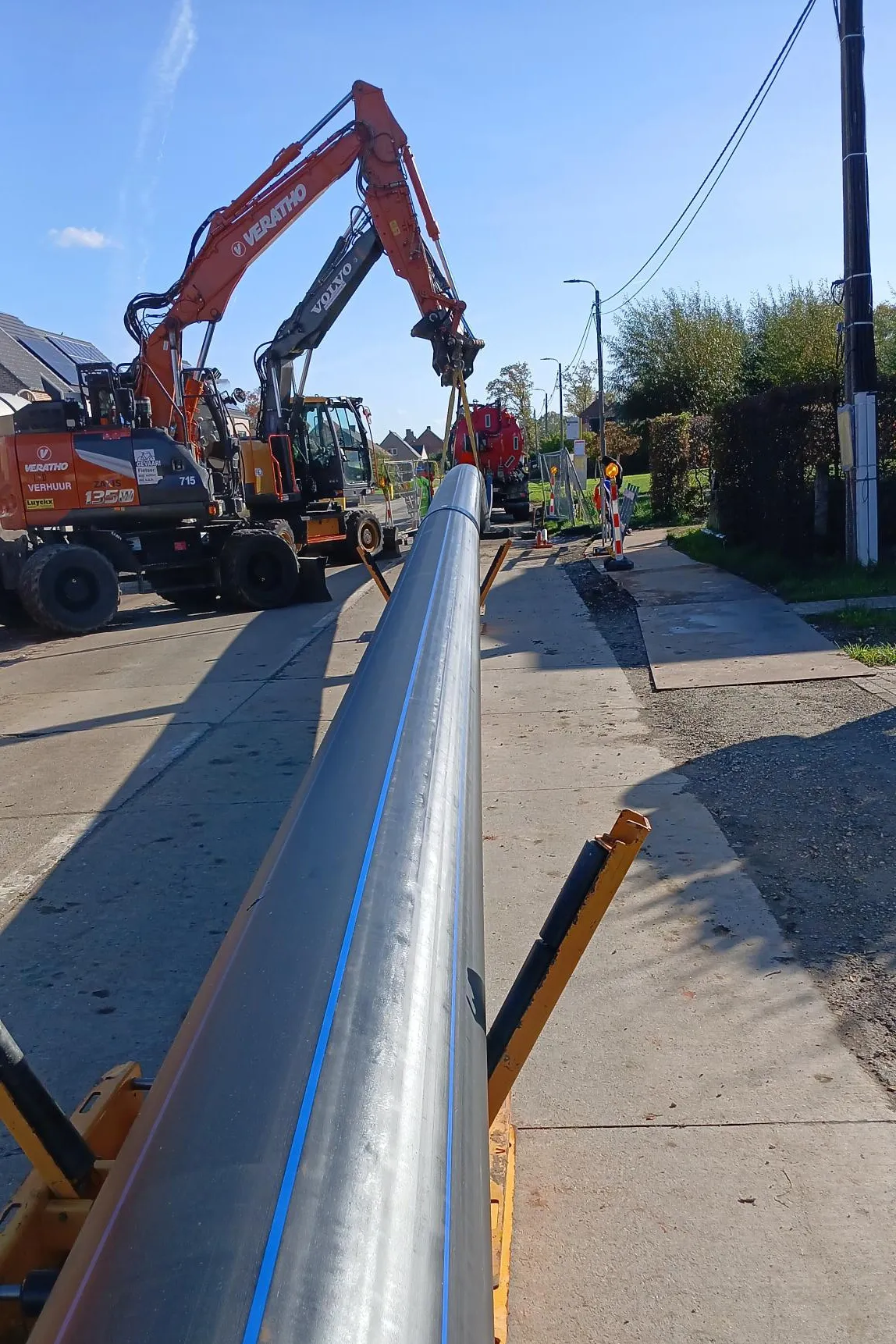
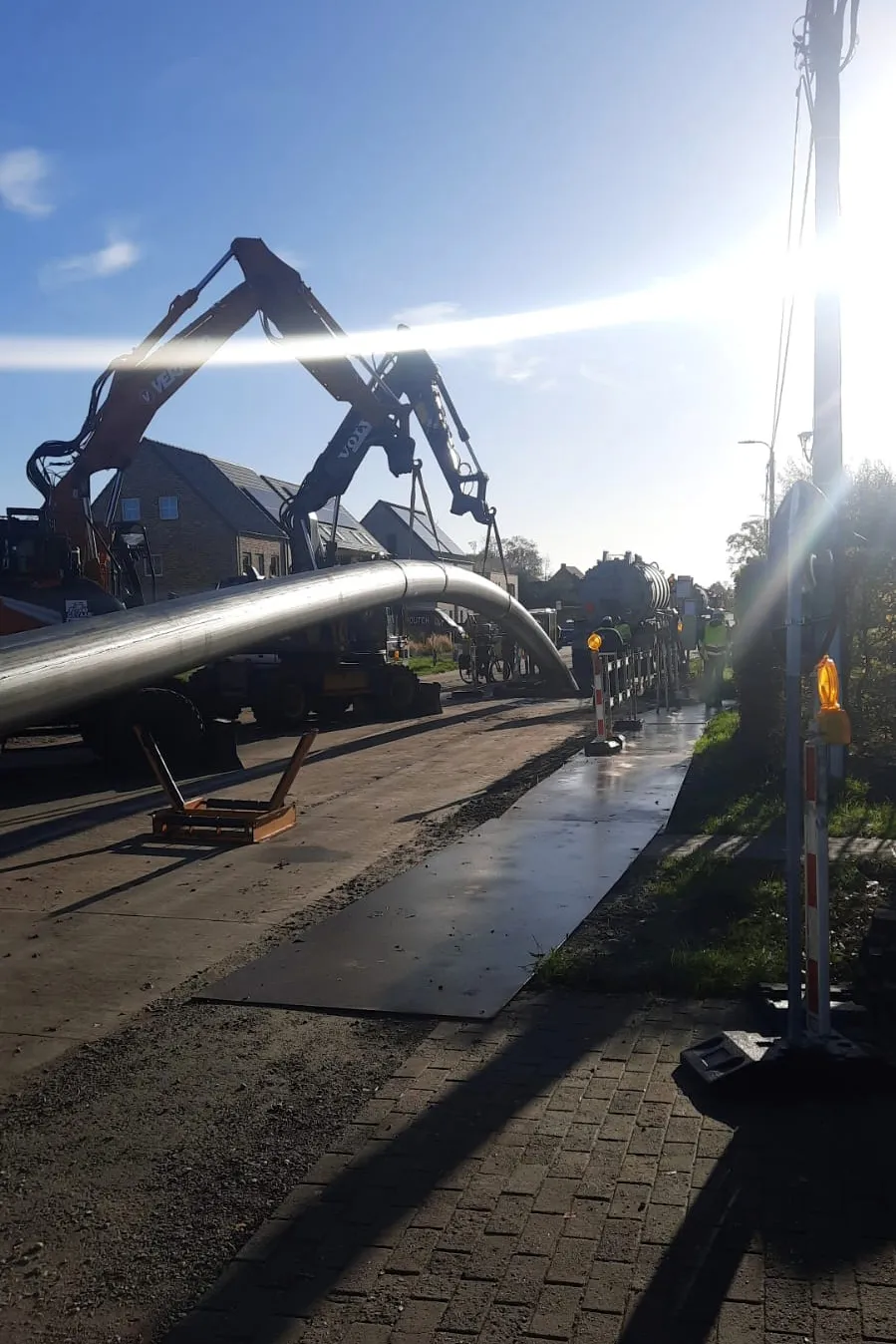
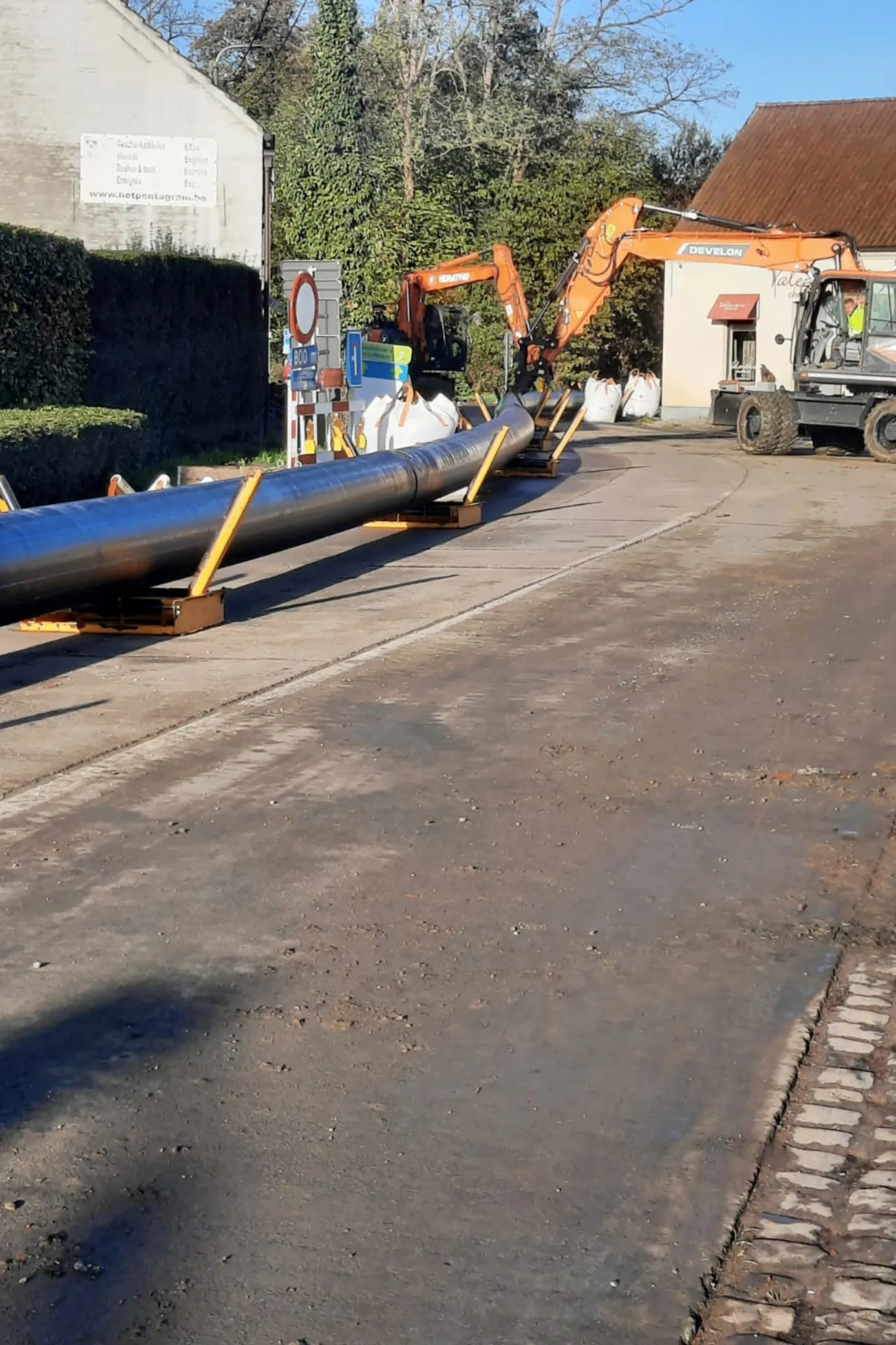
The length of the pipes presents an additional challenge. Each section is twenty metres long, making transport, delivery and storage complex. Walgraeve says: “Every delivery of pipes, couplings and fittings therefore has to arrive at exactly the right time and place, so that it dovetails seamlessly with contractor Canalco’s drilling work.
If the pipes arrive late, everything comes to a halt and the schedule for the entire project is put at risk. That is why we coordinate continuously and respond quickly whenever needed. Thanks to this flexibility and the peace of mind we provide, work on site continues without interruption.”
The pipes are also too long for standard transport. Special transport and adapted loading and unloading procedures are required. This adds to the complexity, but at the same time reduces the number of joints needed on site. That means fewer working hours in the short term and fewer potential leak points in the long term.
Collaboration keeps the project on track
The first drill shots took place at the end of 2025, and the project is now about halfway complete. Both Pidpa and Deschacht stress the importance of collaboration and trust. “You are working with different partners and techniques,” says Goetschalckx. “Everything has to fit together and keep moving smoothly.” Walgraeve also sees this as decisive. “A project on this scale can only succeed with good coordination. Everyone has to think ahead and take responsibility.”
That approach is already paying off, with the project progressing well to schedule. The new main is due to be fully operational by 2027. The region will then have a robust and efficient drinking water supply ready for the future.
Een zakelijke vraag aan Deschacht? Get in touch
Companies in this story
Keep following this
Get an email when a new story is published. No account needed.
- ThemeRenewing pipelines and sewers
- SubjectSewerage & underground infrastructure
- CompanyDeschacht







