









Sewerage & underground infrastructure
How can you get the most value from your sewerage investment?
Text and images Pipelife
When selecting materials for sewerage systems, the decision is often driven by the lowest initial cost. This may seem like a logical approach, but focusing on low initial costs often leads to higher expenditure in the long term. That is why a holistic approach such as Life Cycle Costing (LCC) is becoming increasingly important. By using this LCC methodology, you can make an informed choice that takes into account the costs over the entire life cycle of your sewerage infrastructure.
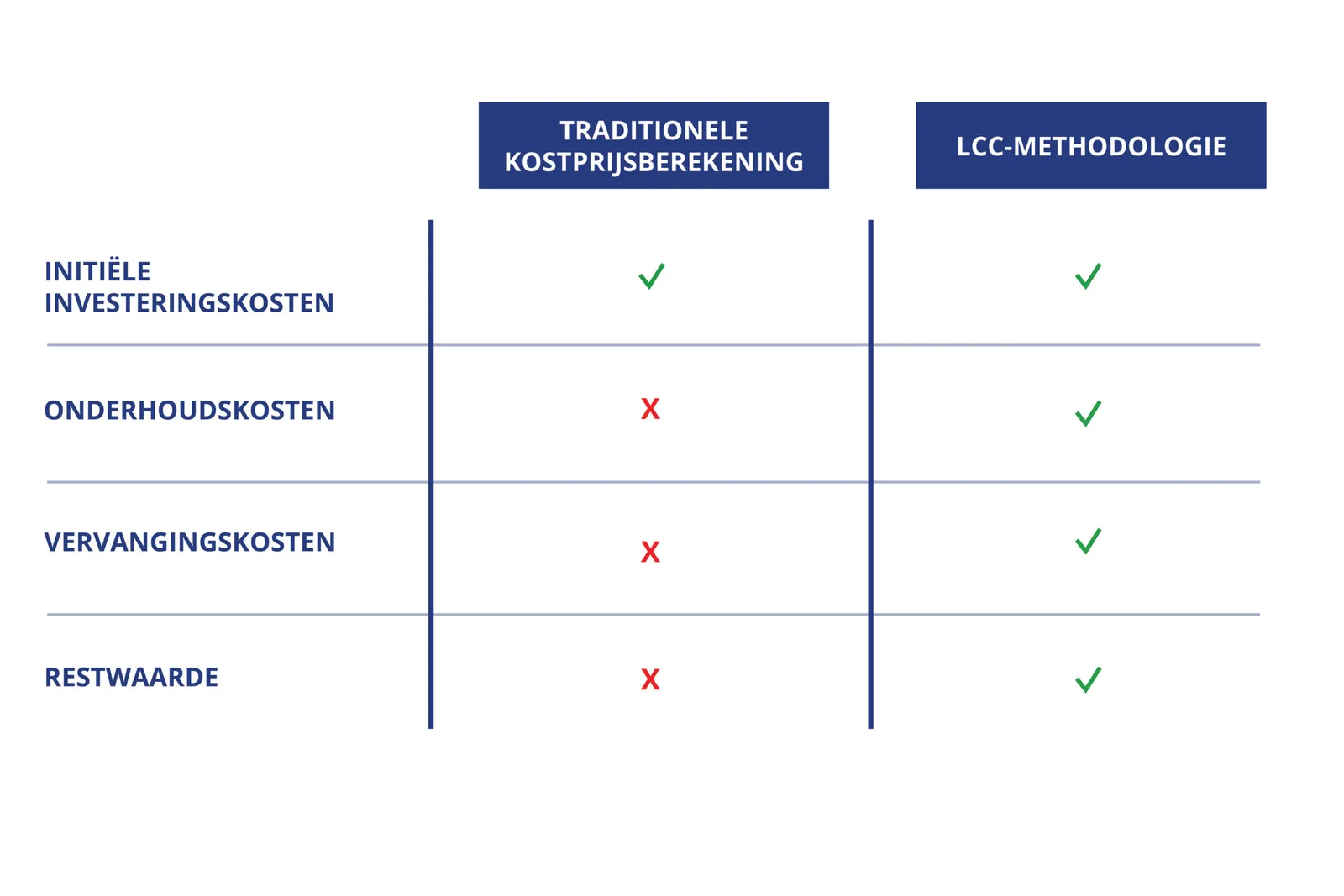
Life Cycle Costing, an internationally recognised approach in accordance with ISO 14040 and ISO 14044, is a method for evaluating the economic performance of a product or system over its entire life cycle. This starts with the extraction and processing of raw materials, followed by production, distribution and use, and ends with end-of-life treatment. Unlike a traditional cost analysis, which often looks only at the initial investment, LCC includes all direct and indirect cost items, such as initial investment costs, maintenance costs, replacement costs and residual value.
Thanks to this broad approach, LCC provides a more comprehensive picture of total costs and helps quantify the economic sustainability of your investment.
Independent LCC study: life cycle costs for foul sewer systems
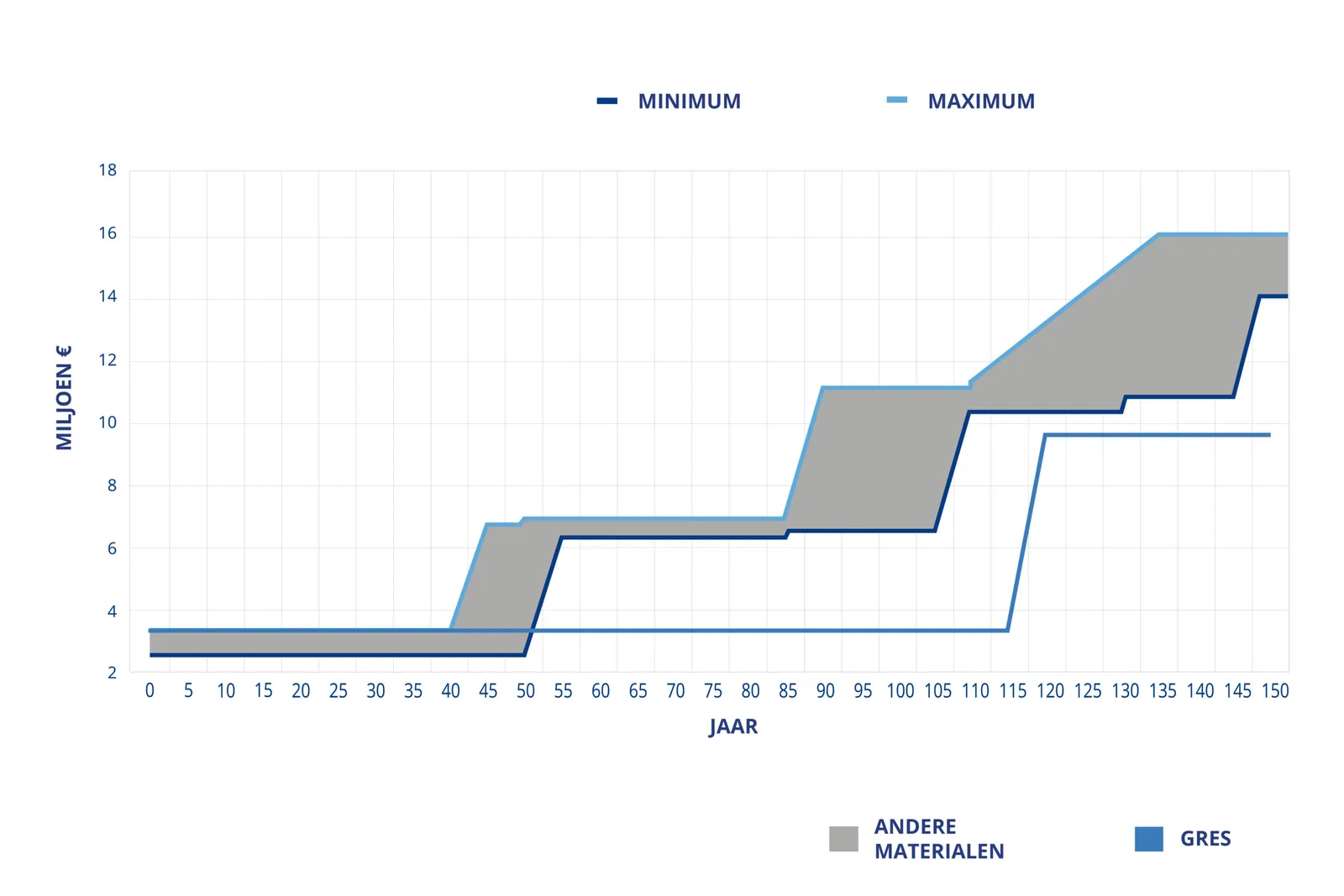
In 2024, Project Hub 360 conducted a study mapping the full life cycle costs. This in-depth analysis compares vitrified clay pipes with thermoplastic alternatives for foul sewer applications. It takes into account initial costs, maintenance, service life and residual value over a 150-year time horizon.
Independent LCC research confirms that, when the operational service life exceeds 40 years, vitrified clay pipes are the best investment from an economic perspective.
The costs were calculated on the basis of a project carried out in Val Tinella (ITA). The total initial investment cost was € 3,317,882 for vitrified clay and € 3,188,377 for the thermoplastic alternative. Although vitrified clay requires a slightly higher initial investment (+4%), it offers long-term cost savings of up to 65%. After 40 years, vitrified clay pipes are more cost-effective than other alternatives. This means that vitrified clay is the cheapest option for sewerage systems with a minimum service life of 40 years.
Although vitrified clay requires a slightly higher initial investment, it offers long-term cost savings of up to 65% compared with alternative materials.
Make your investment future-proof by looking beyond today's price to tomorrow's value. By integrating the LCC methodology into your decision-making process instead of relying on traditional cost calculations, you can estimate the total costs of your sewerage infrastructure more realistically and make more economically sustainable choices. This prevents surprises in the long term and helps you get the maximum value from your investment.
The results of in-depth LCC analyses of foul sewer systems, conducted in 2024 by Project Hub 360, clearly show that vitrified clay is the best long-term investment. By choosing vitrified clay, you invest in quality, durability and lower costs over the entire service life of the sewerage system.

Question about this story? Ask your question
Keep following this
Get an email when a new story is published. No account needed.
- ThemeRenewing pipelines and sewers
- SubjectSewerage & underground infrastructure







