









Sewerage & underground infrastructure
High-voltage substation with a flow-through cable chamber: pilot project for climate-resilient utility infrastructure
Text and images Lithobeton
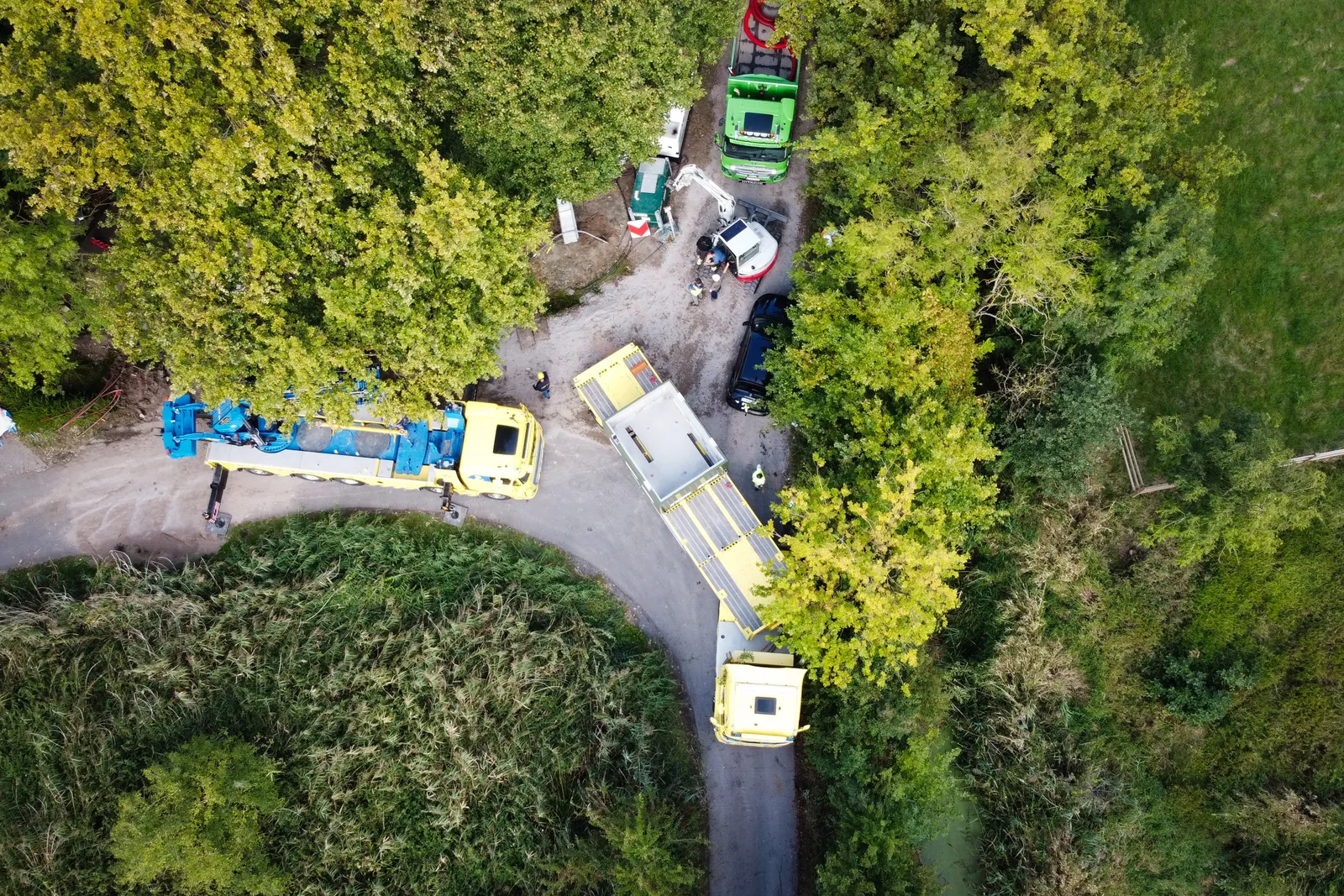
A pilot project was recently completed in Afsnee, where Belgium’s first operational flow-through high-voltage substation was installed. The project is the result of a collaboration between Fluvius and Lithobeton, and provides a practical response to the growing challenges of building (precast) structures in flood-prone areas.
Technical challenge
High-voltage substations are usually built on a solid concrete chamber. In areas exposed to waterlogging or flood risk, however, this conventional approach can cause problems. When groundwater or surface water levels are high, a solid chamber is subject to considerable upward water pressure. If this pressure is not properly counteracted, the structure may float or subside, potentially having serious consequences for the continuity of the electricity supply.
To avoid this risk, an alternative approach was developed in Afsnee (Ghent): a water-permeable chamber structure. Openings in the side walls allow water to flow into and out of the chamber. As a result, the pressure inside and outside remains equal, removing the upward forces that could otherwise displace a solid chamber.
The solution combines the structural strength of reinforced concrete with greater climate resilience, without compromising the functional requirements of the high-voltage substation.
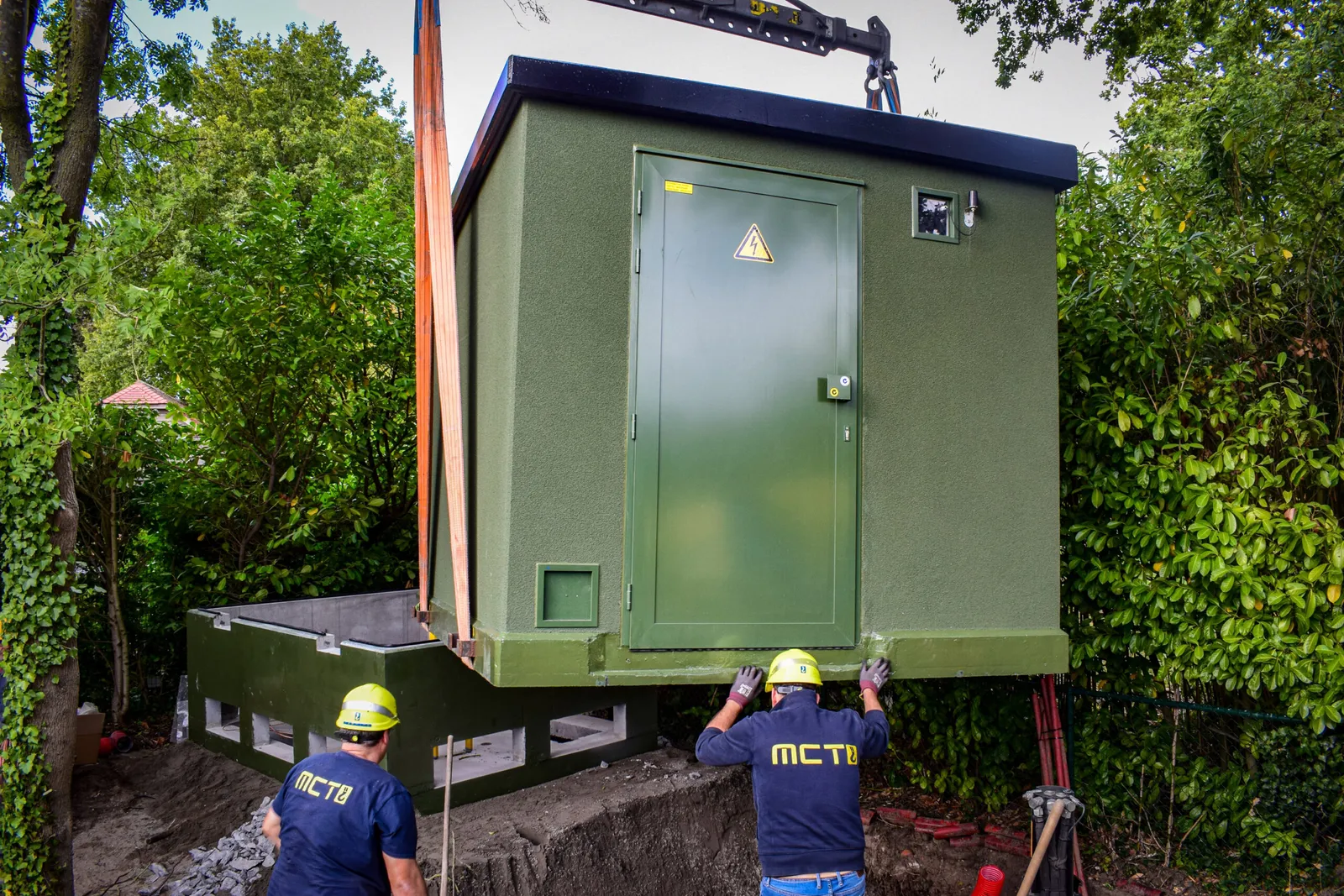
Relevance to climate adaptation
The project in Afsnee is the first application of this type of chamber in Belgium and can be seen as an important step towards climate-adaptive electricity utility infrastructure. With extreme rainfall and local flooding expected to increase, it is important to adapt existing design principles where the application requires it. The concept demonstrates that, with targeted modifications, precast concrete products can make an important contribution to the safety and long service life of utility infrastructure in a changing climate.
This project illustrates the value of practical collaboration between client Fluvius and manufacturer Lithobeton. The exchange of expertise led to a solution that is technically viable, replicable and practical to implement within existing construction practices.
Applications across the sector
Although the project in Afsnee was set up as a pilot, it opens up prospects for wider application in other flood-prone regions. The principle of flow-through chambers can be used not only for high-voltage substations, but also for other utility infrastructure where stability and flood resilience go hand in hand. For the precast concrete sector, this offers an opportunity to continue innovating towards climate-resilient product development.
Een zakelijke vraag aan Lithobeton NV? Get in touch
Companies in this story

Keep following this
Get an email when a new story is published. No account needed.
- ThemeRenewing pipelines and sewers
- SubjectSewerage & underground infrastructure
- CompanyLithobeton NV







