









Sewerage & underground infrastructure
Environmentally friendly water drainage at Liefkenshoektunnel thanks to hydrocarbon separator
Text Niels RouvroisImage DYKA
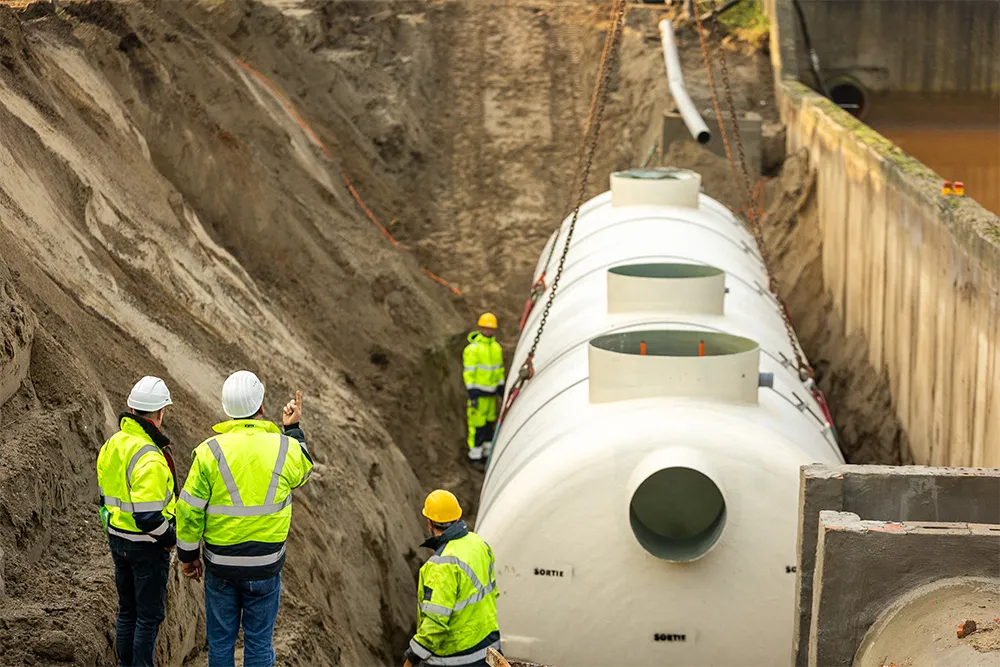
As one of the few tunnels in Flanders, Liefkenshoektunnel has an oil and petrol separator to allow surface water from the tunnel to be discharged into the Scheldt in an environmentally friendly way. DYKA was brought in by main contractor Lareco to determine the correct dimensions and supply the right separator. The end result is a chemically resistant underground hydrocarbon separator with a flow rate of no less than 450 litres per second.
Regular maintenance work is carried out at the well-known Antwerp toll tunnel beneath the Scheldt, but structural improvements are also being explored. This project certainly falls into that category. Installing the oil and petrol separator represents a significant ecological step forward for Liefkenshoektunnel and, by extension, the Scheldt.
A unique project
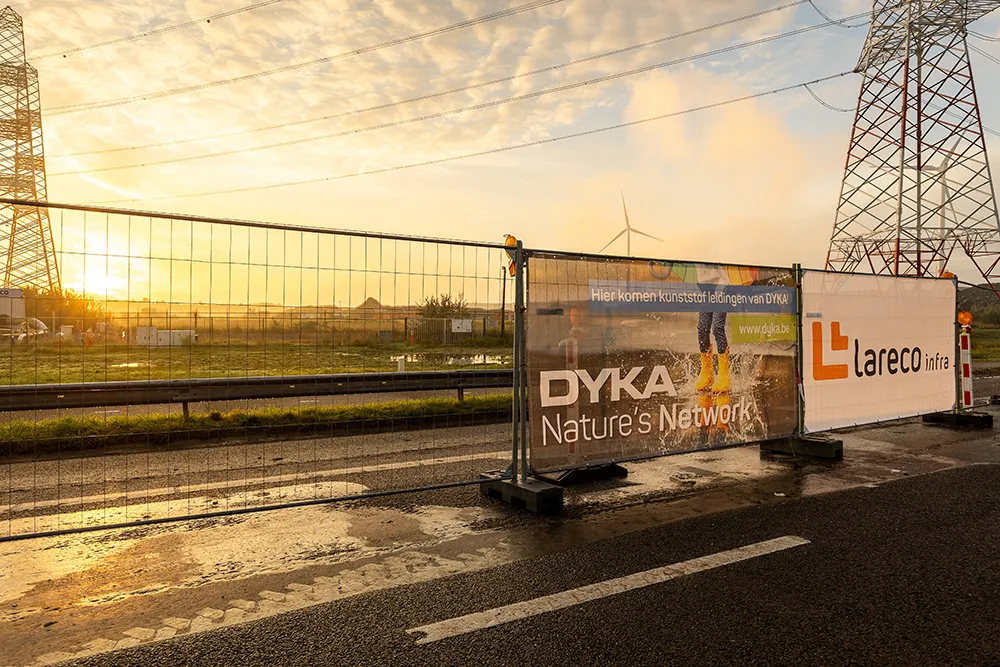
“What makes this project unique is that Liefkenshoektunnel is one of the first tunnels in our country to opt for an oil and petrol separator,” says Ivan Pudic, Managing Director of Lareco. “Installing this separator means that surface water from the tunnel can be treated before being discharged into the Scheldt. We won this contract partly thanks to our good cooperation with DYKA. DYKA’s thorough follow-up meant we were able to carry out the work smoothly and to schedule.”
Installing the separator is a milestone for Liefkenshoektunnel. Buki Foubert, safety adviser at Liefkenshoektunnel, agrees: “We are especially proud of this project. Thanks to this hydrocarbon separator, we have found an environmentally friendly solution for discharging groundwater into the Scheldt. Liefkenshoektunnel is one of the few tunnels equipped in this way.”
Chemically resistant
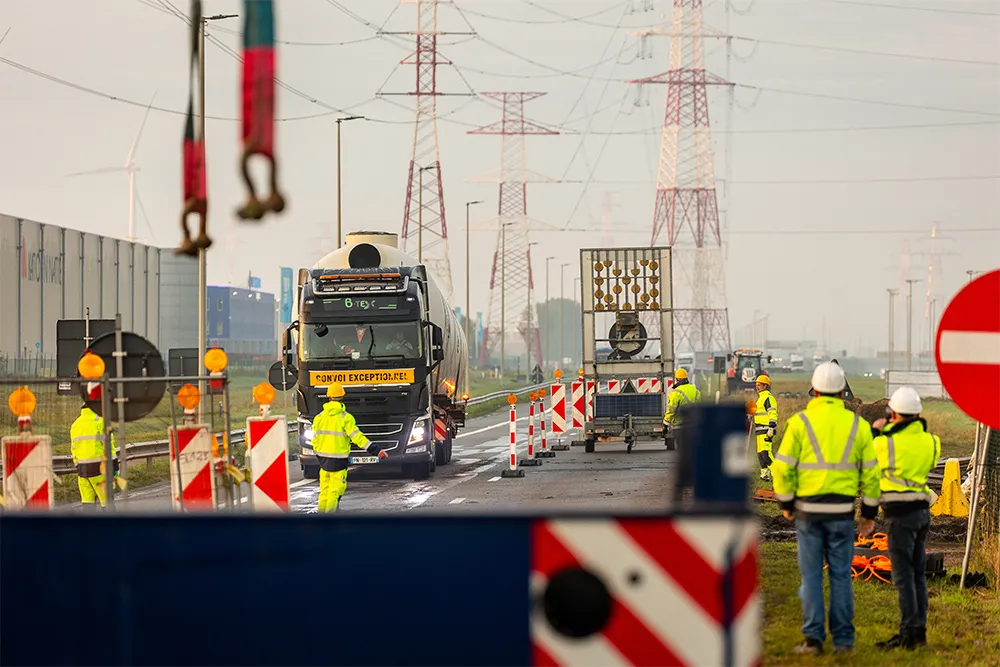
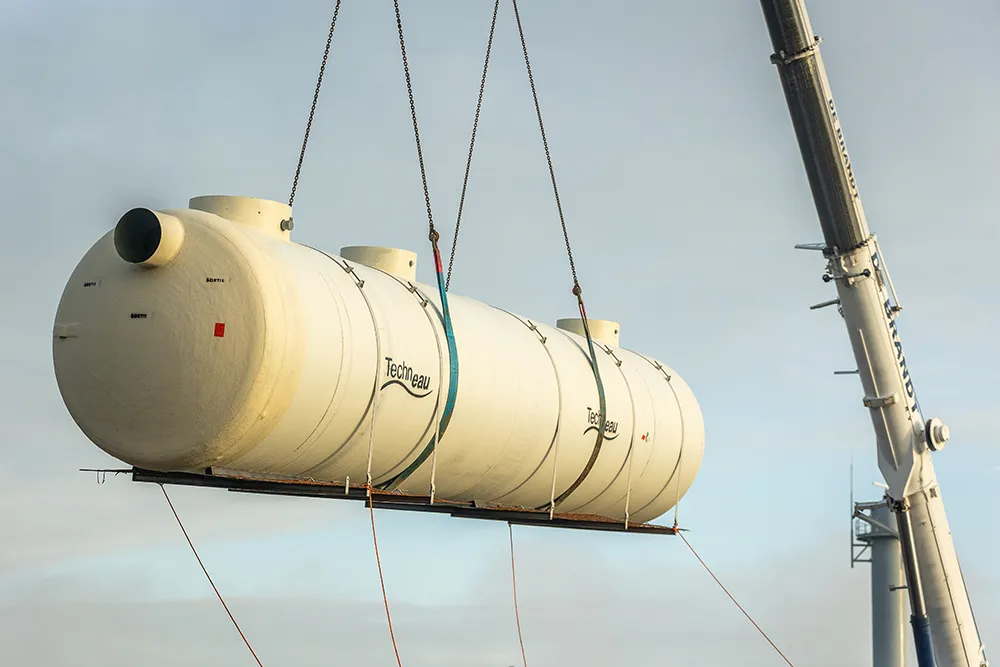
DYKA’s expertise was crucial to determining the right type of hydrocarbon separator for this project. “The purpose of an oil and petrol separator is to remove all light mineral liquids from the water, leaving a residual concentration of less than 5mg per litre before it is discharged into the Scheldt,” explains Willem Schrooyen, Regional Sales Manager at DYKA. “The unit we selected and dimensioned for this project is an oil and petrol separator with a flow rate of 450 litres per second. It is made from glass fibre-reinforced polyester, which is highly resistant to chemicals. And that is essential. Liefkenshoektunnel is an ADR tunnel*, and in the event of an incident, substances can enter the wastewater. These potentially harmful substances are now captured by the oil and petrol separator.”
About DYKA
We live in a constantly changing world. Amid this ongoing transition, DYKA offers value-added solutions to meet growing needs related to urbanisation, the enormous energy challenge, increasing water scarcity and abundance, climate change, and rising demand for a more comfortable, healthier and safer lifestyle. DYKA’s sustainability programme is grouped into three key areas of focus: circularity, people and continuous improvement.
It is no surprise, then, that DYKA is keen to support projects with a sustainable and ecological focus. With a strong emphasis on innovative, high-quality and sustainable products, DYKA has been manufacturing plastic piping systems since 1957. But DYKA is much more than just a manufacturer: the company also presents itself as a personal point of contact, trading partner and technical adviser, whether on site or at one of its nine branches.
Question about this story? Ask your question
Keep following this
Get an email when a new story is published. No account needed.
- ThemeExtending the life of bridges and tunnels
- SubjectSewerage & underground infrastructure







