









Sewerage & underground infrastructure
Engineering consultancy increasingly making its mark on the international metro market
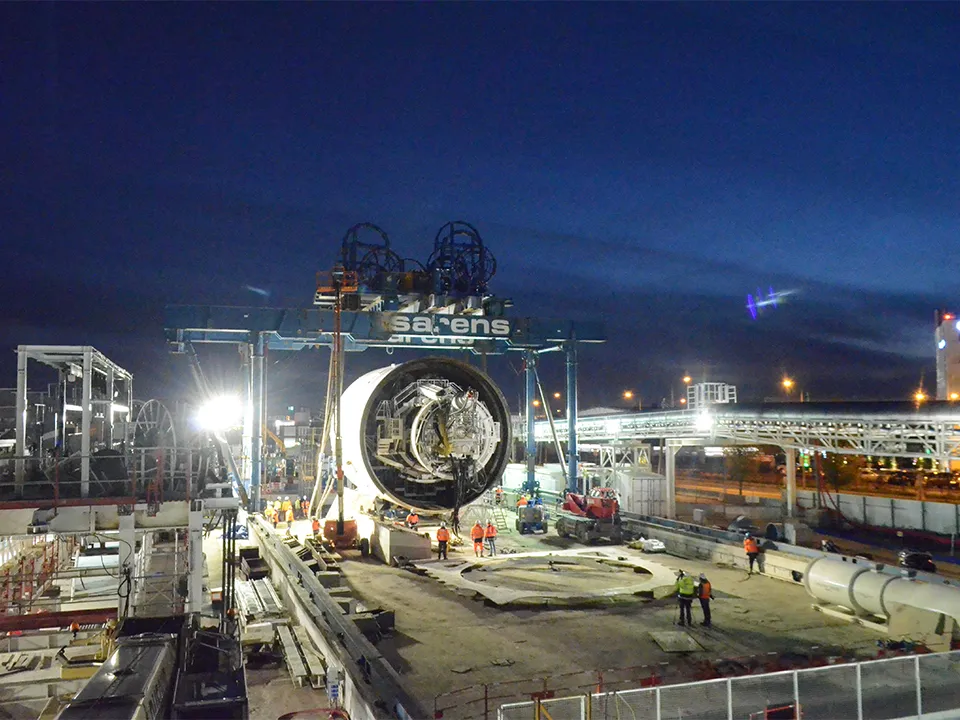
Work is currently under way on a new 150 m-long tunnel beneath the railway tracks at Brussels North station, as part of the future Metro 3.
Sweco Belgium has been involved in delivering the new metro line as lead engineering consultancy within the temporary joint venture (TM) Bureau Métro Nord (BMN) since the large-scale project began in 2009. “It has been a very long journey, but an extremely worthwhile one, and Sweco’s strengths have proved invaluable,” says Pierre Vandenbossche, project manager at Sweco.
The future Metro 3 will provide passengers with a new route across the metro network, linking Bordet and Albert stations in just 20 minutes. The project is led by the STIB and Beliris and is a partnership between the federal state and the Brussels-Capital Region. Its aim is to significantly improve public transport mobility, quality of life and user-friendliness in the capital.
Involved from start to finish
In 2009, Beliris commissioned the temporary joint venture Bureau Métro Nord (BMN) to carry out a feasibility study into extending a highly efficient public transport network to the north of Brussels. The well-known engineering and consultancy firm Sweco is at the helm of the joint venture. The first part of the study, on ‘socio-economic opportunity and strategy’, was completed in 2012. The second part examined the technical and geotechnical feasibility of defining the ideal route for the metro line between North station and Bordet. The third part of the study covered the preliminary design.
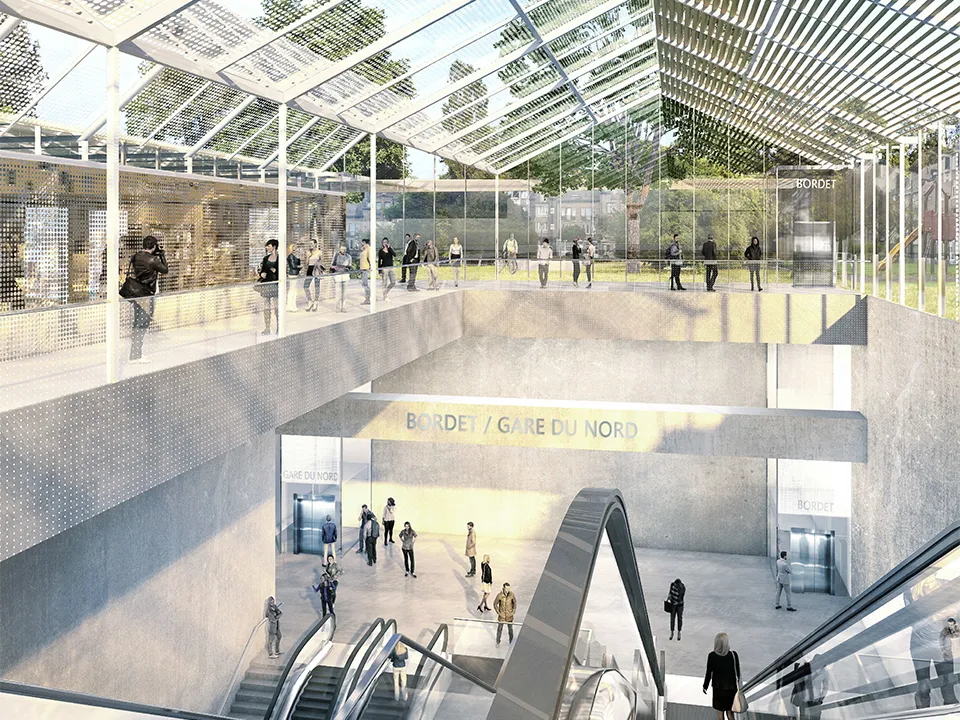
Pierre Vandenbossche: “As the engineering consultancy, we are involved in the project from start to finish. It all begins with a feasibility study. The selected route for Metro 3 has the greatest passenger potential and is also the shortest, and therefore the cheapest, of the three route options studied. It also scores highest in terms of technical feasibility. The new metro line will have 7 stations: Liedts, Collignon, Verboeckhoven, Riga, Linde, Vrede and Bordet. The Brussels government has designated Bordet as the terminus of Metro Nord, while retaining the option to extend the line to Haren at a later stage.”
Close monitoring
As lead engineering consultancy, Sweco keeps a close eye on the project throughout. “A number of things can change or need adjusting over the course of a project that lasts this long,” says Pierre Vandenbossche. “Close monitoring is therefore essential. The project is now entering a new phase with construction of the new tunnel at North station. Collaboration and relations between all the parties involved are very smooth, both technically and organisationally. They are all experienced in projects on this scale. That is one of Sweco’s strengths. We have the expertise, experience, flexibility and capacity to deliver projects of this kind.”
“When it was launched, Metro 3 was the largest metro project to come to market in Belgium in recent decades,” adds Anne-Caroline Kiekens, operational manager at Sweco. “A feasibility study showed that a new metro line was the best solution for a high-performance public transport network towards the north of Brussels. It is a complex project, with many stakeholders and difficult decisions. An environmental impact assessment is also currently under way as part of the permit application. For example, the option of a single tunnel is being assessed against 2 parallel tunnels, and the possibility of improving the design of certain stations is being considered. It takes a great deal of effort to work with all the parties to find the best and right solutions.”

International projects
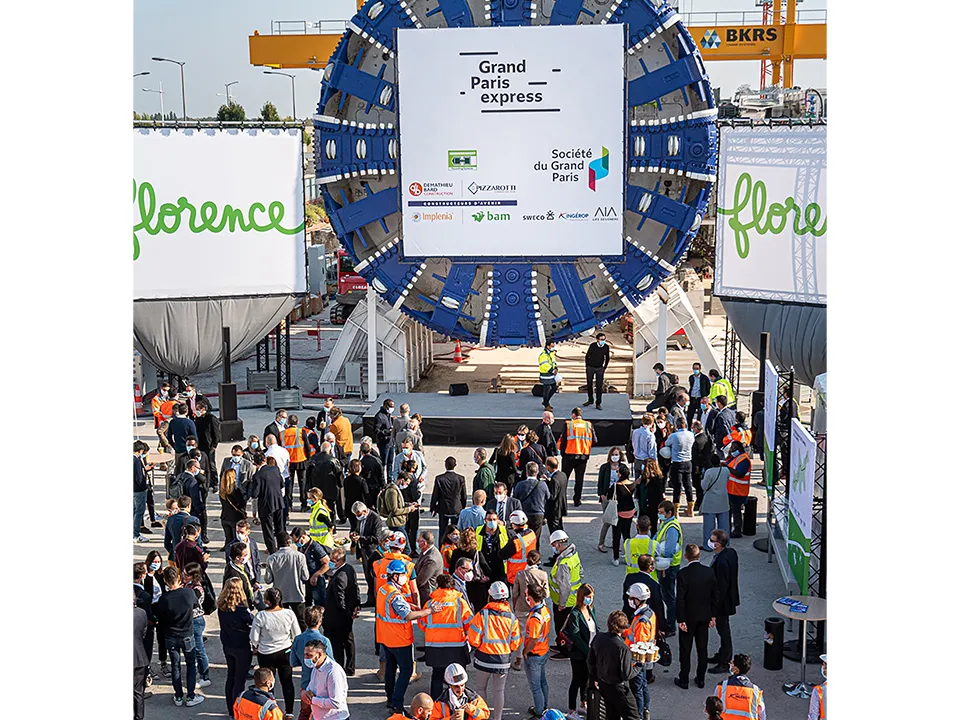
The major Brussels metro project has opened doors for Sweco over the past ten years, and the company is now firmly establishing itself on the international metro market. “A number of projects for the Grand Paris Express came to market in 2014 and 2015. The knowledge we had already gained through the study work for Metro 3 encouraged us to bid for projects in Paris too. Successfully, as Sweco was involved in work on lines 15, 16, 17 and 18. The experience we have gained there is now proving useful in Brussels. Sweco also worked on the metro systems in Amsterdam and Stockholm. We are therefore among Europe’s leading firms in metro studies. Even specific rail-related aspects, such as track construction and power supply, are becoming increasingly familiar to us,” concludes Anne-Caroline Kiekens.
Question about this story? Ask your question
Keep following this
Get an email when a new story is published. No account needed.
- ThemeExtending the life of bridges and tunnels
- SubjectSewerage & underground infrastructure







