









Sewerage & underground infrastructure
Donauduiker bundles drinking water, heat, internet, electricity and gas
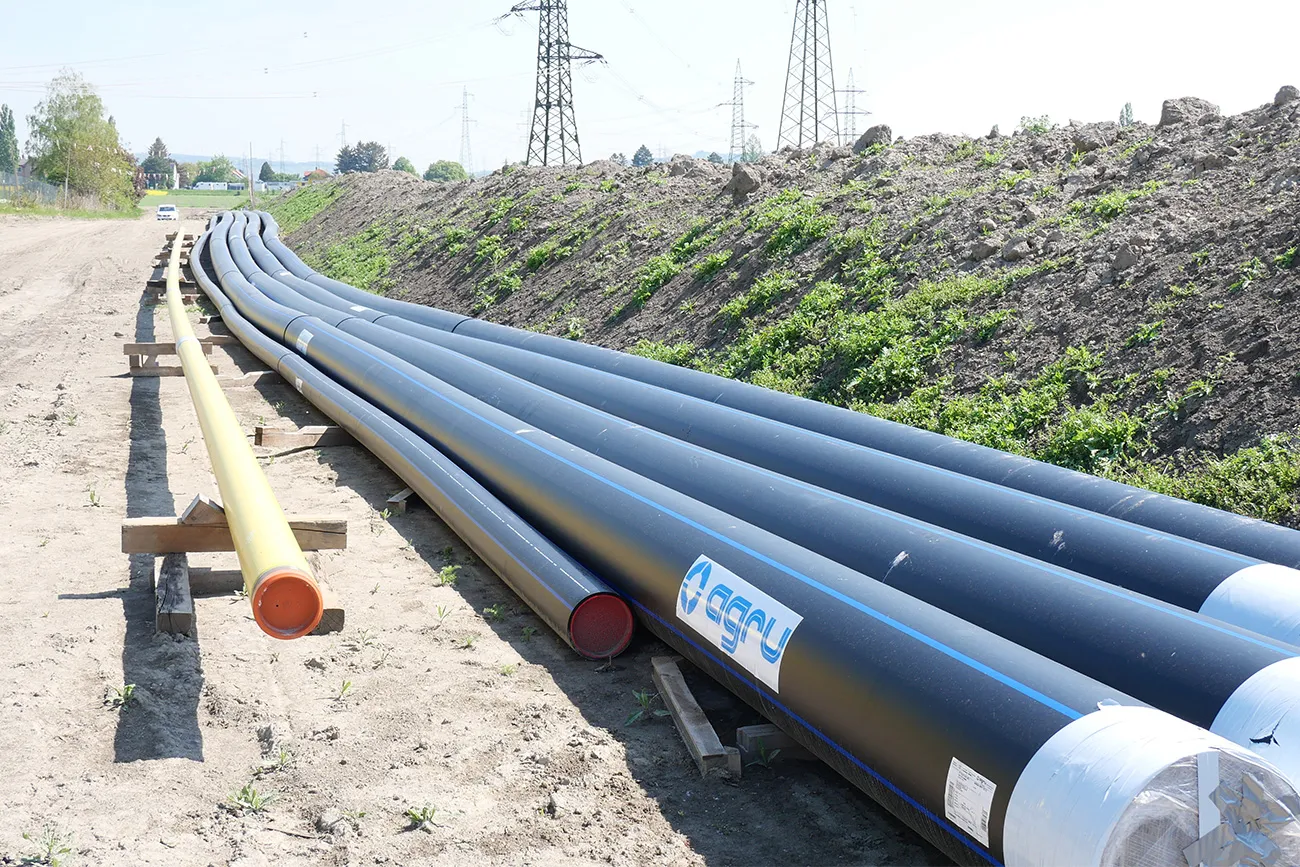
Klosterneuburg and Korneuburg are two municipalities in Lower Austria, directly opposite each other on the banks of the Danube. A microtunnel beneath the riverbed has connected the supply systems of the two municipalities. EVN has invested around 10 million euros in tunnelling beneath the Danube and installing pipelines for drinking water, natural heat, internet, electricity and gas. This is intended to improve security of supply in the region and further promote the expansion of renewable energy supplies.
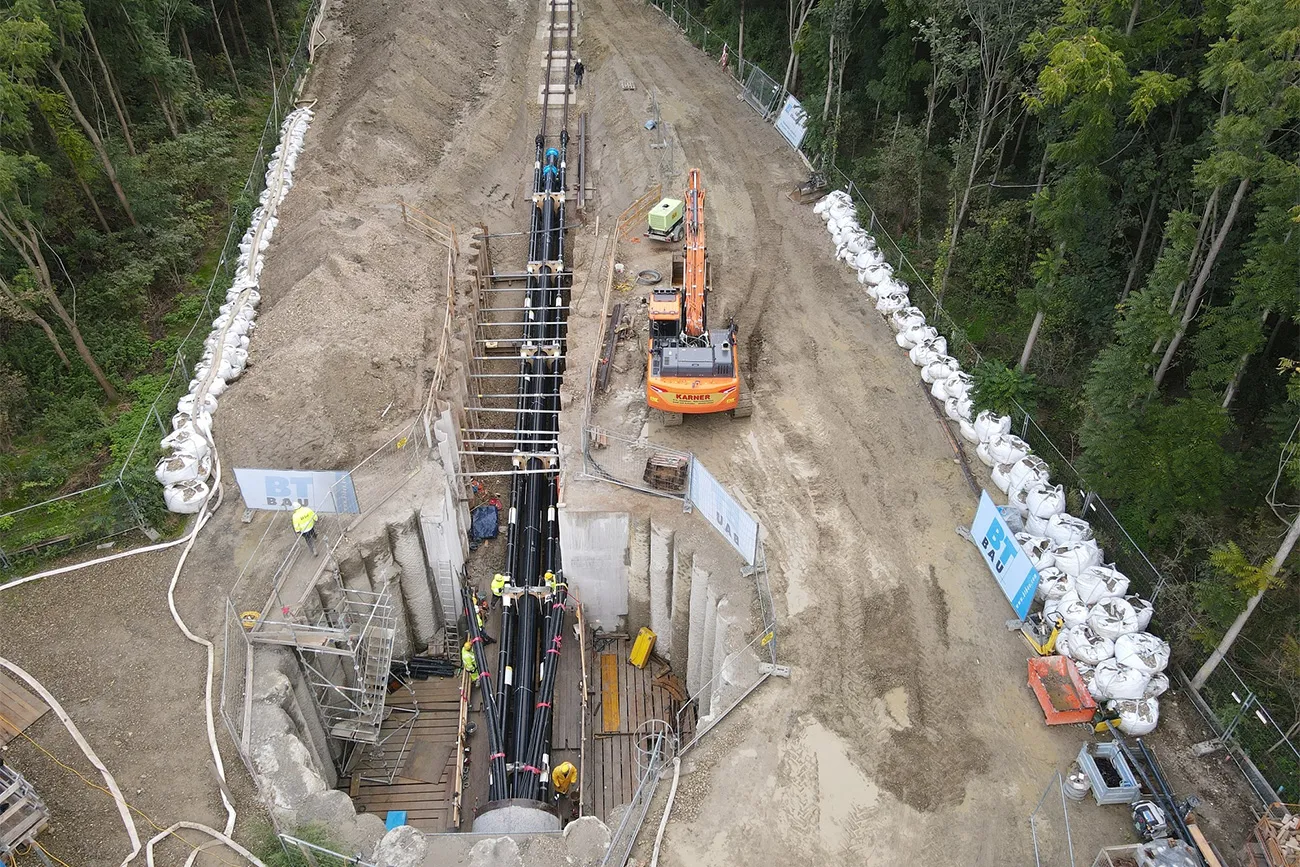
To connect the gas, water and district heating pipelines of the two municipalities, EVN commissioned the construction of a 460 m long microtunnel beneath the Danube, with a diameter of two metres. Built using pipe jacking, the tunnel contains the Korneuburg-Klosterneuburg high-pressure steel natural gas branch and two AGRULINE drinking water pipelines made from high-quality PE 100-RC, with dimensions of da 560 mm SDR 11 and an operating pressure of up to 16 bar. AGRU Kunststofftechnik GmbH supplied more than 1,000 m of PE 100-RC pipes, including fittings. As a precaution, two district heating pipelines and a reserve high-pressure steel gas pipeline were also installed in the Danube tunnel, along with 16 plastic cable protection ducts for electricity and optical fibre. AGRU Kunststofftechnik GmbH supplied a total of 2,880 m of PE 100-RC pipe and fittings in da 160 mm SDR 21 for the cable protection ducts.
Trenchless pipeline construction for infrastructure
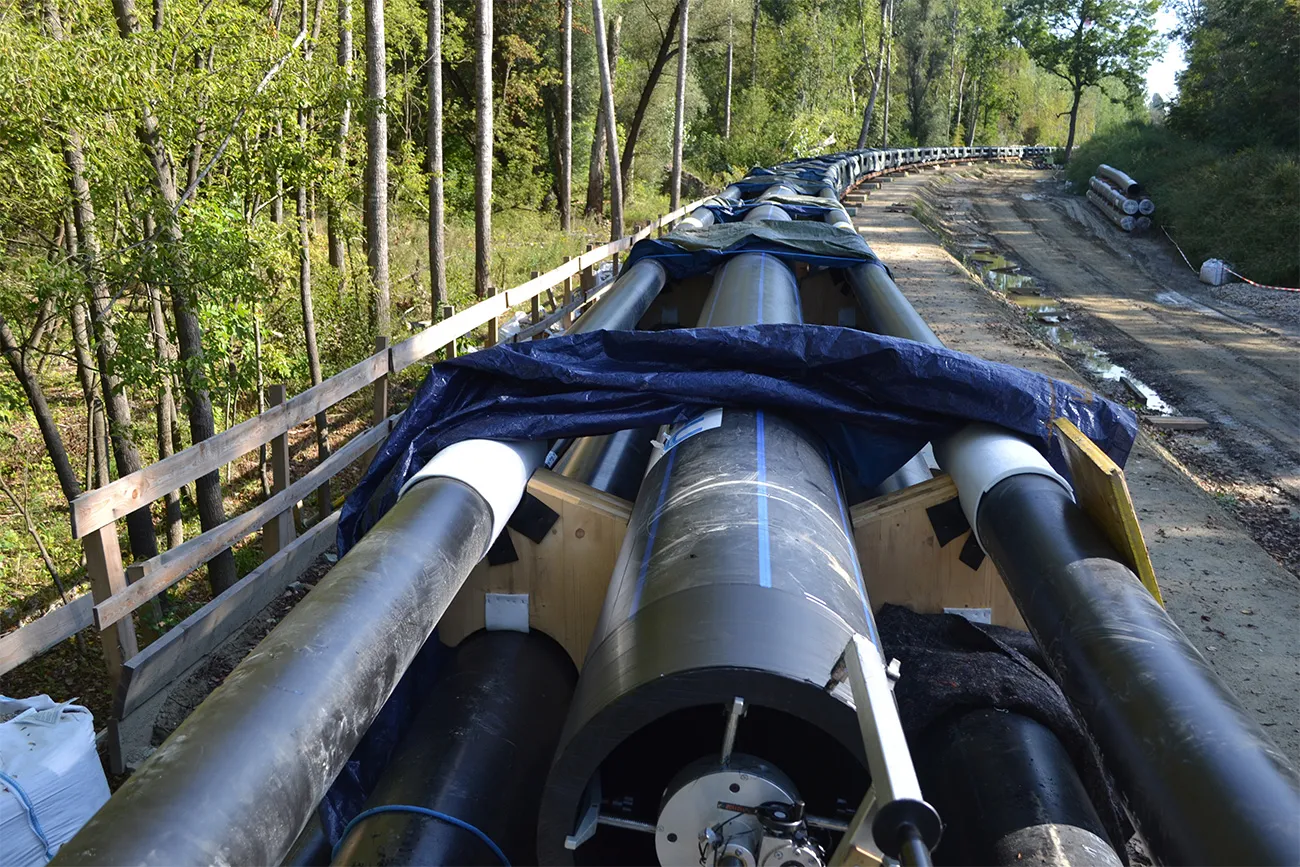
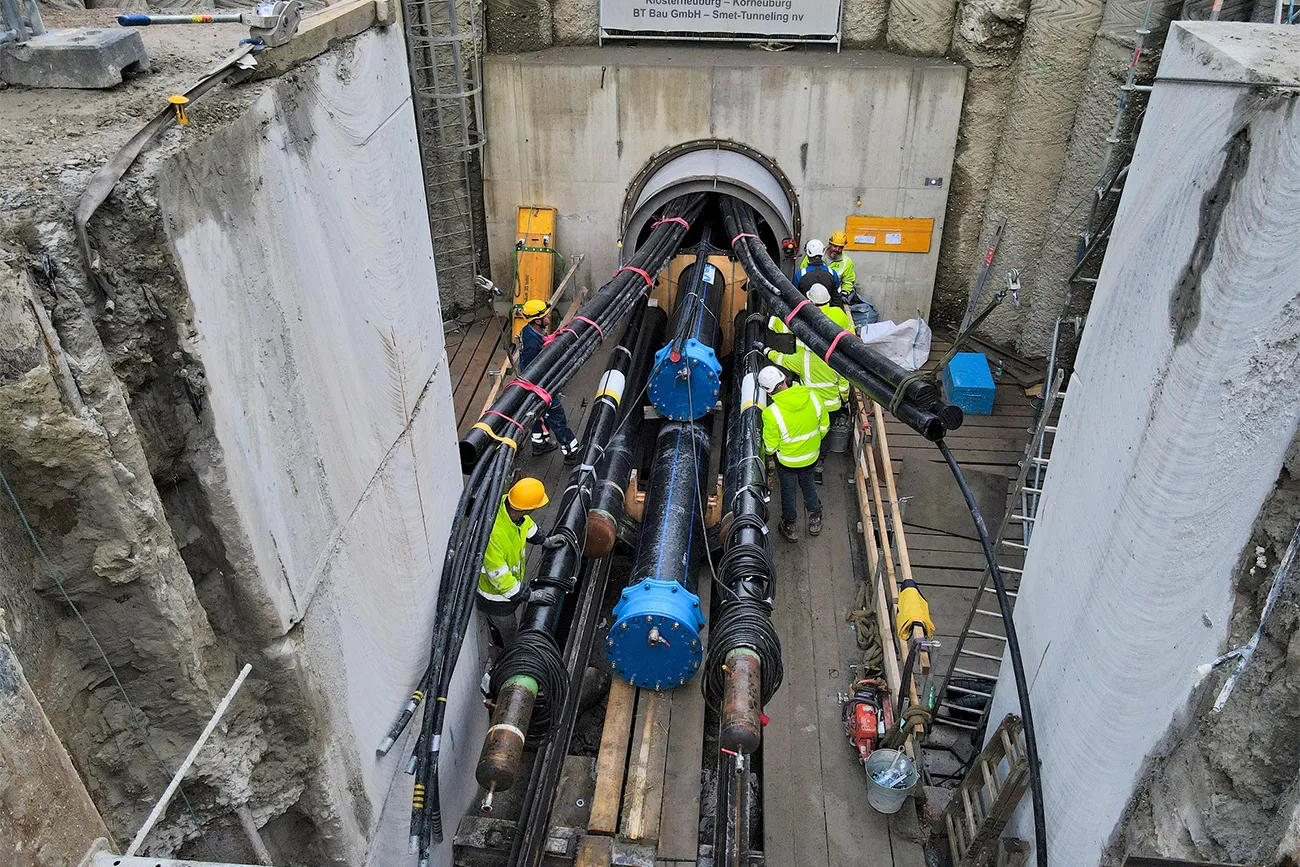
The 460 m long Danube crossing starts on the Klosterneuburg side, at the northern edge of the Rollfährensiedlung, and ends in Tuttendörfl on the Korneuburg side. It was bored using the pipe-jacking method with a 40-tonne boring head and lined with concrete pipes. The tunnel route is not straight, but follows a radius of 1,600 metres. This “banana shape” results in varying cover depths beneath the Danube bed, from approximately 5 m in the bank area to a maximum of 11 m in the middle of the Danube. The trenchless construction method enabled a safe crossing beneath the Danube and efficient installation of the concrete pipe, which has an internal diameter of 2 m. The drinking water, natural heat and internet pipelines were welded, positioned on a sled structure and pulled into the tunnel pipe using a rail system. AGRU supplied PE 100-RC pipe lengths of 18 m in da 560 mm, significantly reducing the amount of welding required. Mechanically manufactured electrofusion couplers were used in the connection zones.
The tunnel was then sealed at both ends, filled with water and the pipelines checked for any defects. “Once the inspection had been completed successfully, the tunnel was filled with a concrete suspension and permanently sealed, with no need for maintenance,” explains EVN company spokesperson Stefan Zach.
District heating and drinking water network
On the Korneuburg side, pipelines were laid from the EVN power plant site and a well field to just short of the Danube bank, and the necessary tunnelling works were carried out beneath the railway line and the A22. An EVN biomass heating plant was added to the Korneuburg thermal power station in 2015. It converts wood chips from the region into sustainably produced, environmentally friendly heat. This is also one of the reasons for building the supply tunnel. EVN spokesperson Stefan Zach says: “The biomass plants on both sides of the Danube can step in for the other plant at any time in the event of a fault or maintenance. Since we also have large well fields and springs on both sides of the Danube, the tunnel makes it possible to connect the drinking water reserves. This could be vital if there is a fault at the well field. Times like these, in particular, show how important regional security of supply is.”
Question about this story? Ask your question
Who worked on it
Donau-doorlaat in Klosterneuburg
- PE 100-RC buizenAGRU Kunststofftechnik GmbH
Keep following this
Get an email when a new story is published. No account needed.
- ProjectDonau-doorlaat
- ThemeRenewing pipelines and sewers
- SubjectSewerage & underground infrastructure
- CompanyAGRU Kunststofftechnik GmbH







