









Sewerage & underground infrastructure
Cost-effective dewatering with waterglass injection gives Beernem sewer project a major boost
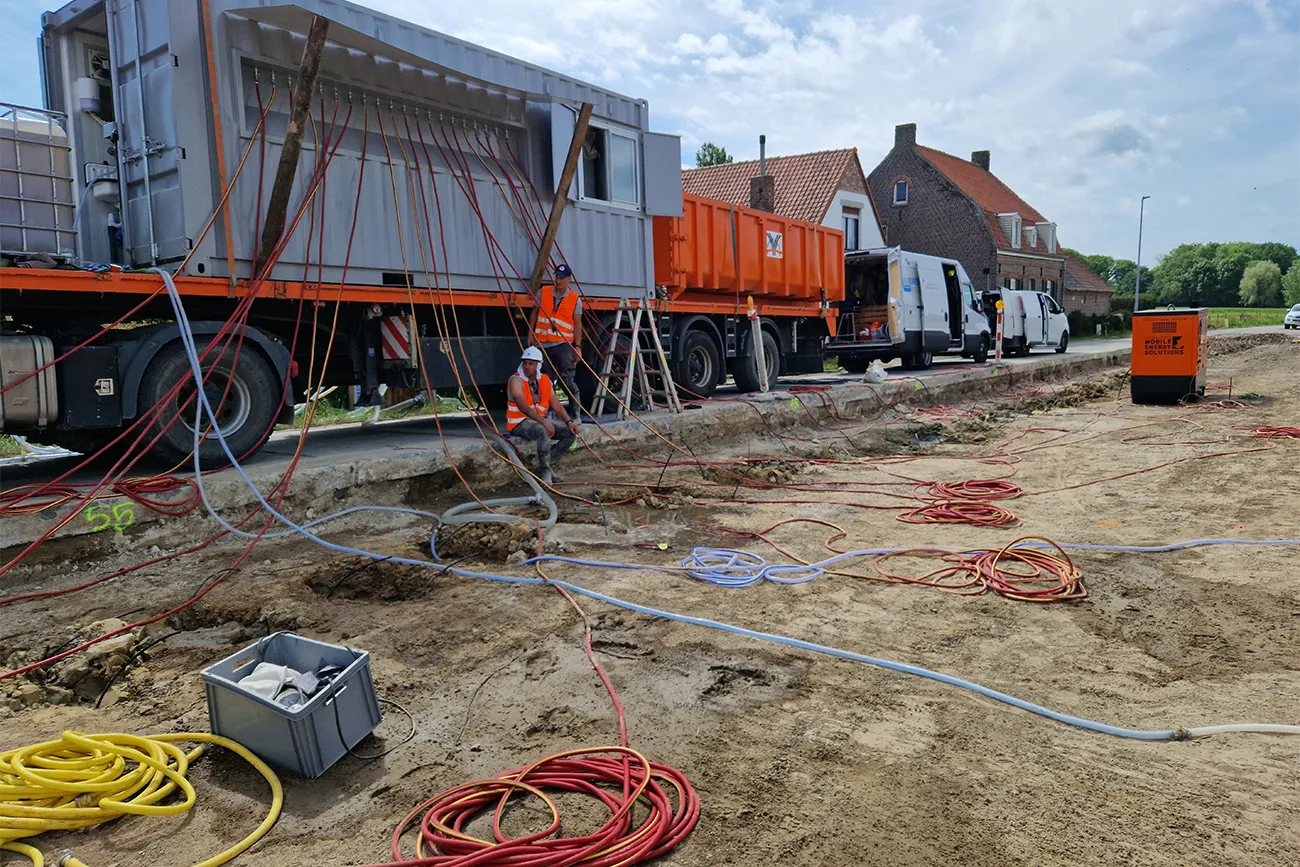
Sewer and roadworks in Beernem are progressing rapidly. The aim of the works is for Aquafin and the municipality of Beernem to connect the wastewater of around 130 residents of Oedelem, which currently flows directly into ditches and the Zuiddambeek, Zoetebeek or Biezemoerbeek, to the sewer network. The works are being carried out by Norré-Behaegel and Aannemingen Vanlerberghe as a temporary joint venture. “We are responsible for all the dewatering, shoring and sewer works,” says Hendrik Vanlerberghe, managing director of Aannemingen Vanlerberghe, based in Diksmuide.
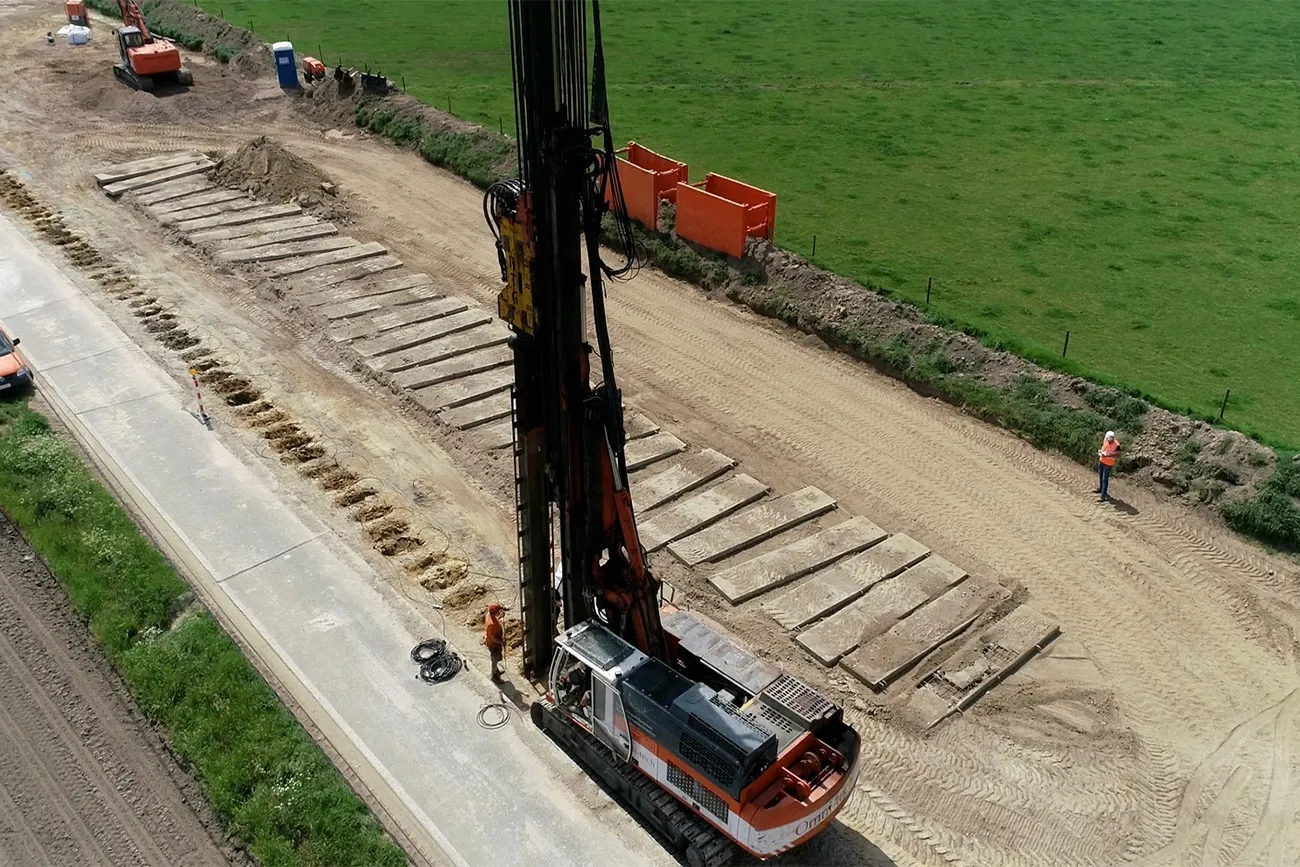
Once the project is complete, the wastewater will be treated at the wastewater treatment plant in Beernem. To deliver the project, Aquafin and the municipality of Beernem will install a separate sewer system, collecting wastewater separately from rainwater. The wastewater will ultimately be treated at the wastewater treatment plant in Beernem. Clean rainwater will be discharged into existing ditches, which in turn drain into nearby watercourses. The Province of West Flanders has also joined the project to further develop the interregional cycling network. A cycle path will be built along Scherpestraat and Beernemstraat, between the roundabout in Beernem and the built-up area of Oedelem. The cycle path is being built as part of the Fietsfonds.
Before work began, Aquafin reached agreements with utility companies, giving them the opportunity to renew utility lines such as telephone, internet, water, gas and electricity. Once the utility companies had finished their work, the contractors moved on site. Work started in February 2022, is scheduled to take a total of 25 months and is being carried out in phases. “Vanlerberghe is responsible for all underground sewer works, while Norré-Behaegel is focusing on the works above ground, namely the roadworks and cycle path,” explains Hendrik Vanlerberghe.
Cost-effective solution
The sewer works, and dewatering in particular, presented Aannemingen Vanlerberghe with an interesting challenge. Hendrik Vanlerberghe explains: “To limit the impact of dewatering on the surrounding area due to the presence of peat layers, the specification called for water-retaining barriers either down to the clay layer at a depth of 12 m, or to a depth of 8 m, with the ground between the two barriers to be sealed by grouting. Since the clay layer was deeper in some places and a water-retaining barrier would have been too costly, we decided to install barriers to a depth of 8 m along the entire route, on both sides of the trench, and seal the ground between them using waterglass injection. This enabled us to create a watertight enclosure in a considerably shorter time.”
Waterglass injection
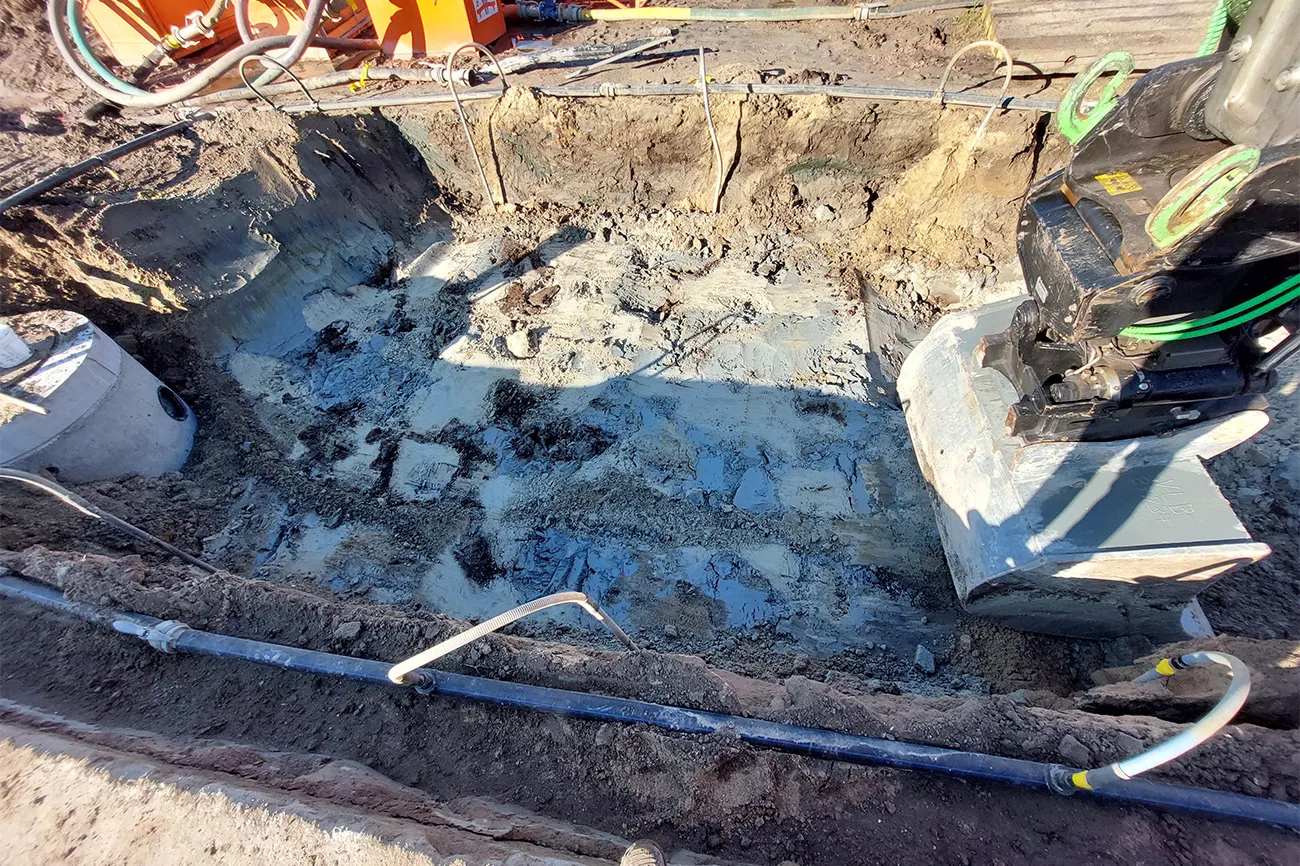
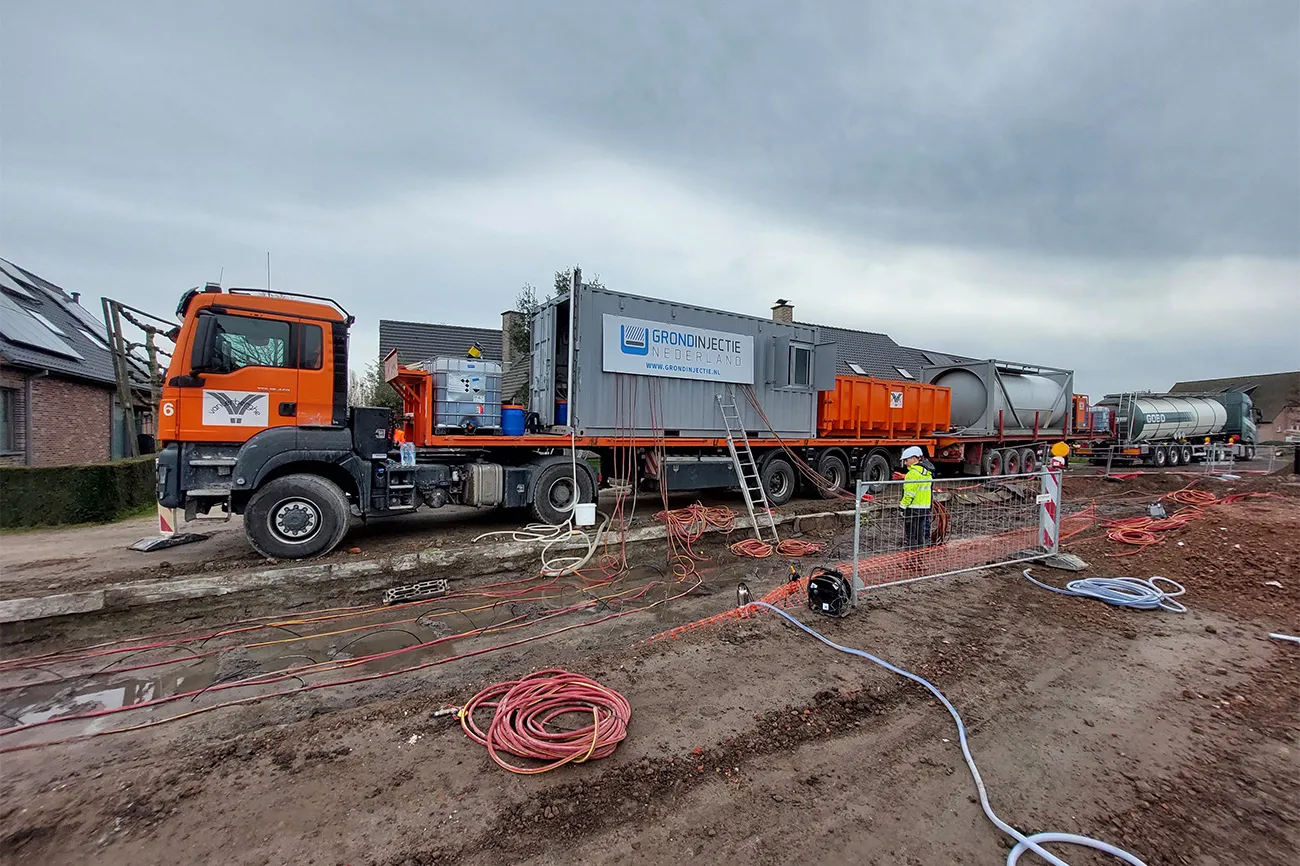
Waterglass injection is a form of horizontal ground sealing in which a fluid, a mixture of waterglass, water and a hardener, is injected into the pores between soil particles, creating a water-retaining layer in the ground beneath an excavation. “Waterglass injection is a specialist technique that is becoming increasingly popular. We contacted several companies and ultimately chose Grondinjectie Nederland BV, while geotechnical consultancy Doorgrond BV prepared the necessary calculations. Waterglass injection is not suitable for all ground conditions. Clay and loam, for example, are unsuitable because of their fine-grained structure. The coarse-grained sandy soil above the clay layer in Beernem, by contrast, is suitable. Importantly, the injected gel is soluble and will eventually disappear, allowing the groundwater flow to recover. The specification called for a water-retaining barrier to a depth of -12 m, but we opted for one at -8 m, combined with waterglass injection. This is clearly a more economical solution.”
Dewatering as a service
Using waterglass injection is a first for Aannemingen Vanlerberghe. “And it has certainly been a success. The first phase has now been completed and phase two is currently under way. We carry out all the dewatering ourselves. For the shoring and soil mix wall, we rely on the expertise of Omni-Tech, Aannemingen Vanlerberghe’s sister company. Omni-Tech also installed the injection pipes for the waterglass injection. So we provide end-to-end dewatering on our own sites, but in future we also want to offer this service to third parties, providing watertight walls, floors and dewatering as a single package,” concludes Hendrik Vanlerberghe.
Question about this story? Ask your question
Keep following this
Get an email when a new story is published. No account needed.
- ThemeRenewing pipelines and sewers
- SubjectSewerage & underground infrastructure







