









Sewerage & underground infrastructure
Confined spaces, everywhere and nowhere!
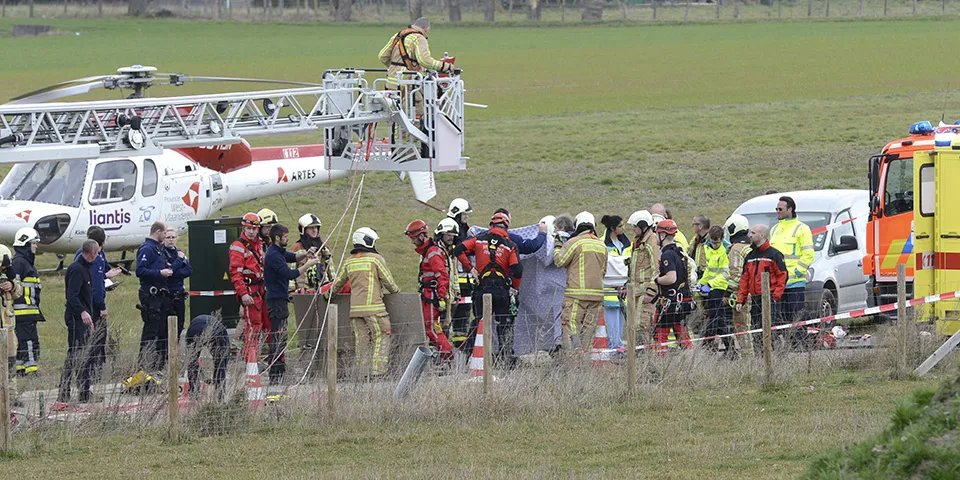
Worksite conditions are, by definition, highly changeable. Safety risks, whether or not caused by interactions between different activities, can vary considerably over the course of the work. Well-known safety risks when laying, renewing and/or renovating sewers include working in trenches and pits, biological agents (present in contaminated soil and wastewater), chemical agents, utility lines, construction machinery, traffic … Much less well known is the risk posed by confined spaces. This is a term more commonly associated with storage tanks and installations in the chemical industry. But confined spaces on construction sites? Surely not!
One further difficulty in raising awareness of confined spaces on construction sites and/or identifying them is that legislation provides no definition of a confined space. The ARAB does, however, give examples of confined spaces (Art. 53). These include wells, rainwater tanks, pits, collection tanks, vats, underground inspection chambers, fermentation rooms, sewers, gas pipes, flues and other similar places.
To arrive at a workable definition, the Vlario Safety Working Group consulted and discussed various reference works. Two risk areas were identified as key: risks associated with confinement (difficult access/evacuation) and atmospheric risks (H2S, utility lines, for example gas, soil contamination, chemicals, oxidation processes…). A confined space is a space that is not suitable for prolonged occupancy, is enclosed (with a narrow entrance and/or difficult evacuation) and has, or may have, a hazardous atmosphere (whether or not due to inadequate ventilation). Not all these factors need to be present at the same time for a space to be considered confined. The emphasis is on the word “or” (see also Figure 1, decision tree).
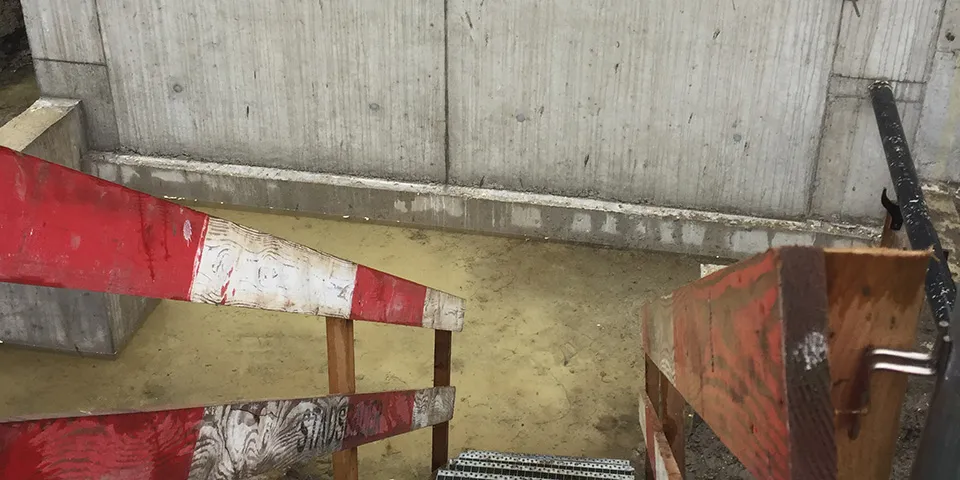
Providing proper access (stairs/stair tower) rather than a ladder can make a big difference. (Image: RD)
Checklist
To help contractors assess the risks of confined spaces in practice, Vlario has developed a checklist. Its primary aim is to raise awareness of confined spaces, from the design stage through to execution. The checklist is intended mainly to support the following professionals: the supervising engineer, site inspector, site manager, project manager, safety coordinator and prevention adviser. Completing the checklist is not specialist work, however. A few simple steps lead to a conclusion indicating whether a space is confined and what risks may be present. It is best completed collaboratively. Appropriate preventive measures can then be implemented.
Appropriate measures
Using the checklist will raise safety awareness and help ensure appropriate measures are taken to prevent accidents. Examples of appropriate measures include providing suitable training and toolbox talks, and supplying the necessary protective and evacuation equipment: gas detectors, escape masks, tripods with fall-arrest blocks and rescue winches, fall-arrest harnesses… Organisational measures are also important, including timely work preparation that focuses not only on technical aspects but also on safety risks and preventive measures.
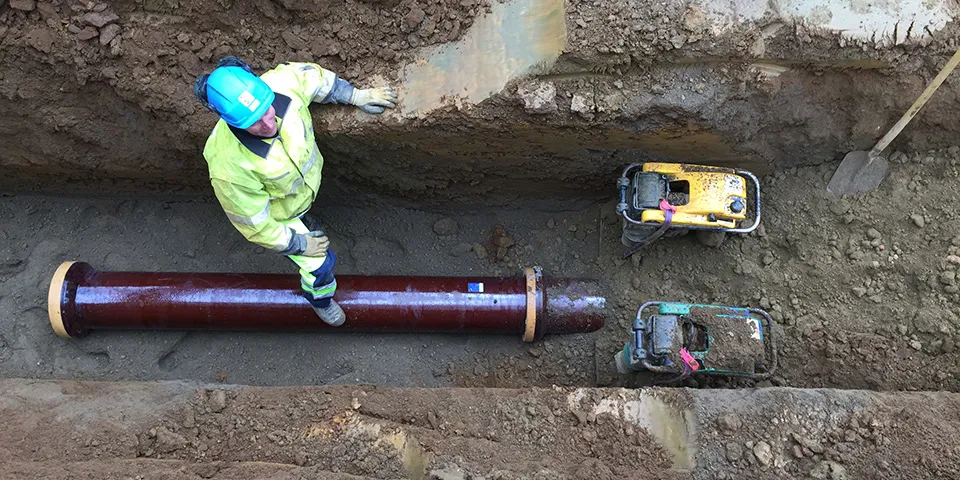
Working in deep trenches with combustion engines can create atmospheric risks, in addition to other risks associated with confinement due to soil collapse or shifting. (Image: RD)
Eliminating confinement
The best approach is still to tackle and/or eliminate risks at source. Vlario therefore advocates assessing whether confinement can be eliminated. Because construction sites involve temporary and changing working conditions, consideration should be given to eliminating confinement. At operational installations that have been commissioned, confinement is more likely to be a fixed feature.
The Vlario Safety Working Group believes this approach strikes the right balance between, on the one hand, the seriousness with which the concept of a confined space is generally treated and, on the other, a pragmatic approach to risks that takes account of the dynamic and changing nature of worksite conditions. It deliberately chose not to use different terms and/or levels of confined space. This avoids confusion over terminology and a scaling back of preventive measures.
Question about this story? Ask your question
Keep following this
Get an email when a new story is published. No account needed.
- ThemeRenewing pipelines and sewers
- SubjectSewerage & underground infrastructure







