









Sewerage & underground infrastructure
A valuable ecosystem thanks to a bespoke clean-water solution
Text Niels Rouvrois Beeld Deschacht / Aclagro
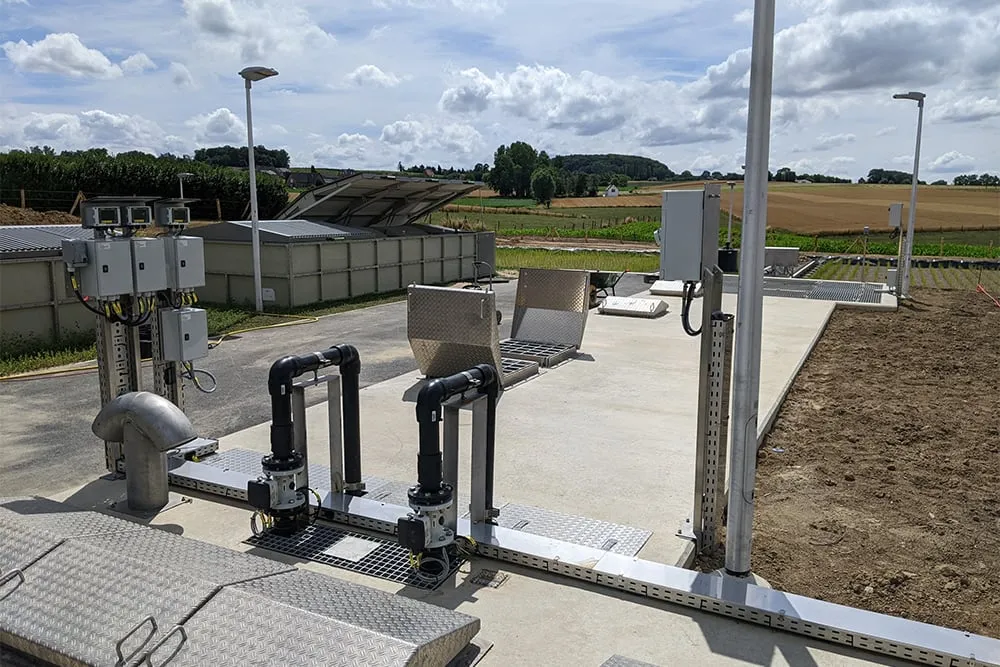
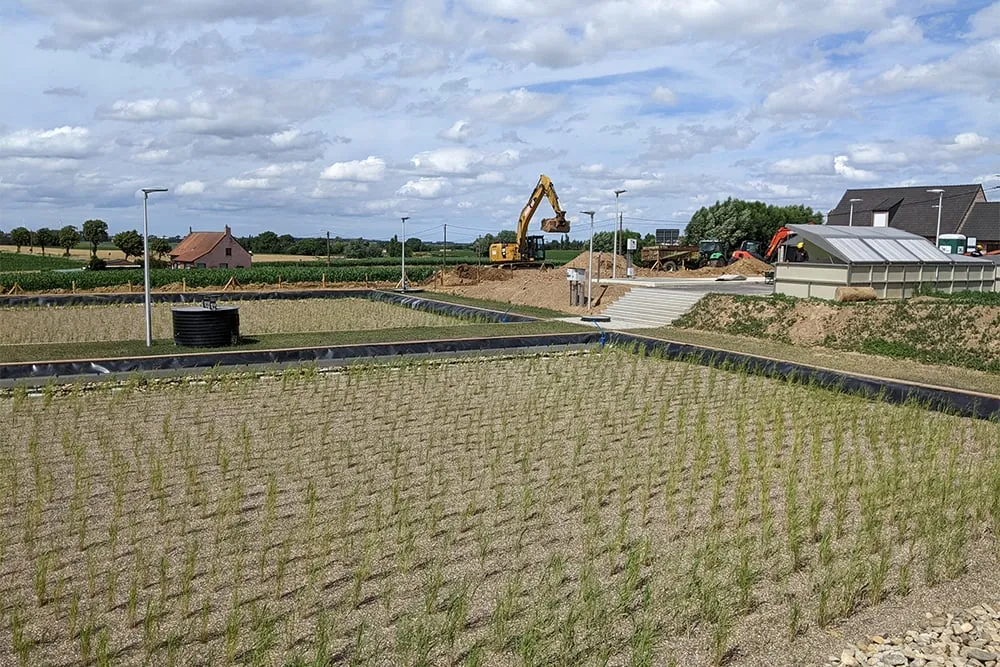
Over the past few months, Aclagro has built a small-scale wastewater treatment plant (KWZI) on the Klijtebeek in Heuvelland, West Flanders, on behalf of Aquafin. The contractor worked with Collinet’s experts on the project. It will allow the Klijte’s ecosystem to recover, while wastewater from local residents and the surrounding area is treated at a brand-new plant. “A particularly valuable green-blue project, characterised by excellent cooperation between all parties,” says Kevin Krikilion, director at Aclagro.
Patricia Bauwens, Head of Business Office at Aclagro, explains how the collaboration worked in practice. “This KWZI project supports the local authority’s and Aquafin’s objective of improving water quality in the Klijtebeek. To ensure the treatment plant operates optimally, the Flemish Environment Agency instructed Heuvelland municipality to disconnect as much rainwater as possible from the sewer pipes in the village centre and discharge it locally into the same Klijtebeek.” A separate sewer system was also installed in Westerse Klijtestraat, with wastewater and rainwater collected separately and rainwater from Dikkebusstraat discharged into the stream. Wastewater is pumped back towards Dikkebusstraat.
“The contract combined civil engineering works, infrastructure works and engineering services,” says Kevin Krikilion. “The civil engineering works included constructing several concrete tanks, some of them underground. The infrastructure works comprised a few small paved areas and sewer installation, including custom-made chambers supplied by Deschacht. The final part involved the electromechanical and electrical systems needed to bring the wastewater treatment plant into operation. The aim is eventually to serve 800 residents and treat their wastewater, so that it no longer flows untreated into the Klijtebeek. This will also allow the ecosystem to recover.”
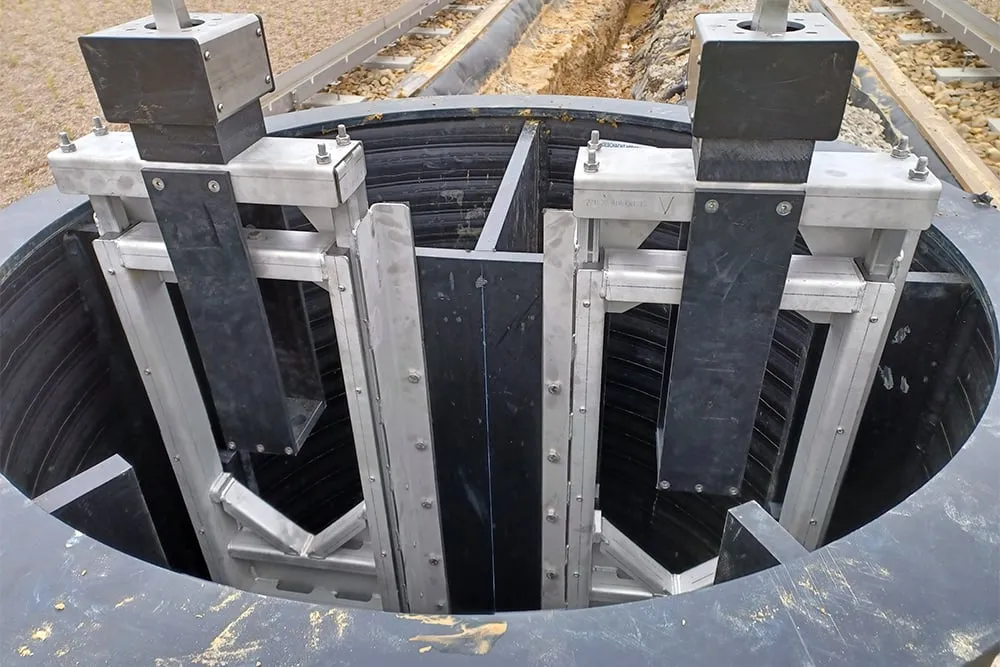
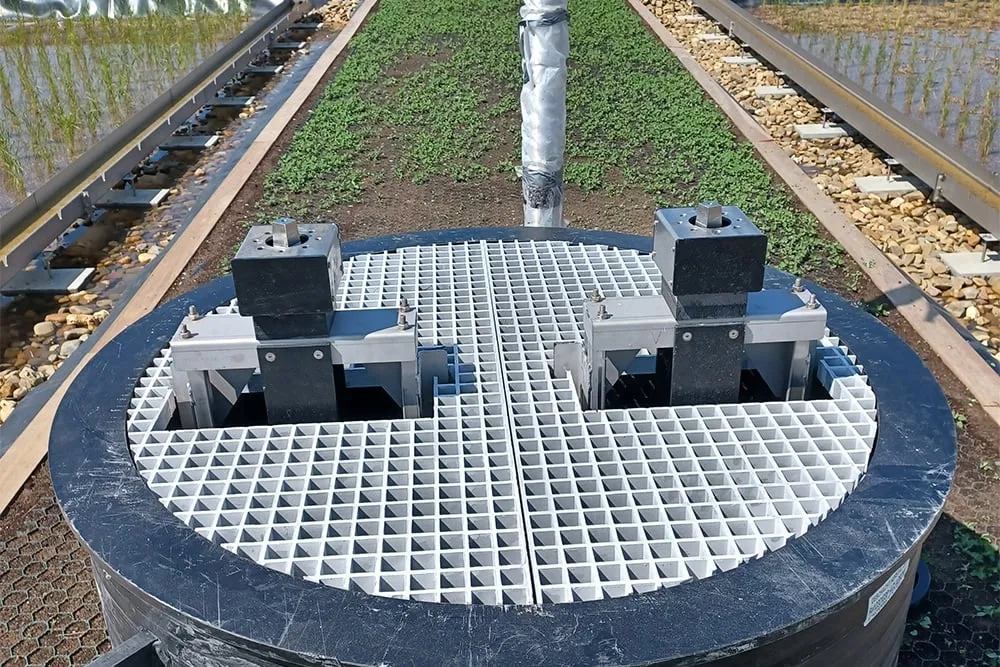
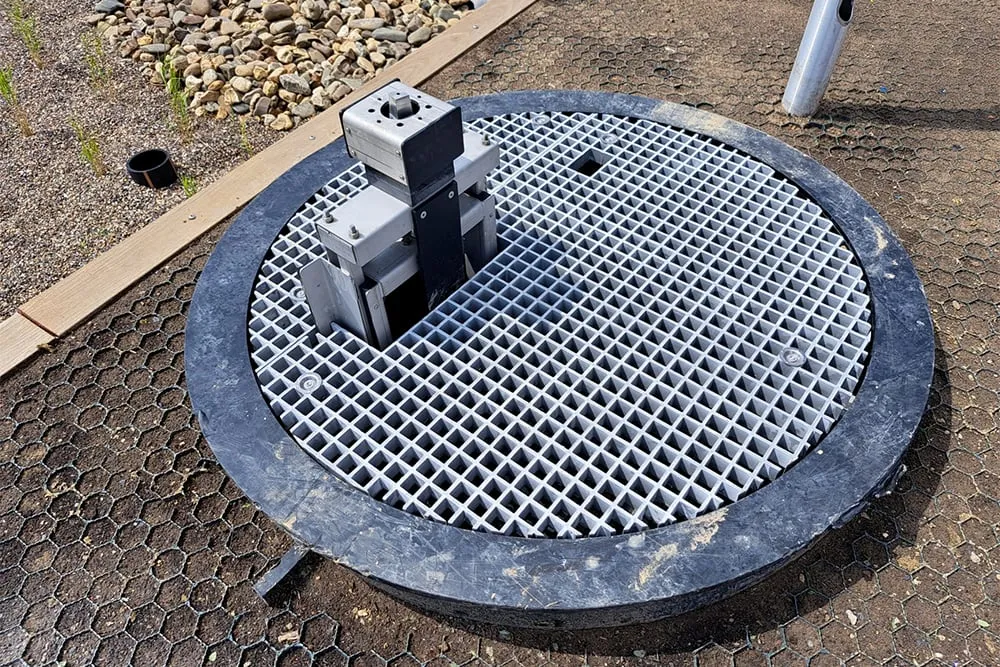
Aclagro called on Collinet’s expertise to prepare and develop the project. Patricia Bauwens says: “Their team prepared the construction drawings and manufactured six HDPE chambers, three of which were made from double-wall pipes with a diameter of 1,500 millimetres. We also relied on Collinet to install the overflow gates and penstocks in the chambers, and to fit glass-fibre-reinforced grating, including the required supports.”
Plug & play
Kristel Vanmolle, Sales Engineer at Collinet, explains the advantages of these chambers. “One of their strengths is how easily various accessories, such as penstocks, overflow gates and valves, can be installed in the chambers. They can be operated either manually or electrically. They are also easy to access for maintenance and inspection. ′
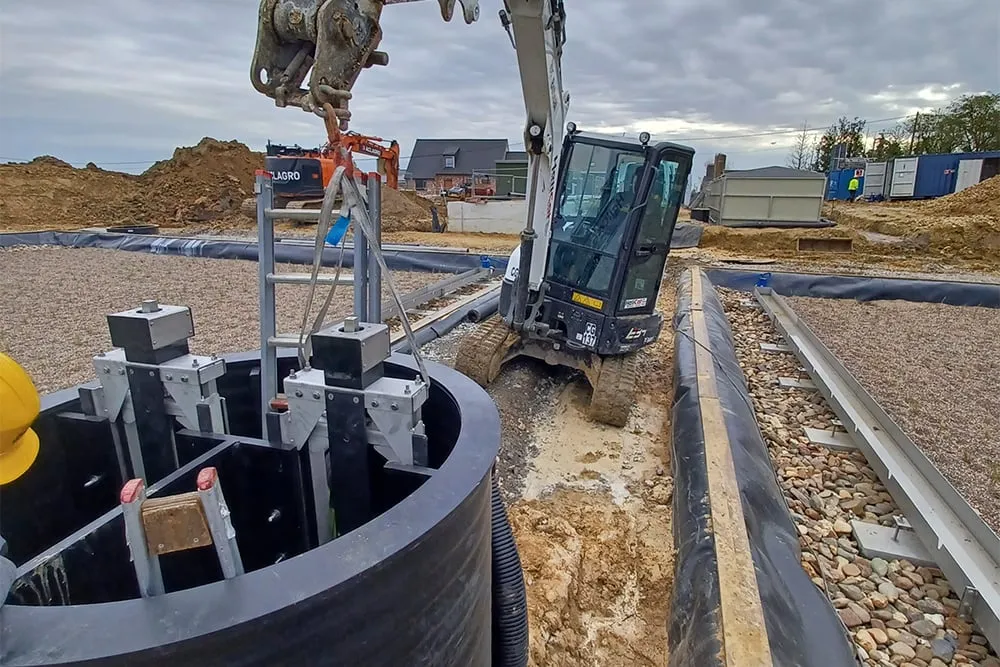
As the supplier, we were also able to prepare the chambers in our workshop and deliver them to site ready to plug and play. Their lightweight HDPE construction enabled us to ensure quick installation, working with Aclagro.”
“During the project preparation, we decided to have the chambers prefabricated,” explains Kevin Krikilion. “And not just the chambers, but some of the valves and gates too. Collinet manufactured and assembled everything in advance, which brought considerable benefits on site in terms of safety and ease of installation. The product arrived on site ready to go and only needed to be connected to the sewer. This is a particularly significant project for Aclagro, as it is the first time we have delivered the combination of civil engineering and infrastructure works together with the associated engineering systems entirely in-house, from start to finish, for a public-sector client.”
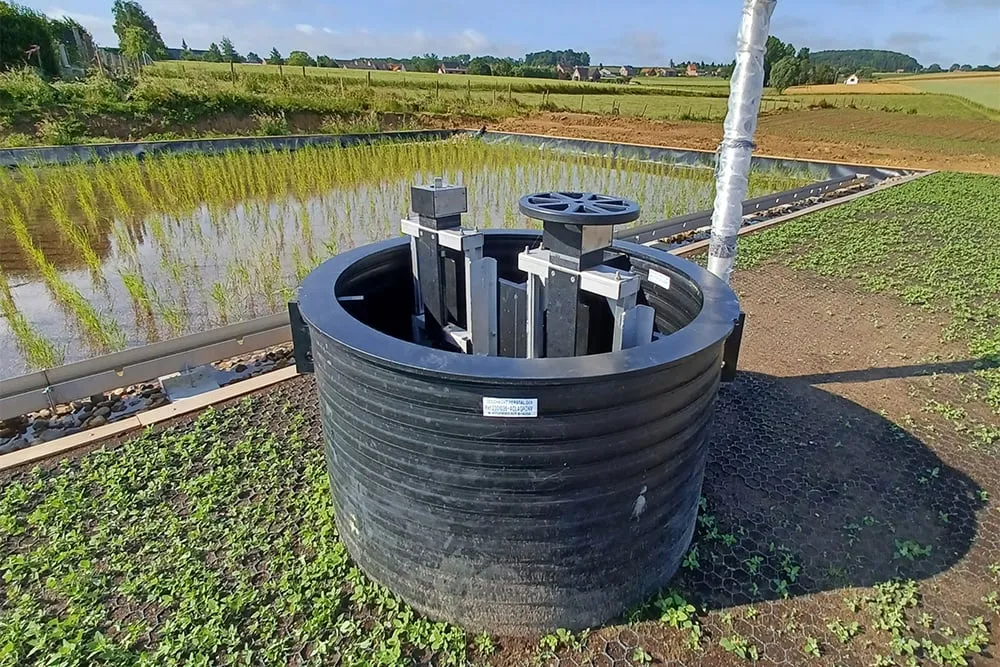
Overflow gates and penstocks
Patricia Bauwens confirms that the overflow gates and penstocks will soon prove their worth: “When flows are higher, the overflow gates divert some of the wastewater directly to the reed beds. The client can set the desired level with a simple turn of the handle, allowing excess water to flow over the gate plate. Penstocks are used to temporarily stop or allow the flow of (waste)water.”
Deadline met
The project began in August 2022 and was completed on schedule. “The chambers were finished on site at the end of April 2023, with glass-fibre-reinforced grating installed on top,” says Kristel Vanmolle. “The works were therefore completed comfortably before the 2023 construction holiday. This was in part thanks to the excellent collaboration between the teams at Collinet and Aclagro and the entire project team, including engineering consultancy Antea, client Aquafin and site supervision by Arcadis.” ′
Kevin Krikilion wholeheartedly agrees: “I talk about two ecosystems in this project. One is the wastewater treatment plant. The other was a constant throughout the construction process: a team-focused ecosystem involving all the different partners in the project team. The result is a reliable, high-quality and safe plant that will support sustainable life. The excellent collaboration is a model partnership that other projects should aspire to. For Aclagro, this was also a valuable learning experience in green-blue projects, an area we want to pursue further in future. Although it was outside our comfort zone, we managed to complete the project on time without compromising on quality or safety.”
Question about this story? Ask your question
Companies in this story
Keep following this
Get an email when a new story is published. No account needed.
- ThemeRenewing pipelines and sewers
- SubjectSewerage & underground infrastructure
- CompanyDeschacht







