









Sewerage & underground infrastructure
A sewer inventory prevents the public from paying twice for sewerage
Every year, hundreds of sewer collapses occur on public roads in Flanders. Repairing the damage can cost a city or municipality up to 100,000 euros, according to estimates by Vlario. Total repair costs therefore run into the millions each year. A comprehensive, up-to-date sewer inventory is a crucial tool for avoiding costs of this kind.
The need is clear: sewer infrastructure is currently worth a total of 70 billion euros, yet less is known about it than about any other asset of comparable value. That is why Flemish Environment Minister Zuhal Demir has given every municipality until the end of 2022 to compile a sewer inventory and a corresponding inspection plan. The first milestone was reached last month: 90% of municipalities have completed a comprehensive sewer inventory.
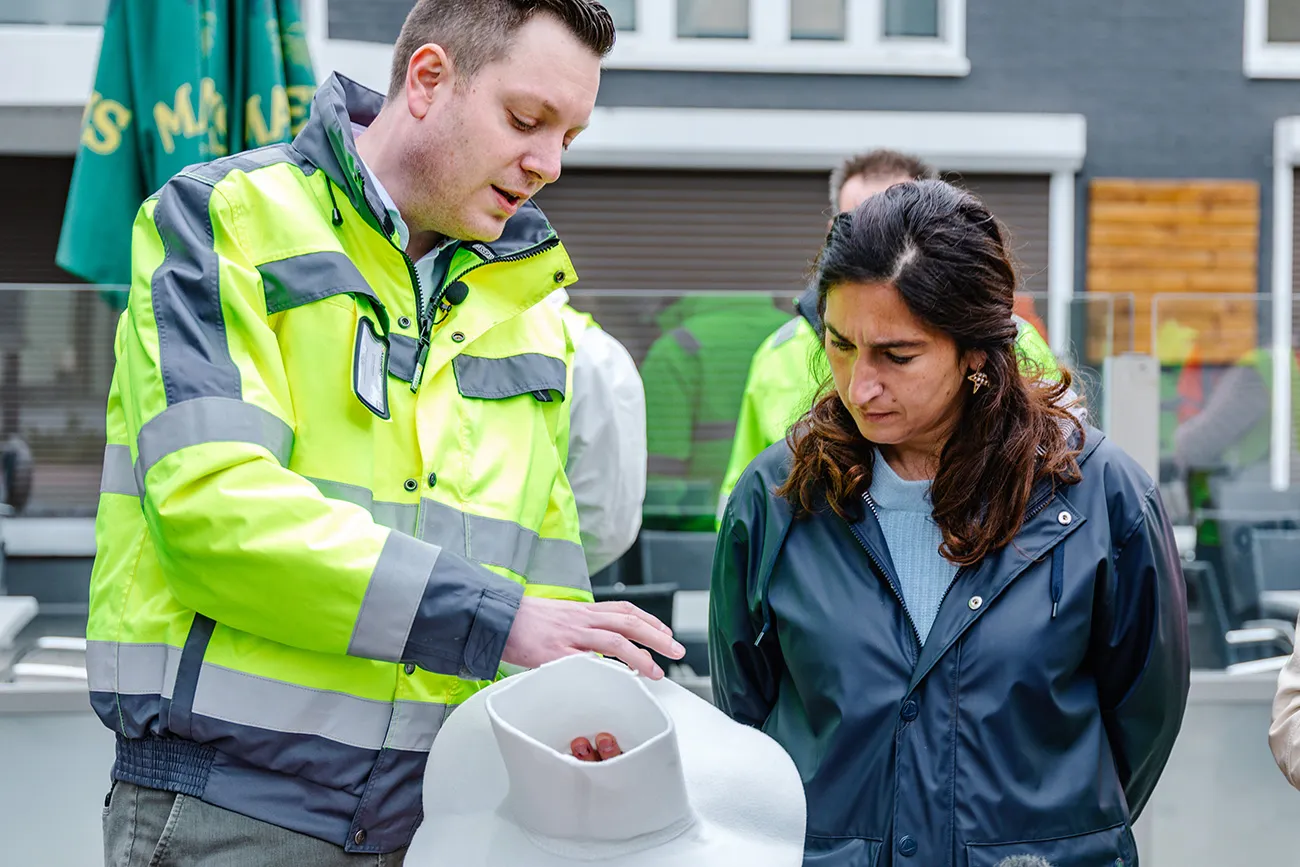
In Houthalen-Helchteren, Minister Demir demonstrates what must become standard practice from 2023: carry out regular inspections and renovate where necessary to prevent substantial additional costs. “Sewer infrastructure is currently worth a total of 70 billion euros, yet less is known about it than about any other asset of comparable value. Only by establishing a complete picture of exactly where sewers are located and what condition they are in can we carry out efficient repairs and make targeted investments,” says Flemish Environment Minister Zuhal Demir.

“Crisis management still takes too large a bite out of the budget that should be spent on extending the sewer network. Regular inspections and targeted maintenance are the answer. We cannot spend billions underground and then never look at it again. This approach also benefits residents: every euro can only be spent once. It is therefore in their interests for local authorities to avoid huge unforeseen costs, so that other investments do not suddenly have to be postponed.”
Action in return for subsidies
Around 10 municipalities have yet to complete their sewer inventory. They will need to take the necessary steps if they are to remain eligible for subsidies for sewer construction and maintenance in future. The minister will raise this with them. Municipalities that have taken the necessary steps get a good mark, but that does not mean their work is done.
The next milestone falls at the end of 2022: by then, risk points in the sewer network must also have been identified, and an inspection plan covering the period up to 2027 must be ready. The plan must be put into practice from 2023. Carrying out inspections in line with this plan costs the average municipality 160,000 euros. That sum is immediately recouped if even one serious collapse is prevented. “Repairing a broken pipe costs up to twenty times more than a planned renovation,” says Wendy Francken, director of VLARIO. “These unexpected repair costs put a heavy strain on a municipality’s budget, but neglecting maintenance can also come back to haunt you in other ways. As well as reputational damage, there are increasingly legal or insurance-related consequences. Insurance companies no longer simply accept ‘we didn’t know’ when an incident occurs that could have been prevented.”
Good asset management
“Good asset management is essential,” agrees Ingeborg Barrez of VMM. “The Flemish Environment Agency gives sewer managers the opportunity, through the sewer inventory, to build a picture of their sewer infrastructure, its condition and the risks it faces. The inventory makes it possible to present inspection results clearly and thus maintain the quality of our networks cost-effectively. A healthy sewer network makes an important contribution to the health of our waterways.”
Coordination across the sector
“Meeting this requirement will create an additional annual need for 30 specialist technicians to assess the condition of these sewers,” explains Wendy Francken. Any defects identified can then be addressed in good time. VLARIO, in collaboration with the Confederation of Construction, offers specialist training for the role of underground structures technician.
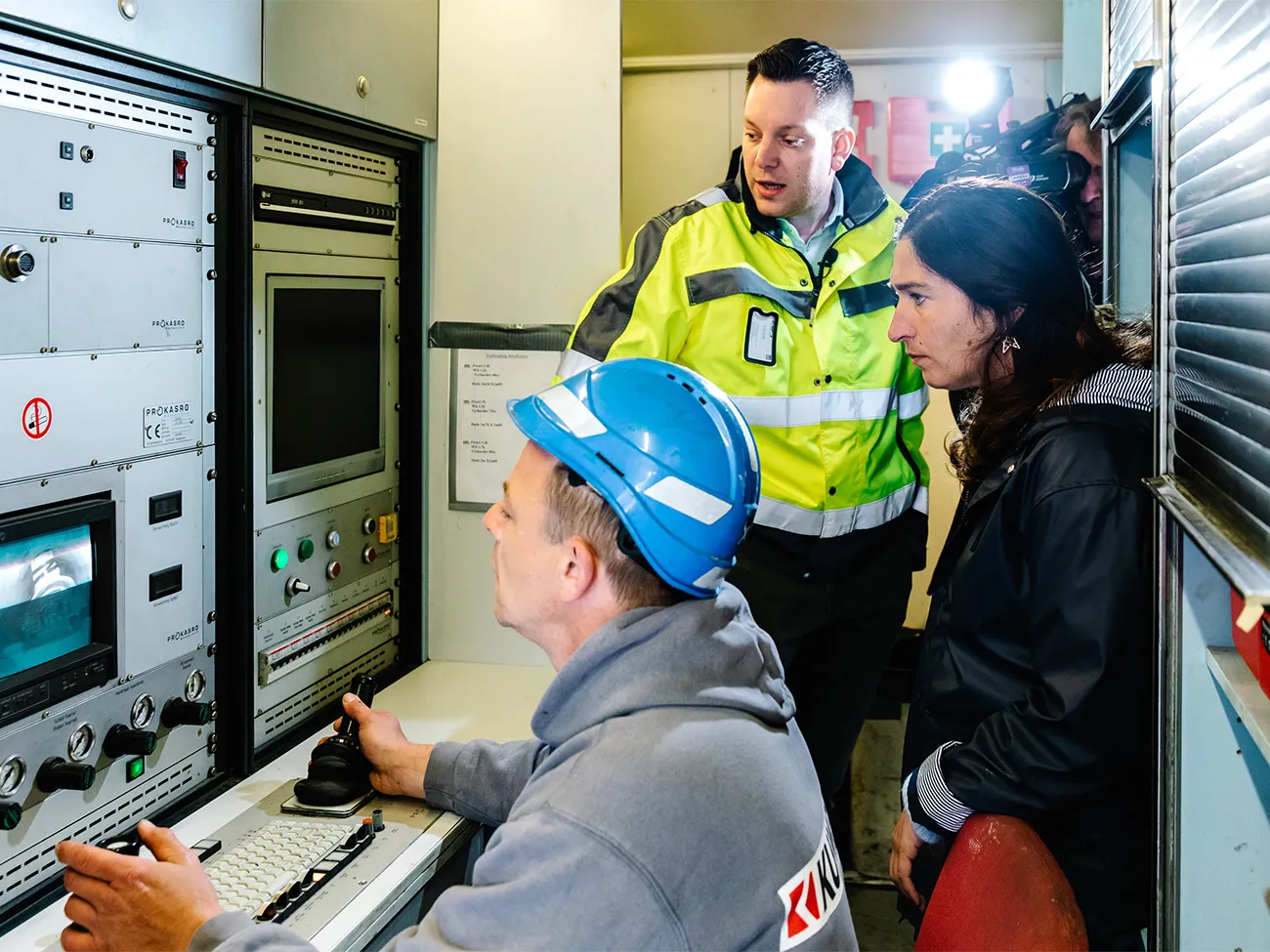
Wendy Francken: “This high-tech training shows just how diverse the construction industry is. The sewer renovation profession has evolved enormously. In recent years, there has been a great deal of innovation in the materials used, and the techniques are state of the art. Robots are one example. The aim is both to improve the quality of sewer renovations and to speed up the adoption of innovative technologies. Craftsmanship must be maintained. Developments in this branch of construction are not standing still either. More and more techniques are inspired by BIM models. These are building information models in which the existing sewer network is scanned in full using 3D technology. Custom-made solutions can then extend the sewer network’s service life by 50 years.”
Sewer renovations with ever less disruption
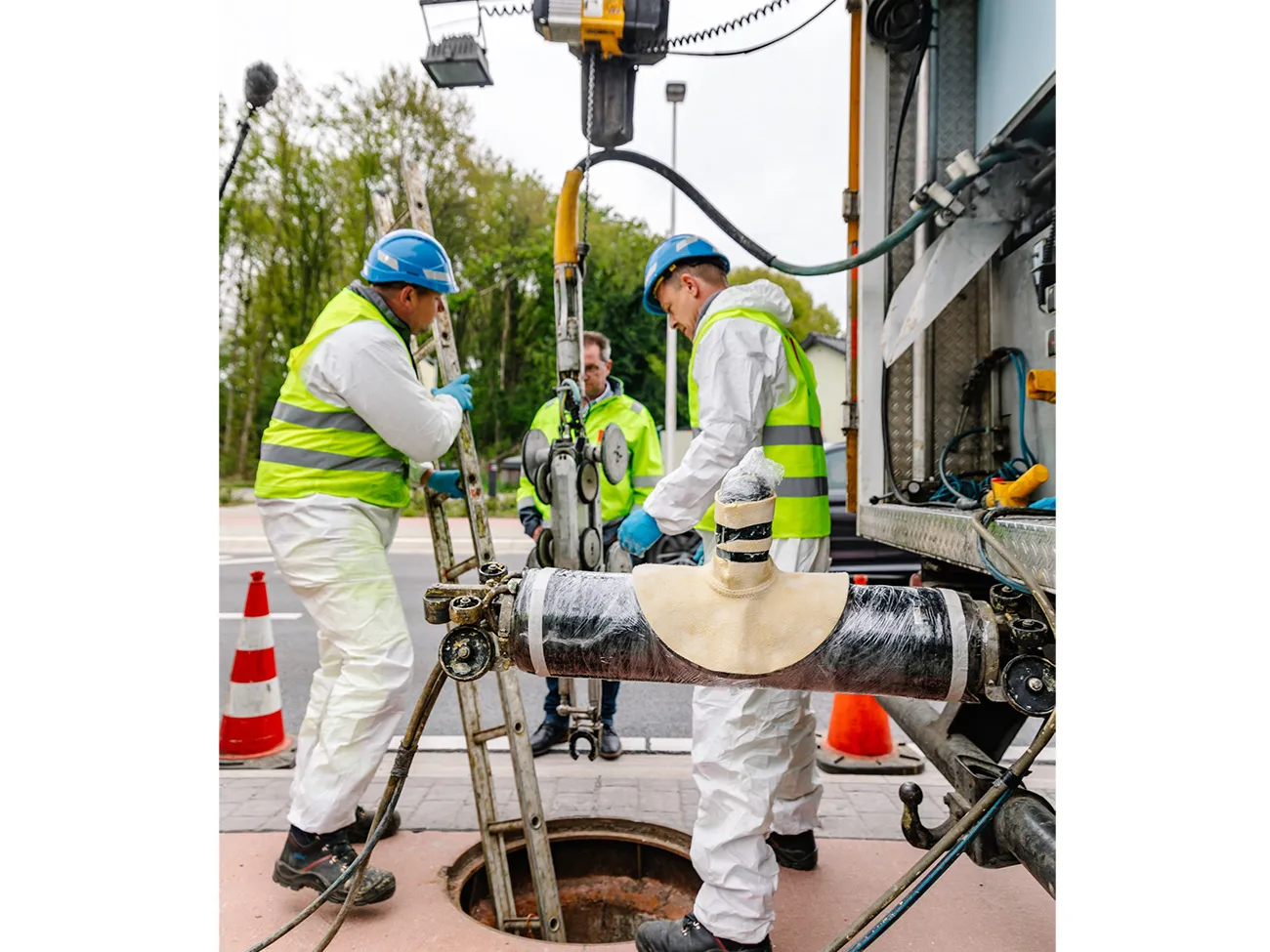
The main advantage of the various sewer renovation methods is that disruption to the surrounding area is minimal, as work on the sewer is carried out solely through the inspection chambers, without disturbing the road. These trenchless techniques extend the remaining service life of sewer networks by 50 years. In some cases, localised repairs using robots can keep a sewer in service for longer. This is also much quicker than a conventional sewer project, which involves not only digging a deep trench but also resurfacing the road. Sewer renovation is also cheaper than replacing the network, as there is no need to break up the road unnecessarily. Finally, this low-disruption technique produces far less CO2 than traditional replacement.
In the project in question, the sewer network beneath the Herebaan is being given a new lining made of glass-fibre-reinforced plastic. This technique is called relining. In short, a kind of sleeve made of glass-fibre mats and polyester resin is pulled through the inspection chamber. The sleeve is inflated inside the existing sewer using compressed air, then cured with a special UV system. Once cured, the sewer pipe is structurally restored and can serve for at least another 50 years.
Question about this story? Ask your question
Keep following this
Get an email when a new story is published. No account needed.
- ThemeRenewing pipelines and sewers
- SubjectSewerage & underground infrastructure







