Combining the useful with the pleasant: new bridge for cyclists, pedestrians and utility services
Text Philippe Selke Beeld TMI
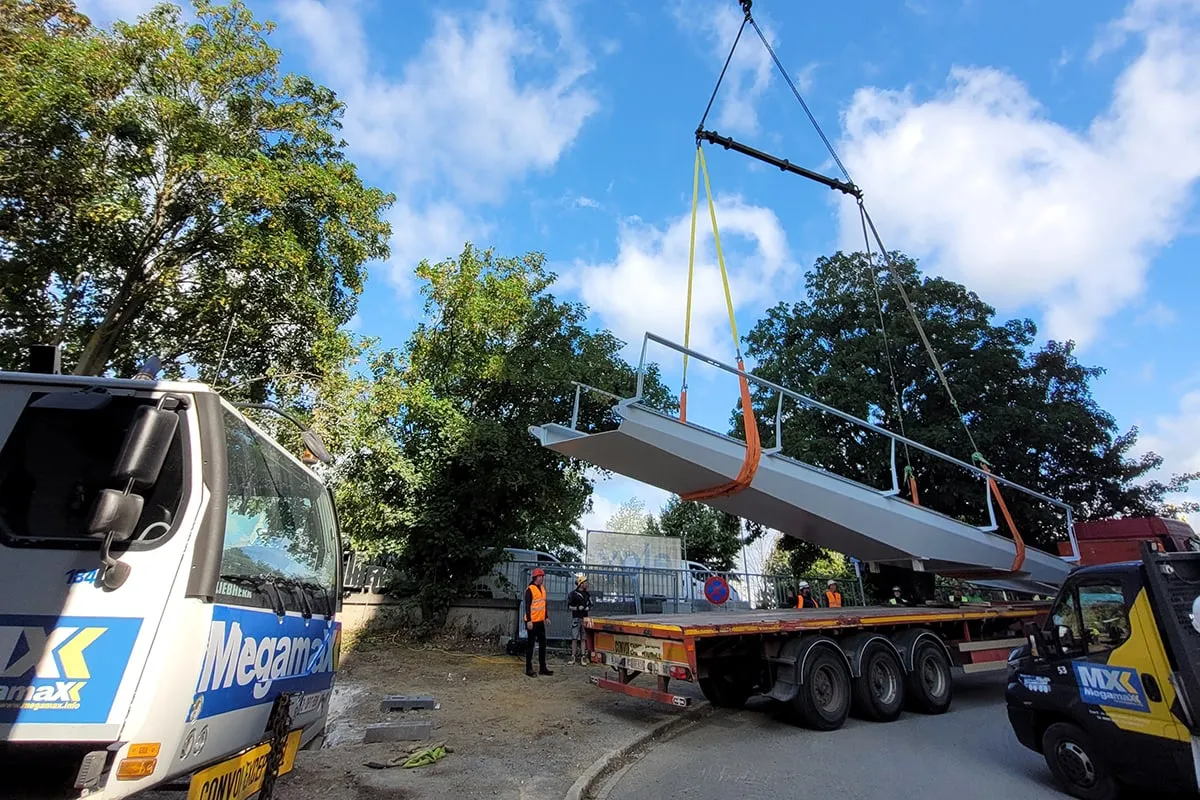
A new bridge for cyclists and pedestrians was recently built along Quai Joseph Wauters on the Ourthe Canal in Angleur (Liège), making life considerably easier for local residents and ISIL students. However, the project was not prompted by an urgent transport issue, but by the search for an elegant solution to carry utility services across the canal for distribution network operator RESA. Main contractor Eloy entrusted this unusual project to Techno Métal Industrie (TMI).
The recently renovated electricity substation in Angleur, on the left bank of the Ourthe Canal, faced the challenge of safely and elegantly carrying a large number of cables and gas pipes across to the right bank of the Meuse, supplying around half of the city of Liège from there. Until recently, this crossing, beside the existing bridge, looked like the handiwork of a clumsy DIY enthusiast.
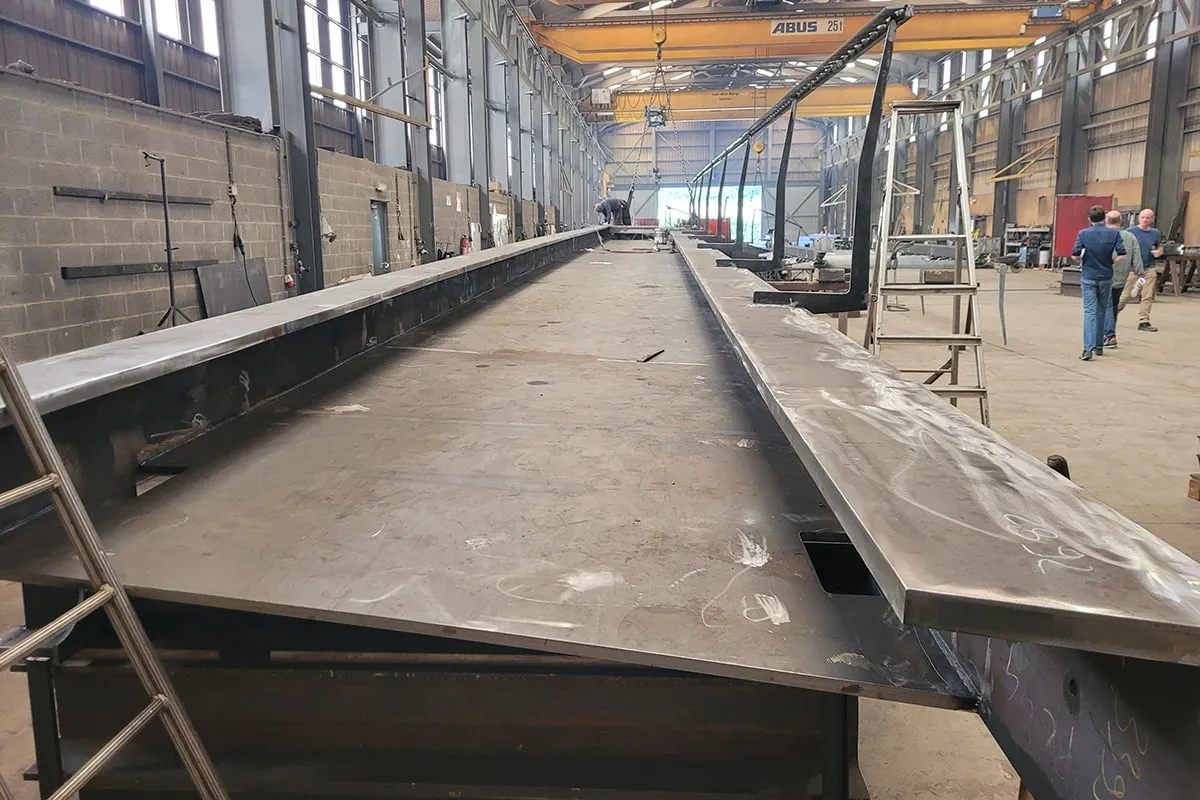
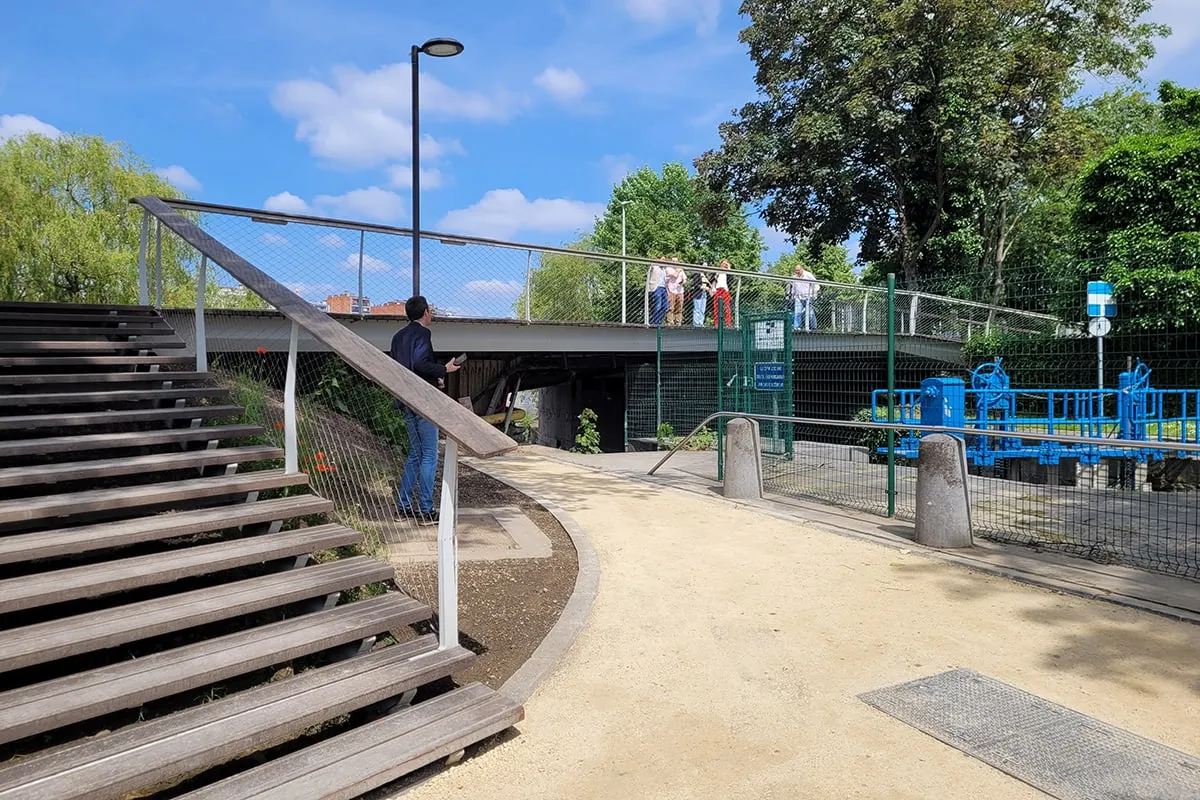
The new bridge structure, manufactured in three weeks at TMI’s workshops in Seilles, consists of two main elements: a ramp from Rue Garde-Dieu and a 23-metre-long, 13-tonne bridge. At its centre is a steel box section, open at the top to accommodate cables and pipes. On the left bank, pedestrians can use a staircase, while cyclists can continue along or from Quai Joseph Wauters.
Complex construction and installation
The structure, designed by consultancy Servais, may look simple at first glance, but its construction and installation were complex. Antonin Grandmont, project manager at TMI, explains why: “The ramp has lateral drainage, while the bridge itself was fabricated with reverse camber. The main technical challenge was therefore assembling the two sections at the expansion joint, which must allow movement of around 30 to 40 millimetres while ensuring a precise connection. A full trial assembly was carried out in the workshop to ensure that the two sections of the bridge fitted together correctly. The bridge for cyclists and pedestrians, including its parapets, was installed on site by crane in two stages: first the ramp, then the bridge itself. The crane was positioned on the Rue Garde-Dieu side, and the sections were transported and installed with the utmost care to avoid damaging the surrounding trees.
An unexpected problem then arose: the foundations had been positioned incorrectly, meaning the legs of the bridge for cyclists and pedestrians had to be moved by 10 centimetres by cutting through and rewelding the base plates. The problem was identified and resolved quickly thanks to good communication between the parties involved. The experience strengthened mutual trust and cooperation, giving this setback a positive dimension after all.
Functional and attractive
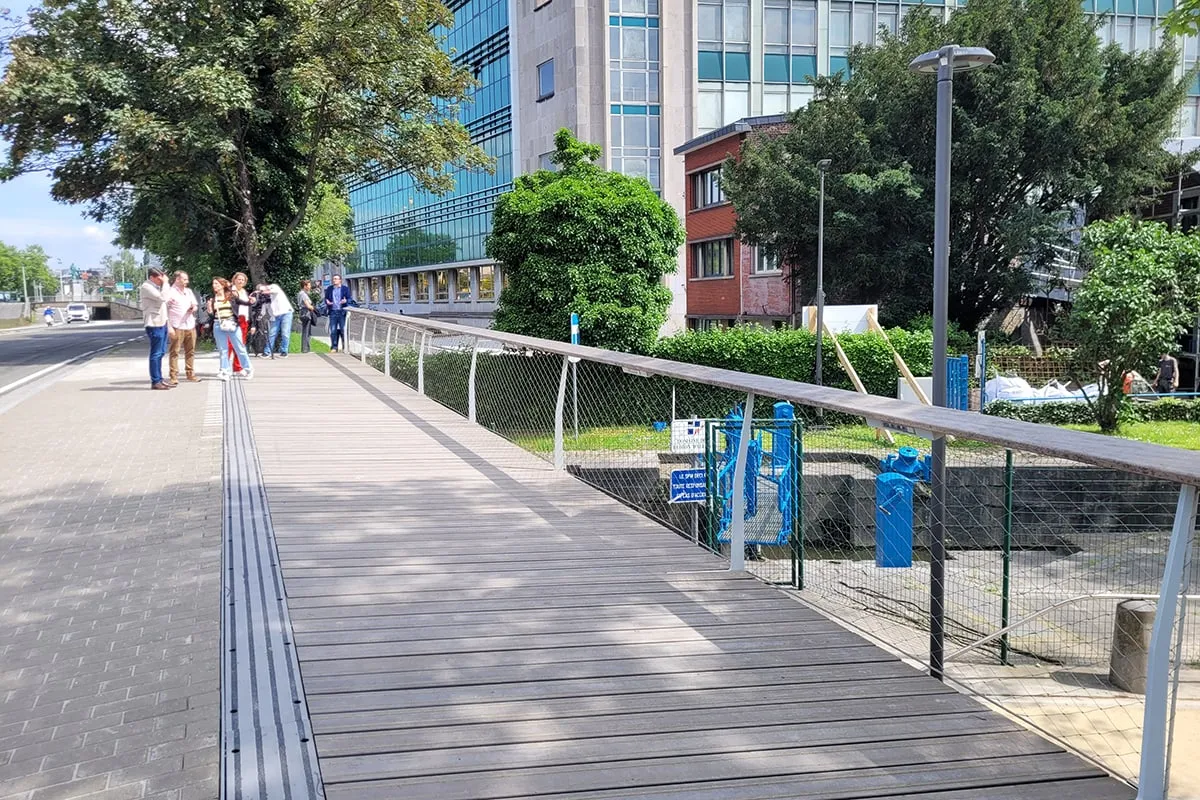
Although the footpath along Quai Joseph Wauters is wide enough, the new bridge offers a practical alternative for pedestrians and cyclists, allowing them to cross the canal without having to take a detour. The structure also carries electricity cables and gas pipes, providing an attractive and functional solution to the infrastructure challenge that prompted the project. Antonin Grandmont: “The bridge deck is made of azobé, an extremely dense and durable tropical hardwood. The wooden planks are fixed in place to maximise safety and deter vandalism. A non-slip metal cover plate has also been installed to bridge the gap between the new bridge for cyclists and pedestrians and the existing bridge. The handrails are made of wood too, in this case bilinga, a less prestigious timber than azobé. Work took place between June 2023 and June 2024, with a few interruptions along the way.”
Question about this story? Ask your question
Keep following this
Get an email when a new story is published. No account needed.
- ThemeExtending the life of bridges and tunnels
- SubjectPublic space