How infiltration blocks help meet the Rainwater Regulation
Text Elise Noyez Beeld ArtStone
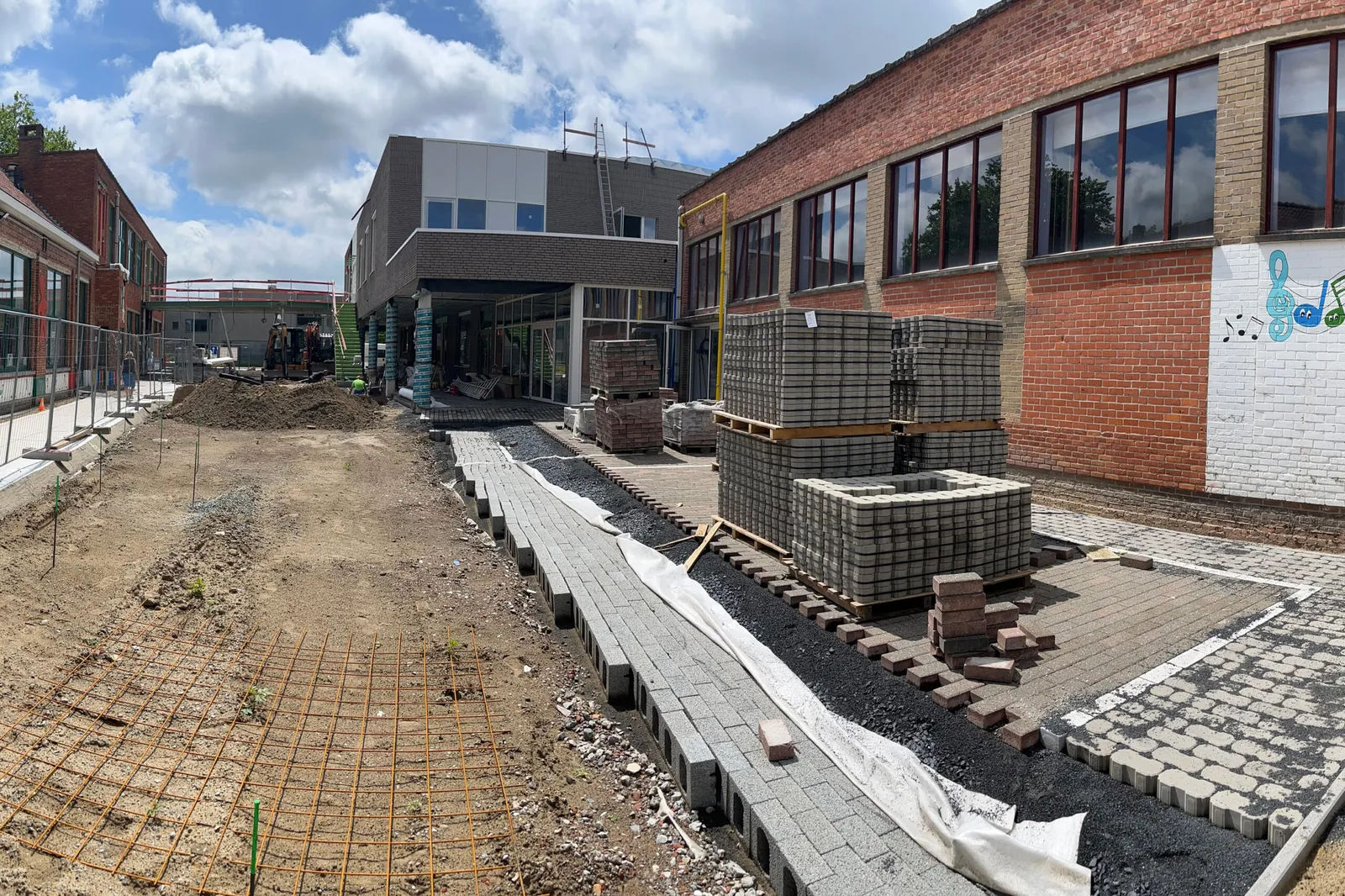
It has now been in force for more than two years: the new regional Rainwater Regulation. Since then, rainwater management in Flanders has focused even more explicitly on reuse and on-site infiltration. The GSVH 2023 has significantly increased not only the required infiltration volumes and areas, but also introduced important rules on the type of infiltration facility. As a rule, these must now be above ground. But what if that is not possible for technical or legal reasons, for example? These projects found a solution in ArtStone’s patented FluvioStone infiltration blocks.
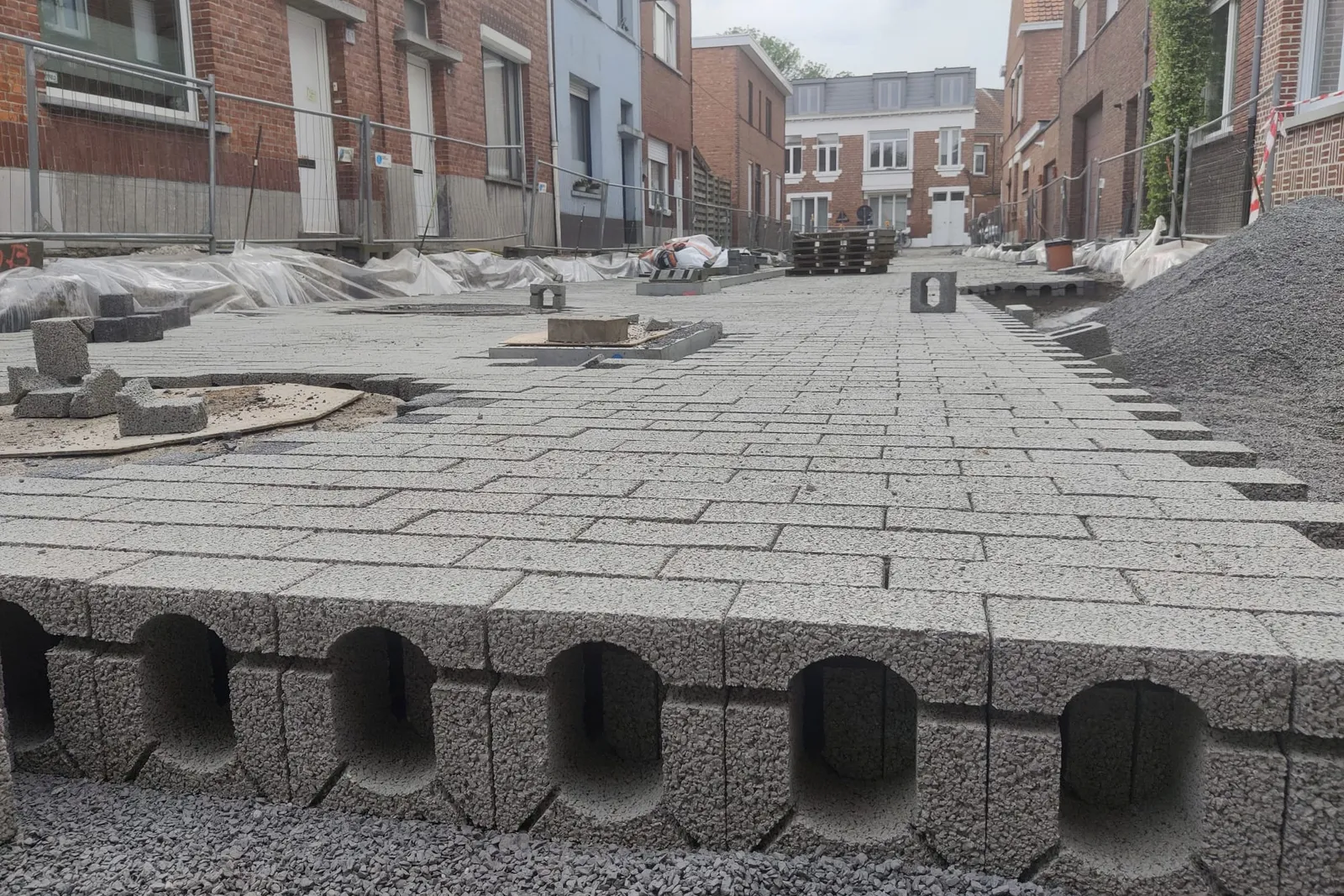
The GSVH 2023 requires the use of above-ground infiltration facilities such as infiltration basins, commonly known as wadis, but does provide for projects where this is not feasible. Those who can explicitly demonstrate that above-ground infiltration is not possible for technical or legal reasons may use underground systems. The technical background document accompanying the GSVH cites FluvioStone as one example. These patented infiltration blocks from ArtStone are installed beneath paved surfaces and, depending on the configuration, provide storage capacity of up to 150 l/m2. The porous concrete allows water to infiltrate into the ground at a controlled rate.
A solution to conflicting requirements
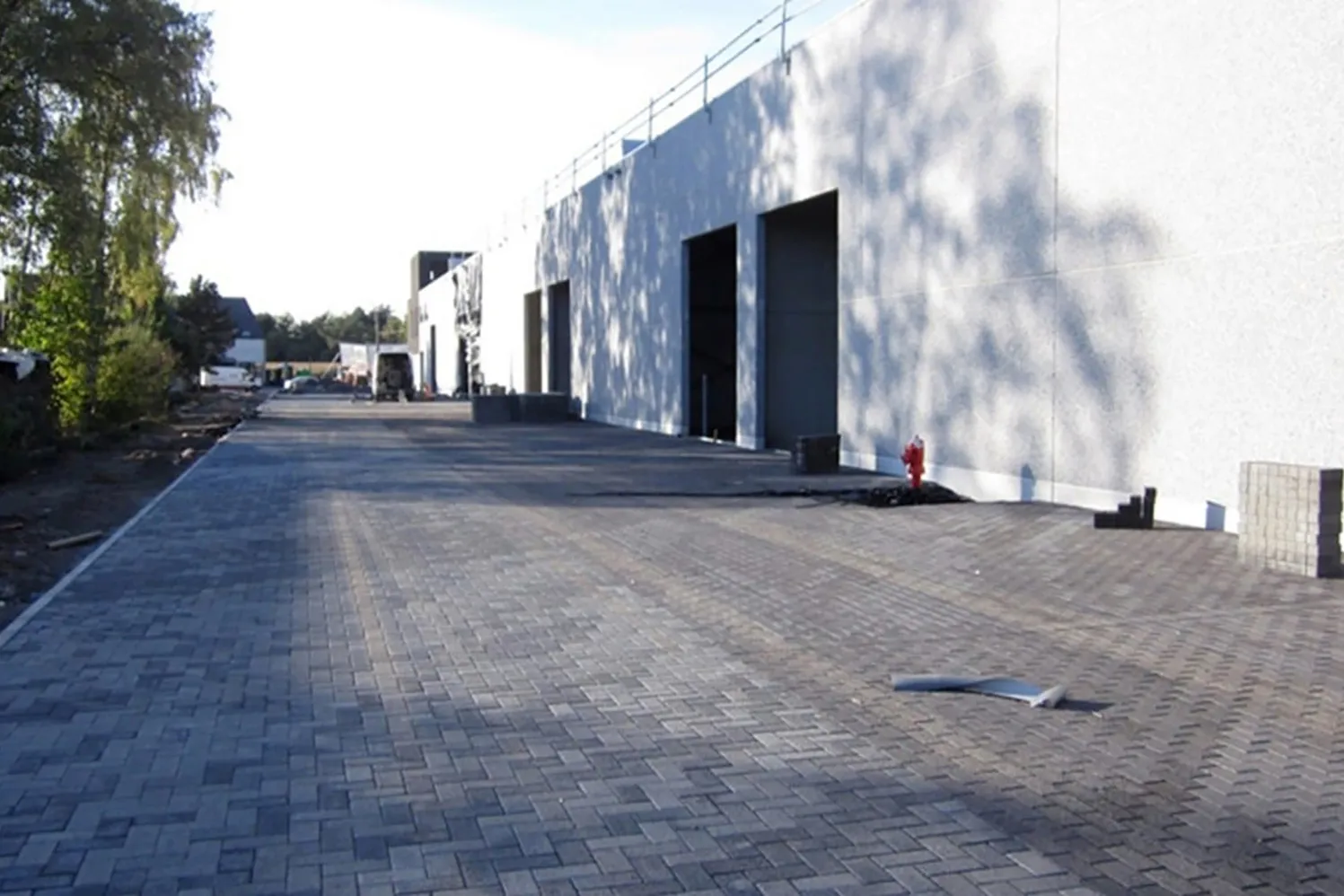
The new GSVH is often a stumbling block for supermarket chains and other commercial buildings. On the one hand, opportunities to reuse rainwater are often limited and infiltration requirements are strict; on the other, sufficient parking spaces must be provided. These requirements cannot always be reconciled on the available sites. This was the case, for example, at Colruyt in Oostvleteren. A total of 850 m2 of FluvioStone infiltration blocks is therefore being installed beneath the car park and part of the store building. They provide more than 125,000 litres of infiltration capacity, which is more than enough to infiltrate on site the rainwater falling on the roof and paved surfaces.
In the public realm
Public projects must now also comply with the Rainwater Regulation. When several existing streets were recently redeveloped as part of the separation of the RWA and DWA systems, the city of Mechelen and Pidpa faced the need to provide the required infiltration facilities. The planned road profile and the need to safely separate different road users left no room for a wadi, so FluvioStone was chosen here too. The infiltration blocks have now been installed beneath the carriageway of Dahliastraat, and FluvioStone is also being considered as a solution for Dobbelhuizen and Tichelrij, right beside the Dijle.
Suitable for heavy traffic too
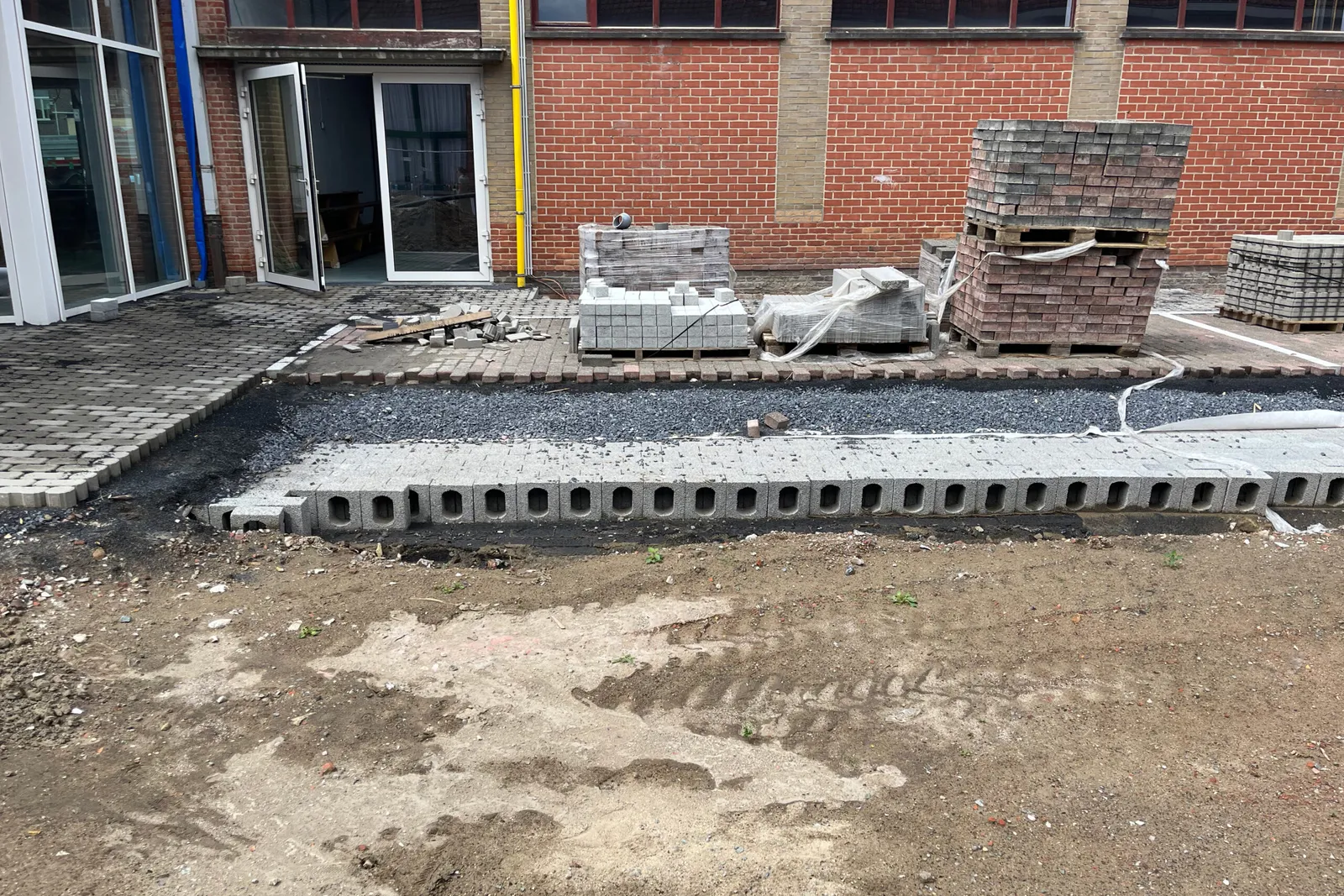
In an industrial setting, it can be difficult to reconcile the requirement for above-ground infiltration with the need for sufficient paved space that can withstand heavy loads. As part of an office building extension in the Port of Antwerp, roof water is therefore being directed to FluvioStone infiltration blocks beneath the container yard. Water from the warehouses and the new car park tower of towing and recovery company Depannage 2000 will also infiltrate locally into the ground via the FluvioStone system.
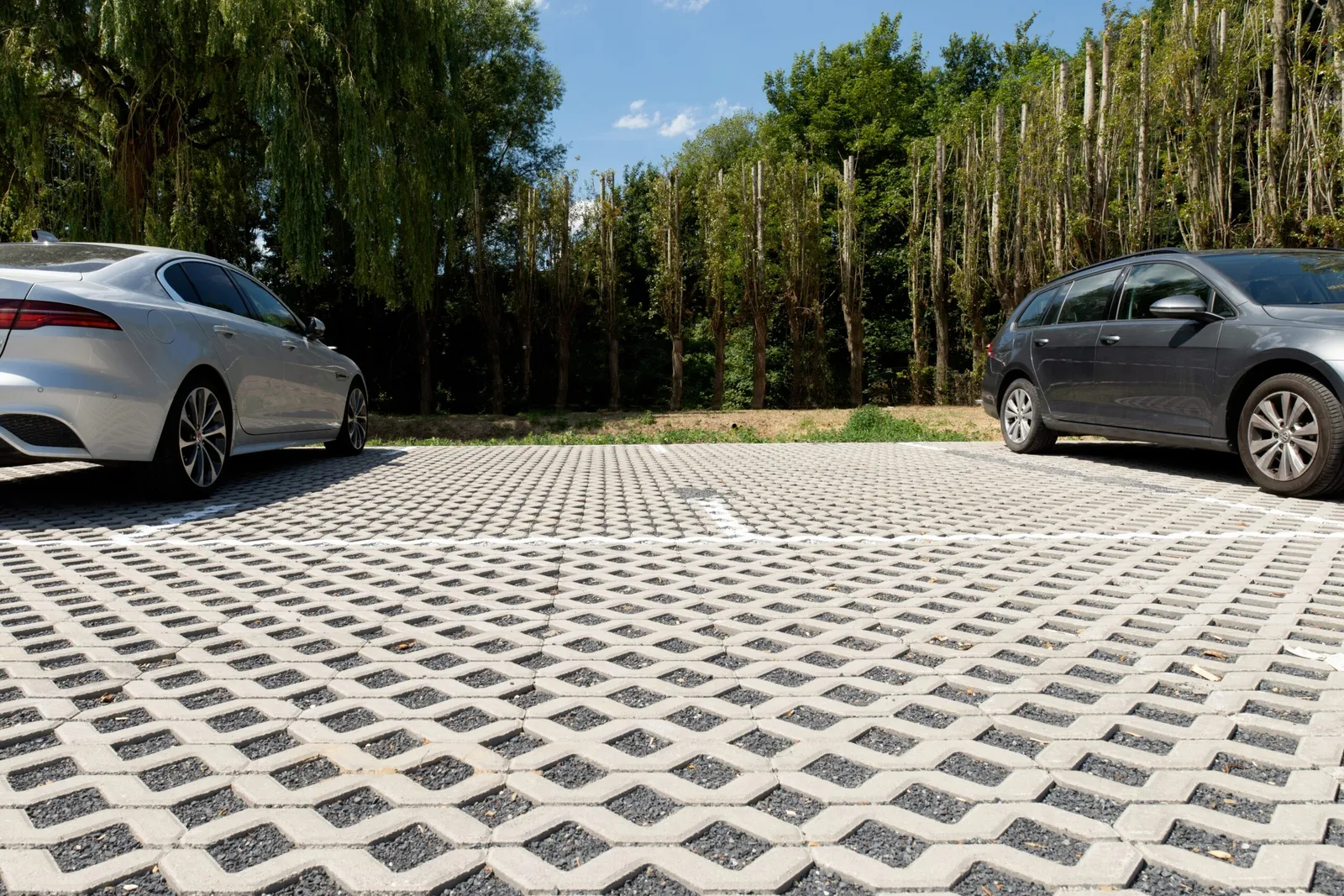
FluvioStone also makes it possible to meet the requirement for permeable paving in similarly demanding situations. When permeable paving blocks are not strong enough, combining an impermeable surface layer that drains into a sub-base containing FluvioStone achieves exactly the same effect: rainwater infiltrates where it falls. A clear justification should then be sufficient for the surface to be accepted as permeable paving.
Een zakelijke vraag aan Artstone NV? Get in touch
Companies in this story
Keep following this
Get an email when a new story is published. No account needed.
- ThemeSpace for water and green infrastructure
- SubjectPublic space
- CompanyArtstone NV