









Vitrified clay pipe, the ideal material for a sewerage project in Wallonia
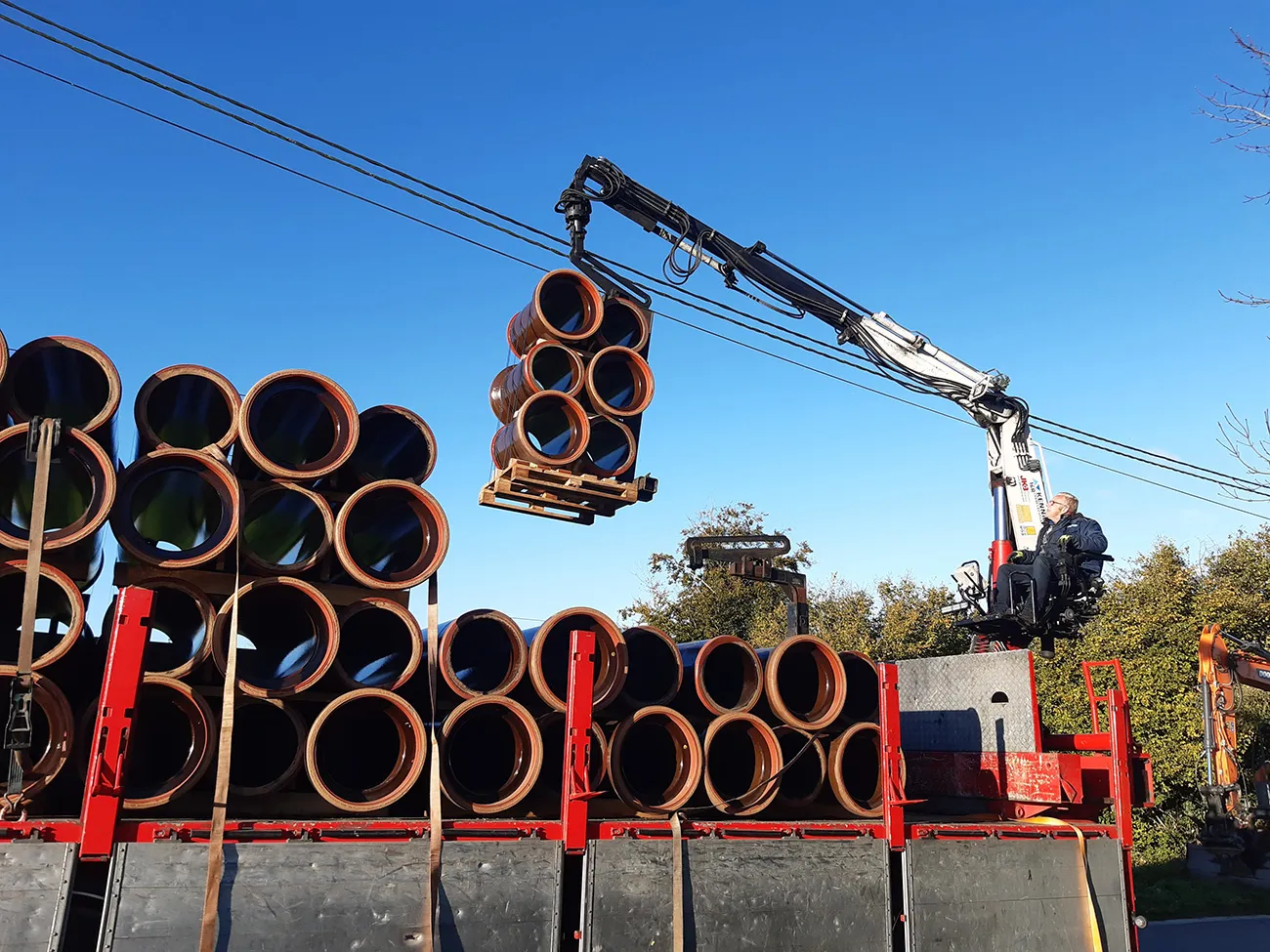
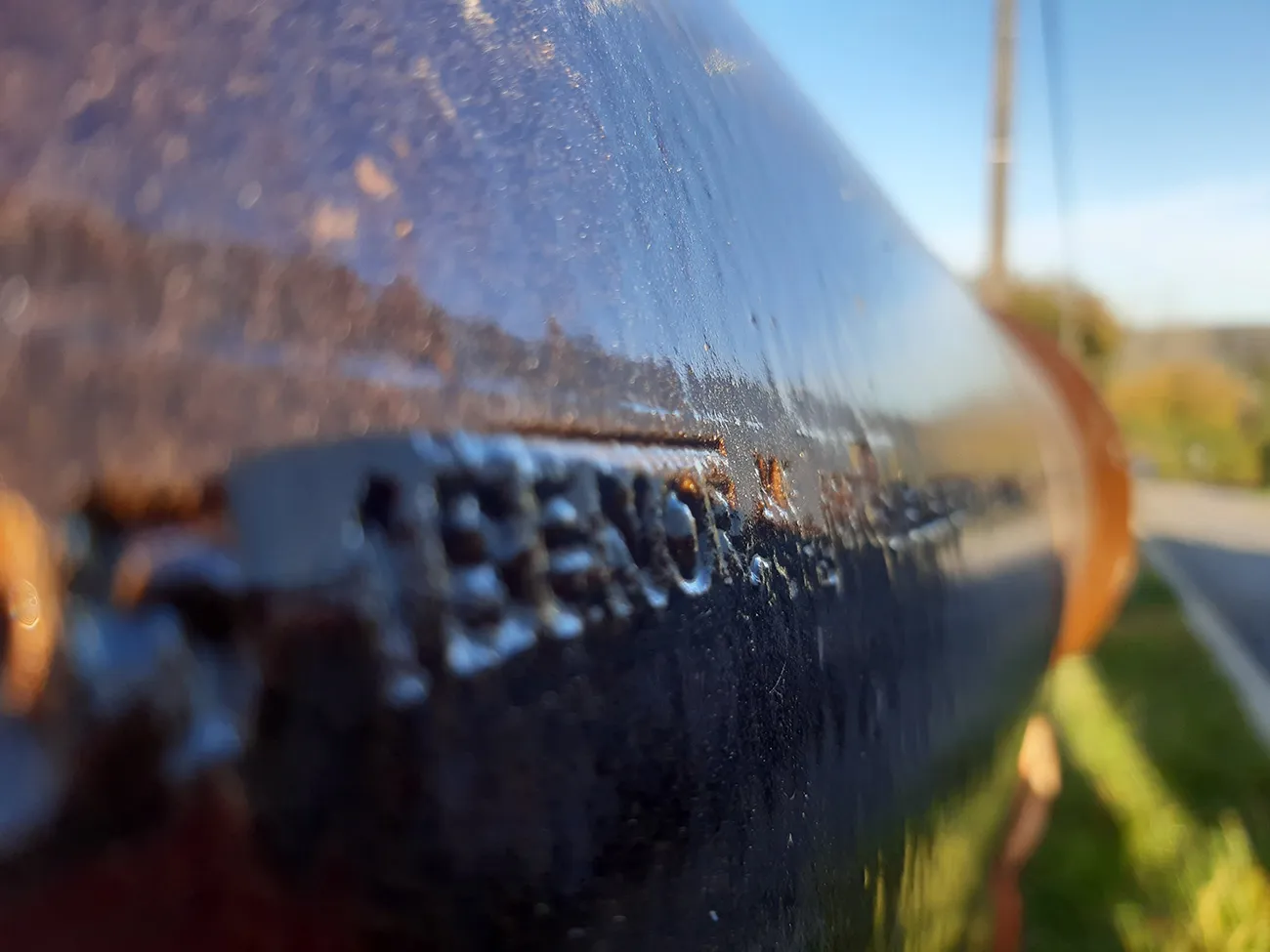
In Flostoy (Havelange), main contractor Roiseux is installing a new sewer in an existing road on behalf of the intermunicipal association INASEP. Because the road has some steep gradients, the client opted for vitrified clay pipes. Roiseux installed the pipes with help from Deschacht, which supplied modern, compliant, Benor-certified materials.
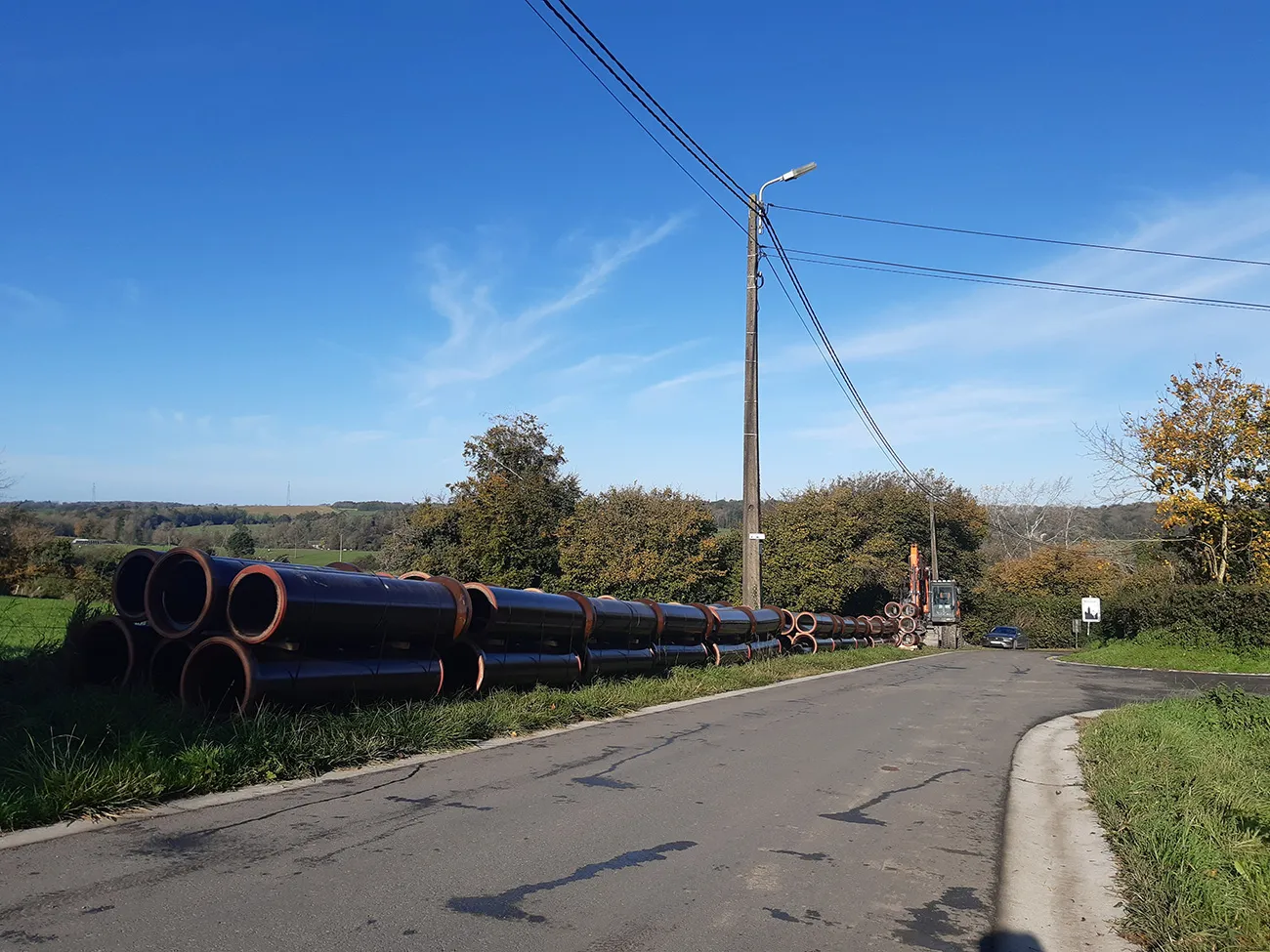
The project used 288 m of 400 mm-diameter series 160 vitrified clay pipes, together with special seals for the inspection chambers (supplied by concrete manufacturer Probémal). But why use vitrified clay, a material now rarely used for sewerage, when other, lighter and easier-to-install materials such as the various types of PVC are available on the market?
Unusual conditions
“The client opted for vitrified clay because the road had a steep gradient, reaching 8% in one section, but also because the two sections to be connected were already made of vitrified clay,” says Serge Lanners, Roiseux’s site manager. He explains why he turned to Deschacht: “When we were looking for a supplier, Deschacht immediately came to mind. We regularly buy their inspection chambers, covers and gullies because their prices are very attractive.”
A new partner
The enquiry caught the interest of Vincent Brehl, technical sales adviser at Deschacht. “With the help of a new partner supplying Benor-certified pipes that meet European standards, we were able to offer the market an alternative to the existing products. The difference? The pipes were in stock at our supplier, so we could deliver them very quickly, along with all the necessary advice and technical data sheets.”
Vitrified clay, a material from the past?
But isn’t vitrified clay a material from the past, harder to handle and install? Serge Lanners says: “We work with vitrified clay less and less. It is an old solution, but fortunately the pipes have evolved and are no longer comparable to those from 20-30 years ago. Of course, the work is still more delicate because vitrified clay is brittle. And for future connections, holes will need to be drilled using specialist equipment. That is more complicated than with PVC pipes, which can be connected using simple tees.”
Roiseux and Deschacht are particularly proud of this first vitrified clay project in Wallonia, which will undoubtedly be followed by others.
Een zakelijke vraag aan Deschacht? Get in touch
Companies in this story

Keep following this
Get an email when a new story is published. No account needed.
- ThemeRenewing pipelines and sewers
- SubjectGeneral
- CompanyDeschacht







