









Study explores network of smart private rainwater tanks

It made the headlines this spring: Flanders is once again facing the threat of a water shortage, and the outlook is only set to worsen. Flanders wants to have a water rationing plan in place by summer 2020. Using water wisely is therefore more important than ever if we are to keep water flowing from our taps in the long term. Aquafin is investigating whether smart use of the 1.5 million privately owned rainwater tanks in Flanders could restore the balance between periods of water surplus and water scarcity.
Aquafin has long been committed to reuse and infiltration, including through rainwater plans and ‘Operatie perforatie’ (see box). But the wastewater treatment company is not standing still: it continues to explore innovative ways of using water wisely. Together with local authorities, Aquafin has been encouraging residents for some time to install rainwater infiltration systems on their properties. A new development in this strategy is the idea of ‘smart rainwater tanks’. “Imagine a system in which residents make their rainwater tanks available for use. We would fit the tanks with sensors, allowing us to measure water levels and draw on the stored water when needed,” explains Danny Baeten, Aquafin’s Director of Business Development & Innovation.
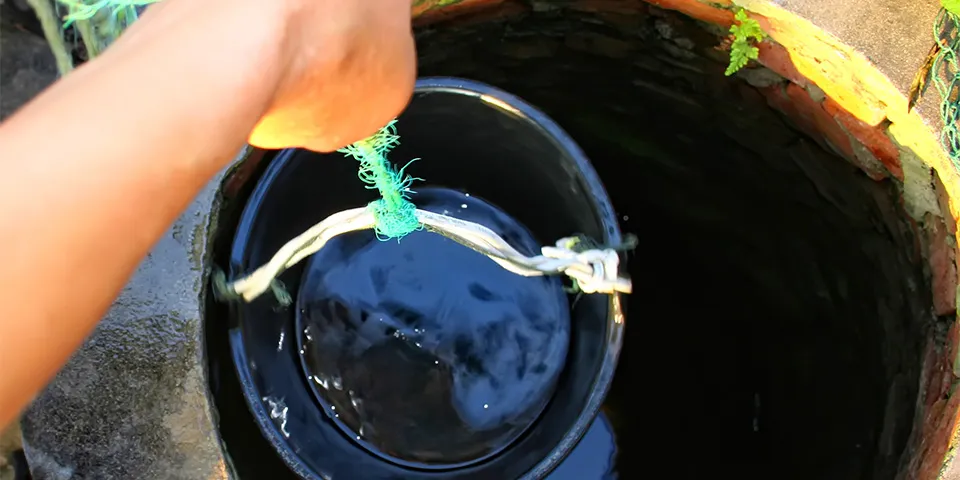
Aquafin is investigating whether smart use of the 1.5 million privately owned rainwater tanks in Flanders could restore the balance between periods of water surplus and water scarcity.
Danny Baeten: “Flanders’ vast network of rainwater tanks represents a huge buffering and storage system, which could help us better bridge periods of heavy rainfall and drought. We are now assessing the viability of this concept. We are analysing the combined water storage capacity of all the rainwater tanks in Flanders. We estimate that it exceeds 15 million m³. We will then consider what controls are needed to turn them into a smart network.”
Making the best use of capacity
Most private rainwater tanks are almost full all year round. Their capacity could potentially be used more intelligently and sustainably, for the benefit of the whole community. That is the idea behind smart rainwater tanks. The system has two functions. A few days before heavy rain is forecast, the tanks are emptied, either fully or partially, allowing the water to infiltrate. The empty tanks then provide a network of storage capacity for the forecast rainfall. During prolonged drought, the water stored in the tanks can also be managed to avoid peak demand on the drinking water network.

During prolonged drought, the water stored in the tanks can be managed to avoid peak demand on the drinking water network.
Naturally, owners will want to be sure they are not left short of water. Danny Baeten offers reassurance: “A smart weather radar system that predicts where and how much rain will fall tomorrow or the day after is crucial. We would link that to consumption patterns at street level, or even to those of individual households. We will not pump out more water than necessary, to avoid residents suddenly using more mains water during a drought because we have emptied their tanks.”
What does the future hold?
“It is certainly conceivable that owners will receive a fee for making their private rainwater tanks available,” concludes Danny Baeten. “We could lease the tanks and manage them collectively. But it is too early to say anything definite. The idea is still at the concept stage. It will become clearer over the coming months which direction we will take.”
Question about this story? Ask your question
Keep following this
Get an email when a new story is published. No account needed.
- ThemeRenewing pipelines and sewers
- SubjectGeneral







