









Review of the 2022 provincial contact days
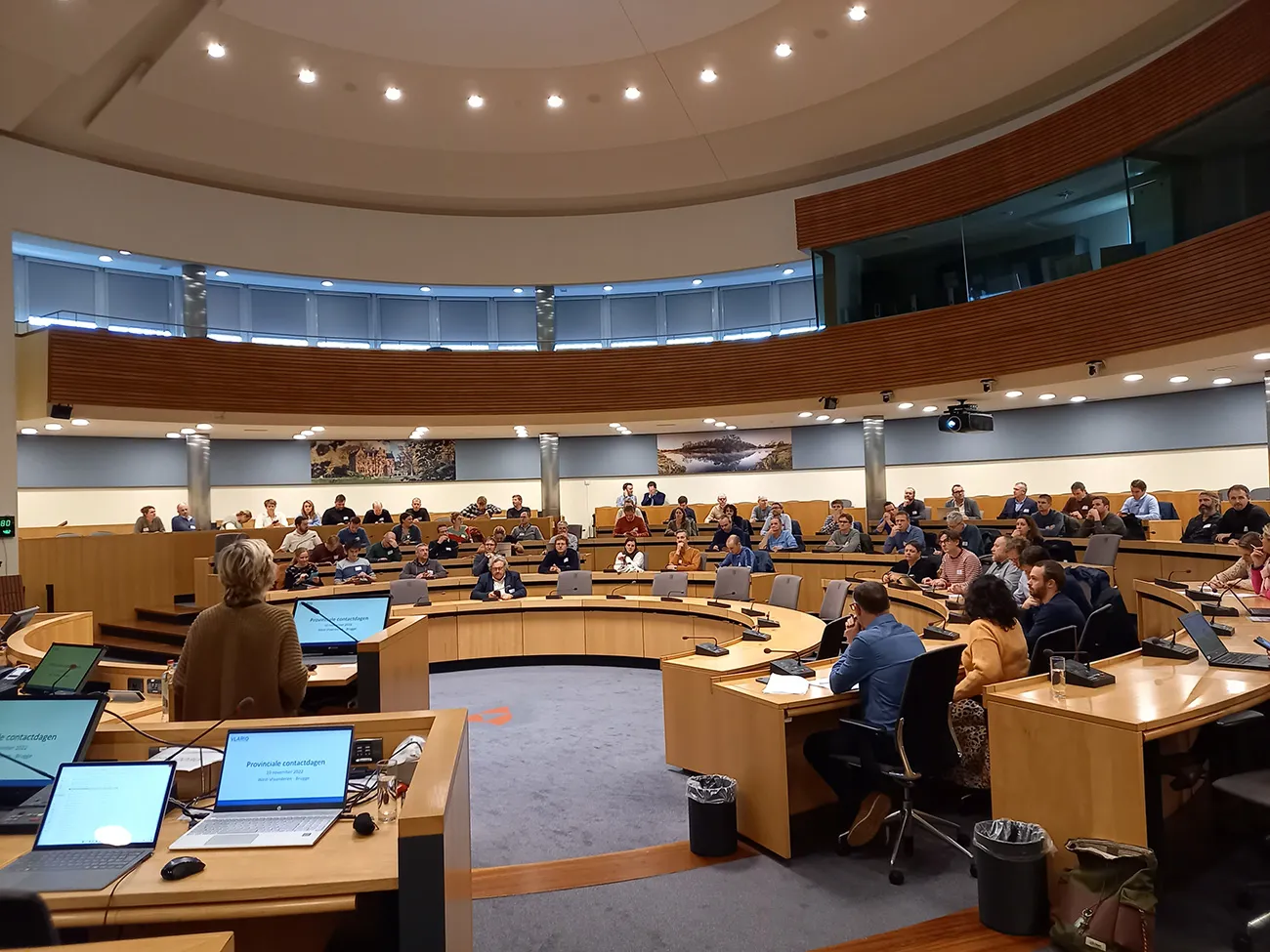
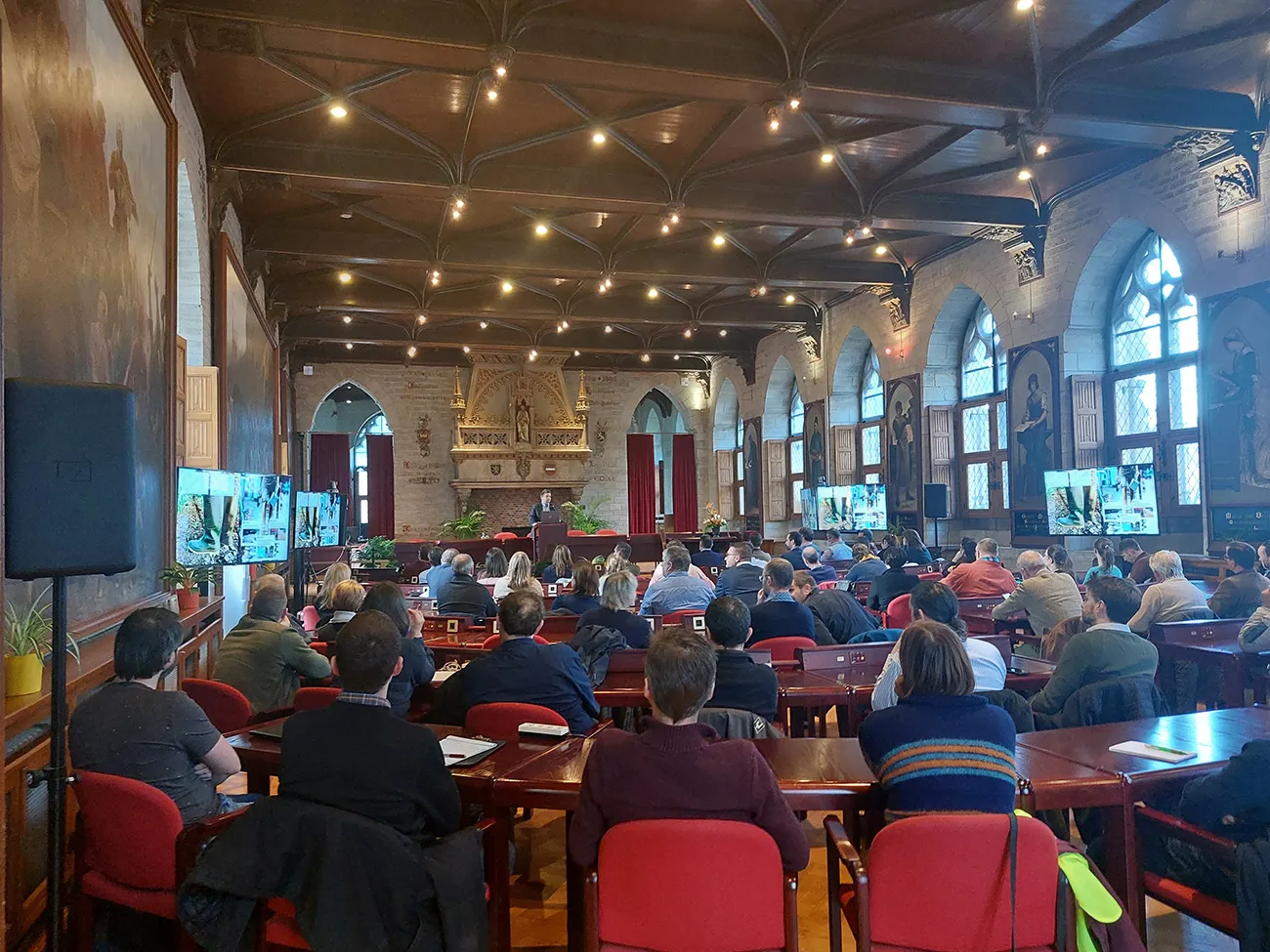
The 2022 VLARIO provincial contact days achieved their objectives. More than 500 participants across the different provinces were informed about the latest developments in various regulations and technical fields. The Blue Deal and circularity remain hot topics in the sector, as was clear during the contact days.
The Blue Deal is an ambitious programme by the Flemish Government to develop structural solutions to prevent water scarcity and drought. The programme comprises more than 70 actions and 400 projects. It focuses on working together on multiple fronts and delivering projects on the ground. Krista Decat, Blue Deal coordinator for the Coordination Committee on Integrated Water Policy (CIW), gave an overview of the approach in each province.
With the Blue Deal, Flanders is moving towards less hard surfacing, more wetland restoration and maximum circular water use. The deal accelerates investment in smart water use, green-blue solutions and wet nature. It also makes full use of innovative partnerships. The Blue Deal also promotes innovation through research, knowledge sharing and the roll-out of smart monitoring networks and control systems. Through numerous calls for project proposals, the Blue Deal supports businesses, associations, farmers, knowledge institutions and citizens in working together to increase water infiltration, retain water for longer or use water more efficiently. The Flemish Government is also using the Blue Deal to improve regulations and their implementation. This includes removing regulatory barriers, for example around water reuse, and improving policy instruments such as the water assessment, rainwater plans and water audits.
GSV
On 15 July 2022, the Flemish Government gave its initial approval in principle to a new Regional Urban Planning Regulation on Rainwater (GSV Hemelwater). The changes in this version were explained during the contact days. The necessary advice was sought, and in September the text was opened to public consultation. The Flemish Government’s Department of Environment received many comments. These comments will be processed in November, followed by a second approval by the Flemish Government, advice from the Council of State and then final approval by the Flemish Government. The aim is for the new GSV Hemelwater to come into force in early 2024.
Failure to disconnect rainwater correctly
Municipal authorities want a means of ensuring that residents disconnect their rainwater connections correctly. A tax is often chosen because it is administratively straightforward to apply. But is this the right approach? The Agency for Domestic Governance has indicated that enforcement can no longer be carried out through a tax regulation, as is currently done by many municipalities. This tax regulation must therefore not be renewed for the new term of office starting in 2025. VLARIO’s municipal working group is now looking further into the option of municipal administrative penalties (GAS fines).
Drawing up municipal green-blue regulations
At municipal level, stricter rules and conditions can be imposed, depending on the issues and objectives set out in the rainwater and drought plan. A municipal regulation can be drawn up to ensure that new projects and/or renovations are climate-resilient. During the contact days, local authorities shared several examples to highlight the importance and benefits of such regulations and inspire their colleagues.
Circularity in specifications
The Flemish Government Agreement gives due attention to the circular economy. The ultimate aim is to use only products considered circular, assessed against objective criteria. To this end, PCRs are being drawn up. These are a set of requirements, specifications and guidelines for developing Environmental Product Declarations (EPDs) for one or more product categories. They should therefore also be specified in tender documents. During the contact days, the approach to PCRs for sewerage systems was discussed.
Next steps for rainwater and drought plans
At the end of last year, VMM published a new blueprint for drawing up rainwater and drought plans. These plans set out an integrated vision of where and how water in an area can be retained or reused locally as far as possible, infiltrated, stored and, only as a last resort, discharged at a controlled rate. From 2024, municipalities must have a rainwater and drought plan in order to receive water-related subsidies.
Pidpa, Farys, Fluvius and Aquafin explained their approach to using this new blueprint and updating existing rainwater plans. However, several practical questions remain, and answers are expected shortly.
Question about this story? Ask your question
Keep following this
Get an email when a new story is published. No account needed.
- ThemeRenewing pipelines and sewers
- SubjectGeneral







