









Renewed sludge treatment at Deurne-Schijnpoort WWTP more sustainable and circular
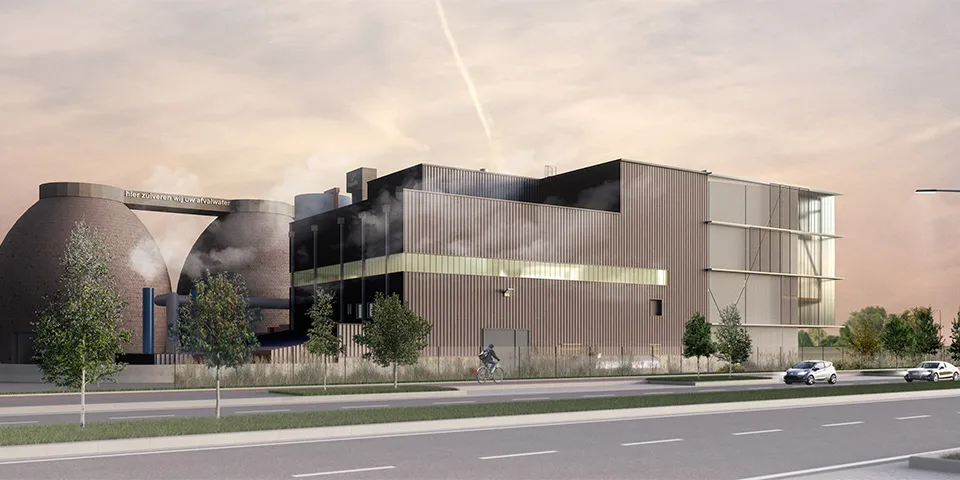
Aquafin operates a large-scale sludge treatment line at the Deurne-Schijnpoort wastewater treatment plant. It processes sludge, a by-product of the water treatment process, from both the local wastewater treatment plant and other wastewater treatment plants, with a total capacity of 10,000 tonnes of dry solids per year. The existing sludge treatment line dates back to 1998 and needs replacing. By completely renewing sludge treatment, the Flemish water treatment company aims to further its commitment to sustainability and the circular economy. Aquafin will start the renovation works in early 2020, and the renewed plant is due to be operational by summer 2021. The total investment is around 18 million euros.
Flemish water treatment company Aquafin renovates sludge treatment process
“The existing sludge drying plant is outdated and uses a lot of energy,” say Aquafin’s Lieven Lauwereys (Project Manager), Bart Van Doorslaer (Technical Project Manager) and Johan Cauwenberghs (Process Technologist). “As a company, we want to use fewer resources across the board. Renewing the sludge treatment process will significantly improve energy performance and substantially reduce sludge disposal costs.”
Specifically, a new sludge building will be constructed alongside the existing one, housing 2 new technologies. The existing high-temperature sludge dryer will be replaced by thermal pressure hydrolysis, followed by a low-temperature belt dryer. “Thermal pressure hydrolysis will break down more sludge in the digestion plant, resulting in significantly higher biogas production,” says Process Technologist Johan Cauwenberghs. “In addition, extensive dewatering will mean that much less water needs to be evaporated in the more energy-efficient belt dryer. We expect the new sludge treatment plant to have a balanced thermal energy balance and to operate entirely on the biogas it produces. The greater breakdown of sludge during digestion will also substantially reduce the amount of sludge that needs to be disposed of.” Aquafin designed the concept for the new sludge treatment process entirely in-house.
The construction process presents a complex challenge for client Aquafin, designer Archiles architecten, consultancy and engineering firm Arcadis, and the contractors and suppliers. “The existing sludge treatment plant must remain operational at all times,” says project manager Ivan Van Puyenbroeck of consultancy Arcadis. “Several contractors will be working on the building and technical installations in parallel, while the water treatment process and associated sludge treatment must continue to run without interruption. This naturally makes the renovation project more complicated. Arcadis is responsible for the technical engineering and full project coordination.”
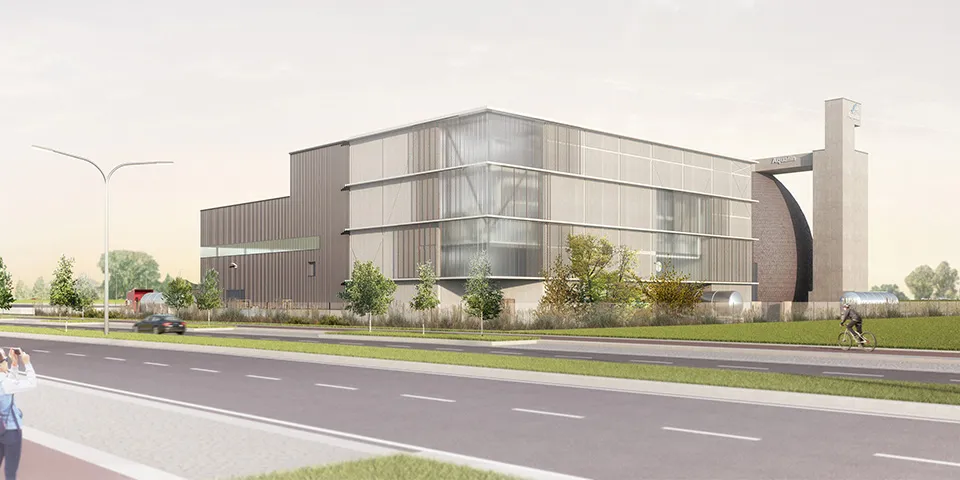
The new building will also be clearly visible to the many motorists who pass by every day. “The Aquafin site is easily recognisable by its egg-shaped sludge digestion tanks alongside the Antwerp ring road,” says architect Jeroen Geys of Archiles architecten. “The necessary extension to the building must complement the existing character of the site and certainly must not detract from the iconic design of the tanks, which serve as a landmark for the WWTP. The materials chosen for the new building are therefore more in keeping with the egg-shaped volumes at the rear of the site than with the existing sludge building.” The new building will match the existing one in height and will be built directly alongside it.
“We have opted for a steel structure clad in prefabricated architectural concrete panels,” the architect explains, describing the appearance of the new building. “The concrete will have a coarse grain and texture, with a smoother texture stamped into it in several places to create an exterior interpretation of the internal steel framework. Large transparent sections in the building will highlight the lines of the façade, making both the internal structure of the volume and the lines of the façade finish visible, and allowing them to flow seamlessly into one another.”
The new sludge treatment building will also be equipped with an automatic solar shading system. “The shading has been designed in keeping with the same thinking as the rest of the building. Its industrial character is expressed through large steel frames filled with expanded metal, in colours that complement the sludge digestion tanks. The opening and closing of the building will be visible from the street and further emphasised by the internal lighting,” explains architect Jeroen Geys. “The intention is for this building to take a leading role in shaping the future vision for the site.
Aquafin aims to start construction of the new sludge building in May 2020 and complete the renovation works by summer 2021. “Some preparatory works still need to be carried out first, and these will start in January 2020. The tender for these preparatory works will be published in mid-October, with the contract due to be awarded at the end of November. We plan to issue the tender for the new building in early November. We hope to award the contract by the end of January 2020,” says project manager Lauwereys, outlining the project schedule.
Question about this story? Ask your question
Who worked on it
Slibverwerking RWZI Deurne-Schijnpoort in Bevekom
- clientAquafin
- designerArchiles architecten
- studie- en engineeringbureauArcadis
Keep following this
Get an email when a new story is published. No account needed.
- ProjectSlibverwerking RWZI Deurne-Schijnpoort
- ThemeRenewing pipelines and sewers
- SubjectGeneral
- CompanyAquafin
- CompanyArchiles architecten
- CompanyArcadis







