









Flanders steps up fight against drought with ambitious Blue Deal
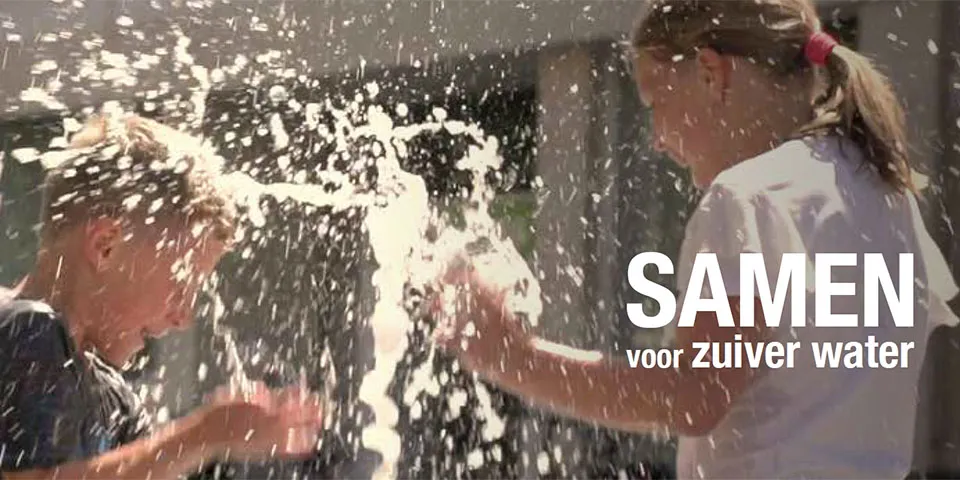
Flemish Minister for the Environment Zuhal Demir is preparing Flanders for tomorrow’s drought with a major Blue Deal. The Flemish Government has already earmarked an initial €75 million. “More marshes and wet grasslands, tackling water losses from leaks, depaving our cities, more large-scale infiltration and water storage basins, circular water use in agriculture and industry … With this Blue Deal, Flanders is firmly setting out on a path towards less paving, more wetland and nature, and maximum circular water use,” she says with conviction.
Our country is among the European countries hardest hit by extreme drought. Yet awareness that water is a scarce and precious resource still has not translated into our everyday behaviour. Zuhal Demir is therefore pleased with the Blue Deal, through which the Flemish Government aims to significantly increase water availability in Flanders. The budget is €75 million, with further funding to be added in the autumn. “We are fully committed to having water companies lead by example, for instance by stepping up efforts to tackle water losses from leaks, and we are making the transition to circular water use. At the same time, we are investing heavily in large- and small-scale water storage.”
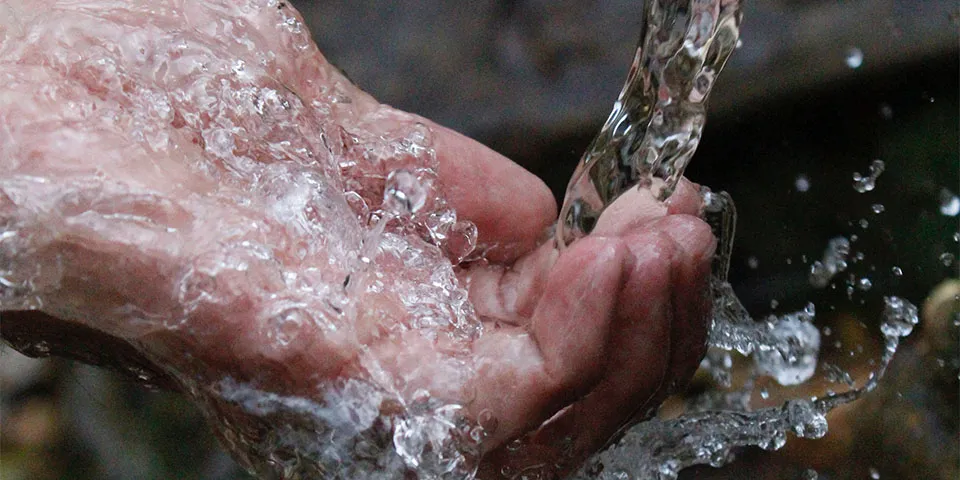
With the Blue Deal, Flanders is firmly setting out on a path towards less paving, more wetland and nature, and maximum circular water use. (Image: Pexels)
Wetland nature and water storage
The ‘Wet Nature’ project will restore marshes, ponds, lakes and wet grasslands in Flanders. These can hold the greatest volumes of water and also store a large amount of carbon. Experts consider wetland nature to be the most cost-effective way to combat drought. Flanders is also making funding available for essential works, such as the construction of large-scale water storage basins to provide reserve capacity and the restoration of meandering watercourses. In addition, small weirs in drainage ditches, among other measures, help more water infiltrate the ground and replenish groundwater, slow the drying out of nature and keep more water available for agriculture.
Industry and agriculture
The Blue Deal sees agriculture and industry as important parts of the solution. From 2022, companies will only be eligible for financial support or permits from the Flemish Government if they have undergone a water audit. Water scans will be mandatory by 2022 for large water users and companies with extensive paved areas. “The past few years have seen a lot of drought, with consequences for agriculture and horticulture. It also poses risks for our water-intensive industries. Water is a scarce resource that we must use responsibly. It is encouraging to see that investment in water-saving projects has risen sharply in recent years,” says Zuhal Demir.
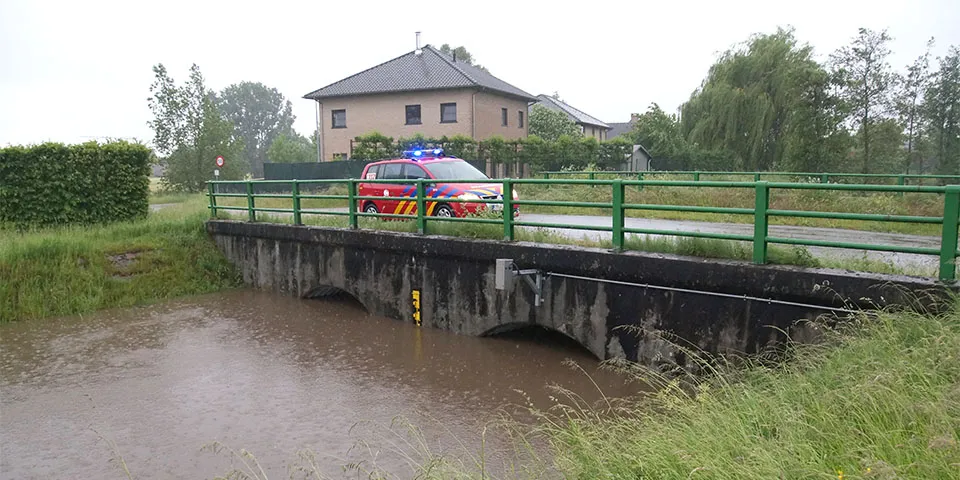
The rising climate trend also brings short, intense downpours, often resulting in flooding.
Ambitious drought plans
To encourage local authorities to depave existing public spaces, Flanders will provide funding through ‘Flanders Breaks Out’ for effective depaving measures by local authorities. From 2024, municipalities will only be eligible for water-related subsidies if they can present an ambitious rainwater and drought plan. Water losses from leaks will be reduced to a minimum. An accelerated innovation and implementation programme is therefore being launched with water companies. By the end of 2025, Flanders aims to be among the world’s best performers in leak-free pipelines, without affecting water bills.
There will also be a requirement to report the abstraction of water from non-navigable watercourses. Until now, no such requirement existed. The Government wants to gain a clearer picture of how much water is being abstracted by third parties. The Flemish Government is also drawing up a strategic water supply action plan, setting out investment projects by drinking water companies to ensure security of supply, now and in the future. A central Flemish authority for drinking water supply will also be established.
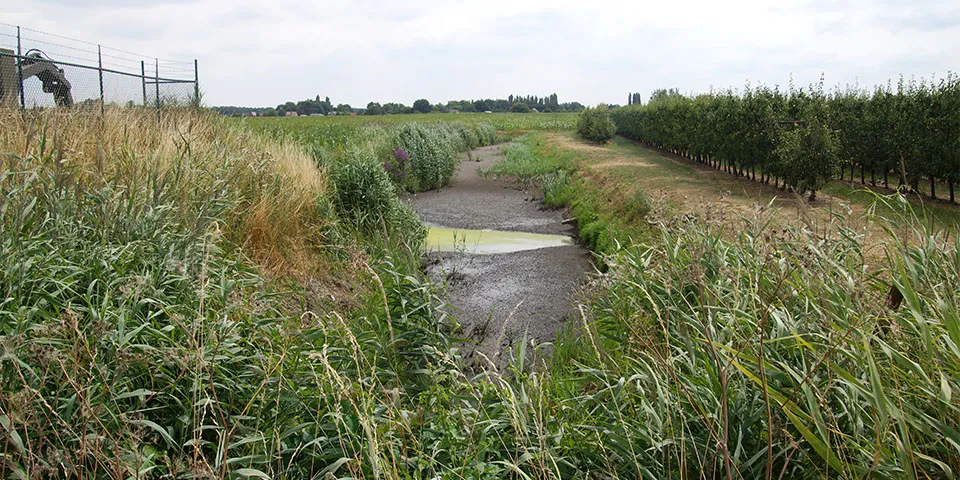
Flanders is also making funding available for essential works, such as the construction of large-scale water storage basins to provide reserve capacity and the restoration of meandering watercourses. (Image: VLARIO)
Drought task force
As part of these measures, the Flemish Government is setting up a Drought Task Force. It will oversee the implementation of the Blue Deal and put forward additional policy proposals. “We are determined to make Flanders wetter and improve our water supply. Failing to invest in the fight against drought would undermine the resilience of our industry and agriculture. What is more, every depaving project creates additional work for roadworkers and the construction sector. The creation of wetland nature and large-scale water storage basins will also generate a considerable amount of work for earthworks contractors. Wetland nature can often be developed for tourism, which also brings indirect economic activity,” concludes Minister Zuhal Demir.
On Friday 11 September, VLARIO is holding a seminar explaining in practical terms what the Blue Deal means for local authorities and/or sewer managers. More information at www.vlario.be. Looking for inspiration? Be sure to visit www.blauwgroenvlaanderen.be, an initiative by VLARIO and Aquafin, for interesting projects.
Question about this story? Ask your question
Keep following this
Get an email when a new story is published. No account needed.
- ThemeRenewing pipelines and sewers
- SubjectGeneral







