









The transition to greener, circular concrete gathers pace
Text Niels Rouvrois Beeld Creus Concrete Solutions
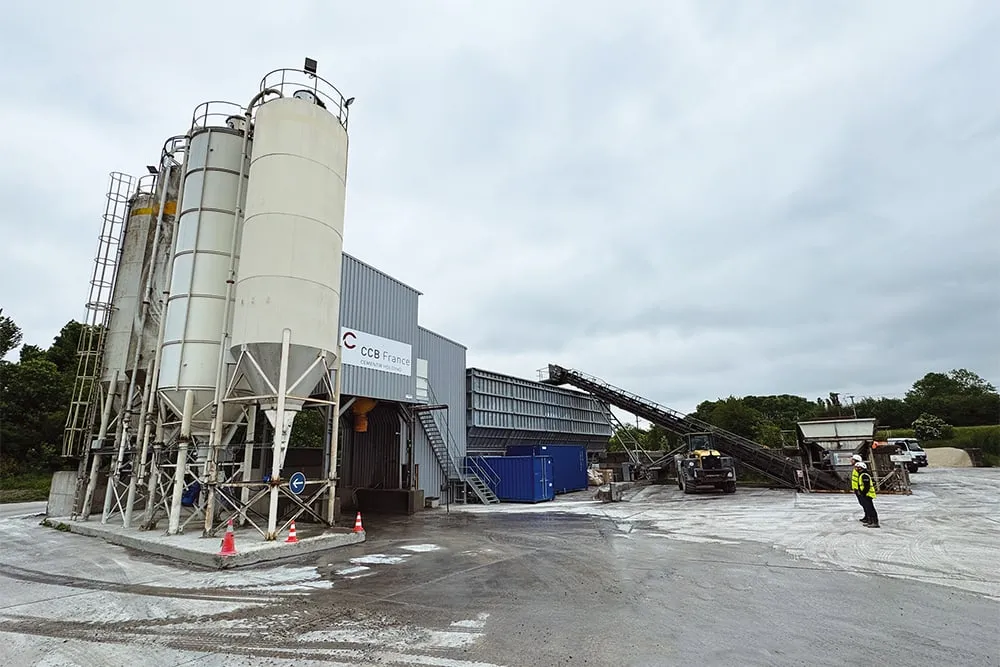
The transition to a circular economy is now well under way. As the world’s most widely used construction material, concrete must also get on board. Recycled materials are becoming increasingly popular in concrete production, but not all batching plants are suitable for this type of production. Creus Concrete Solutions, a manufacturer of batching plants, has a solution. “Our bins are designed to handle alternative production processes too,” says Stijn Defraeye of Creus.
Creus designs and manufactures batching plants and fully automated production lines for reinforced concrete floor slabs. Maintenance and servicing are also part of the company’s offering. Stijn Defraeye explains: “Our main focus is on developing batching plants. Compact batching plants for building-materials suppliers, construction companies and smaller precast manufacturers, large horizontal batching plants for precast and ready-mixed concrete, as well as continuous mixing plants for stabilised sand and industrial waste materials such as fly ash and sludge…” Every project places particular emphasis on easy maintenance, user-friendly operation and good service. Stijn Defraeye adds: “We see our experience in maintenance and servicing as a major advantage, because it gives us a clear understanding of what needs to be improved when developing new plants. This enables us to bring easy-to-maintain plants to market.”
Pioneering role
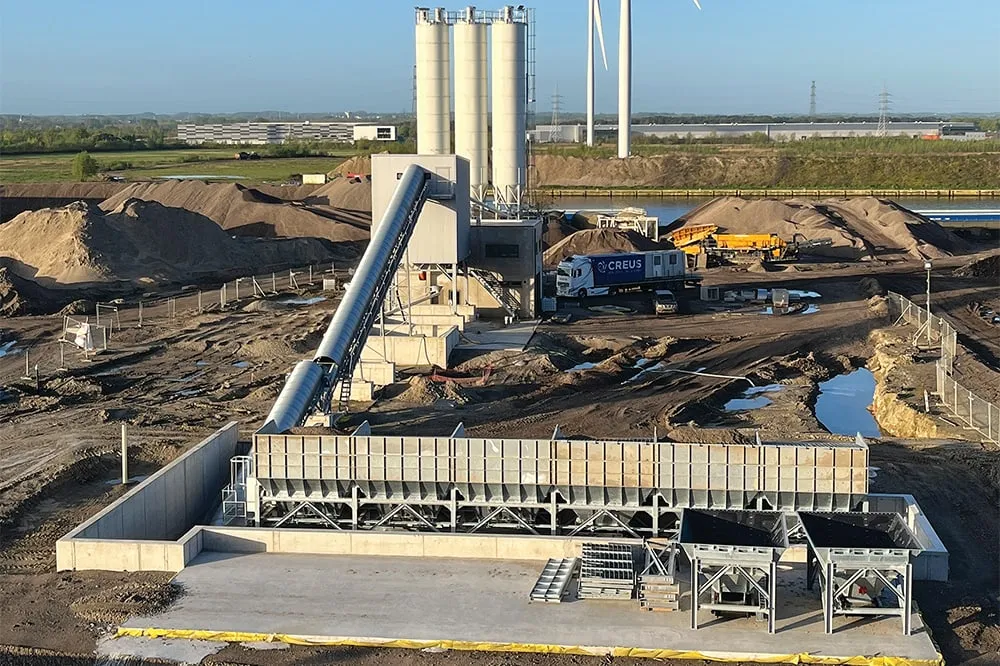
Recycled materials are increasingly being used in the production of precast and ready-mixed concrete. To make concrete more circular, greater emphasis is being placed on using recycled aggregates to partially replace natural aggregates. Creus Concrete Solutions recognises the urgency and is taking a pioneering role as a manufacturer and developer of batching plants. “Quality remains our starting point. Our bins are robust and galvanised, but we also take account of a changing society,” says Stijn Defraeye. “Whereas pure raw materials such as Scheldt sand or sea sand were once the norm, we are now seeing a major shift towards recycled materials. That is why Creus has designed bins that can handle this type of production too. We also have a mobile plant, and a second mobile plant is currently in the design phase.”
Keeping pace with change is the only way forward. “The market sets the direction, and it is calling for an increasingly green approach, which makes perfect sense,” he says. “Raw materials are becoming scarcer and more expensive. It makes sense, then, to recycle the large volumes of rubble available. This is already happening, but it will only increase in the future. We got on board from day one, and that proved necessary. Belgium is certainly a frontrunner in this respect. With bins from other countries, we often find that the material simply will not discharge, or that more than half of it stays stuck to the sides. As part of its recycling work, Creus has also developed an earth bin. Processing earth requires a more specialised approach and cannot be done with a standard recycling bin.”
New site in France
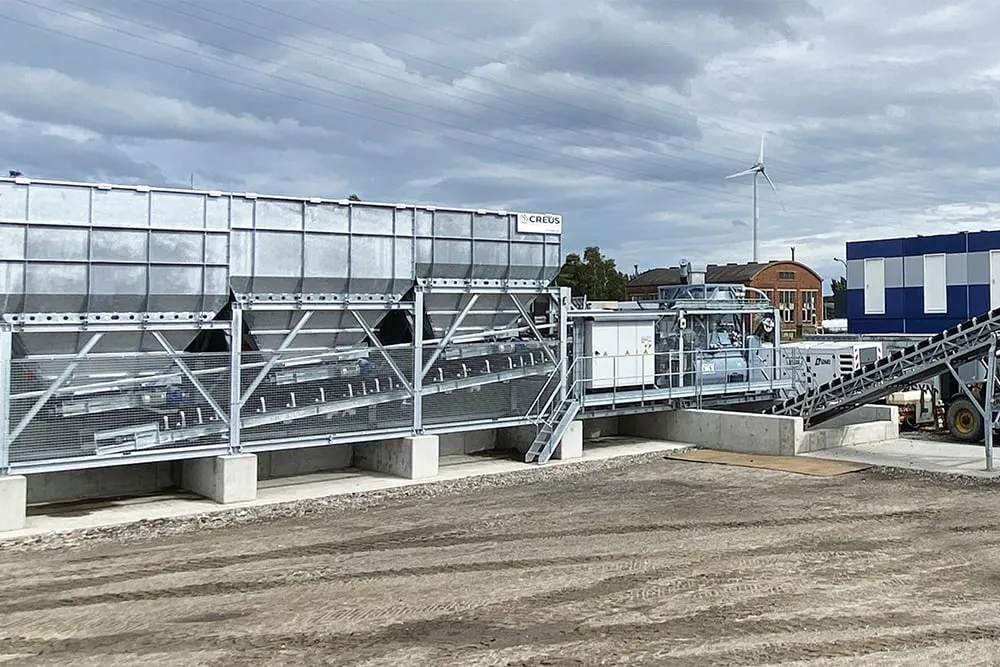
Alongside in-house development by its own engineers, Creus Concrete Solutions also works with a number of trusted partners. “Only high-quality components from our partners are installed in our concrete batching plants. They all share the same philosophy. These dynamic companies, each with more than 25 years of experience, are leaders in their respective fields. Our partnerships give us direct lines of communication with management and technical staff, allowing us to respond quickly to any questions. To serve our customers even better, we opened our new site in France at the start of this year as Creus sa,” concludes Stijn Defraeye.
Een zakelijke vraag aan Concrete x? Get in touch
Companies in this story
Keep following this
Get an email when a new story is published. No account needed.
- ThemeMaterials with a lower environmental impact
- SubjectConcrete
- CompanyConcrete x







