









Circular reuse of wastewater at hyperscale data centres in Farciennes
Text Joris Hendrickx Beeld Jan De Nul
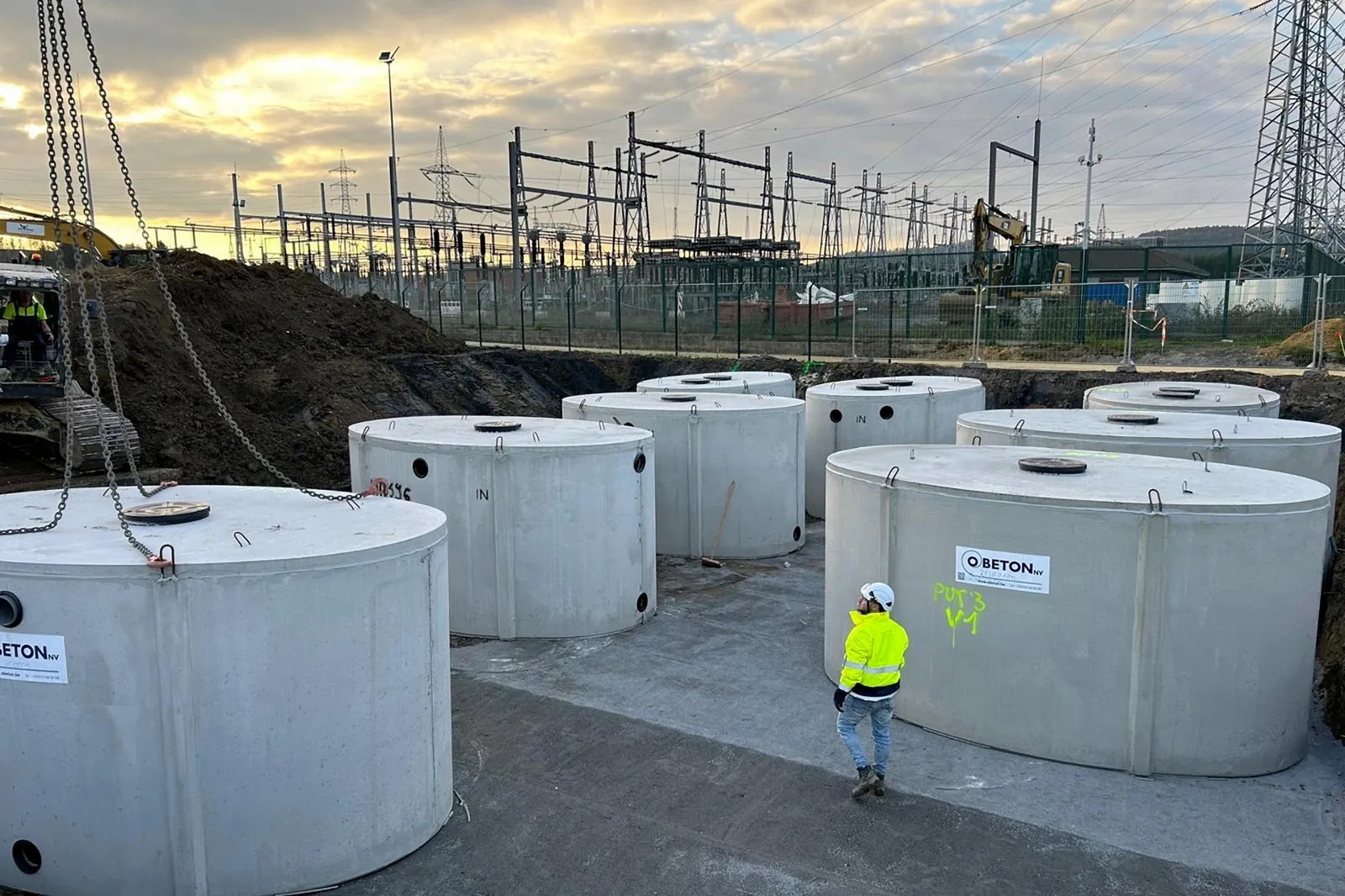
Work is progressing apace on two hyperscale data centres in Farciennes for a major technology company. Innovative solutions are needed to minimise the environmental impact of a project on this scale. One notable example is the wastewater treatment plant installed at the site’s temporary welfare building. It was constructed using precast concrete tanks from O Beton, a member of FEBEO, the product group within FEBE representing manufacturers of water treatment products. Jan Lauwers (Sales Director at O Beton) and Jurgen Vandamme (Chief Site Manager at Jan De Nul) explain how it works.
FEBE is the recognised trade association for manufacturers of precast concrete products and represents the interests of the sector. The Belgian concrete industry produces a wide range of precast elements for construction, from masonry blocks and paving stones to large structural elements such as bridge beams. Within FEBE, FEBEO operates as a product group bringing together manufacturers of precast concrete products for water treatment. FEBEO supports the marketing of its members’ products, both technically and promotionally.
Sustainable wastewater solution
The so-called welfare building on the Farciennes site serves as a temporary hub for site managers, workers and clients. “At peak times, up to 1,200 people are working there at once. They need facilities including toilets, canteens and office space. In short, all the amenities that produce wastewater,” says Jan Lauwers.
The original plans called for underground holding tanks that would be emptied regularly. Jurgen Vandamme contacted O Beton about supplying them. As this approach would be financially and environmentally unsustainable in the long term, Jan Lauwers proposed treating the water on site.
Modular, scalable wastewater treatment plant
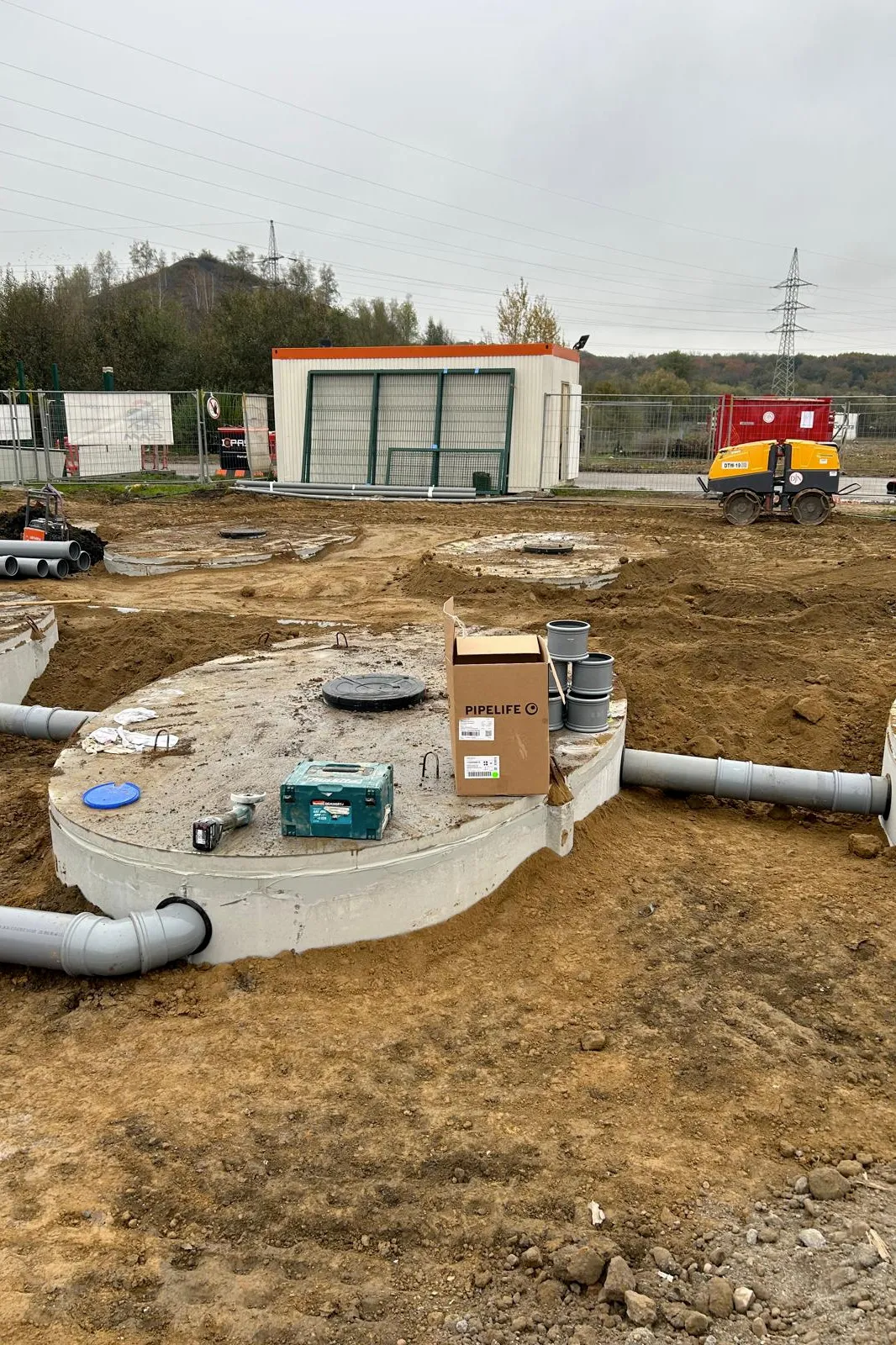
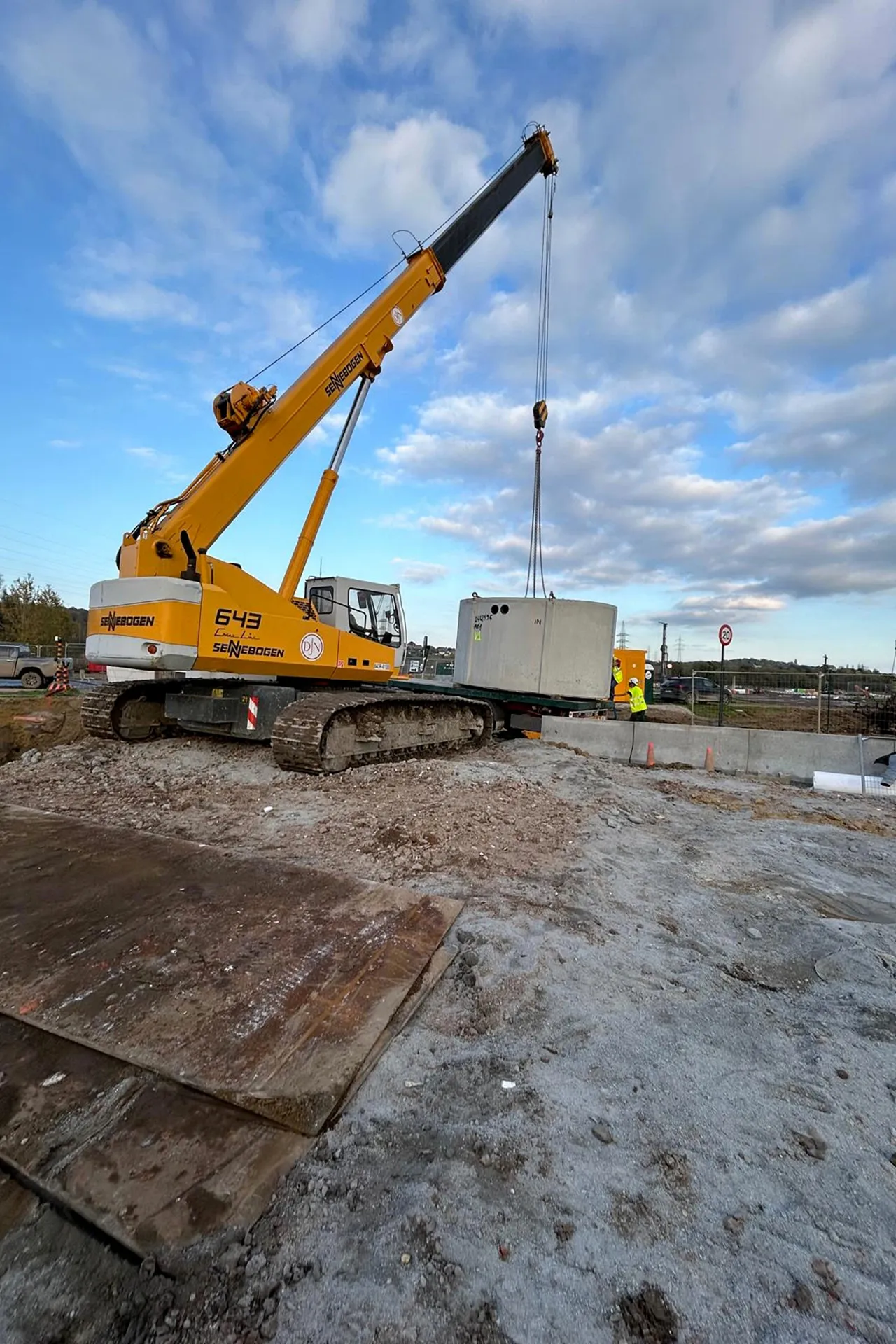
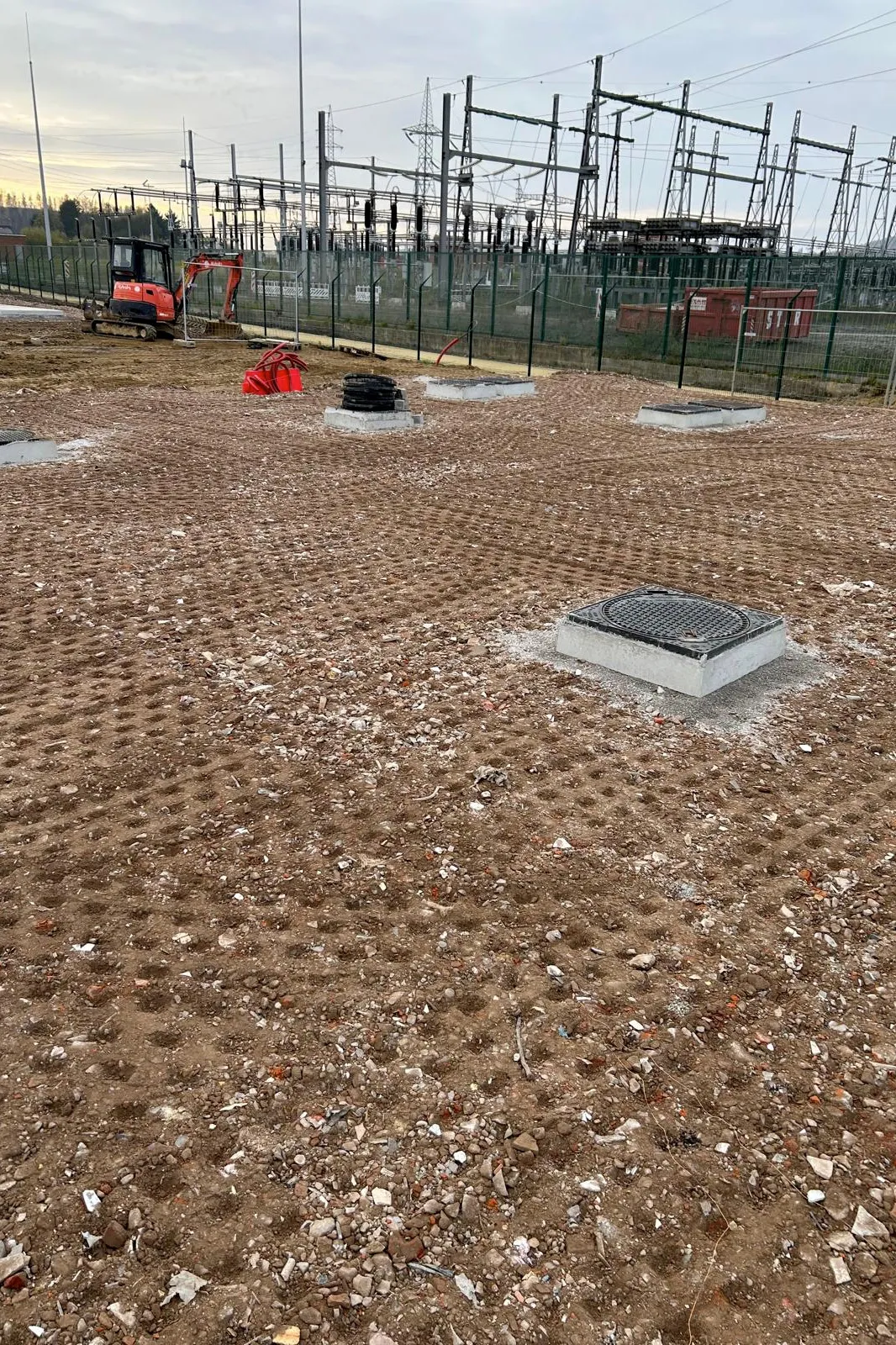
A small-scale wastewater treatment plant (KWZI) was chosen: a compact, flexible solution that treats wastewater on site. “We reuse the treated water, for example to flush toilets,” explains Jurgen Vandamme. “Any surplus treated water is discharged to the Sambre under controlled conditions.”
The plant was designed to be scalable. “What started out as one data centre quickly grew to two, so the welfare building doubled in size too. We had to scale up quickly, which was possible thanks to the system’s modular design,” says Vandamme.
Complete service, including maintenance and monitoring
According to Lauwers, O Beton’s service does not end with supplying the plant. “We also take care of maintenance. Every three months, we carry out proactive checks to ensure the plant is always performing optimally.
This is essential to continue guaranteeing the specified treatment efficiencies.” Vandamme agrees: “Having that taken care of is a major benefit for us. The system operates fully autonomously, without us having to check on it every day.”
Long-term benefits for wastewater and rainwater
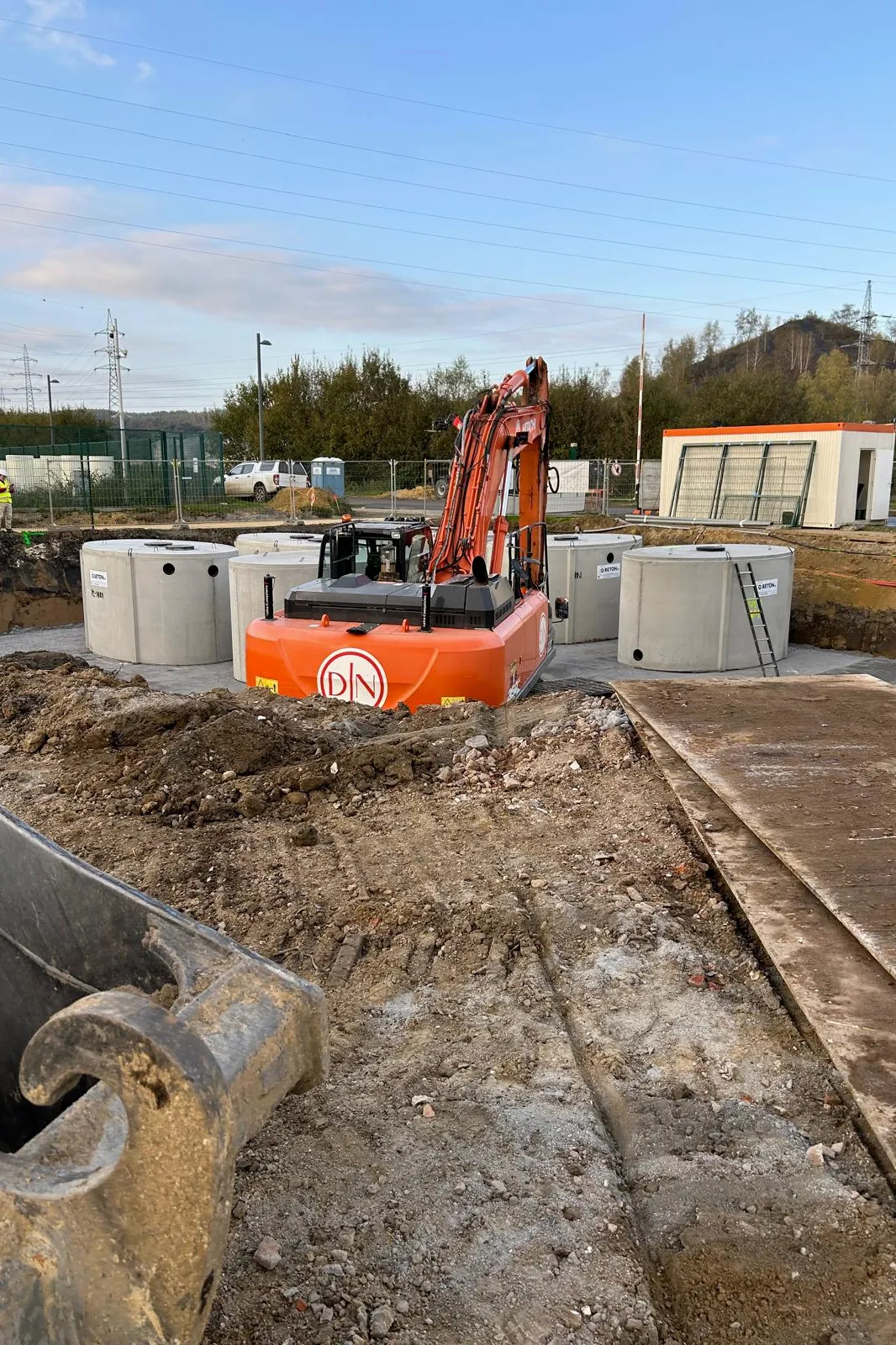
The KWZI consists of several precast concrete tanks, each with a capacity of 20,000 litres. “This makes it easy to scale the plant up or down as required,” says Lauwers. The plant will remain in operation after the data centres are completed, albeit at a lower capacity. “We can adjust the flow rate flexibly to match actual use. Its strategic location between the two data centres also ensures the system can be used efficiently over the long term.”
Rainwater recovery was also included alongside wastewater treatment. “Given the large roof area of the welfare building, there is plenty of rainwater available,” says Lauwers. “That water can also be reused, further enhancing the project’s sustainability.”
Suitable for other sites and sectors
The small-scale wastewater treatment plant was initially a new concept for the client, but its benefits soon became clear. “They now include wastewater treatment as standard in the specifications for similar projects,” says Vandamme. “It is a truly sustainable, multifunctional and cost-effective system that requires no special permits and is easy to install.
Lauwers concludes: “This solution is not only suitable for large construction sites. Our system also offers an efficient and cost-effective solution for smaller, remote sites where connection to the sewer network is difficult, whether on a temporary or permanent basis.”
Een zakelijke vraag aan O BETON? Get in touch
Companies in this story
Keep following this
Get an email when a new story is published. No account needed.
- ThemeRenewing pipelines and sewers
- SubjectGeneral
- CompanyO BETON







