UHasselt tests residual strength of 32-metre-long concrete bridge girders from Walloon viaduct
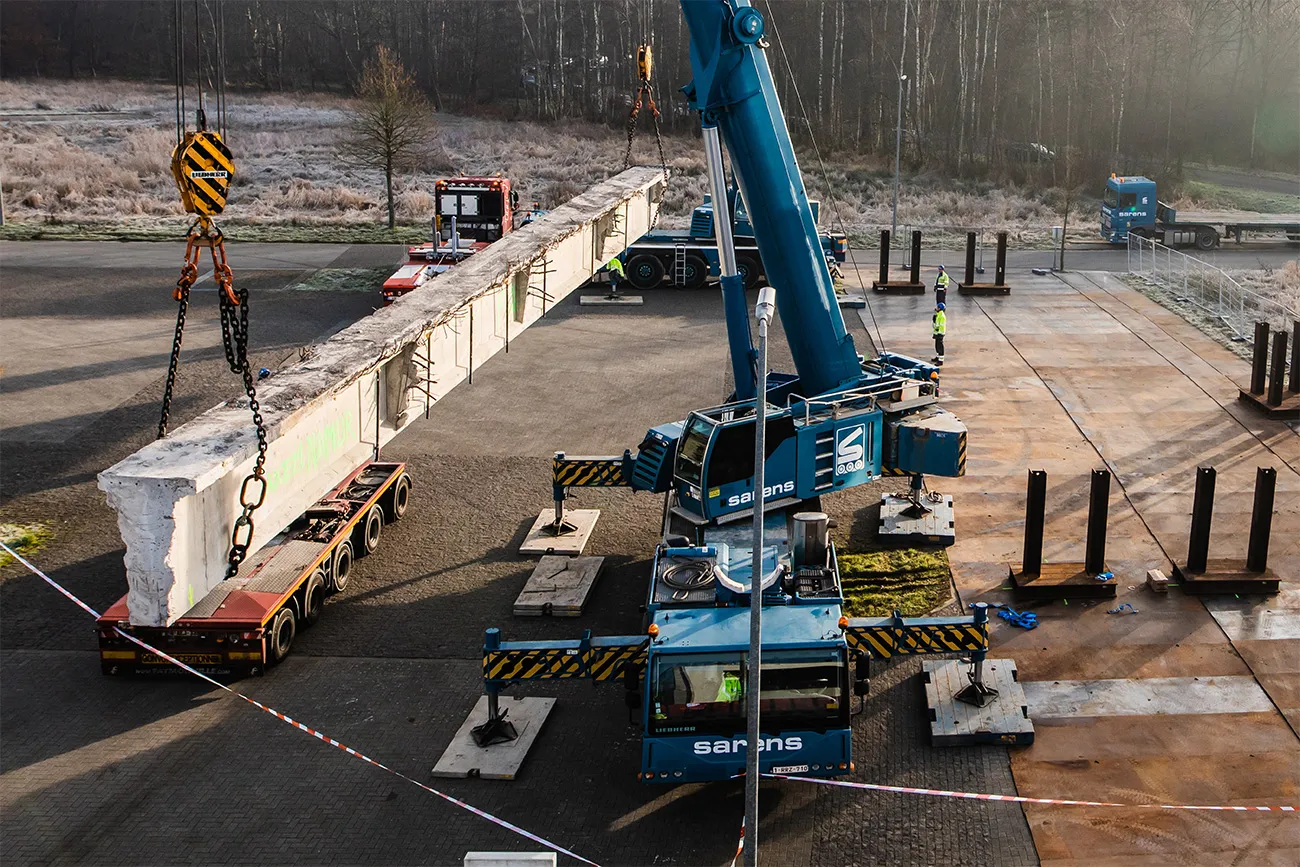
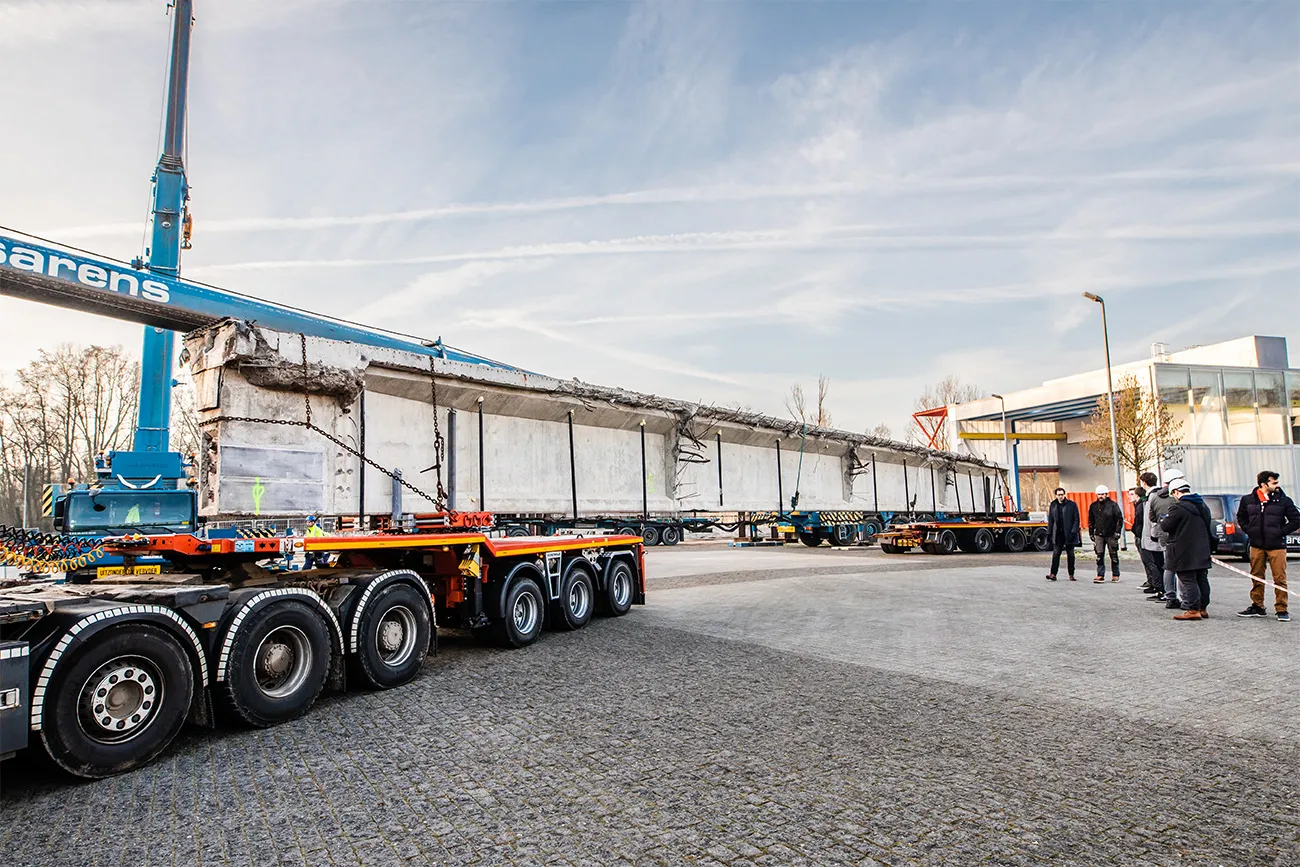
Bridge girders measuring 32 m long and 2 m high have arrived at UHasselt’s Concrete and Construction Application Centre for stability measurements. The girders date from the 1960s and until recently formed part of an existing viaduct in Wallonia. “At the request of the Walloon authorities, we will test these bridge girders under loads of more than 300 tonnes to establish the remaining capacity of the bridges. This will give us an idea of the condition of the viaduct assets in Wallonia,” says UHasselt professor Hervé Degée.
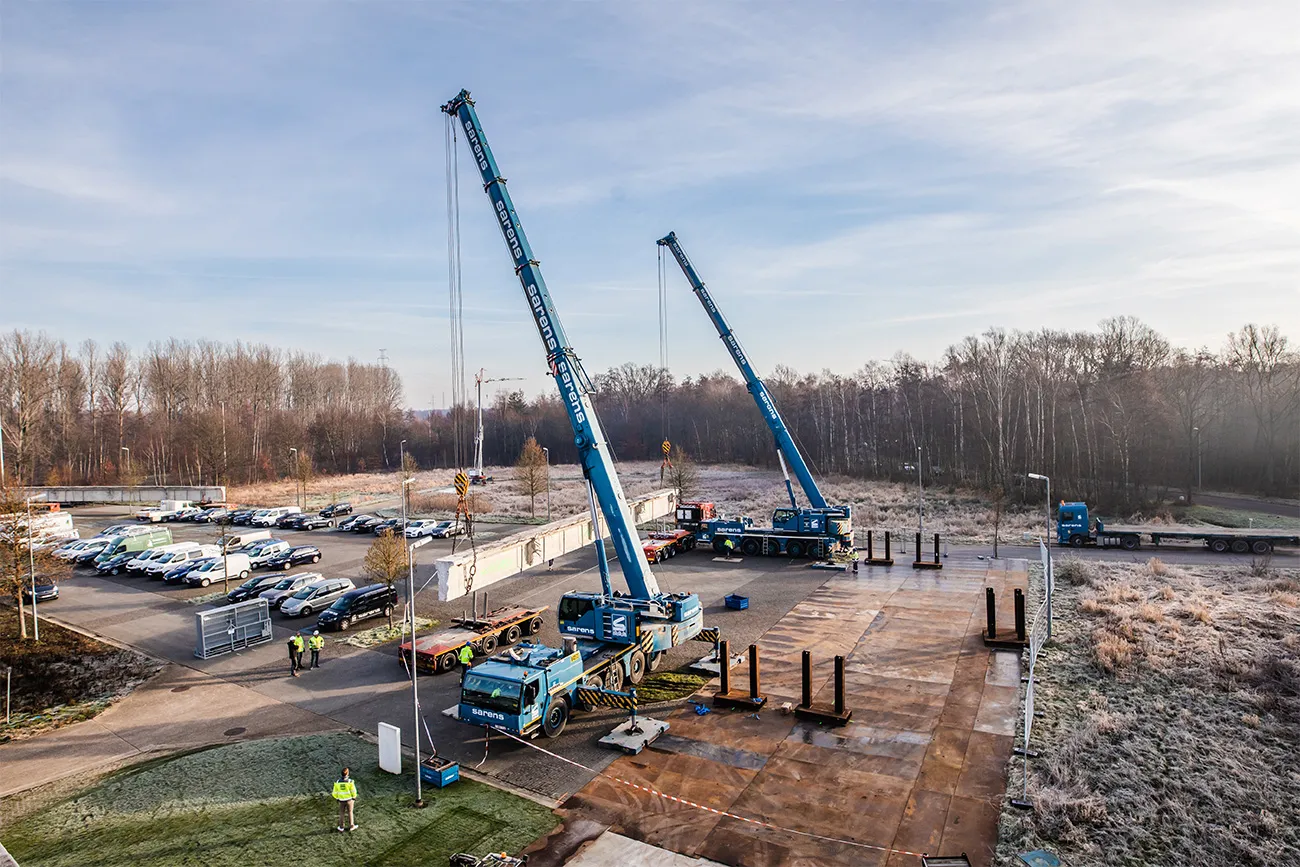
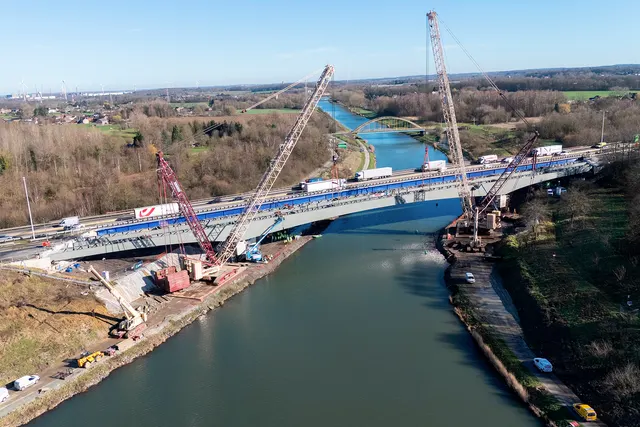
The bridge girders that have arrived at ACB² are components of the Huccorgne viaduct (E42 between Liège and Namur). Like many viaducts currently found on Walloon roads, these bridge components date from the late 1960s and early 1970s. The Walloon authorities (SPW) now want to assess the condition of their viaducts. They have enlisted the help of Hasselt University, ULiége, ULB and SECO.
Applying loads of up to 300 tonnes
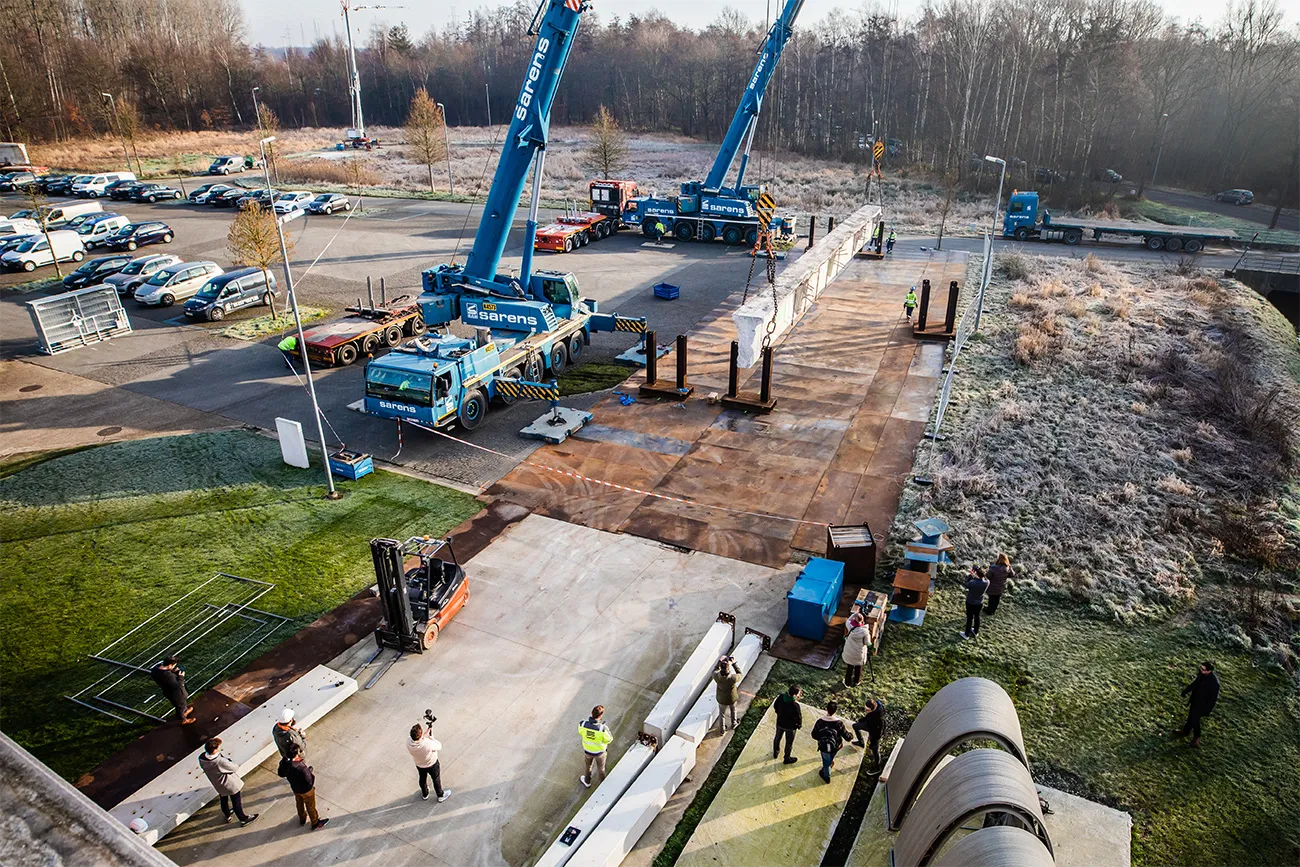
“In March, we will carry out shear tests on these 3 concrete bridge girders at our Concrete and Construction Application Centre. Hydraulic jacks will apply a load from above of more than 300 tonnes. We will fit the concrete bridge girders with a large number of different sensors to measure cracking in the beams precisely,” says professor Hervé Degée. The researchers will load each of the three girders at a different point until it fails: 6 m, 9 m and 12 m from the support.
By breaking these bridge girders at 3 different points, the researchers can establish the remaining capacity of the components, taking account of any cracking or degradation that has occurred over the years. Based on the measurements taken at UHasselt, ULiège and ULB will prepare and refine calculation notes and virtual models to determine the residual strength of other bridge girders in the Walloon authorities’ assets.
Heavier traffic
The researchers will use these models to provide the Walloon authorities with guidance on the next steps to take for other viaducts built in a similar way. “Today’s viaducts were designed for a service life of 100 years. But road traffic in the 1970s is, of course, no longer comparable to traffic today,” says Dr Rik Steensels (UHasselt). “It is therefore important to establish the impact that the ever-increasing number of cars and heavy vehicles has had on these roads. This research will enable us to advise the authorities on whether similar girders in existing viaducts still meet requirements, or need to be repaired or replaced.”
This research project, with a total budget of around 200,000 euros, was funded by the Walloon authorities (SPW). Hasselt University is a partner in the research project, together with Université de Liège, Université Libre de Bruxelles and SECO Belgium.
Question about this story? Ask your question
Keep following this
Get an email when a new story is published. No account needed.
- ThemeExtending the life of bridges and tunnels
- SubjectBridges & tunnels