Structures: a successful marriage of steel and water
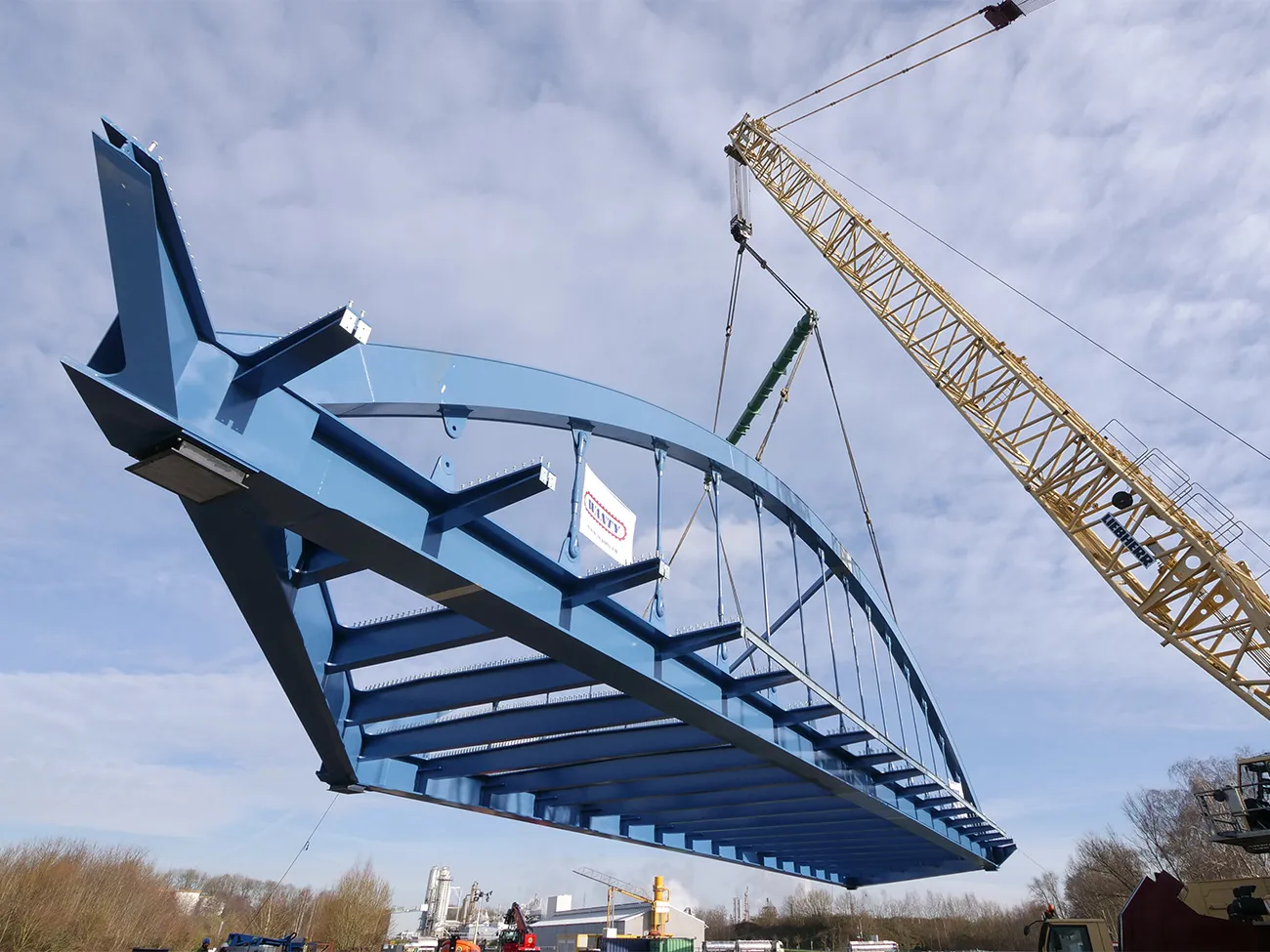
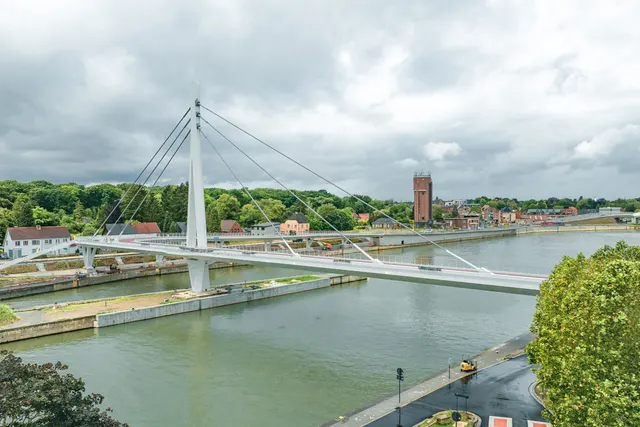
Work on the reconstruction of the bridge over the Goulet de la Darse in Hautrage (Saint-Ghislain), a major structure on the N50 that had been closed to traffic since February 2019, was completed at the end of last year. Around 10,000 vehicles use it every day, including many lorries. The large-scale project was carried out by Techno Métal Industrie (TMI), which formed a joint venture with Wanty, on behalf of SPW Mobilité et Infrastructures. TMI is one of Belgium’s specialists in this kind of work. In recent years, it has built up an impressive portfolio of prestigious projects, including the recently completed Theunisbrug in Antwerp.
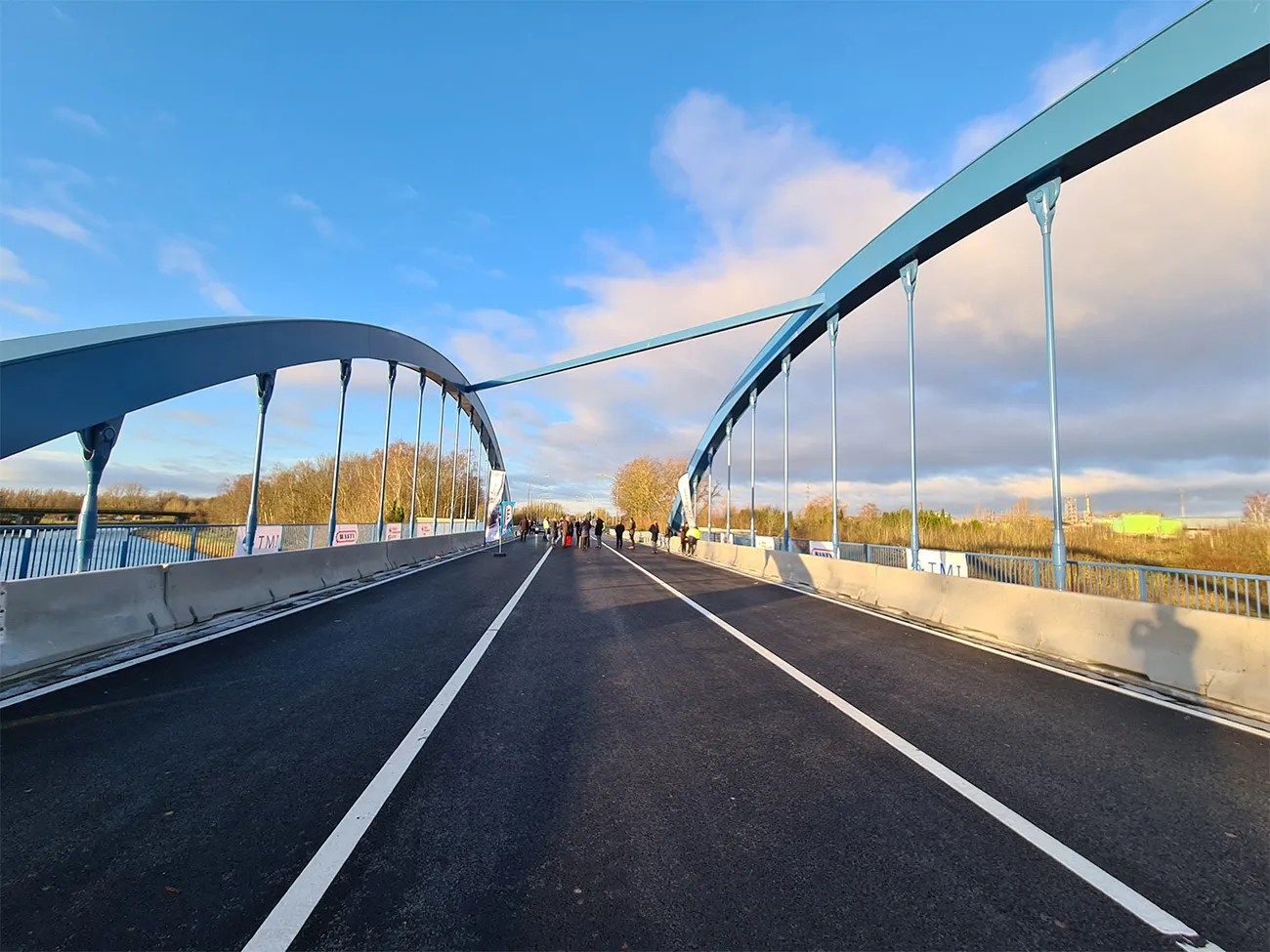
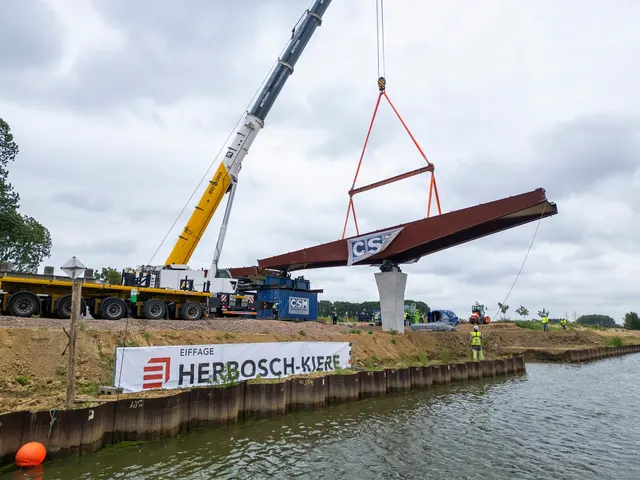
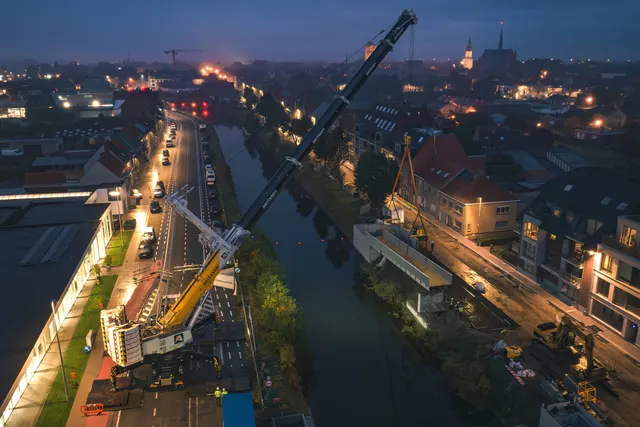
“We regularly build bowstring bridges like this one in our workshops. Although this has become routine work for us, every project still requires meticulous preparation and attention to detail.” In this case, the most spectacular part of the project was undoubtedly the on-site installation. A zone on the bank first had to be set aside for assembling the entire bridge structure, after which a suitable position had to be found for the crane, which was to lift the 300-tonne structure into place in a single operation. The bridge also had to be installed at an angle, which made the distances even greater.
Fabrication in Andenne
All construction and erection studies were carried out in-house by TMI. The design studies had previously been carried out in collaboration with the SPW and SECO, with a particular focus on the fatigue resistance of certain components, which made fabrication quite complex.
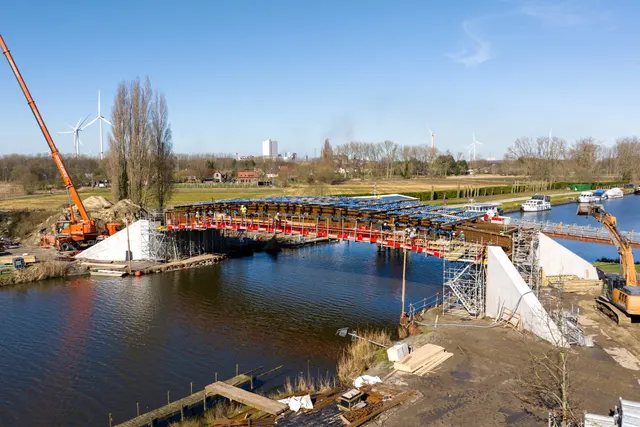
Production of a bowstring bridge of this kind at TMI’s workshops in Andenne typically proceeds through several successive stages: setting out (one month), ordering the plates from the rolling mill (eight to ten weeks), cutting, assembly, workshop welding (three to four months) and, finally, painting (one month). On site, TMI then reassembles the plates, after which they are welded and repainted to treat all the joints. This takes around three months in total.
Class 7 accreditation
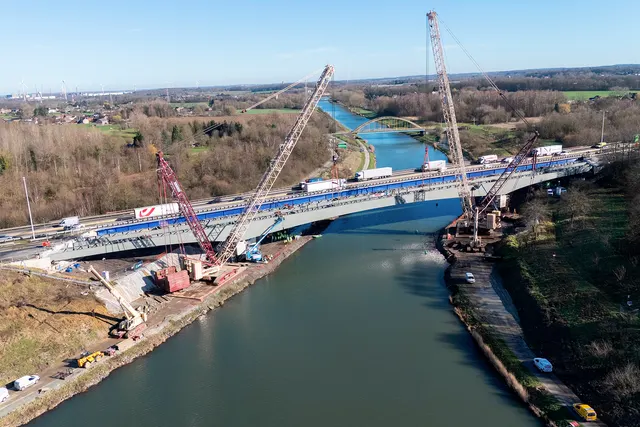
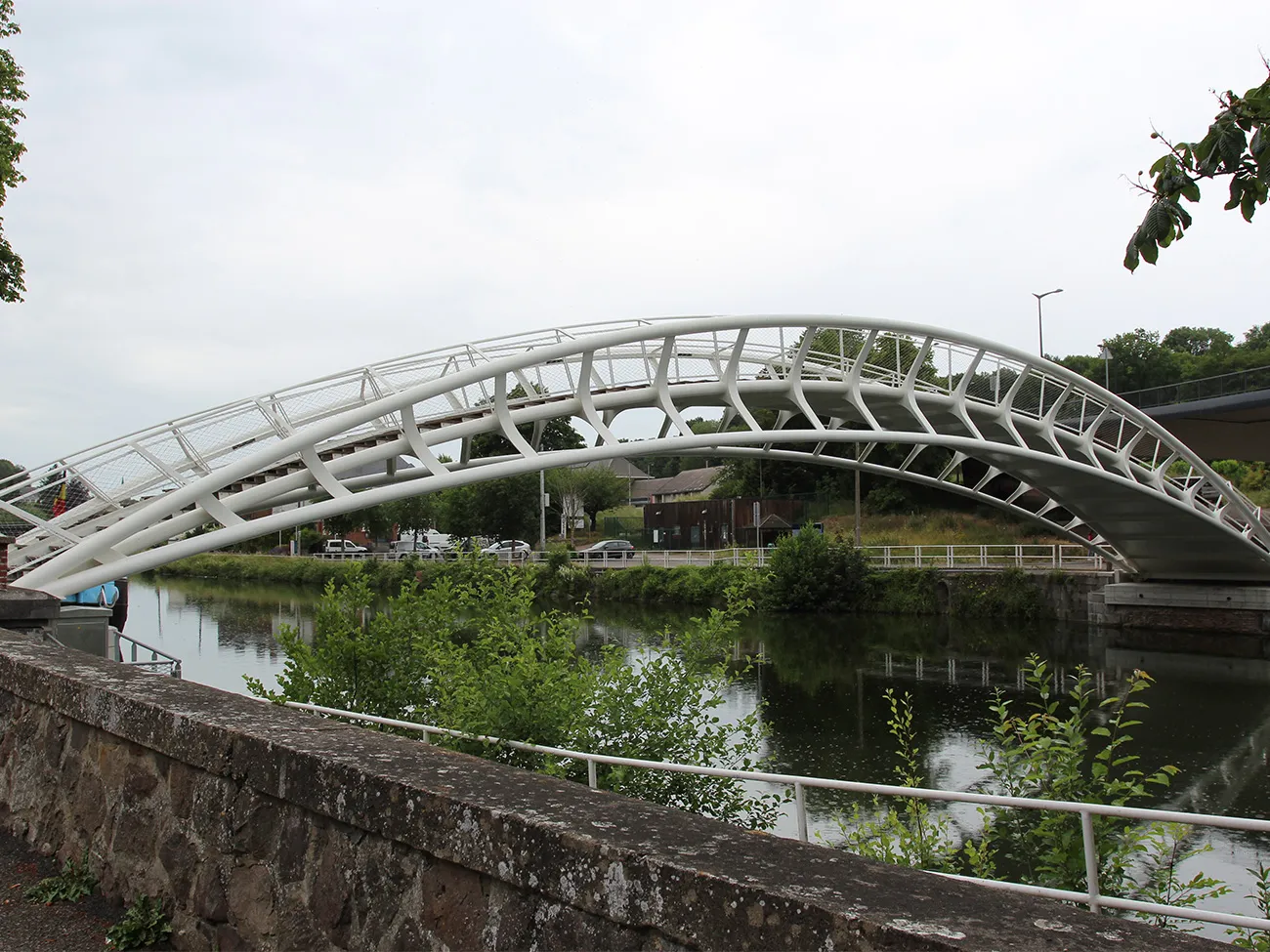
Alongside numerous large buildings, TMI’s portfolio includes bridges of many different types and sizes, such as the bridge over the widened Scheldt in the centre of Tournai and the Pont des Allemands in Visé, a railway viaduct with a total length of 532 metres and a steel weight of 2,460 tonnes. It comprises a hyperstatic span (245 metres long and weighing 1,550 tonnes) and seven isostatic spans (41 metres long and weighing 130 tonnes each). The award-winning passerelle at Chartres station is another impressive project.
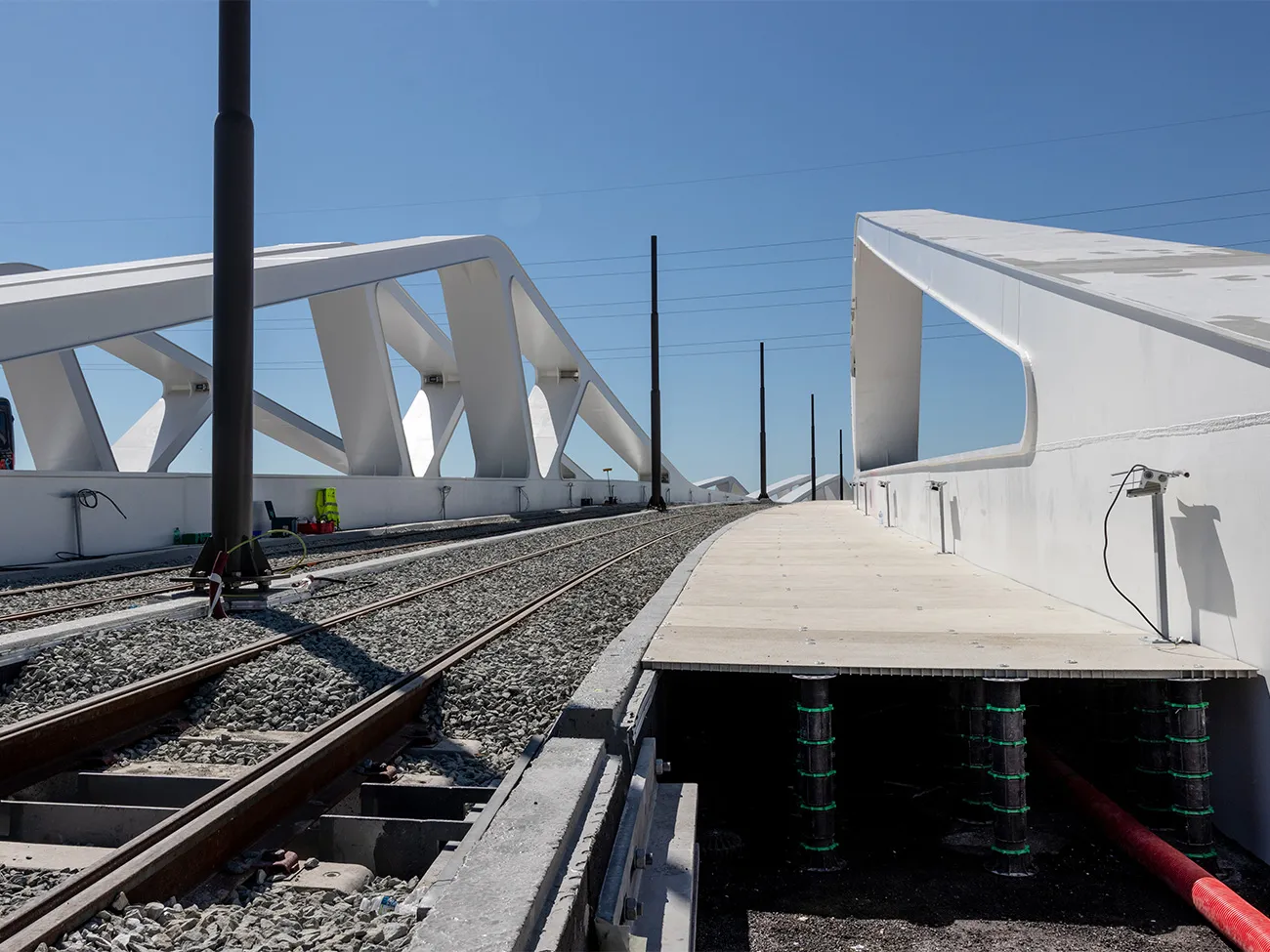
In a joint venture with steelwork contractor Aelterman, also a Class 7-accredited company, the Walloon firm recently contributed to the construction of the Theunisbrug in Antwerp, specifically by building the central tram bridge. This was a very attractive composite steel and concrete structure of the box-girder type, with a system of tie rods. Eric Deneil: “We also won the contract to build the columns at Ghent station. And, very recently, together with Alheembouw, we secured the contract to build the Mobilis centre for D’Ieteren in Anderlecht.”
Locks and dams
Another field in which TMI has built up an impressive portfolio is the construction of locks and dams. TMI recently built sheet-pile walls and gates for dams near Tournai and Deux-Acren, as well as on the island of Monsin in Liège, where the structures are even more imposing. At Ampsin-Neuville, the gates (12.5 metres wide and 10 metres high) of the new 25-metre-wide lock are now being brought into service. TMI is also manufacturing a mitre gate with two leaves, each 12.5 metres wide, and a 25-metre-wide, 10-metre-high sluice gate. Eric Deneil: “Our expertise is valued even in France, where we have worked on the Meaux dam project near Paris.”
Question about this story? Ask your question
Keep following this
Get an email when a new story is published. No account needed.
- ThemeExtending the life of bridges and tunnels
- SubjectBridges & tunnels