Safety was paramount during Scheldebrug renovation
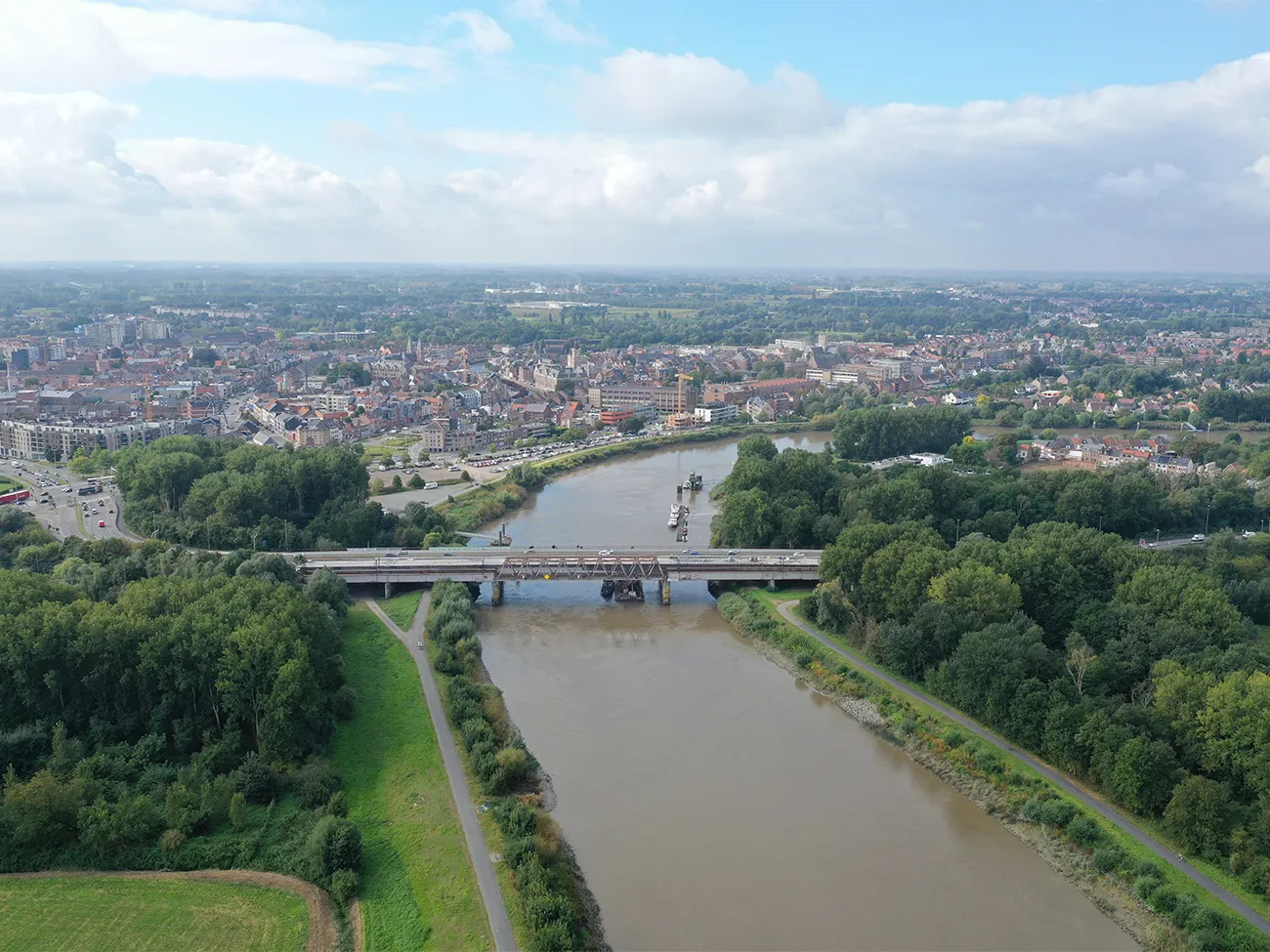
Cargo ships, strong currents and a pontoon that drifted away
A bridge renovation over the Schelde in Dendermonde seemed like a standard project for Renotec. But a number of factors made the work a challenge for the renovation and restoration specialist from Geel. Not least the large cargo ships passing close to the worksite.
The Scheldebrug in Dendermonde was no longer in the best condition, so a full renovation was needed. AVW Oost-Vlaanderen awarded the project to Renotec, working in a temporary joint venture with Colas, which was responsible for the asphalt works and renovation of the adjacent junction. Renotec’s task was to rebuild the bridge on its supporting structure and further strengthen that structure.
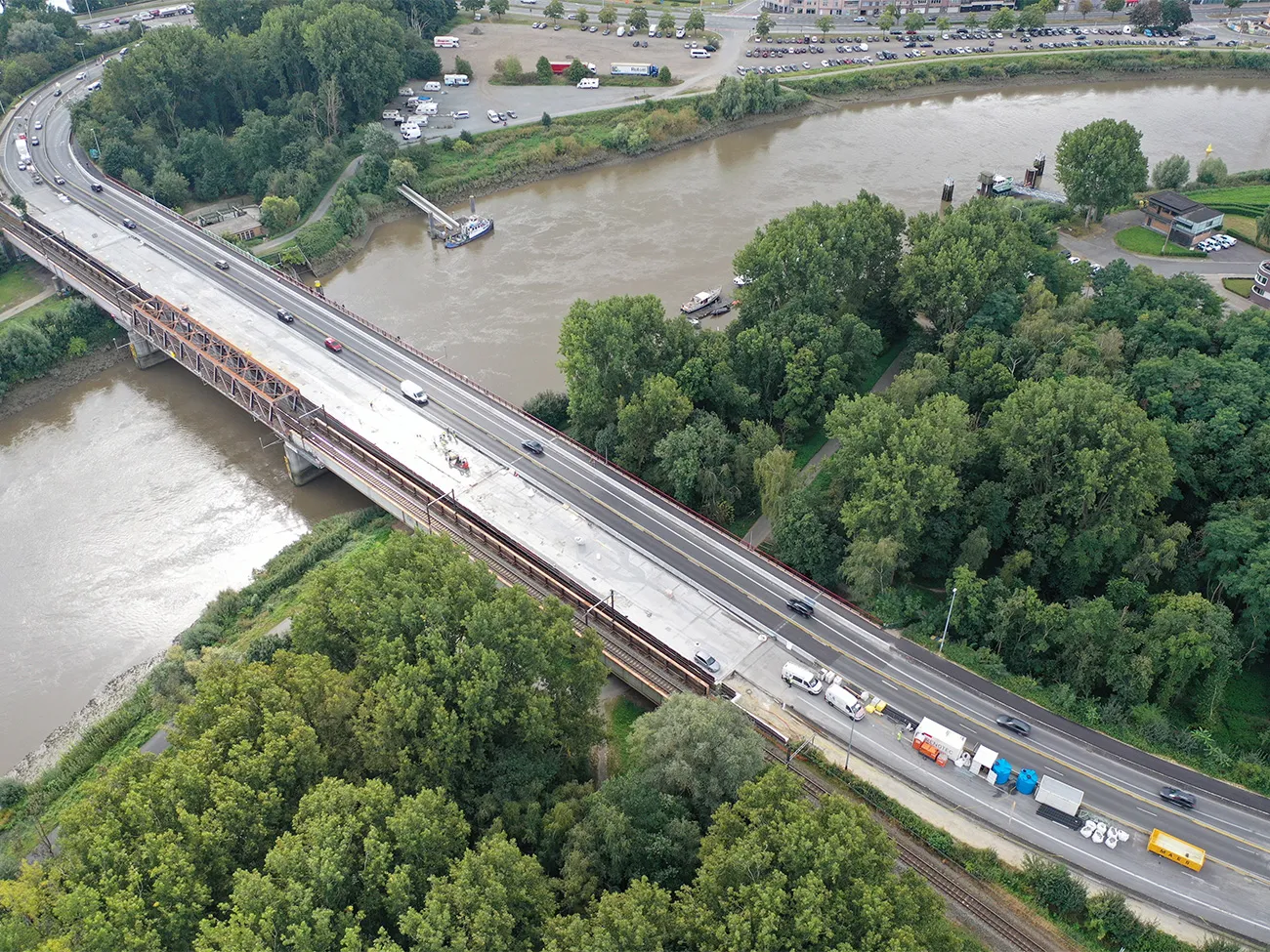
40 tonnes of mortar
The superstructure was not a major challenge for the team, although Renotec had to place 40 tonnes of mortar to create a smooth crossfall and longitudinal profile on the bridge’s supporting structure. That is a large quantity for a bridge project of this kind. Thomas Mertens, project manager at Renotec, said: “If we don’t do that and create the entire new crossfall and longitudinal profile using asphalt alone, rutting and other damage will soon start to appear again.”
Drifting round the bend
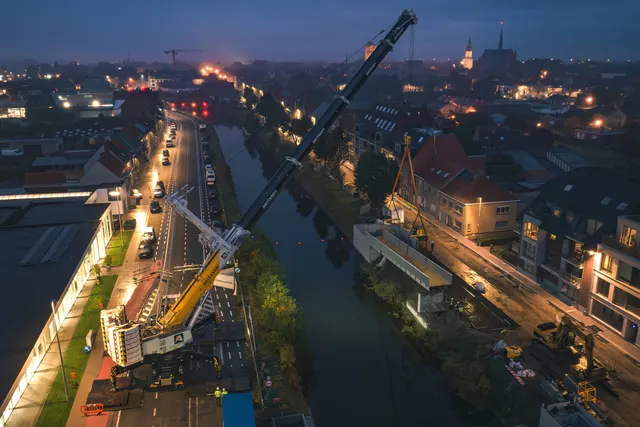
The bridge’s substructure was a very different matter. Mertens said: “The Schelde is a crucial artery for inland shipping, including in Dendermonde. So there were a lot of cargo ships passing during the works. And there was a very sharp bend just before the bridge. As a result, the large vessels, up to 100 metres long and 12 metres wide, drift round the bend towards the bank and end up in our work zone. We held extensive discussions with De Vlaamse Waterweg beforehand to ensure the safety of our team, as well as the ships and their crews. This led to a range of measures, including buoys at precisely specified locations, advance warnings on the banks and at the locks, shipping notices, and enough navigation signs, which had to be lit at night using solar panels, among other things.”
15 metres
Another problem emerged at low tide: an extra foundation came to light, reducing the planned 60 metres between the bridge piers to just 40 metres. This cut the available space for each bridge section by 10 metres. “You don’t want to be right next to that foundation or in the path of those large vessels either,” says Mertens, “which left us with a work zone of just 15 metres per pier. That’s not much, of course.”
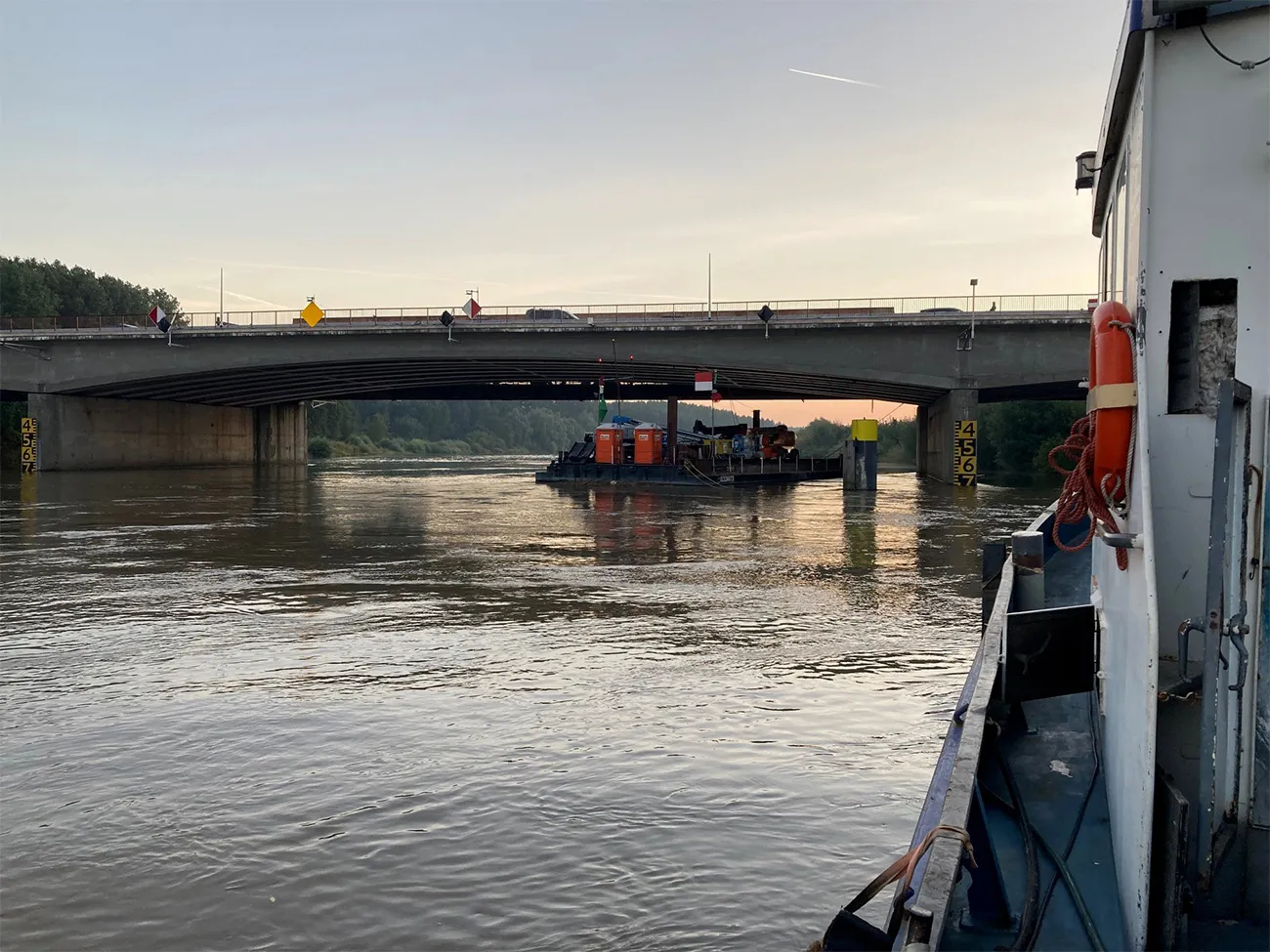
Current
Another issue became apparent during the works: the current in this section of the Schelde was quite strong, and the ground into which the pontoon’s spud legs were anchored, but which they were unfortunately unable to penetrate, as they are designed to do, could not withstand the current. As a result, the pontoon did not stay securely in place and drifted a little way from its original position every day. Renotec’s boat had to bring the pontoon back into position both during the day and at night. Eventually, the pontoon was even secured to the piers, while the boat had to remain nearby at all times. Fortunately, the cargo ships drifted towards just one bank, which was the most dangerous challenge. “But that was the bank where we started work. So we had to get straight into it to ensure safety,” Thomas says with a laugh.
Rapid decision-making and intensive communication were essential for this project. “But it was clear that all the partners wanted to make a great success of it,” says Thomas. “Together with the client AWV and the other parties involved, such as Infrabel and De Vlaamse Waterweg, we completed the job very smoothly.”
Question about this story? Ask your question
Wie aan Scheldebrug werkte
- asfaltwerkenColasIn this story
- clientAVW Oost-VlaanderenIn this story
Keep following this
Get an email when a new story is published. No account needed.
- ProjectScheldebrug
- ThemeExtending the life of bridges and tunnels
- SubjectBridges & tunnels
- CompanyColas
- CompanyAVW Oost-Vlaanderen