New cycle and pedestrian bridge over the Demer in Diest
Text Joris Hendrickx Beeld Herosch Luchtfoto’s: © Geert Brams
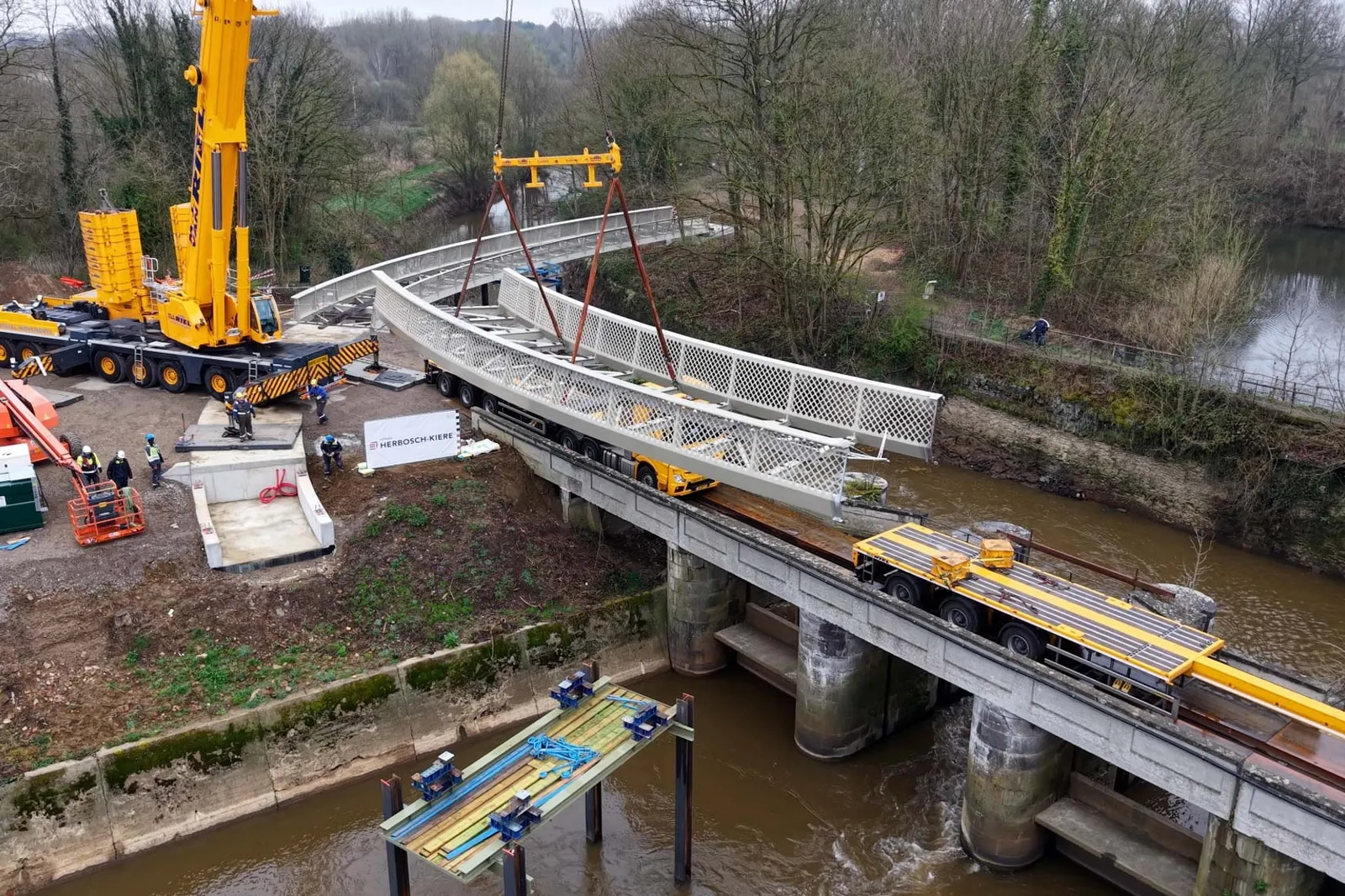
Over the coming years, the Grote Steunbeer, an old lock complex in Diest, will undergo a thorough restoration. The bricked-up historic passageways will be reopened and automated weir structures installed. This also means the old concrete bridge over the Grote Steunbeer will be removed. To maintain the connection between the district of Schaffen and the centre of Diest, Herbosch-Kiere is building a new cycle and pedestrian bridge over the Demer. Site manager Gary Van Gulck talks us through the project.
The wider context
The ‘Grote Steunbeer’ is a listed monument and part of the 19th-century defensive perimeter around Diest. The Vlaamse Milieumaatschappij (VMM) is replacing the existing lock with a controllable weir with digital controls. This will help improve water management in the higher-lying areas, including by raising the groundwater level in Webbekoms Broek.
Smart controls will make it possible to respond more efficiently to drought in the region. The VMM is also restoring the connection between the Demer and the Oude Demer, allowing river water to flow through the centre of Diest again. These measures reduce the risk of flooding and create favourable conditions for biodiversity.
Complex construction site in a protected area
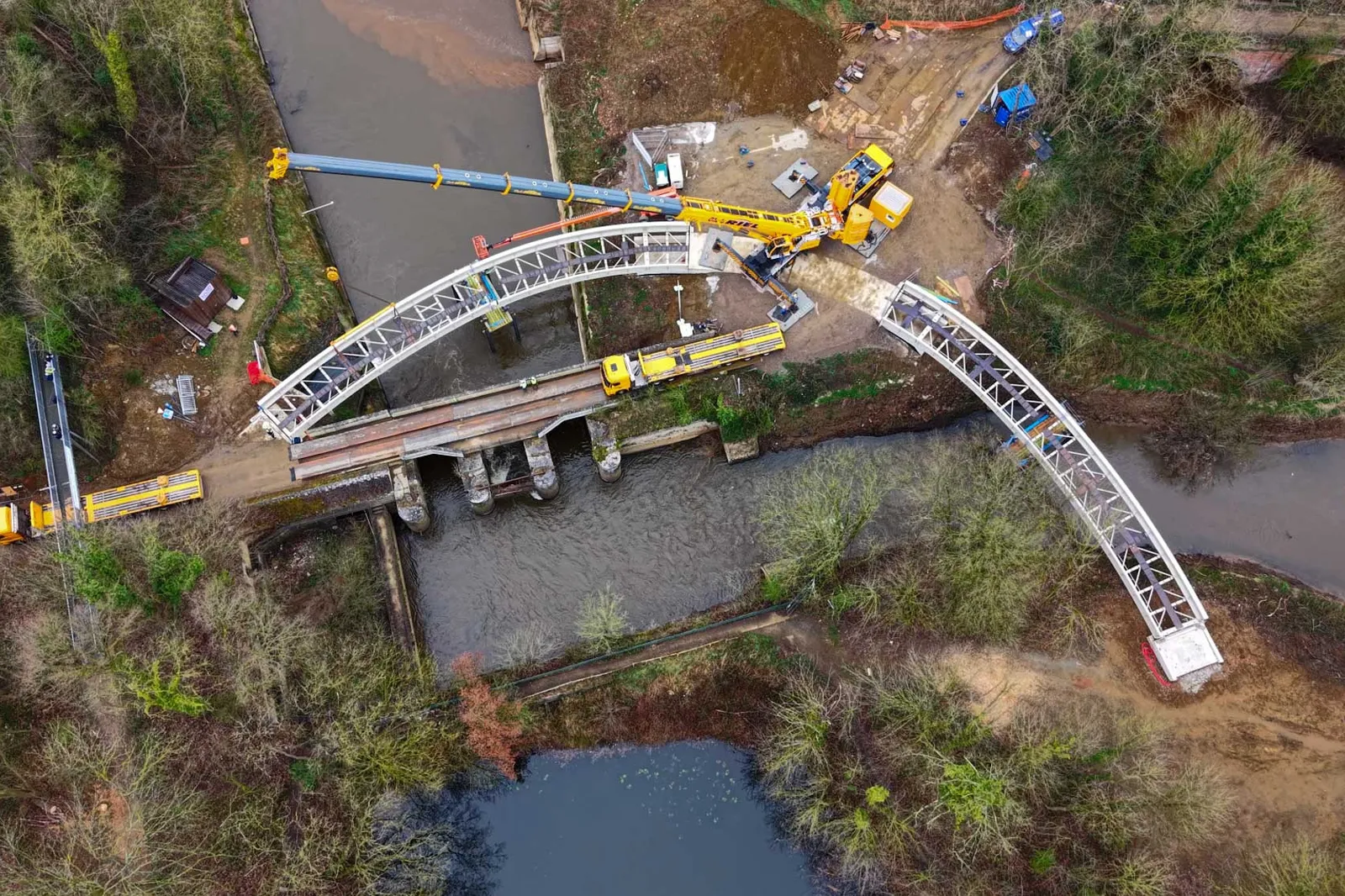
Herbosch-Kiere is specifically responsible for building a new cycle and pedestrian bridge next to the lock complex. “Building this bridge is no everyday job,” says Gary Van Gulck. “We are working in an area of historic and ecological importance. This brings considerable challenges, both technical and logistical.”
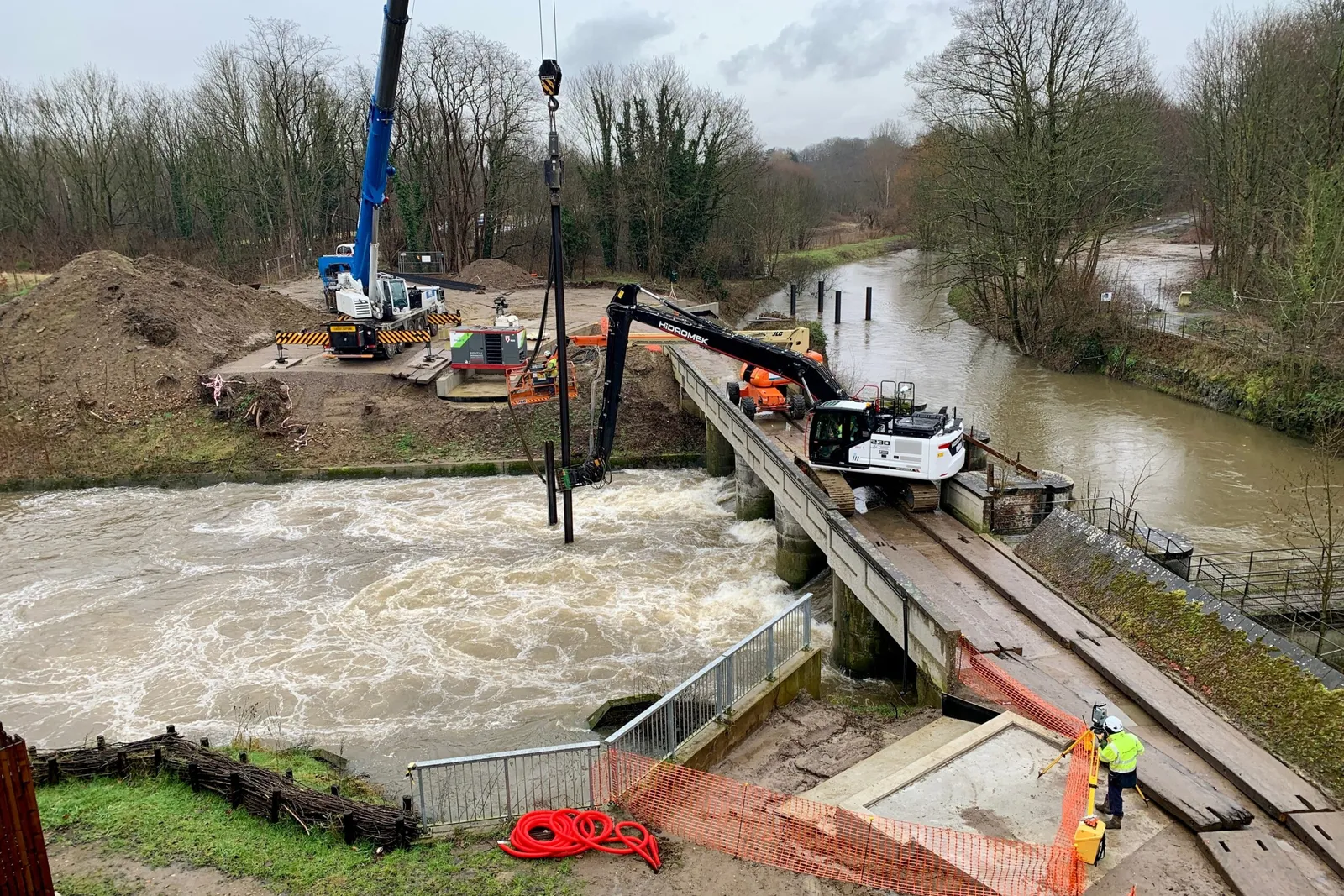
The bridge crosses the Demer twice, which means three abutments are needed. “We started building the abutments after the 2024 construction holiday,” Van Gulck explains. “Each abutment rests on pile foundations to provide the necessary stability. As we are working near the Webbekoms Broek nature reserve, manoeuvring large machines around the site was no easy task. We therefore had to find smart ways of getting the equipment on site.”
Steel structure delivered in two sections
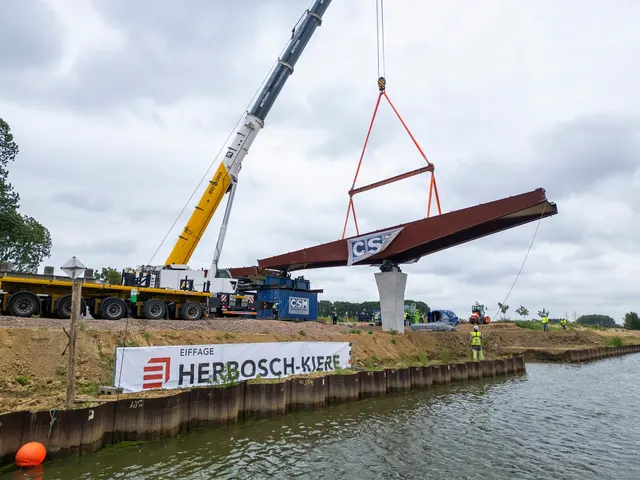
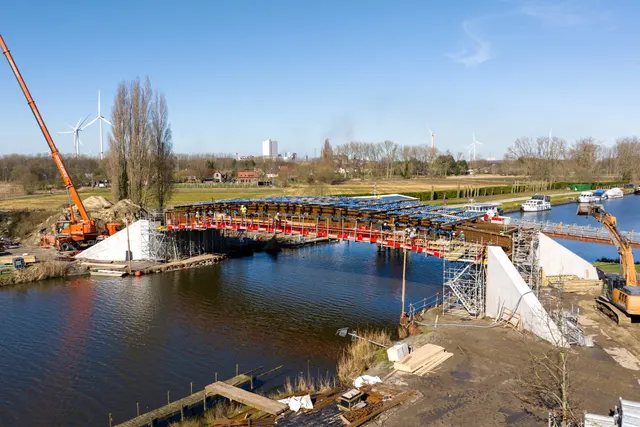
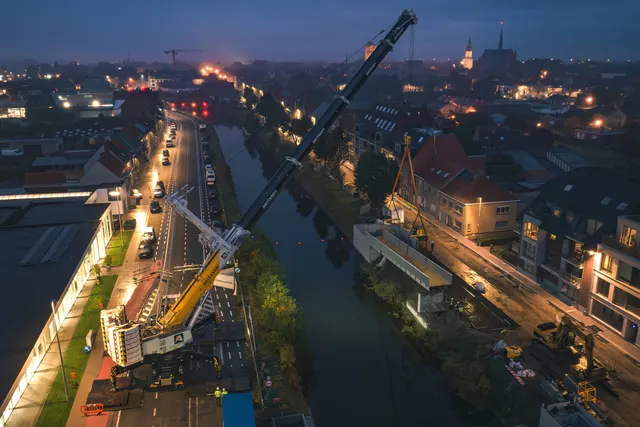
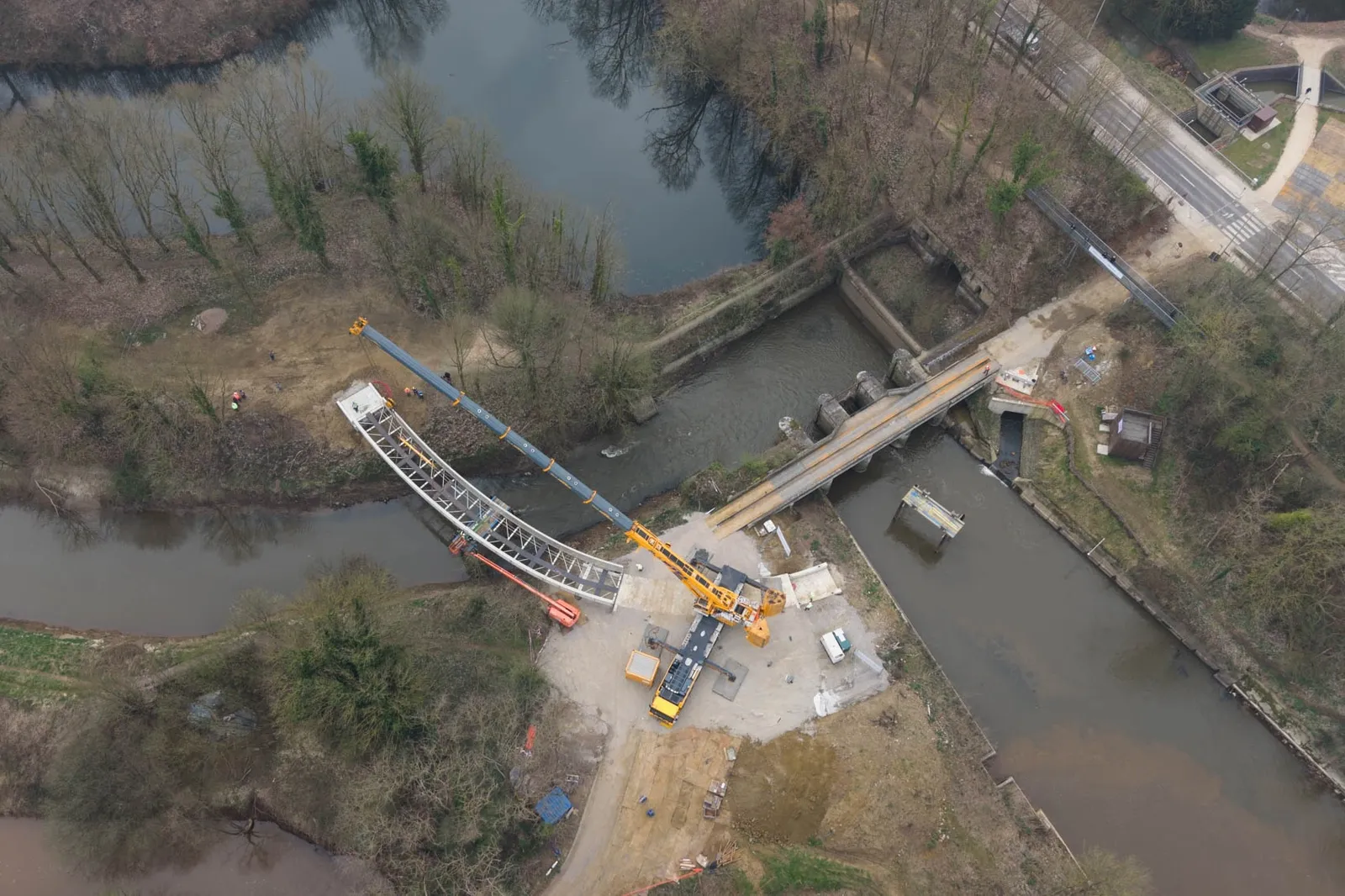
The impressive steel bridge structures were manufactured by partner company CSM at its workshop in Hamont-Achel. “Because of their size, we could not transport them as a single unit,” says Van Gulck. “The bridge was therefore delivered in two sections and welded together on site. This was done on temporary intermediate supports that we built in early 2025.”
The bridge sections were installed, welded and coated above the water, a precision job that required specialist expertise. “We worked closely with our partners to ensure everything went smoothly. Every step had to be meticulously prepared to get the bridge safely and correctly into its final position.”
Finishing works and looking ahead
With the bridge structures in place, the project is entering its final phase. “Once the steel bridges are ready, the bridge deck will be finished with 50 custom-made precast concrete panels made from ultra-high-performance concrete, with an exceptional strength class of 130 MPa and a thickness of just 6 cm,” says Van Gulck. “Finally, the road leading to the bridge will be reinstated, allowing cyclists and pedestrians to cross the Demer comfortably and safely again.”
The new bridge is an important link between Schaffen and Diest and will help make mobility in the region smoother and safer. “We look forward to completing this project successfully,” Van Gulck concludes. “It is a fine example of how infrastructure, heritage and nature can go hand in hand.”
Een zakelijke vraag aan Herbosch-Kiere? Get in touch
Companies in this story

Keep following this
Get an email when a new story is published. No account needed.
- ThemeExtending the life of bridges and tunnels
- SubjectBridges & tunnels
- CompanyHerbosch-Kiere