Lantis breaches Scheldt dike on Linkeroever to make way for new Scheldt Tunnel
Text and images Lantis
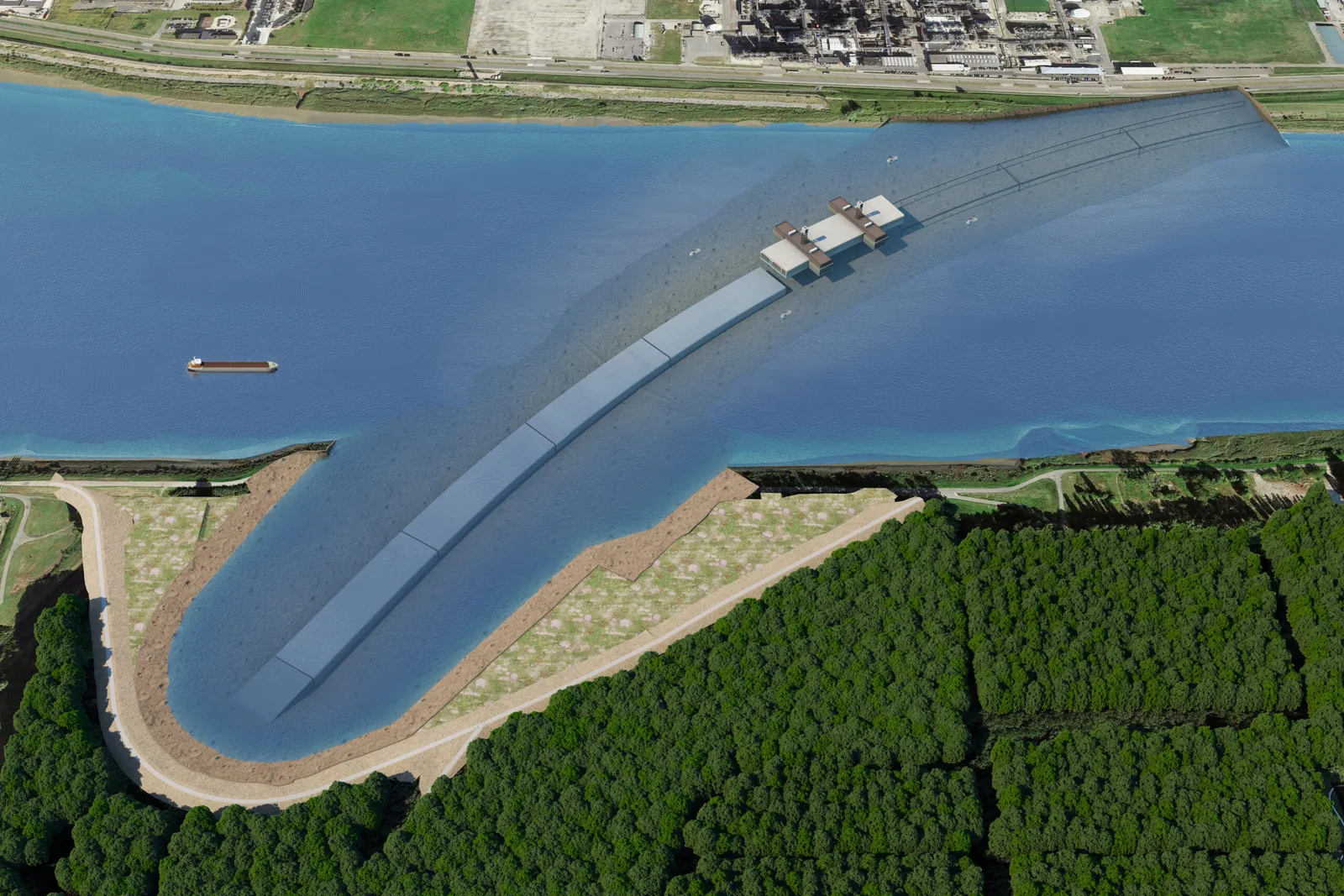
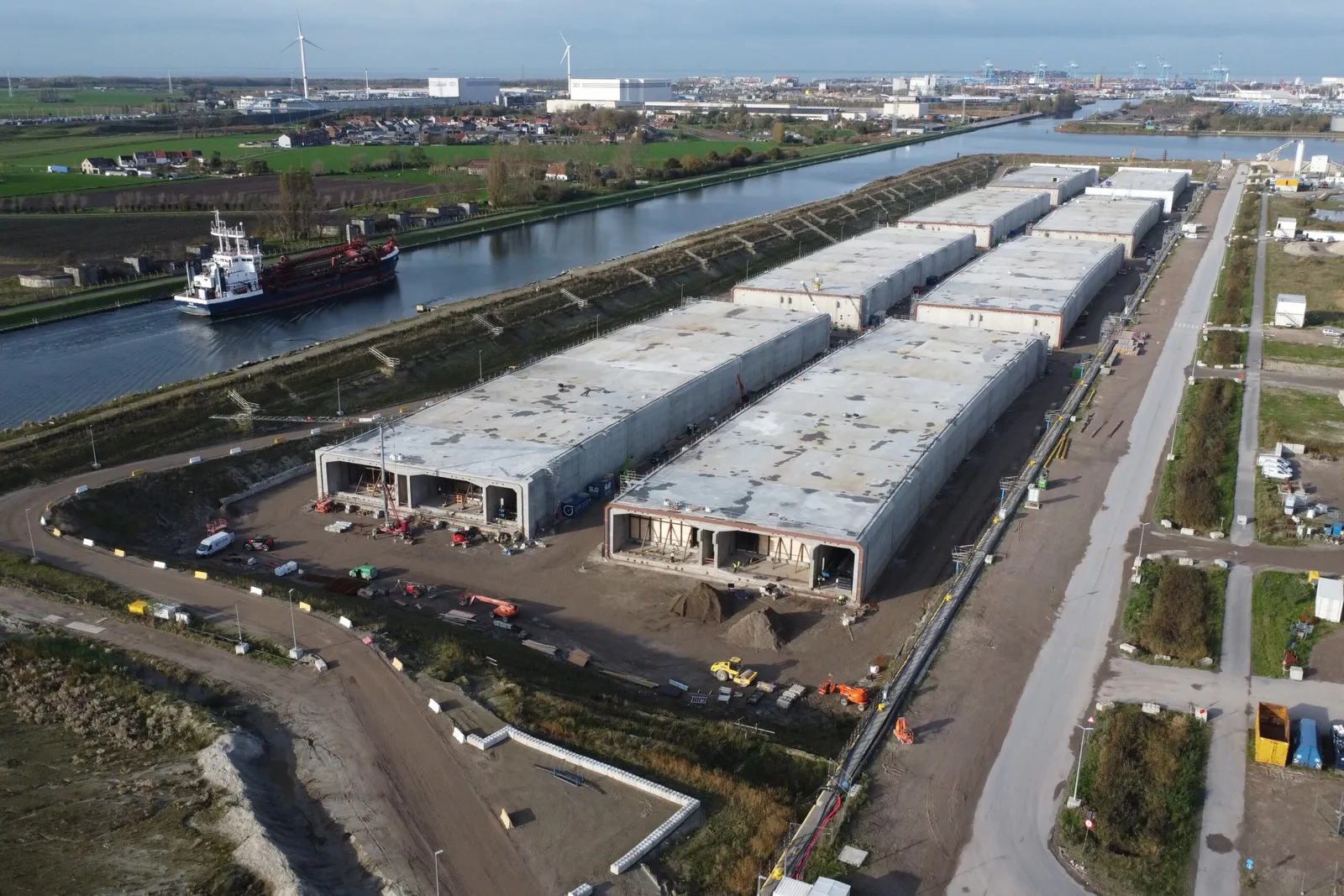
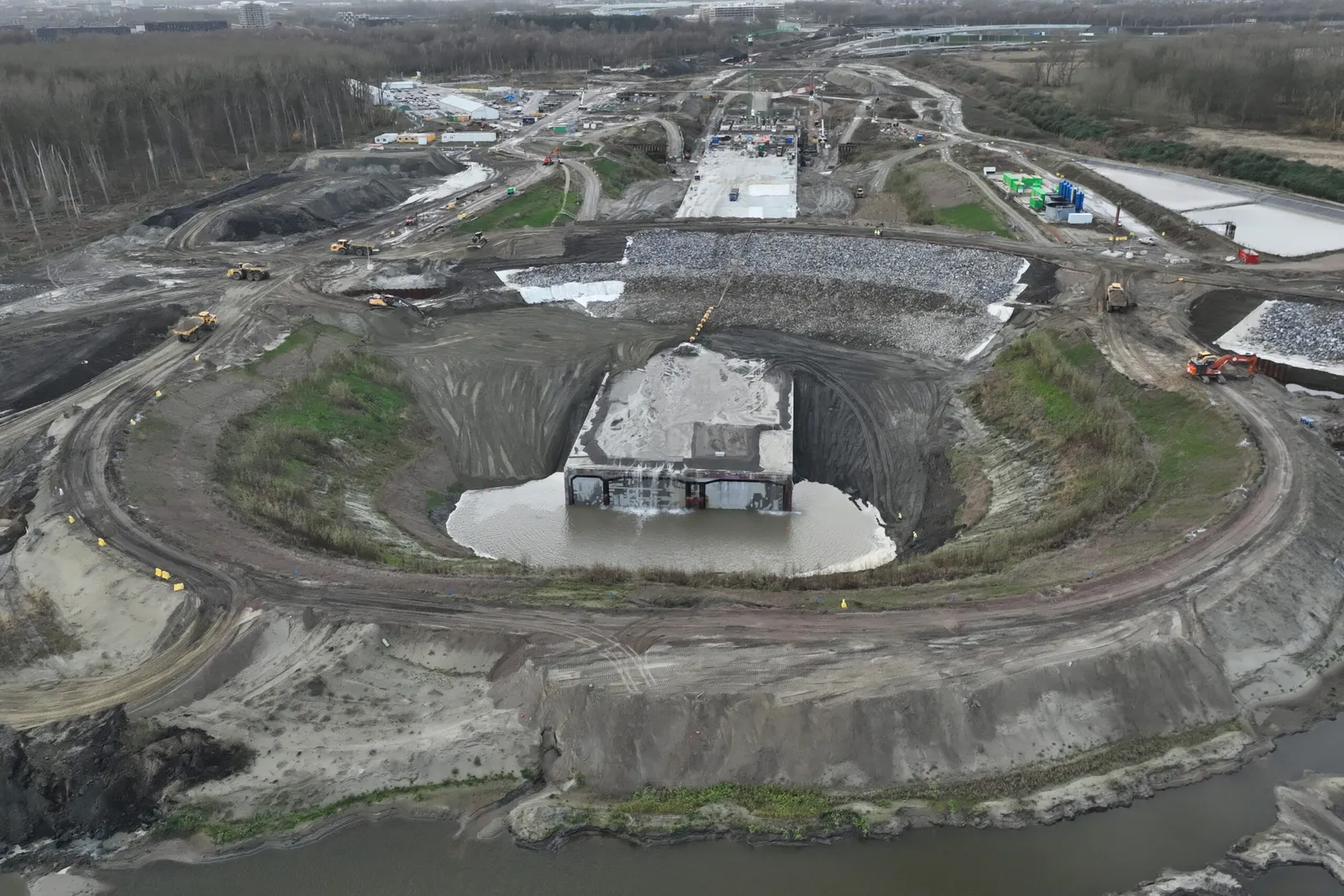
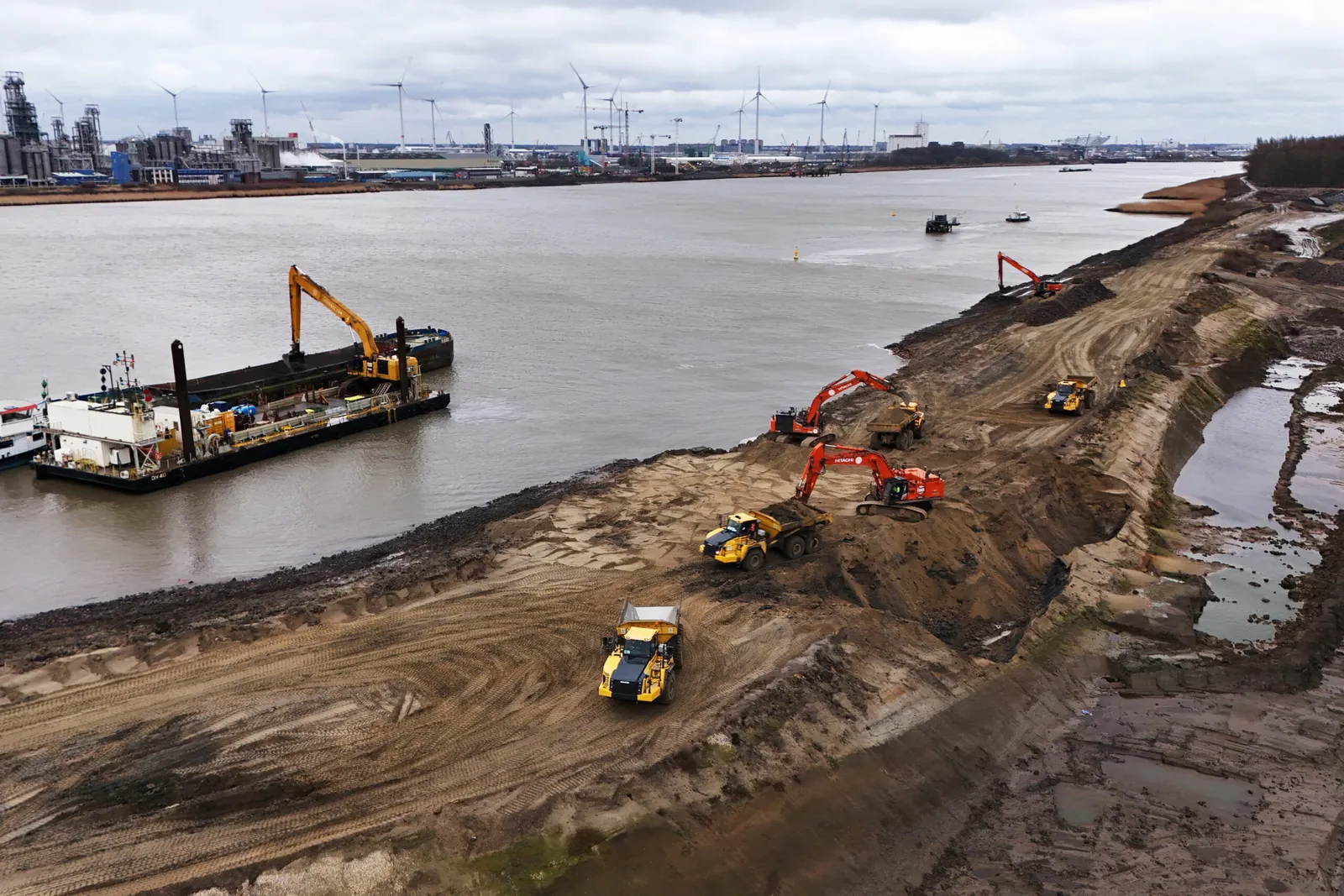
At the end of January, a major milestone was reached in the construction of the new Scheldt Tunnel on Linkeroever: Lantis breached the old Scheldt dike near Sint-Annabos. Contractor TM COTU* is removing 400 metres of the old dike to make way for the first tunnel element from Zeebrugge. In summer 2025, this first element will be connected to the section of tunnel built on Linkeroever.
Annick De Ridder, Minister for Mobility and Public Works: “We have taken another crucial step towards completing the Scheldt Tunnel and the Oosterweel project, the construction site of the century. The Scheldt Tunnel is a vital link in completing the Antwerp Ring. The infrastructure works for the Scheldt Tunnel are essential for mobility, quality of life and the economy in Flanders, and go hand in hand with nature development. By relocating the dike, we are freeing up a great deal of space for ecologically valuable natural areas.”
The Scheldt Tunnel starts on the left bank near Sint-Annabos and emerges on the right bank at the future Oosterweel junction and the Canal Tunnels.
Protection
At the beginning of December, pumps were used to deliberately flood part of the construction site on Linkeroever. This operation was intended to protect the section of tunnel already built on Linkeroever when the dike was breached. The Scheldt’s current is particularly strong and, without additional measures, could damage the tunnel section already built. Now that the dike has been breached, the tunnel structure is truly in the Scheldt for the first time.
Over the coming months, Lantis will continue its work to receive the first tunnel element from Zeebrugge this summer. Dredgers are preparing the immersion trench in which the eight enormous tunnel sections will be placed.
In February, anchor piles will be installed in the river so that the tunnel sections can be lowered into the Scheldt in a controlled manner. According to the schedule, all eight tunnel sections will be under the Scheldt by the end of 2025. The tunnel will open to cyclists in 2028. Motorised traffic will be able to use it from 2030.
A boost for nature
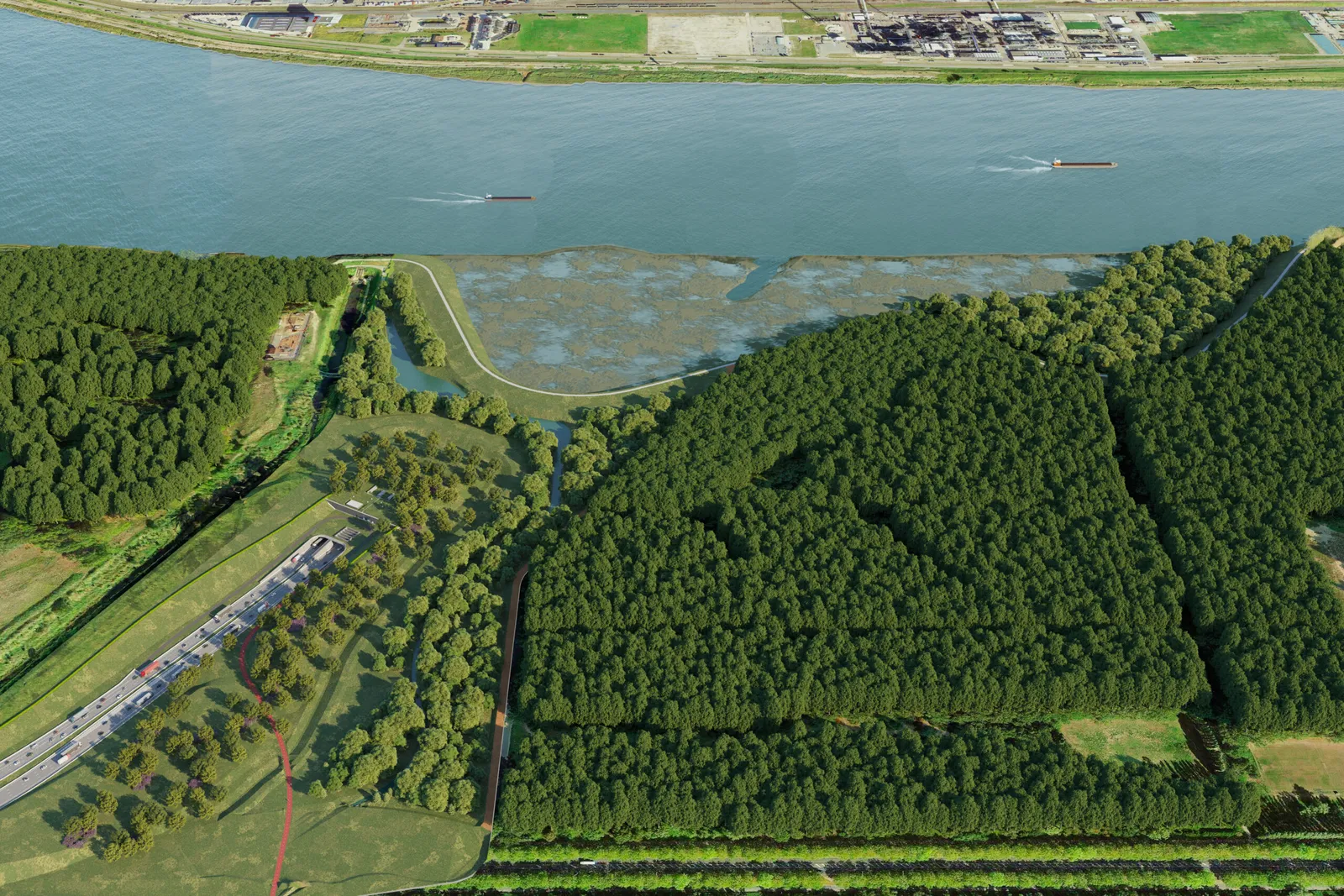
There is no need to worry that breaching the dike means the Scheldt will no longer be contained. Over the past few months, Lantis has built a new, higher dike further inland. It now takes over the role of the Scheldt buffer and, thanks to its increased height, provides better protection against flooding. Relocating the dike also frees up a great deal of space for ecologically valuable natural areas.
The new Scheldt dike is 300 metres inland and 2.5 metres higher, making it part of the Flemish Government’s Sigma Plan. This is good news, as it gives the Scheldt up to 24 hectares of extra space, equivalent to no fewer than 34 football pitches. In autumn 2026, Lantis will develop this area into ecologically valuable tidal habitats.
Of the area freed up, 18 hectares will be transformed into a natural landscape of mudflats and salt marshes. Mudflats are low-lying areas that are submerged at high tide. Salt marshes are higher and are only submerged during extreme water levels. Both provide fertile ground for plants and soil organisms, making them ideal places for birds to feed and rest. Lantis will also plant a 6-hectare floodplain forest.
*TM COTU stands for Tijdelijke Maatschap Combinatie Oosterweeltunnel. The group comprises the Belgian construction companies BESIX, Stadsbader Contractors, DEME and Jan De Nul.
Question about this story? Ask your question
Keep following this
Get an email when a new story is published. No account needed.
- ThemeExtending the life of bridges and tunnels
- SubjectBridges & tunnels