Lantis breaches Scheldt dike on Linkeroever to build new Scheldt Tunnel
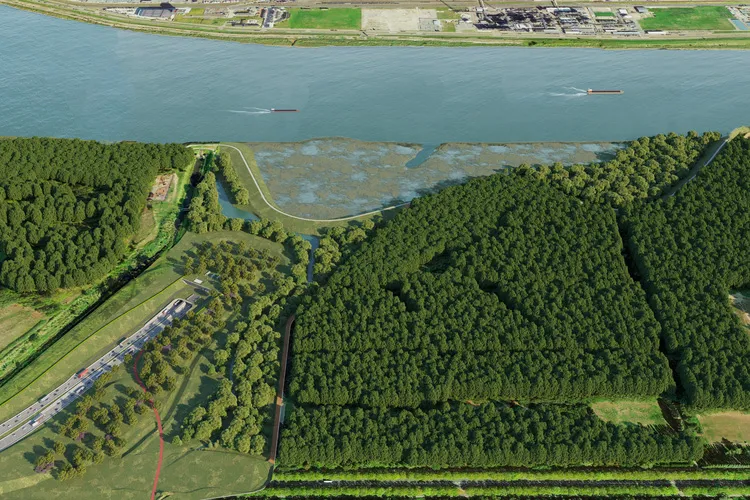
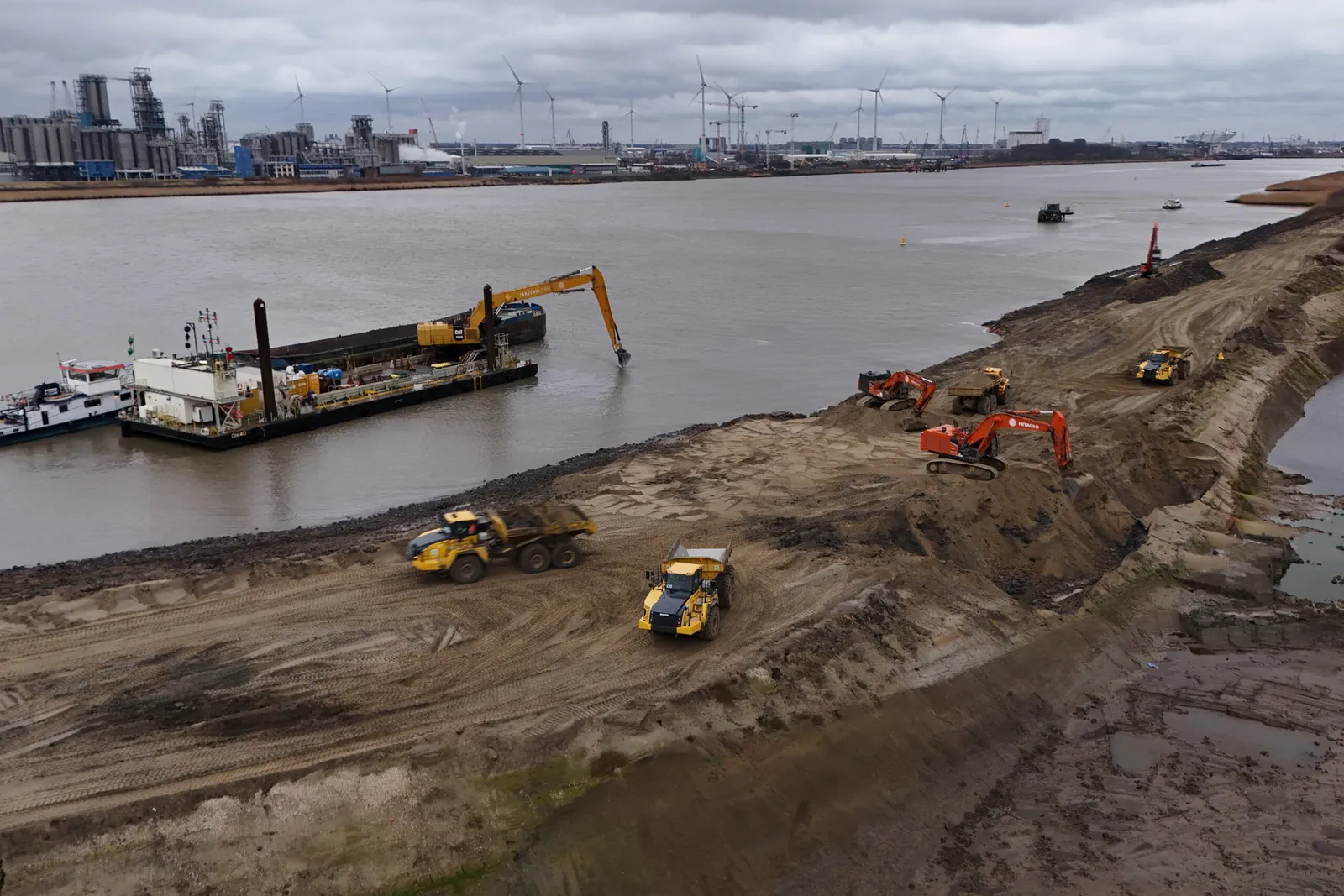
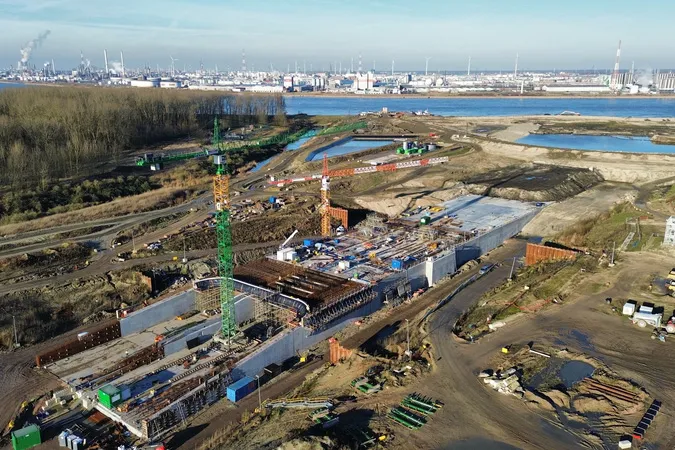
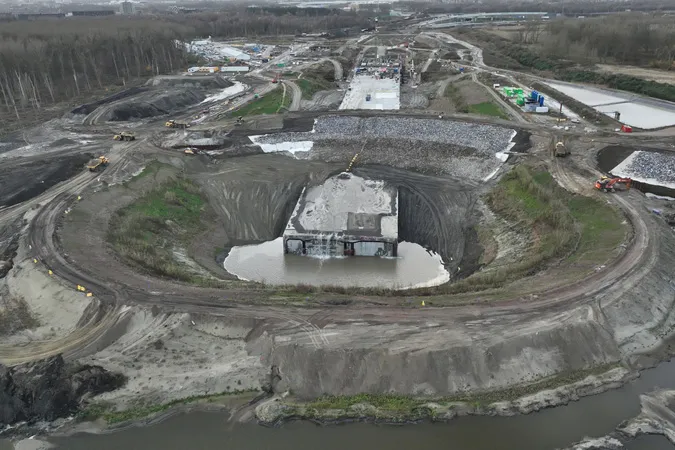
Today marks an important milestone in the construction of the new Scheldt Tunnel on Linkeroever: we are breaching the old Scheldt dike near Sint-Annabos. Contractor TM COTU* is removing 400 metres of the old dike to make way for the first tunnel element from Zeebrugge. In summer 2025, this first element will connect to the section of tunnel built on Linkeroever itself.
Annick De Ridder, Minister for Mobility and Public Works: “We are taking another crucial step towards delivering the Scheldt Tunnel and the Oosterweel project, the construction site of the century. The Scheldt Tunnel is a crucial link in completing the Antwerp Ring. The infrastructure works for the Scheldt Tunnel are essential for mobility, quality of life and the economy in Flanders, and go hand in hand with nature development. By moving the dike, we are creating a great deal of space for ecologically valuable nature.”
The Scheldt Tunnel starts on the left bank near Sint-Annabos and emerges on the right bank at the future Oosterweel interchange and the Canal Tunnels.
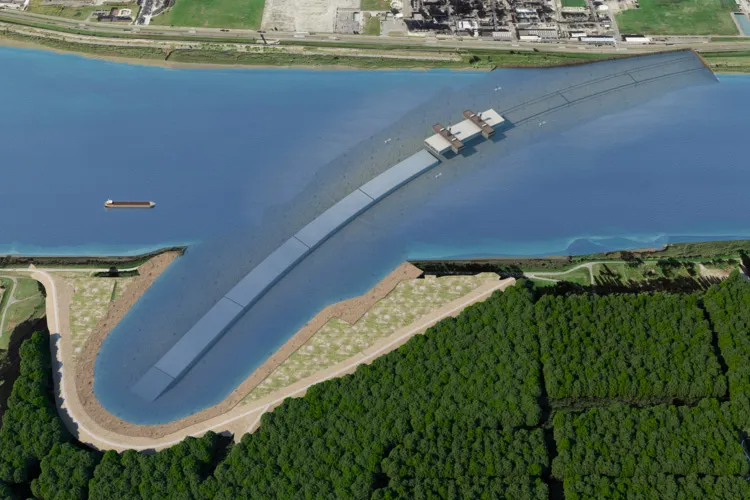
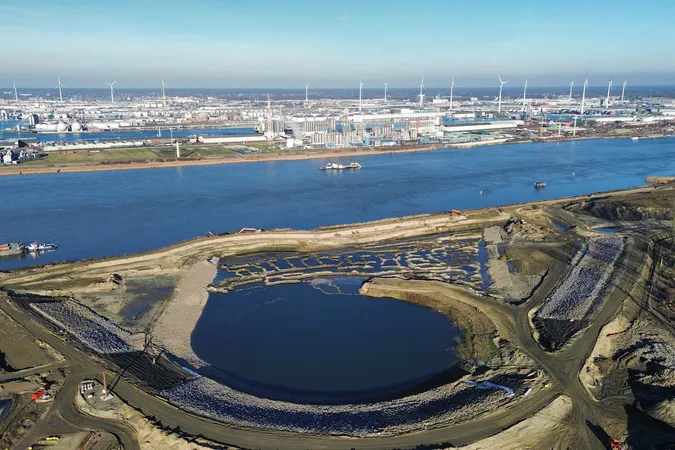
At the start of December, part of the construction site on Linkeroever was deliberately flooded using pumps. This operation was intended to protect the section of tunnel already built on Linkeroever when the dike was breached. The current in the Scheldt is particularly strong and could have damaged the tunnel element already built without additional measures. Now that the dike has been breached, the tunnel structure is in the Scheldt proper for the first time.
Over the coming months, we will continue work to receive the first tunnel element from Zeebrugge this summer. Dredgers are creating the immersion trench into which we will place the eight huge tunnel sections. In February, we will install anchor piles in the river so that the tunnel sections can be lowered into the Scheldt in a controlled manner.
According to the schedule, all eight tunnel sections will be beneath the Scheldt by the end of 2025. The tunnel is due to open to cyclists in 2028. Motorised traffic will be able to use it from 2030.
Flood protection and a boost for nature
There is no need to worry that breaching the dike means the Scheldt will no longer be held back. In recent months, we have built a new, higher dike further inland. It now takes over the role of the Scheldt barrier and, thanks to its increased height, offers better flood protection. Moving the dike also creates a great deal of space for ecologically valuable nature.
The new Scheldt dike is 300 metres inland and 2.5 metres higher, and forms part of the Flemish Government’s Sigma Plan. This is good news, as it gives the Scheldt up to 24 hectares of extra space, equivalent to no fewer than 34 football pitches. In autumn 2026, we will develop this area into ecologically valuable tidal nature.
Of the area freed up, 18 hectares will be transformed into a natural landscape of mudflats and salt marshes. Mudflats are low-lying areas that are submerged at high tide. Salt marshes lie higher and are submerged only during extreme water levels. Both provide fertile ground for plants and soil-dwelling invertebrates, making them ideal places for birds to find food and rest. We will also plant a 6-hectare floodplain forest.
Question about this story? Ask your question
Keep following this
Get an email when a new story is published. No account needed.
- ThemeExtending the life of bridges and tunnels
- SubjectBridges & tunnels