Kolenspoor: the longest cycle route ever
Text Niels Rouvrois Beeld Sweco
“77 km of bespoke design”
From Beringen to Maasmechelen, past mine shafts, outstanding natural areas, innovative hotspots and places to meet. The 77 km Kolenspoor will connect seven former mining municipalities between Beringen and Maasmechelen. At the end of June, the first 12 km section was officially opened. Engineering and consultancy firm Sweco is responsible for process management, design and construction documentation, including supervision of the works.
The first section starts at Ikea in the Genk-Noord industrial zone and winds past Driehoeven and Zwartberg, alongside KRC Genk’s stadium. It then passes Thor Park and Klaverberg, before reaching As railway station.
Peter van der Poort, urban planning expert at Sweco: “This is a project that has been a long time in the making. It is about utility and necessity on the one hand, but also about the experience and look and feel on the other. Our ambition is to integrate the cycle path as effectively as possible. Commuting is its primary purpose, but it also has strong recreational and ecological links. A great deal of time has gone into establishing a broad collaborative framework involving all stakeholders, from local authorities and civil-society organisations to neighbouring businesses and residents. Building broad support is crucial to this project.”
Measures to enhance nature
The surrounding natural environment is being carefully considered in the construction of the cycle path. The route runs alongside valuable nature areas that are home to protected species such as bats, smooth snakes and natterjack toads. For this reason, no hard boundary is being drawn through the landscape. Peter van der Poort: “Eco-tunnels are being built to allow smooth snakes to cross safely. We brought in a nature specialist and developed a bespoke mould to create the eco-screens in extruded concrete, a method never before used in Flanders. A sheep tunnel has also been incorporated, allowing sheep to graze on both sides of the cycle path.”
Circular materials
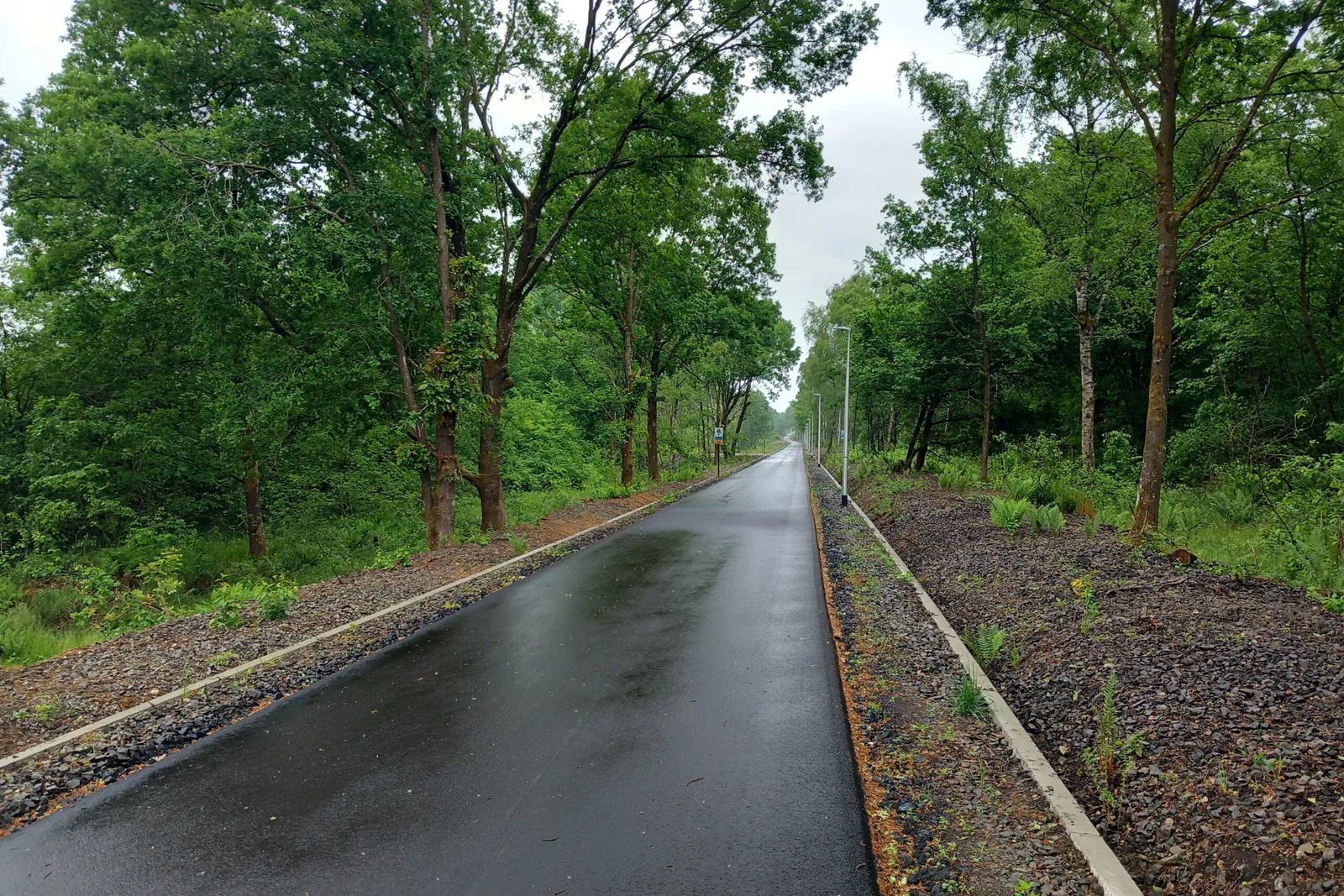
With Sweco’s guidance and support, all the existing railway ballast, the crushed stone beneath the old tracks, was reused in the construction of the first section. “Processing it on site avoided not only the production of new raw materials, but also significantly reduced transport and CO2 emissions. This too was thoroughly investigated at the preparatory stage,” says Maarten Remans, team manager at Sweco.
De Bevoo cycle tunnel
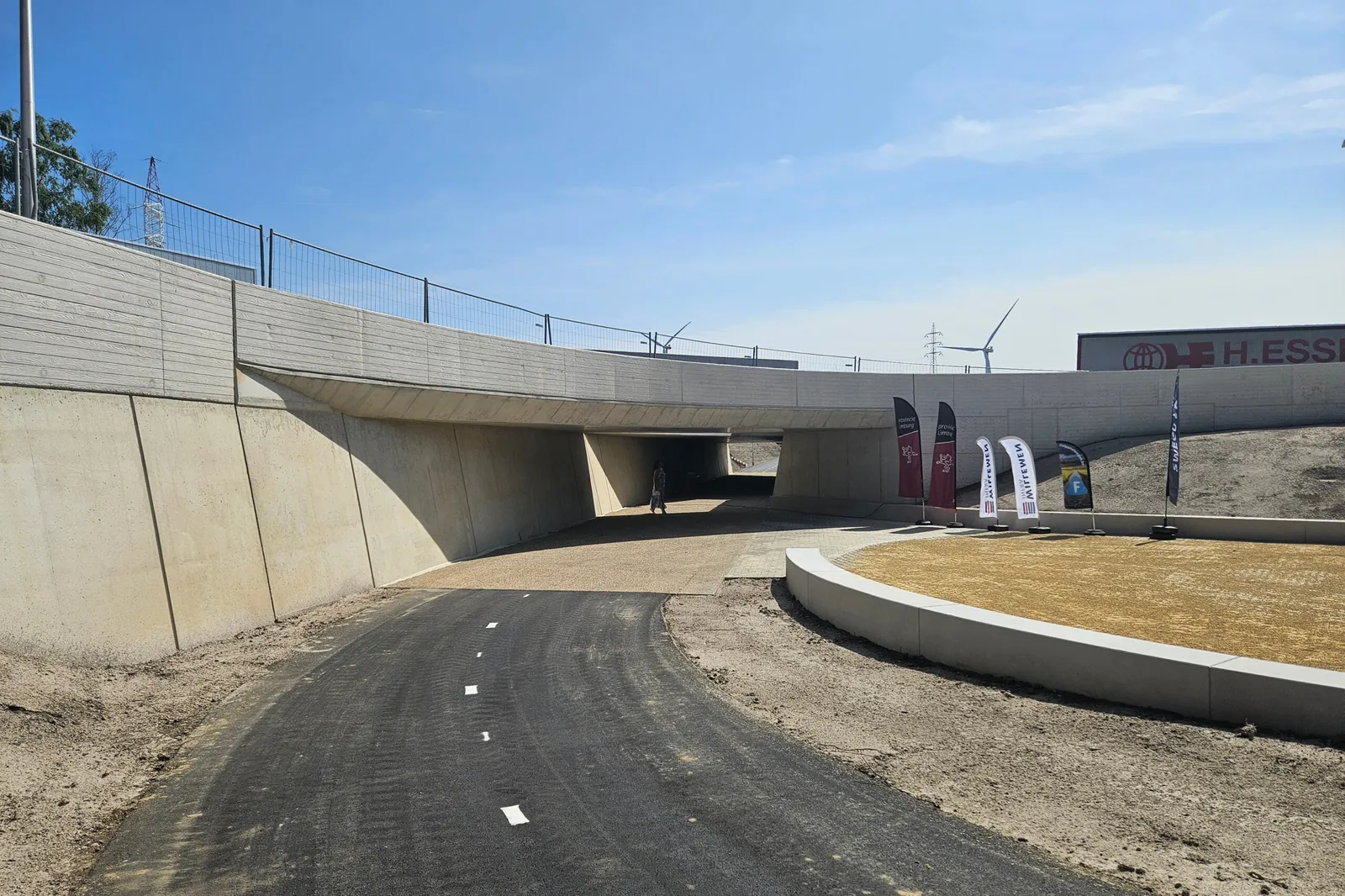
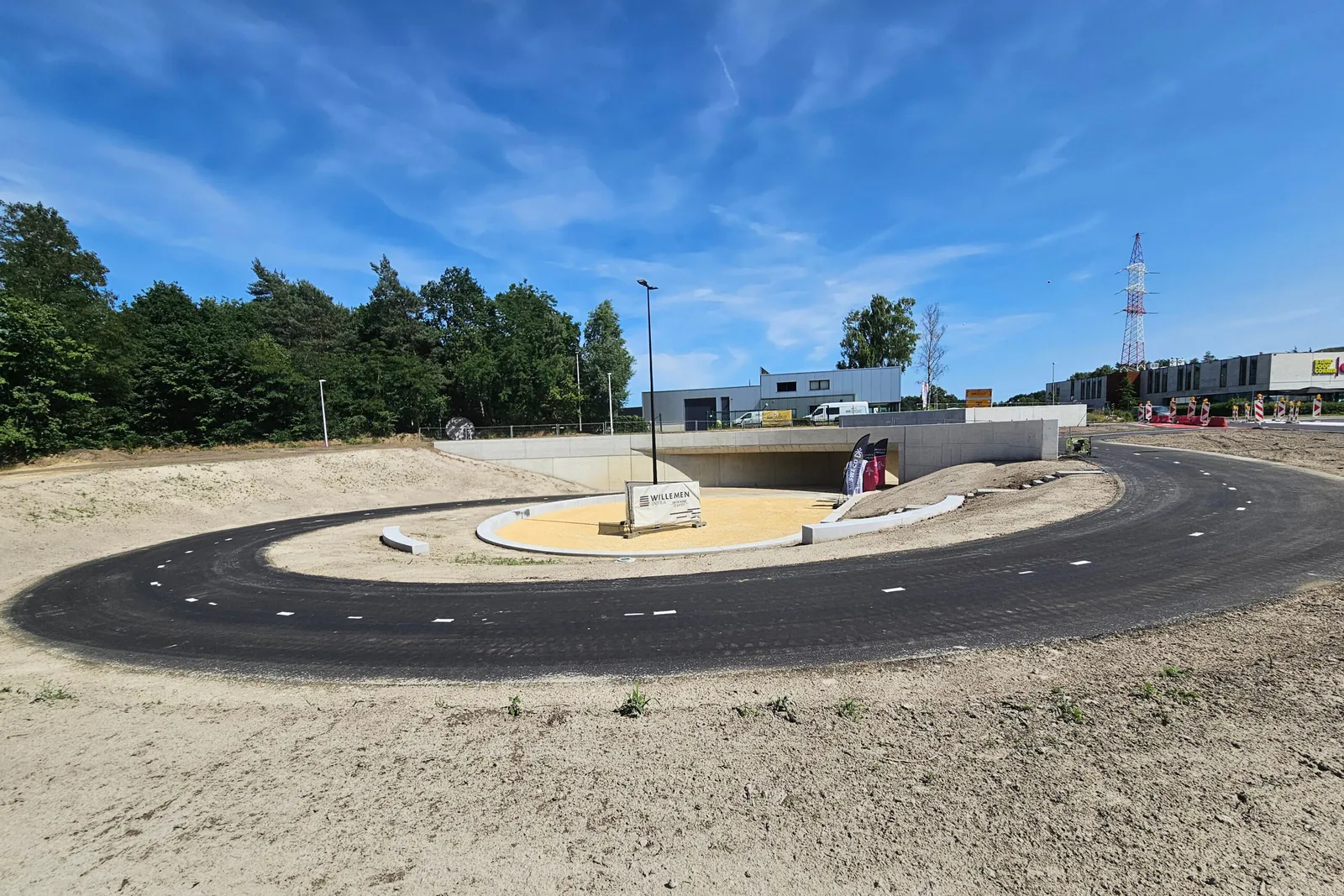
The striking De Bevoo cycle tunnel on Hengelhoefstraat was also officially unveiled in June. Spatial designer Bart Steenwegen explains: “Space on both sides of this junction was limited. On the south side, the ramp was placed as close as possible to Hermeslaan, leaving enough room for a future building. On the north side, the ramp was integrated into a spiral-shaped layout, with a circular rest area in the centre, surrounded by benches.”
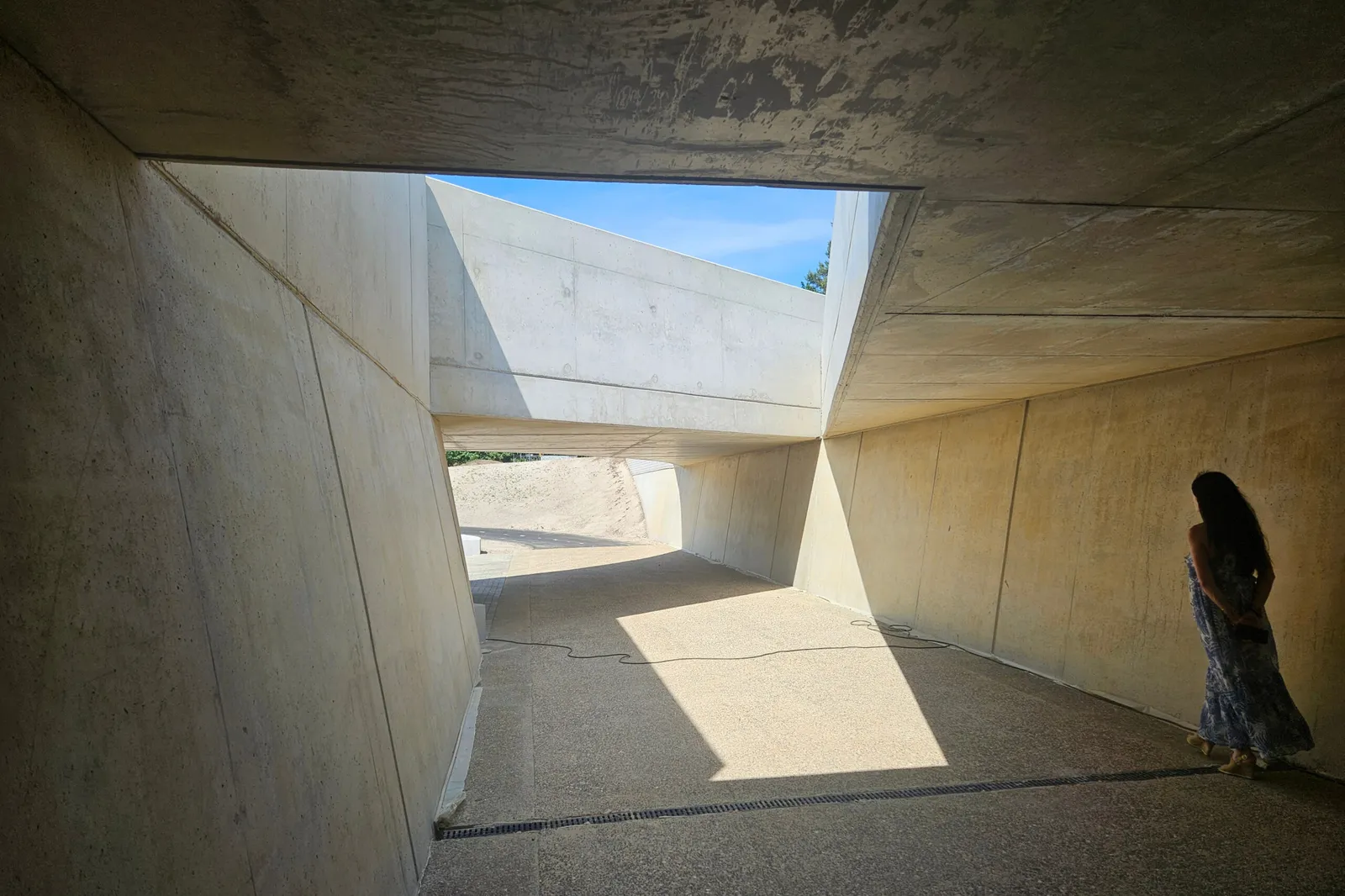
Benches are also planned on the embankments between this rest area and the cycle path, arranged in an amphitheatre. Bart Steenwegen: “To improve social safety, a straight sightline has been created through the tunnel. The materials make a subtle reference to the mining past: vertical joints have been placed at regular intervals between the formwork panels, neatly aligned with the rooflights. The external walls will have timber-textured formwork, and the balustrade will feature vertical timber slats. Space has also been provided on one wall for a poem.”
Catalyst
To deliver this project successfully, Sweco’s teams are taking a wide range of factors into account. Connections to other cycle highways and the Regional Functional Cycle Network are being significantly improved. In addition, a total of 67 junctions will be redesigned to ensure safety and traffic flow. Several sections of the route also connect with the recreational cycle network and link green gems in Central Limburg, including De Wijers and Hoge Kempen National Park. Peter van der Poort: “That catalytic effect is very important. For example, the City of Genk has taken the opportunity to launch its own project alongside the construction of De Bevoo; the area around As station has been completely redeveloped; and a good connection to the cycle route is also being created around La Biomista. And these are just a few examples.”
Multidisciplinary project approach
This project is a good example of how Sweco draws on its broad expertise to deliver complex projects successfully. Different disciplines work closely together from design through to construction. The focus is on infrastructure and mobility, as well as ecology, landscape design and stakeholder management. “The entire route calls for bespoke solutions. You are constantly dealing with a different environment and different stakeholders … For example, the experience at the Be-mine site in Beringen is very different from that around Racing Genk’s stadium. The experience is always central. The choice of black asphalt rather than the familiar red cycle path, and the decision to preserve as much of the old railway line as possible along the entire route, also contribute to this,” concludes Peter van der Poort.
Question about this story? Ask your question
Who worked on it
Kolenspoor
- studie- en ingenieursbureauSweco
Keep following this
Get an email when a new story is published. No account needed.
- ProjectKolenspoor
- ThemeFuture-proofing roads and railways
- SubjectBridges & tunnels
- CompanySweco