Four Brussels tunnels given a new concrete look
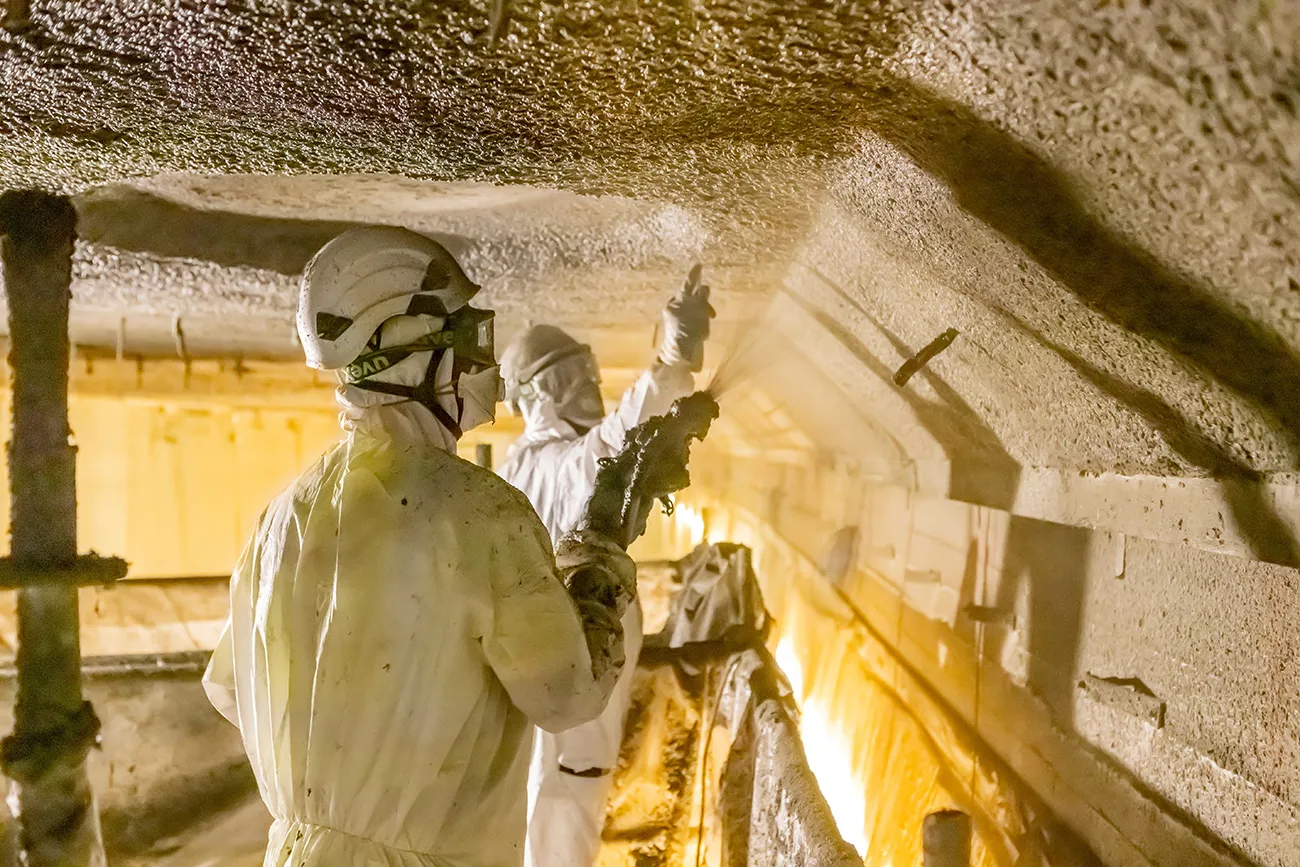
The major renovation of Brussels’ tunnels is well under way. As a specialist in concrete renovation, Renotec was a natural choice for the project. “Our teams carry out the concrete repairs from start to finish and install more than 40 kilometres of titanium strips for cathodic protection in the Troon, Boileau, Tervuren and Naamsepoort tunnels,” says project manager Jens Van De Putte. It is a technical tour de force, with Renotec pulling out all the stops to meet the tight deadlines.
In 2016, the Brussels-Capital Region put forward a multi-year investment programme for Brussels’ tunnels after inspections showed that they urgently needed renovation. Since then, the tunnels have been renovated in phases. In February last year, Renotec was awarded the contract for concrete renovation of the Troon, Boileau, Tervuren and Naamsepoort tunnels. “The decision was based not only on the lowest price, but also on a qualitative assessment of our proposed approach,” says technical director Jo Vandernborne. “The intensive work that went into preparing this plan paid off, as our expertise was decisive in Renotec being selected.”
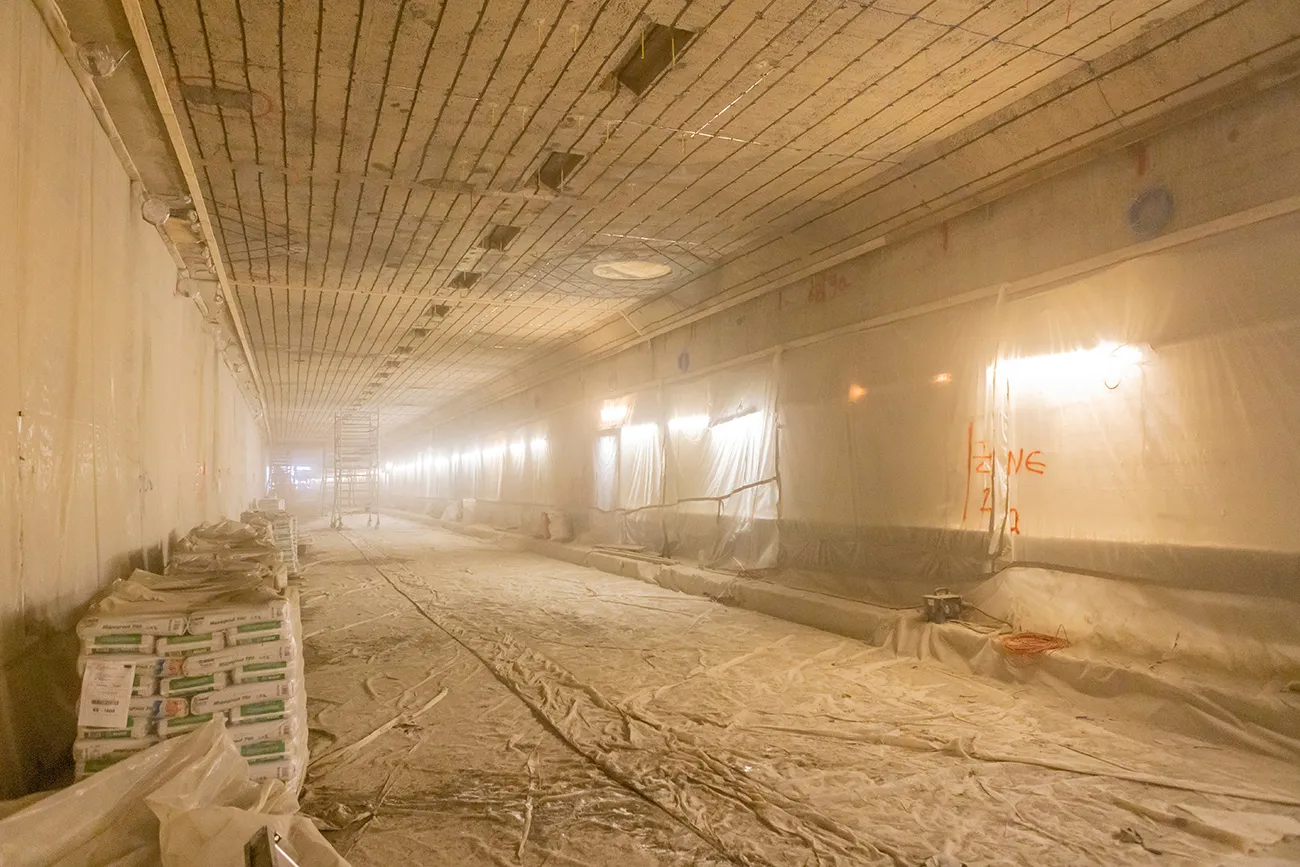
Concrete renovation and cathodic protection of tunnel roofs
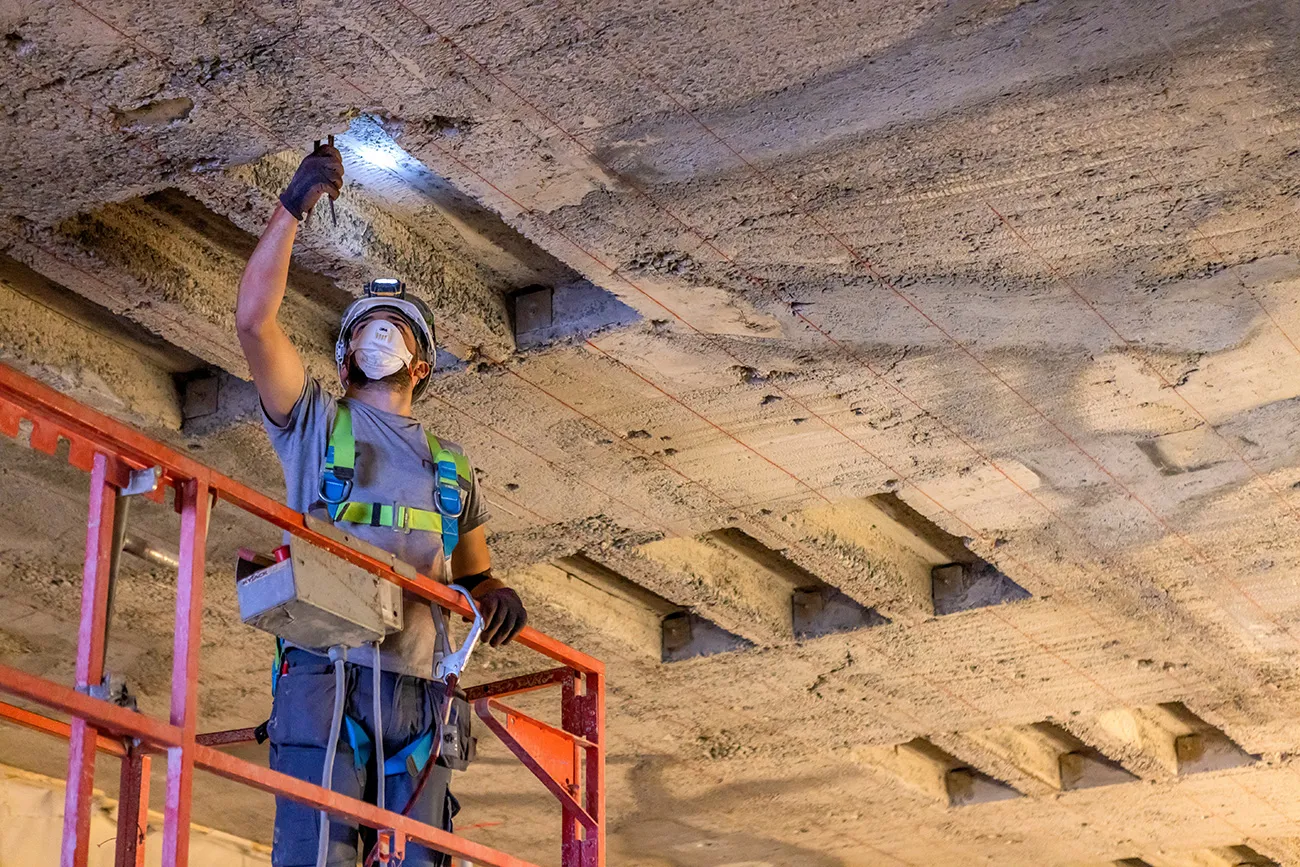
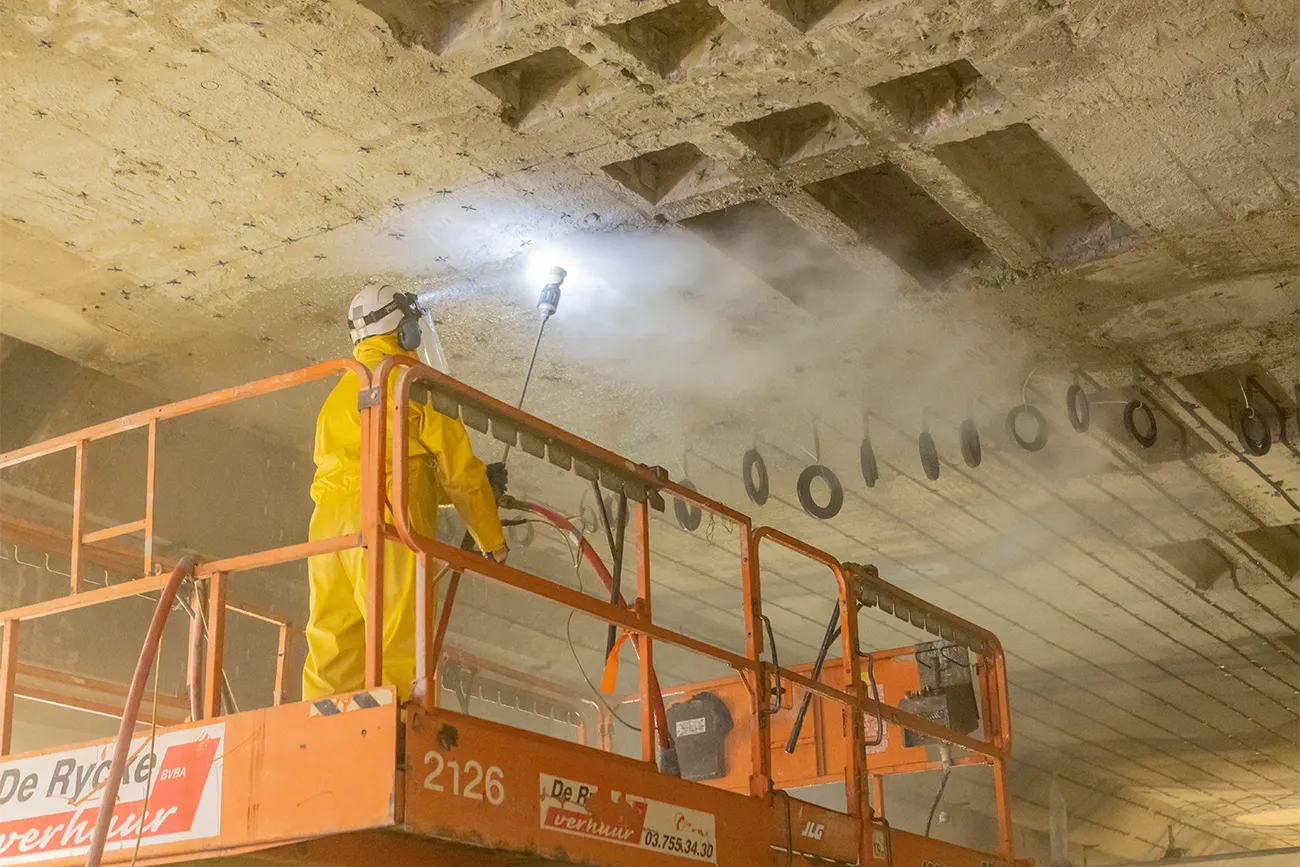
Renotec’s contract covers concrete renovation and cathodic protection of the ceilings of all four tunnels. Project manager Jens Van De Putte explains how his team approaches the work: “Once the wall panels have been removed, all deteriorated concrete in the (concrete) tunnel roofs is removed using hydrodemolition,” he explains. “We then carry out all the concrete repairs using the wet-mix spraying method, a technique we have mastered thanks to our many years of experience. We also make sure the tunnels are 100% watertight using injection grouting. We are also using the relatively new technique of cathodic protection in the tunnels, at least as far as its application to Belgian tunnel roofs is concerned. In practical terms, this means protecting the reinforcement by installing titanium strips and applying an impressed current.”
A technical tour de force
A range of techniques come together in this project. This makes coordination a major challenge, as in addition to the renovation work itself, Renotec is also coordinating cleaning, hydrodemolition, asbestos removal, and the dismantling and reinstallation of all services and signage. “It is like a train of our own teams, subcontractors and other contractors, all of whom need to know exactly when to do what. Our job is to keep the train moving, and so far we have managed that smoothly, to the great satisfaction of our client,” says Jo.
Tight schedule
Efficiency is therefore key, particularly as the project has a very short delivery period. “We were awarded the contract at the end of February and immediately began the study phase, during which we made trial areas and inspection openings during night-time tunnel closures. This is our first large-scale tunnel renovation project in Brussels, so obtaining the permits also proved quite a challenge,” says Jens Van De Putte. “We developed the plans in collaboration with the design consultancy, allowing us to start the work itself on 16 May.” The tunnels are now closed during the day. A partition wall divides them into two halves, allowing Renotec to work in two phases of three months each. In the third and final phase, scheduled for the first quarter of 2023, the concrete repairs, cathodic protection and overlay will be carried out in areas that are currently inaccessible because of the partition wall. “This phase will take place entirely at night. Every morning, the entire site has to be cleared so traffic can pass through the tunnel again. Organising this will be another major challenge,” says Jens Van De Putte.
Pioneering work
“Renotec starts where another contractor stops,” says Jo Vandenborne. “That is one of our company’s guiding principles, and we are living up to it again on this project. We were among the first to master the spraying method and have perfected the technique over the years. Today, we are also pioneers in cathodic protection for tunnel applications. We are using the technique on a large scale for the first time in the Brussels tunnels. The project will undoubtedly be another valuable addition to our track record.”
“We have also demonstrated our ability to adapt. We had to move quickly to meet the proposed schedule, and succeeded: credit is due to all the colleagues who contributed. Of course, we must also recognise the daily efforts of our workers,” concludes the technical director.
Question about this story? Ask your question
Keep following this
Get an email when a new story is published. No account needed.
- ThemeExtending the life of bridges and tunnels
- SubjectBridges & tunnels