Flemish Government and TM Brugfabriek sign agreement to renovate 49 fixed bridges
Major milestone for the OverBruggen renovation programme
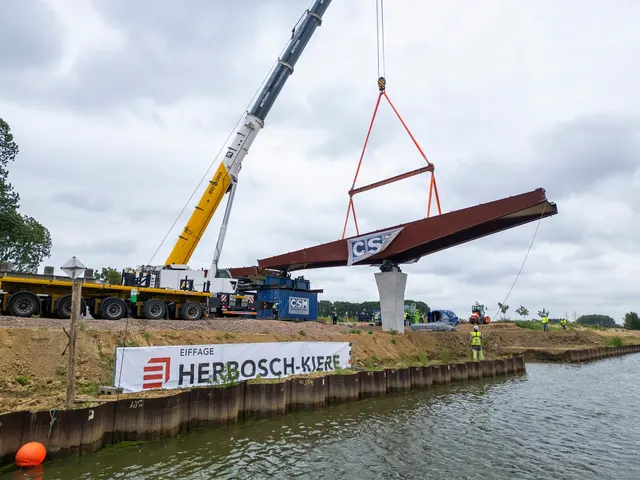
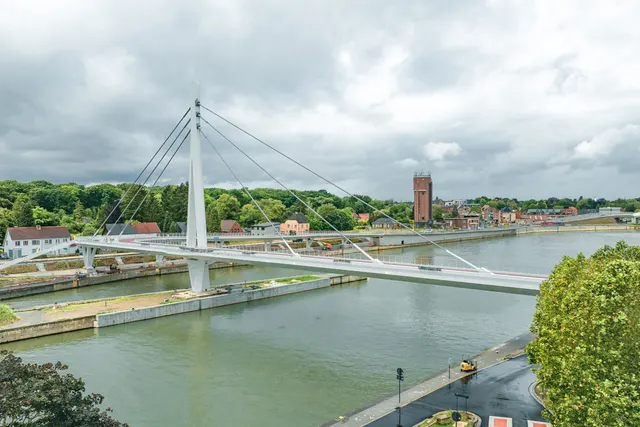
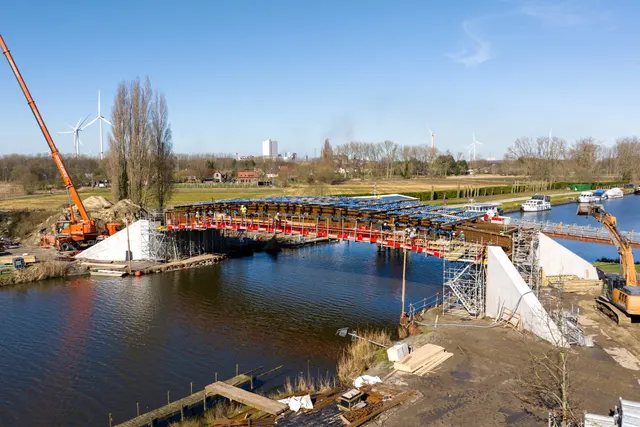
Contractor consortium TM Brugfabriek will fast-track the renovation of 49 fixed bridges in Flanders as a single package. The consortium comprises Jan De Nul, Willemen and Artes. The PPP Kunstwerken project (public-private partnership) is part of ‘OverBruggen’. Through this programme, the Flemish Government will fast-track the clearance of the maintenance backlog on fixed and movable bridges by renovating, replacing or modernising them in packages.
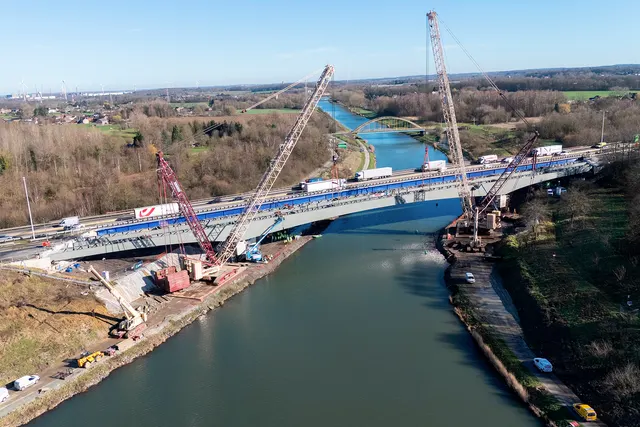
Many bridges in Flanders date back to the construction boom of the 1960s and 1970s and are now severely outdated. The maintenance backlog, a sharp rise in traffic volumes and new safety and technology requirements mean that many bridges in Flanders will undergo major structural overhauls in the coming years. Our neighbouring countries also face the challenge of maintaining all their existing infrastructure. The Department of Mobility and Public Works therefore sought a suitable partner for an initial public-private partnership to modernise 49 fixed bridges in Flanders and make them safer.
Contract awarded to TM Brugfabriek
The Flemish Government awarded the contract to TM Brugfabriek, the contractor consortium comprising Jan De Nul, Willemen and Artes. The agreement was officially signed by all parties on 10 July 2024. The selected contractors will design, build, maintain and finance the 49 bridges. The same contractor consortium will also be responsible for maintaining the infrastructure and ensuring its quality for the first 30 years after construction. The Department of Mobility and Public Works is coordinating the contract with the Agency for Roads and Traffic and De Vlaamse Waterweg nv.
The outgoing Flemish Minister for Mobility and Public Works: “I am delighted that we can now launch this large-scale replacement programme. At the start of this legislature, we faced major challenges with regard to our bridges in Flanders. We not only made more funding available for bridge renovation and replacement, but also looked for a suitable model to step up the pace of our work with the private sector and clear the backlog. This partnership allows us to combine the expertise of the public and private sectors and renovate these bridges quickly and to a high standard on a large scale. With a clear long-term vision for maintenance, a PPP ensures that we can rely on our bridges for years to come.”
Next steps
This signing marks the start of the contract. Over the next six months, the public authorities and private partners will agree the arrangements needed to launch and plan the work during the preliminary study phase. In parallel, they will develop a standardised approach to design, construction and maintenance, to deliver the 49 bridges as efficiently as possible. The design phases for the 49 bridges will then begin according to the agreed schedule, taking account of the standards developed during the preliminary study phase.
Towards efficient, accelerated collaboration
The Flemish Government has several reasons for choosing a public-private partnership.
This approach makes large-scale renovation projects easier to manage. Rather than tendering and managing 49 separate contracts, the requirements, risk management, technical specifications and design principles will be handled in a structured way under a single partnership. This will not only make the work more efficient, but also allow it to be carried out much faster and in logical packages. The first environmental permits will be applied for in 2025. The aim is to start the first works in 2026. If the work proceeds as planned, all works will be completed by the end of 2030.
The scale of the project allows the Flemish Government and the contractors to pool their expertise and capacity. Only close collaboration will enable them to replace these 49 bridges on time. The Government has therefore opted for a unique collaboration model: the two-phase approach. This innovative approach involves the contractor and the client working together on the designs first, after which the contractor begins work. This means that the construction sector’s expertise can be brought in from the outset.
During the design phase, both parties will work closely together to develop an efficient design for the 49 bridges. The new bridges must be future-proof, meet new requirements and take account of local conditions. By bringing together the knowledge of local stakeholders, the contractor and the Government, the aim is to develop the optimum design during this phase. The construction and maintenance phase will follow. The private partner will have the autonomy to organise this as efficiently as possible and with minimal disruption.
Overview of the bridges
The 49 bridges are managed by the Agency for Roads and Traffic and De Vlaamse Waterweg nv.
About OverBruggen
OverBruggen is a Flemish Government programme to fast-track the renovation, replacement or modernisation of fixed and movable bridges in Flanders. The programme focuses on a fast and efficient approach to ageing bridges, with the aim of making them future-proof, robust and safe for all road users. Its key features include a modern organisational model, close collaboration with the private sector, innovative techniques and a specific focus on a bridge’s entire life cycle. In this way, the Department of Mobility and Public Works, De Vlaamse Waterweg nv and the Agency for Roads and Traffic are working together to deliver a new generation of sustainable, modern bridges. The first initiative under OverBruggen is the replacement of 49 fixed bridges and the modernisation of a large number of movable bridges across Flanders.
More information: OverBruggen
Question about this story? Ask your question
Keep following this
Get an email when a new story is published. No account needed.
- ThemeExtending the life of bridges and tunnels
- SubjectBridges & tunnels