Crack-free, watertight topping for the renovated Scheldt Bridge in Temse
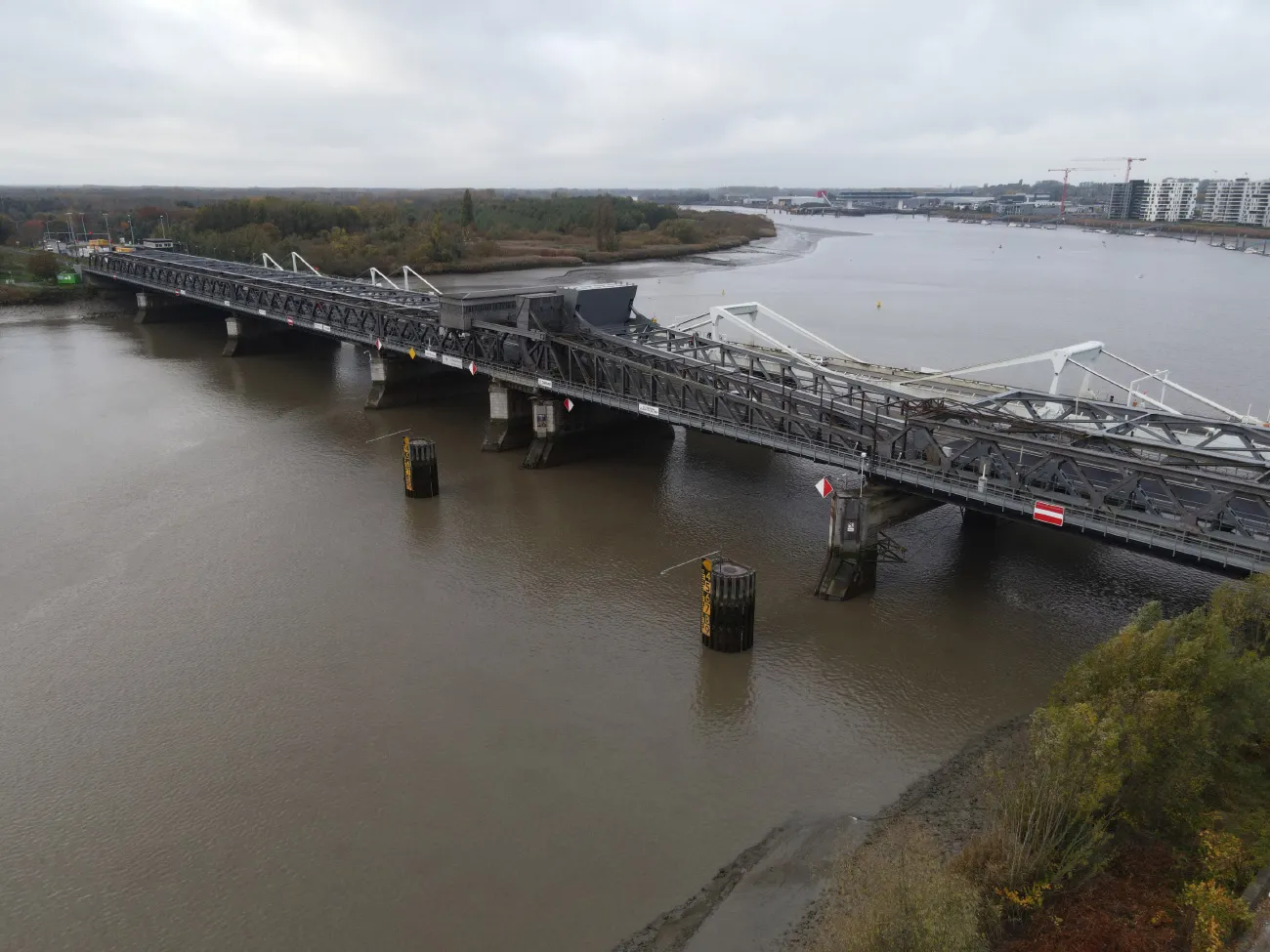
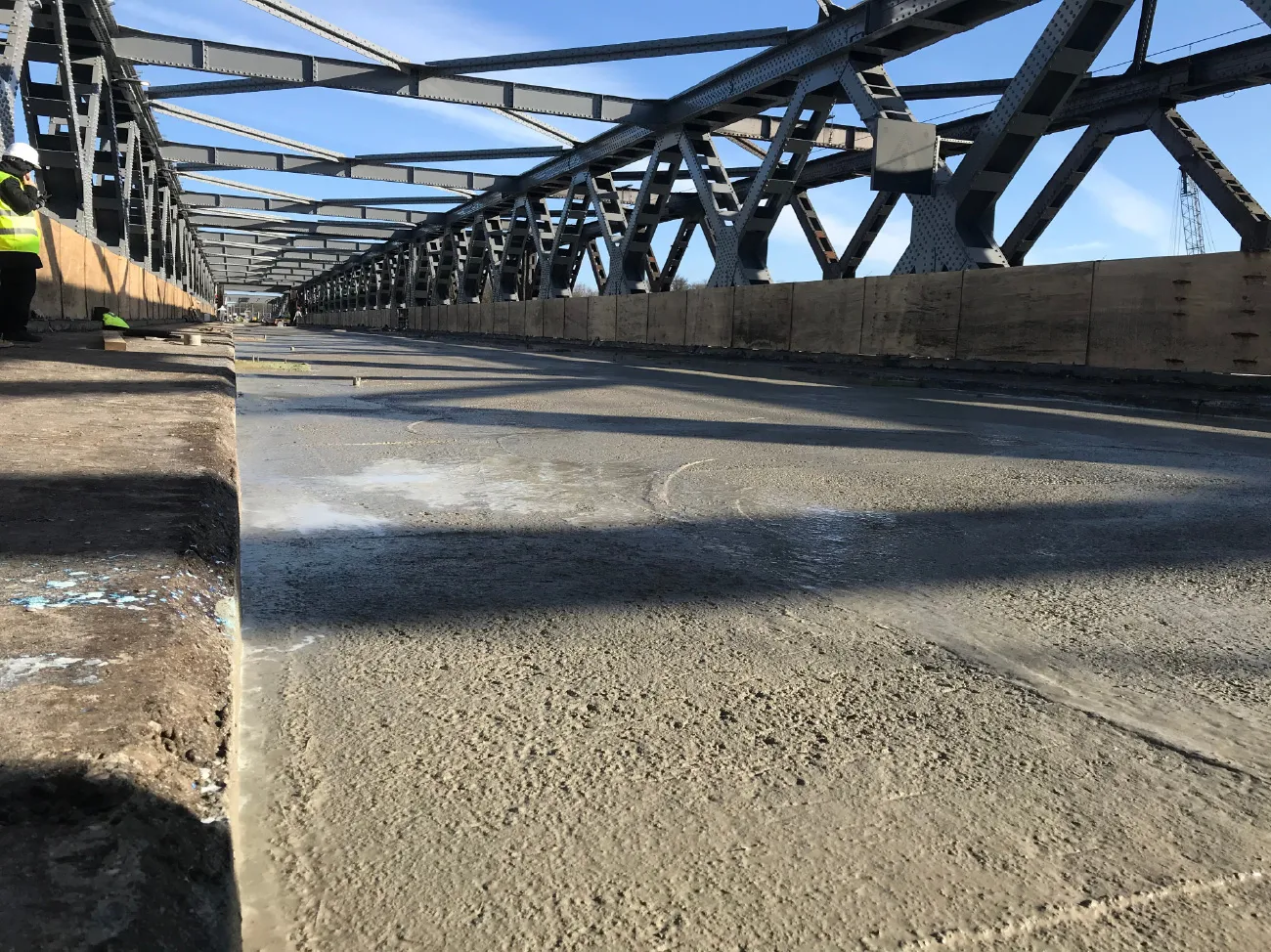
Commissioned by De Vlaamse Waterweg, Renotec and Vastmans Betonvloeren carried out a major renovation of the Scheldt Bridge in Temse. For the topping between the concrete and asphalt, they turned to products from East Flanders-based Adfil, a developer and manufacturer of high-performance fibres for reinforcing ready-mixed concrete, sprayed concrete and precast elements. Durus EasyFinish macrofibres were combined with Crackstop M Ultra microfibres to deliver an efficient, durable result.
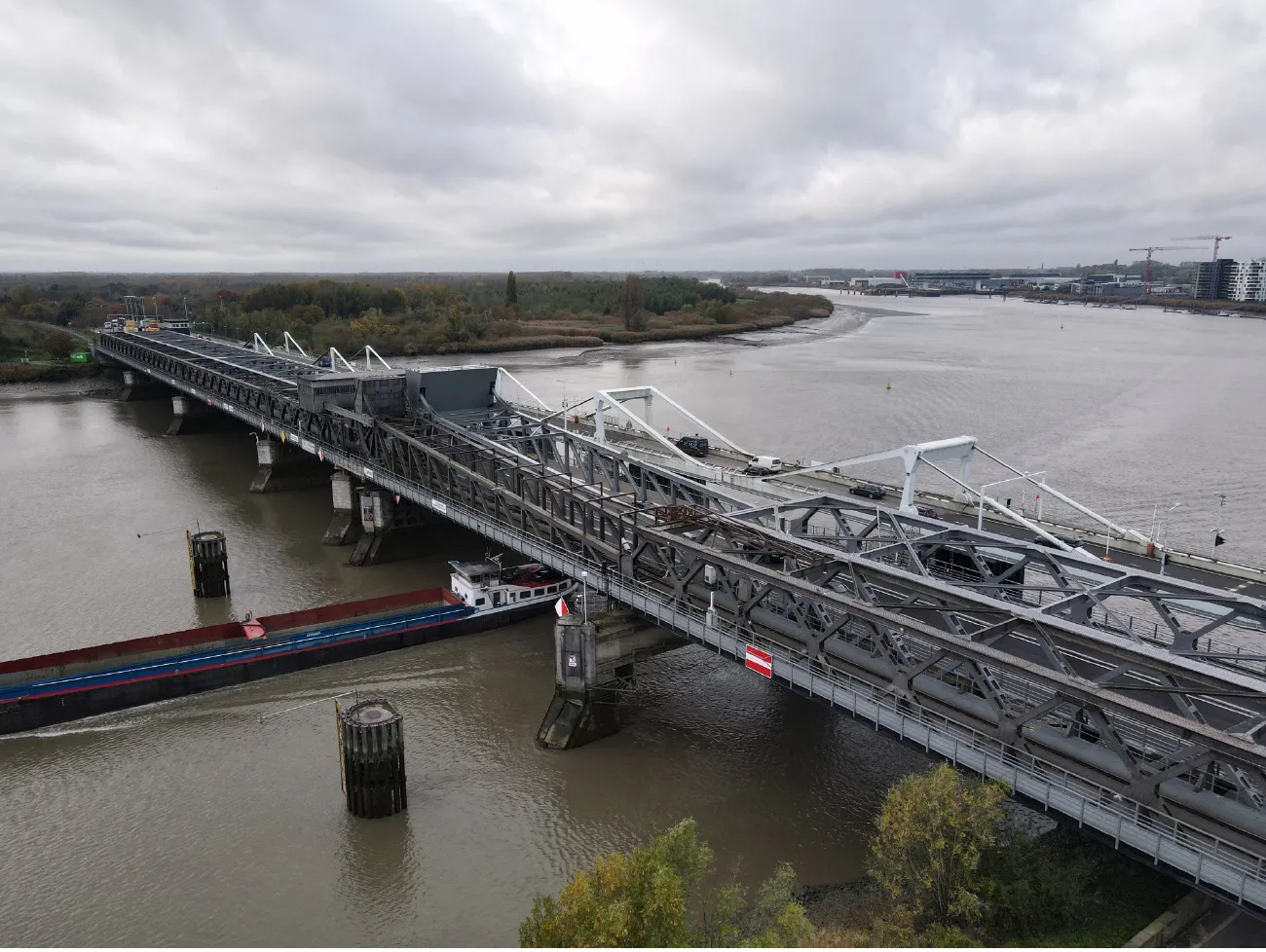
The Scheldt Bridge connects Temse in the Land of Waas with Bornem and Klein-Brabant. At 365 m long, it is Belgium’s longest bridge and the last fixed, above-ground crossing over the river on its way to the sea. A crack-free, watertight topping between the structural concrete and asphalt surface course was essential to a successful renovation. Adfil’s macrofibres and microfibres are ideally suited to making the crossing more durable. The innovative fibres bridge cracks, prevent water ingress and help avoid premature damage. Adfil combined Durus EasyFinish macrofibres and Crackstop Ultra M microfibres as an alternative to conventional steel mesh, producing a durable, crack-free and watertight concrete layer.
Efficient results
“A dosage of 4 kg of Durus EasyFinish and an additional 600 g of Crackstop Ultra M delivered an efficient result,” says Jeroen Smet, technical sales director at Adfil. “The variable thickness of the topping would have made it almost impossible to install a steel mesh correctly. Using fibres instead of reinforcement mesh makes the work much faster, safer and more environmentally friendly. Macrofibres prevent microcracks immediately, even in the first hour while the concrete is still fresh. These cannot then develop into full-blown cracks, which could cause significant damage and costly repairs.”
The macrofibres and microfibres are dosed at the concrete plant, ensuring consistent quality on site. With no reinforcement mesh, the truck mixer can also access the site more easily. Fibre-reinforced concrete also makes the work on site less demanding. The result is more ergonomic work that saves time and, consequently, costs. After pumping and an initial finish, the surface of the topping was sealed permanently by power floating. The crack-free surface can then be covered with asphalt layers after two weeks.
Durus EasyFinish
Adfil’s Durus polypropylene macro-synthetic fibres have revolutionised concrete construction. These macrofibres offer superior performance, cost savings, and health and safety benefits for concrete suppliers, contractors and designers. Durus EasyFinish is very easy to mix and apply. The reinforcement is supplied ready to be mixed into the concrete, or can be added on site. This is a major advantage over reinforcement mesh, which can be installed incorrectly. The fibres are inert to concrete alkalinity and moisture, making them 100% rust-free. This ensures a long service life. Durus EasyFinish also requires considerably less storage space than steel reinforcement and eliminates the risk of injuries from trips, falls and cuts associated with steel reinforcement mesh.
Crackstop M Ultra
Adfil’s range of micro-synthetic concrete reinforcement comprises a series of high-quality monofilament polypropylene fibres marketed under the name Crackstop M. These fibres serve as an alternative to crack-inducing mesh and improve the surface properties and durability of cement-based products. They also significantly reduce plastic shrinkage and plastic settlement cracking. The fibres are coated with surfactant to ensure optimum dispersion and bonding in the concrete.
Adfil’s fibres, no more than a few centimetres long, are made from polypropylene. The manufacturing process is continually scrutinised, and innovation is a constant thread running through Adfil’s work. This drive to develop new products means that ever fewer fibres are needed to reinforce concrete. “We are constantly looking to improve the composition and shape of the fibres. To do this, we use our own concrete laboratory. Whereas 15 years ago you could easily and quickly need 10 kg/m³ of concrete, today it is ‘only’ 2.5 to 3 kg. We closely monitor exactly what the fibres do in the concrete. We use the results of our concrete tests in calculations, which we also provide free of charge to our partners. This gives them a substantiated calculation that can offer a fully fledged alternative solution for a project,” concludes Jeroen Smet.
Question about this story? Ask your question
Who worked on it
Scheldebrug in Temse, renovatie
- macro- en microvezelsAdfil
Keep following this
Get an email when a new story is published. No account needed.
- ProjectScheldebrug
- ThemeMaterials with a lower environmental impact
- SubjectBridges & tunnels
- CompanyAdfil