Complex and imposing bridge renovations pose no obstacle for renovation specialist
Large or small, simple or complex … for concrete renovation specialist Renotec, every renovation project is a welcome challenge. This was certainly true of the renovation of the substructure of the motorway bridge (E19) over the Beneden-Nete in Rumst and the renovation of the railway bridge over the Brussels Ring in Zaventem. “The complex situation in Rumst meant we had to work from pontoons, while minimising disruption was a crucial factor in the mega-project in Zaventem,” says Tim Sneyers, project manager at Renotec.
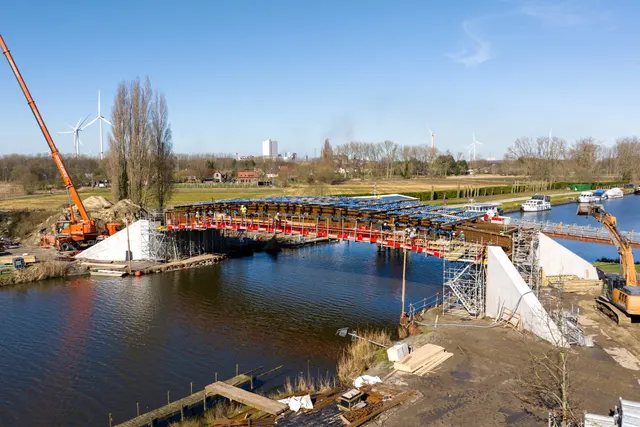
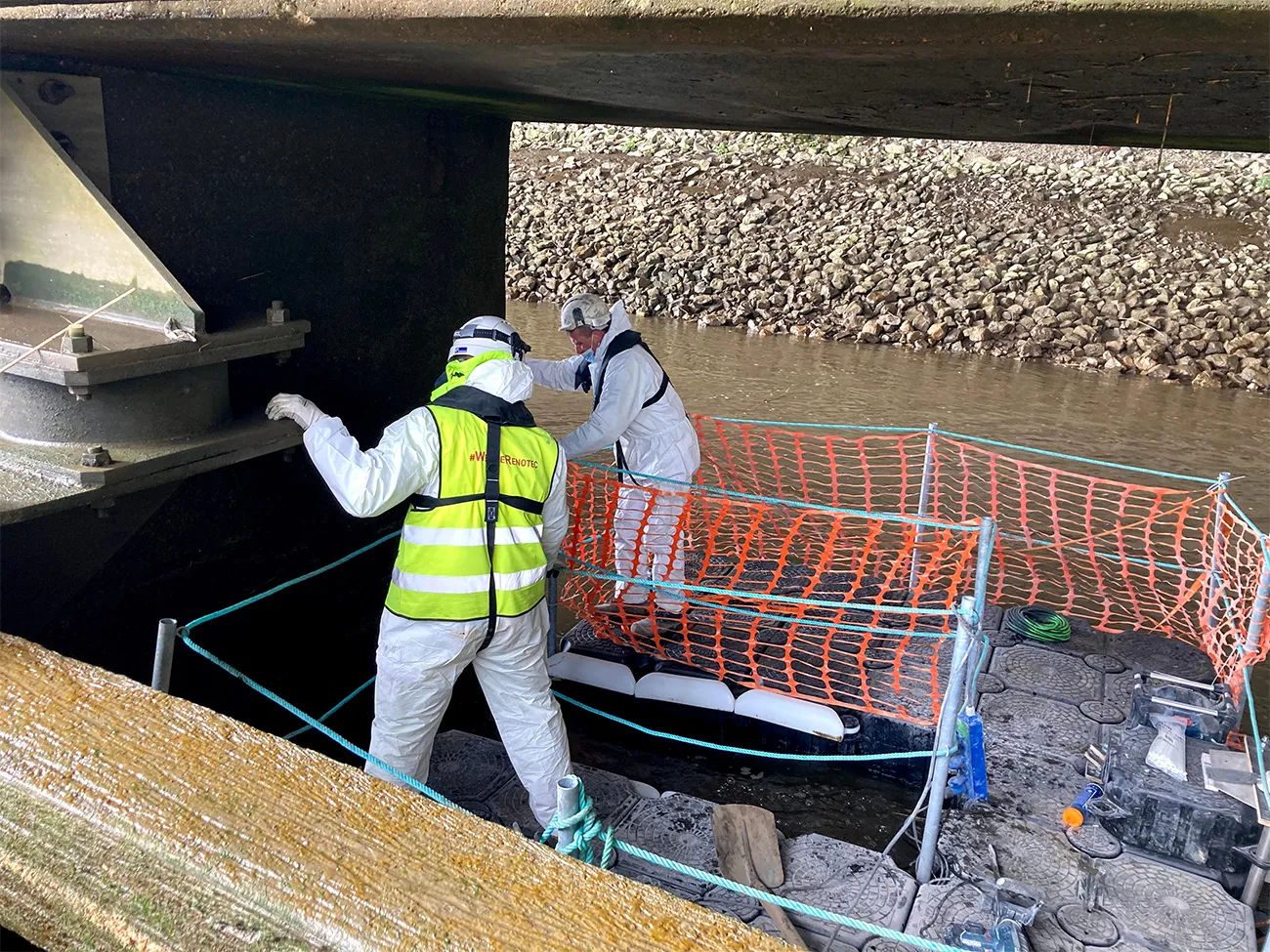
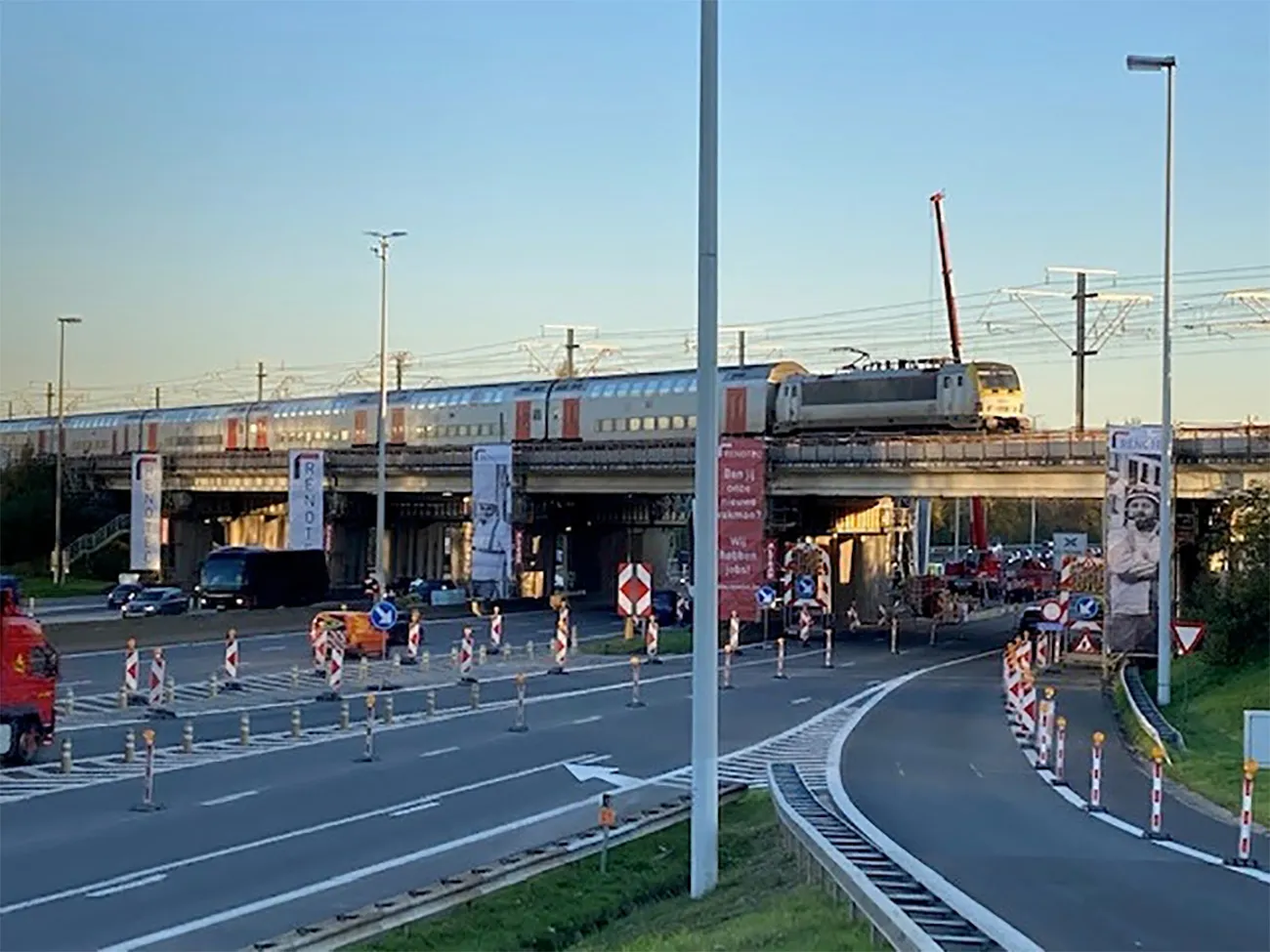
In April 2021, De Vlaamse Waterweg nv began renovating the substructure of the motorway bridge (E19) over the Beneden-Nete in Rumst. Concrete repairs were needed both above and below the waterline. The drainage system and the timber fendering, which protects the bridge piers in the event of a collision, were also replaced. Tim Sneyers: “The project involved around a hundred piers in the riverbed. It was complex for two reasons. Firstly, it quickly became clear that the work would have to be carried out entirely from a pontoon. Secondly, we were dealing with a tidal river. The difference between low and high tide was around 5 m, and we obviously had to take that into account.”
Meticulous planning
Carefully devised planning was therefore crucial to delivering this project properly. “Renovation work in a river whose water level changes twice a day requires clear, practical organisation,” says Tim Sneyers. “Some of the repair products we use need a certain amount of time to dry, and we had to ensure they got it. We only had a few hours before the treated section was submerged again. Even damaged bridge sections that remain underwater continuously were treated using a specific method. Thanks to our extensive experience and good relationships with suppliers, we know the product market very well.”
In consultation with the subcontractor, a pontoon fitted with two MEWPs was selected to carry out the work. Tim Sneyers: “We also built a jetty so the workers could travel by boat from there to the pontoon. Not every contractor is equipped to manage projects this complex, but where others step back, Renotec steps in. Weeks of preparatory work and planning enabled us to devise a workable system without compromising productivity.”
The most visible site
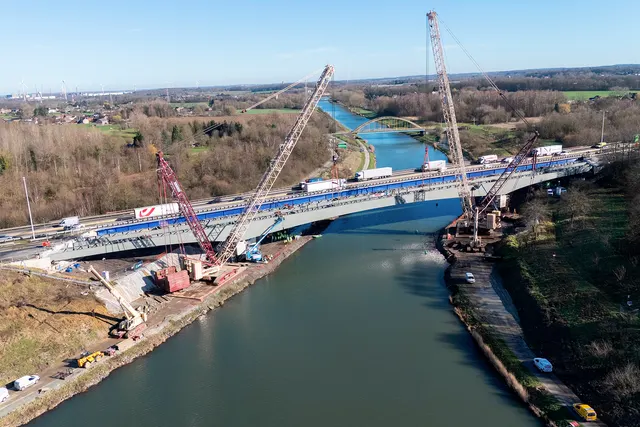
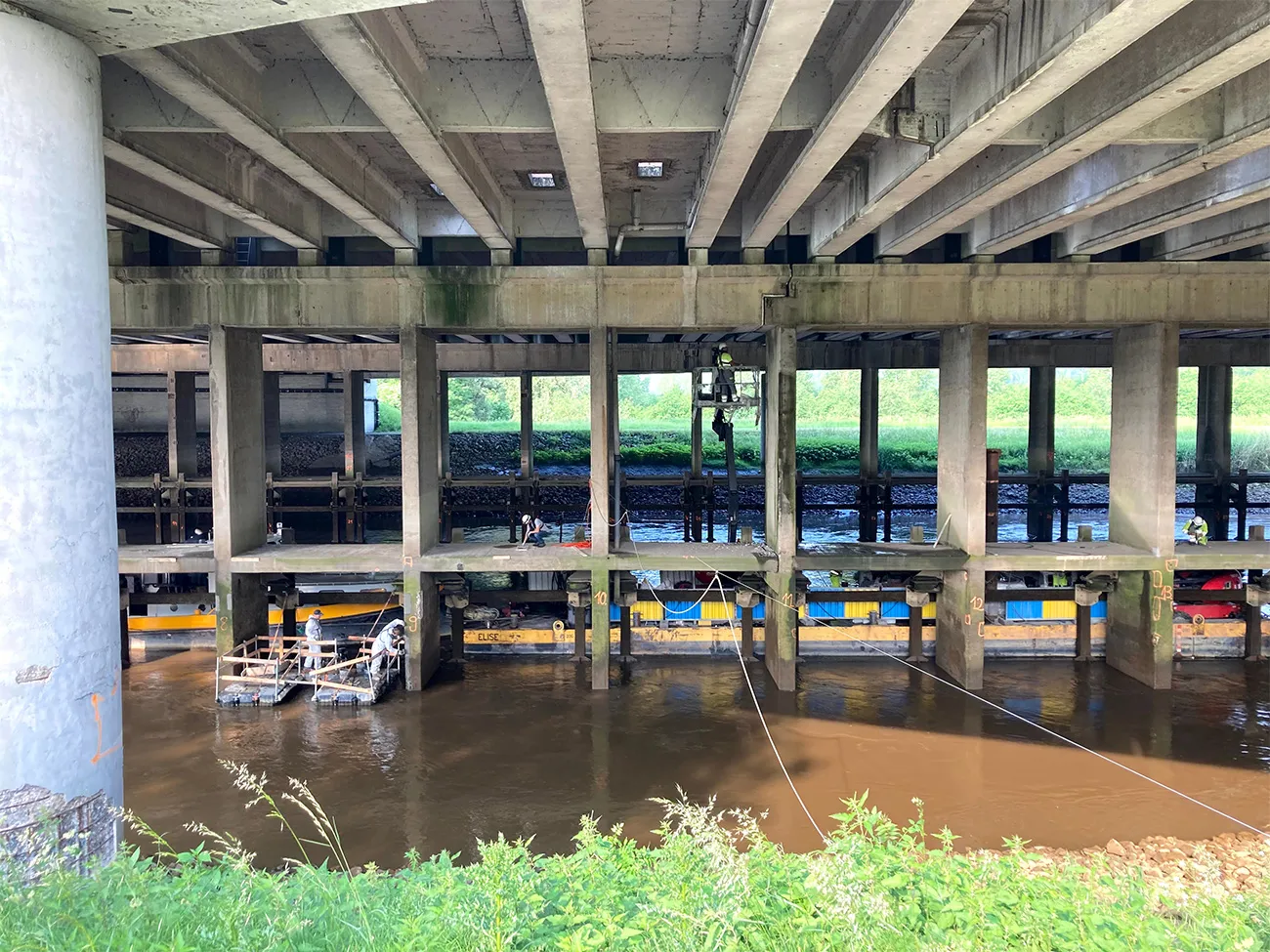
The site at the railway bridge over the Brussels Ring in Zaventem, commissioned by Infrabel, was in turn undoubtedly one of the most ‘visible’ sites in Renotec’s history. During the week, around 450 trains and no fewer than 160,000 vehicles pass over and under the ‘busiest bridge in the country’. The 165-metre railway bridge, built in the 1970s, has five piers supporting six spans with a concrete deck. The 50-year-old bridge showed signs of wear, so concrete repairs were necessary. Tim Sneyers: “We renovated both the superstructure, replacing the waterproof joints beneath the tracks, and the substructure, repairing the deteriorated concrete and replacing the bearings. These are the supports between the bridge decks and the piers. We also repaired the concrete.”
Minimal disruption
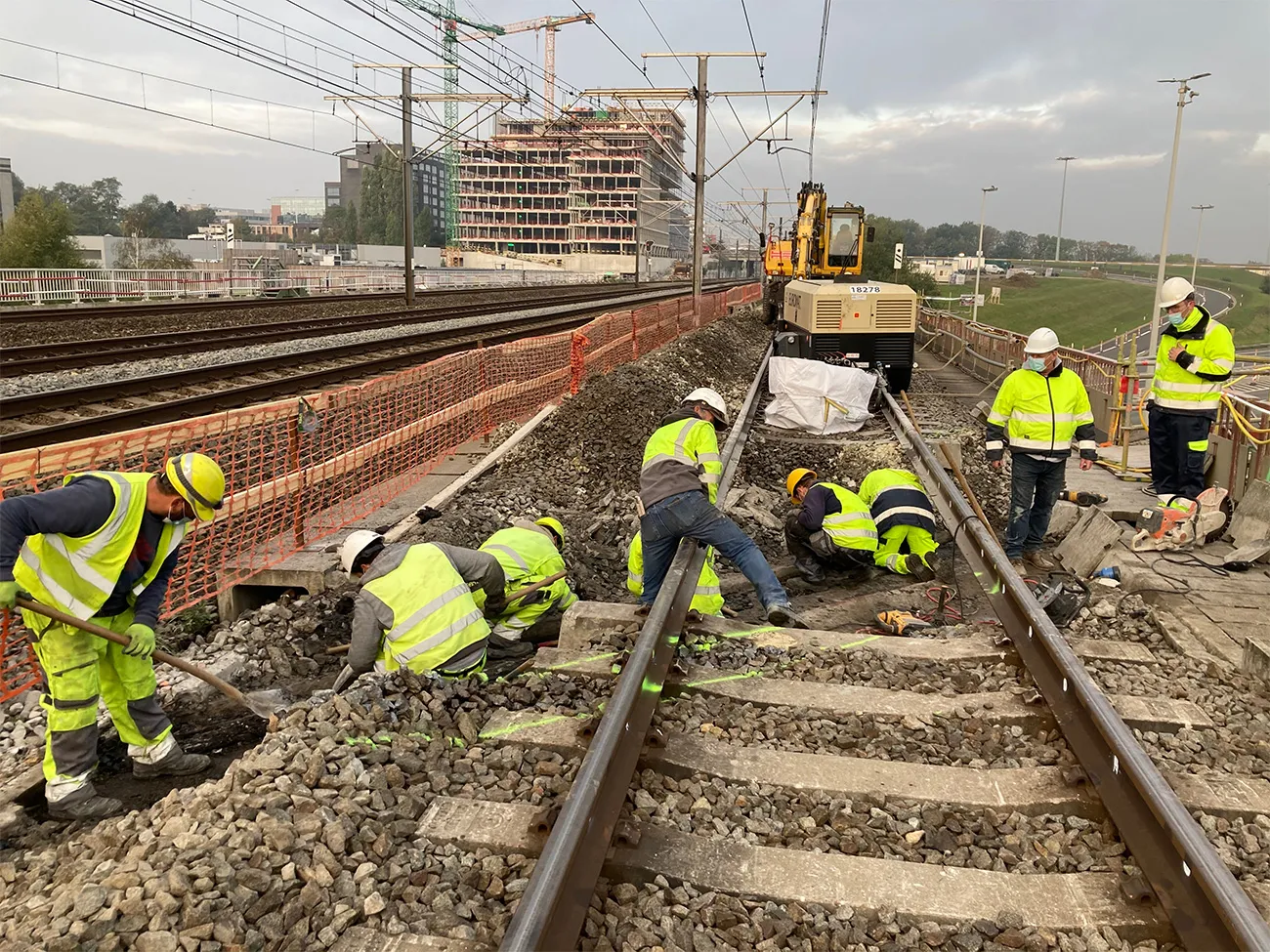
Renotec always takes pride in ensuring that passers-by and local residents experience as little disruption as possible during renovation work. Here, too, we kept the impact on rail traffic to a minimum. Tim Sneyers: “The bridge has four railway lines, two of them international. We had to carry out the work on top of the bridge during several pre-scheduled weekend possessions. During these limited work windows, the tracks were completely removed, the waterproof joints replaced and the tracks reinstated. Good communication and planning were therefore crucial. We also had labour and equipment on standby as a back-up in case of any problems.”
The impact on motorway traffic was also minimal. “Traffic was able to continue passing throughout the works. We surveyed the entire substructure to locate the deteriorated concrete and then repair it. The bearings also needed replacing. To do this, we had to jack the bridge up by around 1 cm. Work on the substructure was carried out mainly at night. Using MEWPs, we worked from left to right in stages, so that sufficient traffic could continue to pass even at night. From May to August inclusive, we were working there almost every night. It was a major logistical challenge, but in the end everything was completed neatly within the agreed timeframe. Cooperation with the other parties was also very good,” concludes Tim Sneyers.
Question about this story? Ask your question
Keep following this
Get an email when a new story is published. No account needed.
- ThemeFuture-proofing roads and railways
- SubjectBridges & tunnels