Belgian first: ship impact berm to protect Kanaalzonetunnels
Text Niels RouvroisImage Sweco
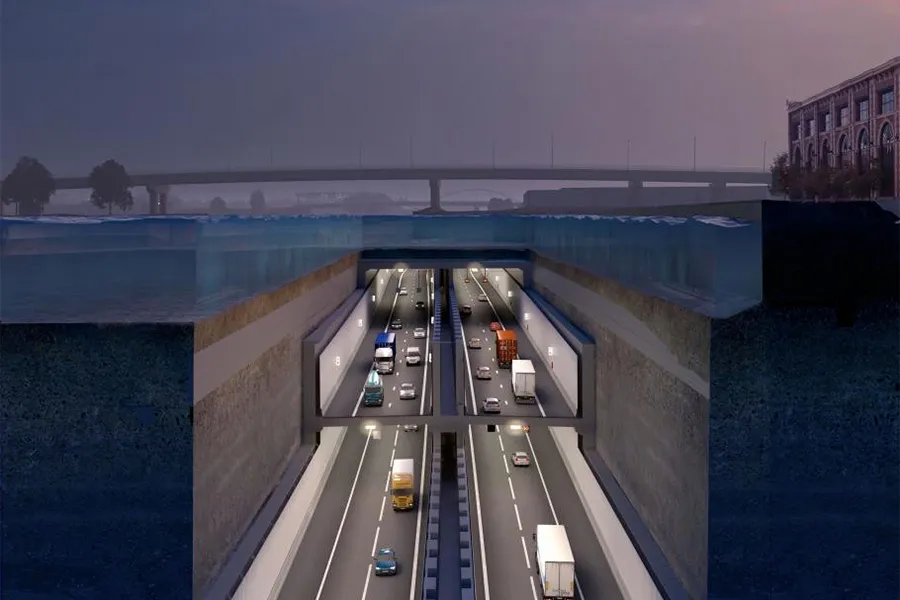
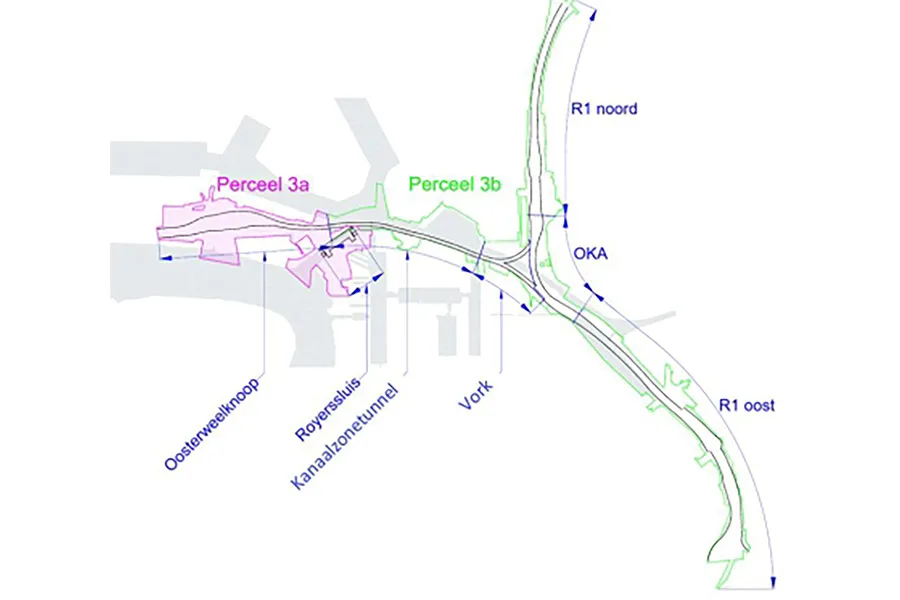
Commissioned by Lantis, construction of the Kanaalzonetunnels is well under way. The tunnels will complete the Antwerp Ring in the north of the city, connecting the new Oosterweelknooppunt on Antwerp’s right bank to the existing Ring. The four tunnel tubes start at Amerikadok and run beneath the Albert Canal. As the top of the tunnel lies higher than the navigation channel, TM ROCO, a consortium comprising BESIX, BESIX Infra, DEME Infra, Dredging International, Jan De Nul, Cordeel, Denys, Franki Construct, Willemen Infra and Van Laere, developed a tool to design a ship impact berm. Sweco, an engineering and architecture firm, was engaged for the design studies.
As a major Flemish liveability and mobility project, the Oosterweel connection will improve traffic flow and safety by completing the Ring and reconstructing road infrastructure. At the same time, some traffic will be routed underground through tunnels and covered sections, above which new parks will be created. Commissioned by Lantis, TM ROCO is carrying out the works on Right Bank Lot 3B, which includes not only construction of the new sunken Ring but also the Kanaalzonetunnels.
Container ships pass close to the tunnel
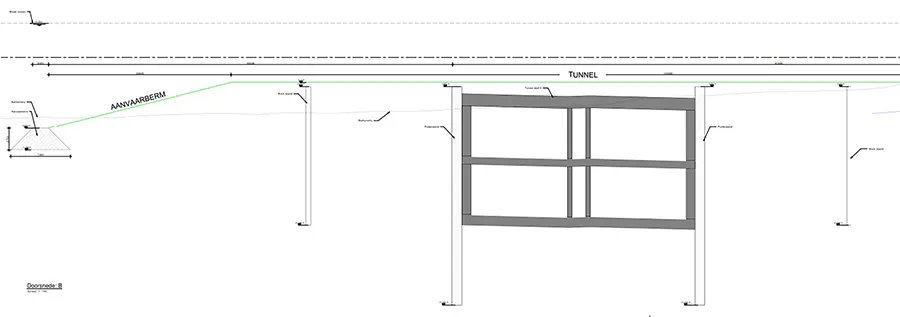
The Kanaalzonetunnels connect the Oosterweelknoop (Lot 3a) to the Splitsingsconstructie (near the Noorderlaanbrug). The tunnel structure lies entirely beneath the bed of Amerikadok and outside its navigation channel. As the channel is deeper than the top of the tunnel, a ship impact protection system was designed to ensure that a potential collision would not compromise the structural integrity of the Kanaalzonetunnels. The berm will bring a ship to a halt by making it run aground on the berm.
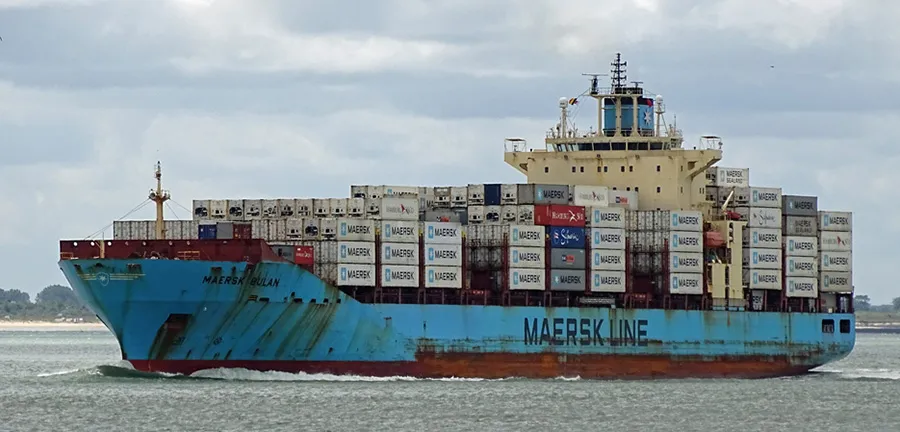
“The tunnel itself consists of four tubes, with evacuation passages and technical rooms in the centre,” explains Franck Monballiu, project manager at Sweco. “This is certainly not the first tunnel Sweco has designed, but this is an unusual case. Huge container ships with a deep draught pass through the Port of Antwerp. They do not pass above the tunnel, but turn and pass in front of it. That is why it was decided to position the tunnel a little higher: the deeper the tunnel is, the more technically challenging and expensive the project becomes.”
Protecting the tunnel and the ship
The higher position does, however, create a potential collision risk if a ship strays off course and ‘misses the turn’. Franck Monballiu explains: “Missing a turn is, of course, a relative term given the unwieldy nature of a ship like that, and the likelihood is very small thanks to tugboat assistance. Nevertheless, the tunnel must be protected against such risks. To protect both the tunnel and the ship from damage, a ship impact berm was developed to shield the side of the tunnel. The principle is quite simple: on hitting the berm, the ship will ride up it, lose speed and eventually come to a halt, without endangering the integrity of the tunnel.”
A first for Belgium
Together with TM Roco, Sweco developed a tool to design the ship impact berm. It combines a bearing capacity calculation with the (dynamic) forces exerted by a ship as it rides up the berm. In addition to designing the berm, the interaction between the berm and the tunnel structure was also examined. Franck Monballiu explains: “As far as I know, this is a first for Belgium. There are examples of ship impact protection, such as at the Great Belt Bridge (18 km) in Denmark. Two enormous piers stand in the middle of the navigation channel there, and are also protected by a ship impact berm. We can draw on some of that design work, but a tunnel is of course completely different from piers. So it remains a challenge. The width, the slope, the materials … everything has to be investigated down to the last detail.”
Leading experts
The design studies are still under way. “All of Sweco’s leading experts are contributing their views to the study. That is one of our major strengths: the extensive and, above all, diverse expertise we have in-house. We can also draw on the expertise of DEME (Eelco van Putten), and we have consulted universities. This shows that we are leaving no stone unturned to complete this study as flawlessly as possible. It is certainly a fine challenge. We are mostly used to working with static structures, but a ship is dynamic, which naturally makes the calculations more complex,” concludes Franck Monballiu. ■
Question about this story? Ask your question
Keep following this
Get an email when a new story is published. No account needed.
- ThemeExtending the life of bridges and tunnels
- SubjectBridges & tunnels