A composite cycle bridge over the Dessel-Turnhout-Schoten Canal
Text Thierry PfleidererImage Herbosch-Kiere
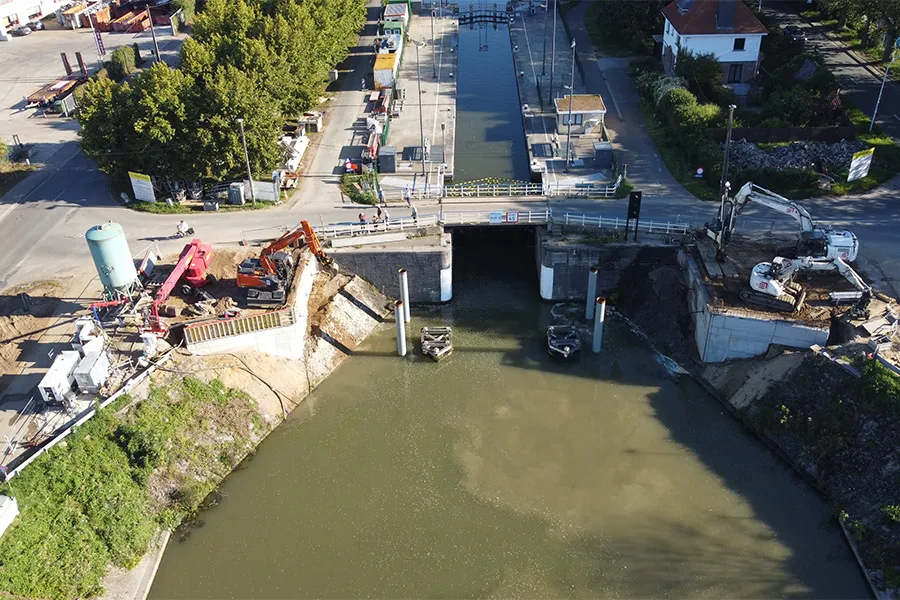
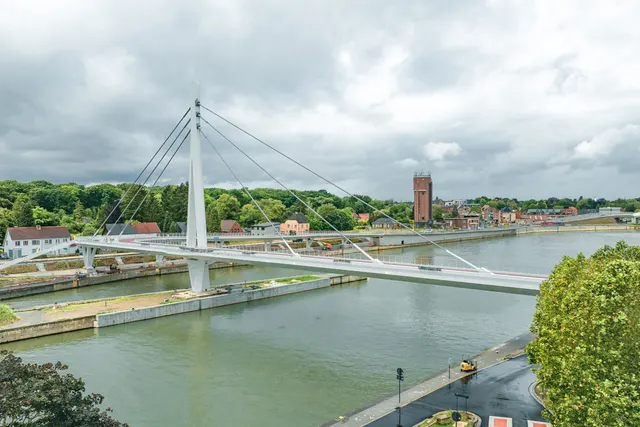
Herbosch-Kiere began work at the end of September on a new cycle bridge over the Dessel-Turnhout-Schoten Canal, at the lock complex in Schoten. We talk to Gary Van Gulck, site manager at Herbosch-Kiere, about this innovative project.
The junction of cycle highways F5 and F15 is located at the canal’s lock complex in Schoten. Cyclists currently share a 3 m-wide bridge with motor traffic, creating unsafe conditions. This is why De Vlaamse Waterweg decided to build a new cycle bridge, separating motor traffic from cyclists.
Built using composites
Composites, or fibre-reinforced polymers (FRP), are increasingly being used in civil engineering structures. International experience with cycle and pedestrian bridges shows that this type of bridge offers significant benefits and is set to become an important part of public infrastructure in the future. One major advantage of FRP over traditional building materials is its low weight relative to its strength and stiffness. This allows for lighter foundations and means that heavy machinery is not needed during installation. Another advantage is that composites are highly durable and require little maintenance.
Composite materials are gaining ground in construction, but are not yet widely used to build bridges in Belgium. Until recently, clients, designers and contractors had limited knowledge of them, and European and Belgian standards were lacking*. This is the first time Herbosch-Kiere has delivered a project of this kind. The company is taking on the challenge with great enthusiasm.
Thorough preparation and a planned approach
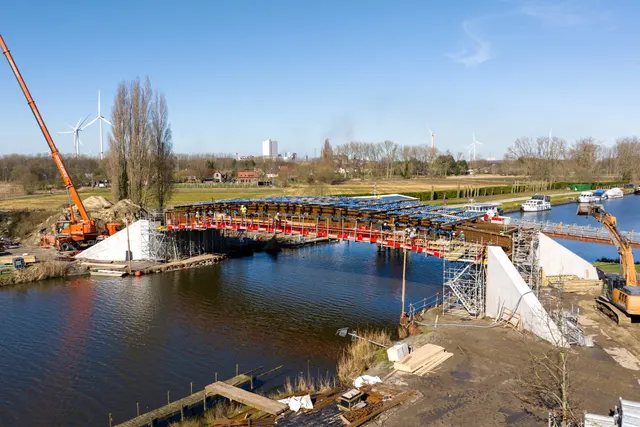
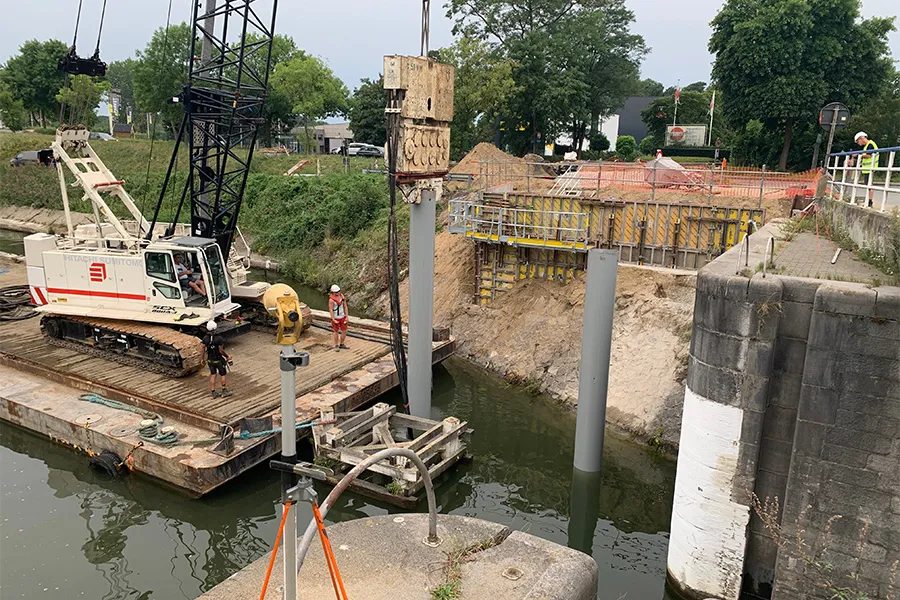
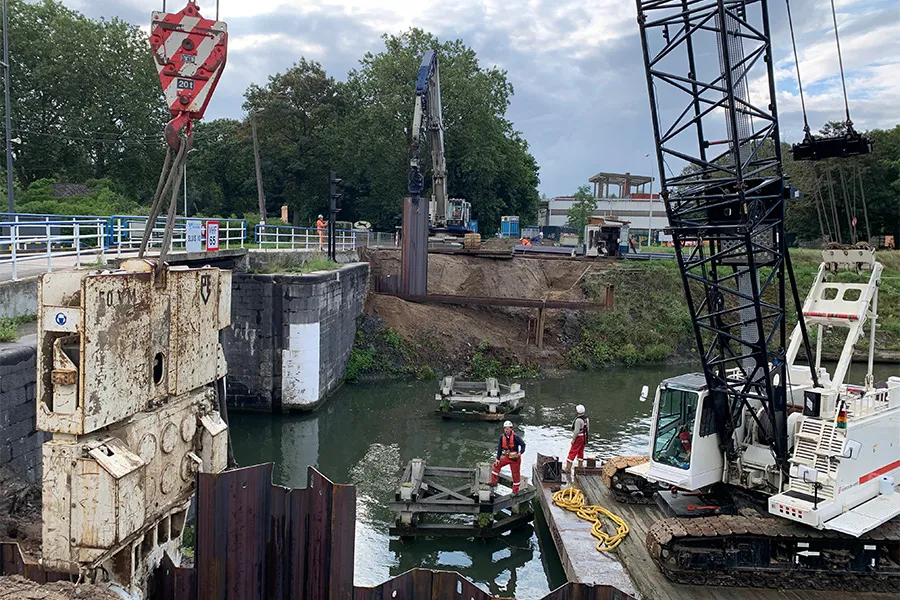
“We paid a great deal of attention to preparing the work,” says Gary Van Gulck. “The project consists of many small components that follow one another in quick succession. The new cycle bridge is being built right next to the existing lock bridge. This involves, among other things, partially removing the existing rubble-masonry embankment and concrete lock floor to drive sheet piles and tubular piles. Some of this work has to be carried out from the water. Our expertise in water engineering is clearly a major asset here.”
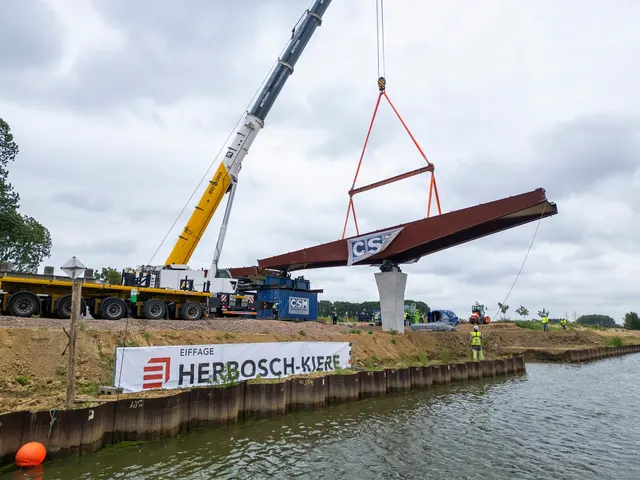
“While we build the abutments and pier beams, our subcontractor Janson Bridging: Composite structures is building the composite bridge in the Netherlands. We will then bring it to Schoten on our own pontoon and lift it into place at the end of September.”
Working efficiently
During the works, Herbosch-Kiere is ensuring that traffic can continue to flow as smoothly as possible. Gary Van Gulck says: “During the first phase, there is little disruption for cyclists and motorists, who can almost always pass the worksite. This is no easy task, given that the bridge is on a busy local road and at a junction of cycle highways. During the second phase, the lock bridge will be closed to motor traffic and cyclists will have to take a short detour. Cyclists will only have to take a longer detour, as far as the next lock, for two weeks.”
Finishing touches from start to finish
“Once the bridge is in place at the end of September, phase 1 will be virtually complete. We will then connect the cycle highways to the bridge and install the necessary road markings and signage. The work is proceeding entirely to plan and will be completed by mid-November,” concludes Gary Van Gulck. ■
*wp7_whitepaper C-Bridge steps for composite bridges: Ugent, Buildwise, Agentschap Innoveren & Ondernemen Vlaanderen
Een zakelijke vraag aan Herbosch-Kiere? Get in touch
Who worked on it
Fietsbrug Vlaamse Waterweg Schoten in Schoten
- waterbouwer
 Herbosch-Kiere
- composiet brugJanson Bridging: Composite structures
Keep following this
Get an email when a new story is published. No account needed.
- ProjectFietsbrug Vlaamse Waterweg Schoten
- ThemeExtending the life of bridges and tunnels
- SubjectBridges & tunnels
- CompanyHerbosch-Kiere
- CompanyJanson Bridging – Composite structures