Versatile renovation for Nieuwpoort yacht clubs
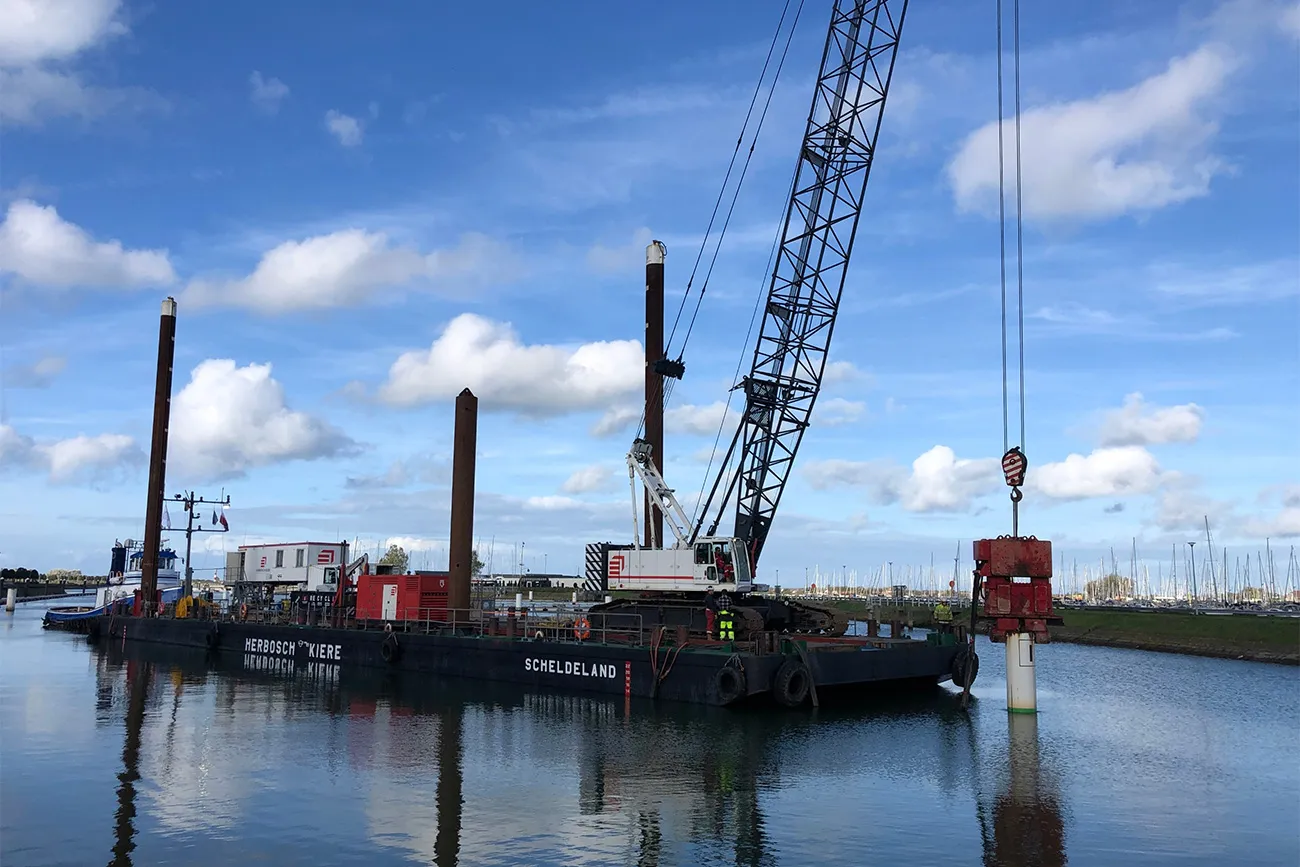
Water engineering specialist Herbosch-Kiere is currently busy renewing the infrastructure of 2 yacht clubs in Nieuwpoort, on behalf of the Flemish Government’s Agency for Maritime and Coastal Services, Coastal Division: Koninklijke Yachtclub Nieuwpoort (KYCN), located at Kromme Hoek, and Vlaamse Yachtclub Nieuwpoort (VYN), located at Watersportlaan. “Our extensive fleet of plant and equipment means we are well equipped for complex projects like this,” says ing. Geert Stellamans, project manager at Herbosch-Kiere.
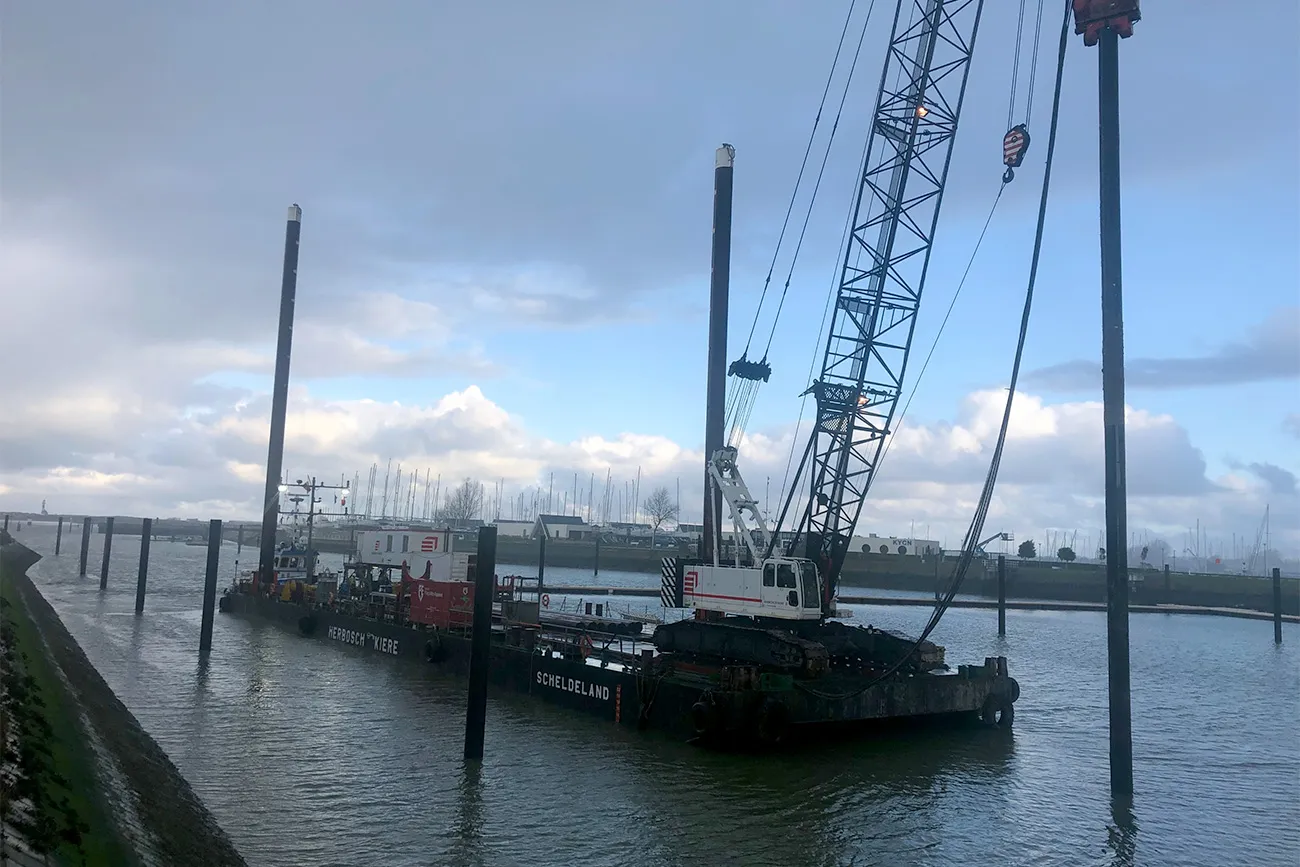
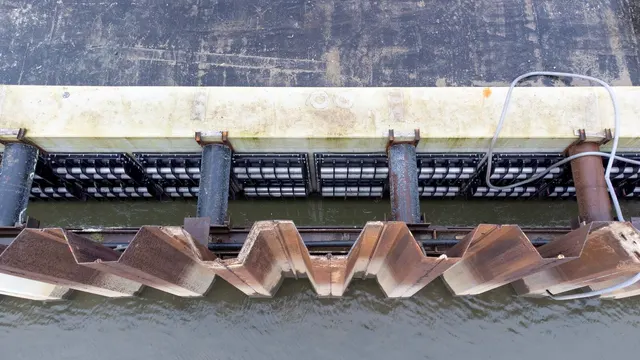
At KYCN, the old steel tubular piles that hold the floating pontoons in place are being extracted and replaced with new ones. Geert Stellamans: “The old tubular piles are in very poor condition and need to be replaced to ensure they can continue to anchor the pontoons. The old piles, with a diameter of around 840 mm, are being replaced by approximately 65 tubes with a diameter of 508 mm, but made from higher-grade steel. The new piles are also longer, giving them greater penetration into the seabed. In addition, all the old concrete access jetties are being demolished and replaced with new ones. New aluminium gangways will provide access from the concrete jetties to the pontoons. Some of the existing aluminium gangways will also be reused. Finally, both yacht clubs are being fitted with new floating pontoons.”
Versatile work
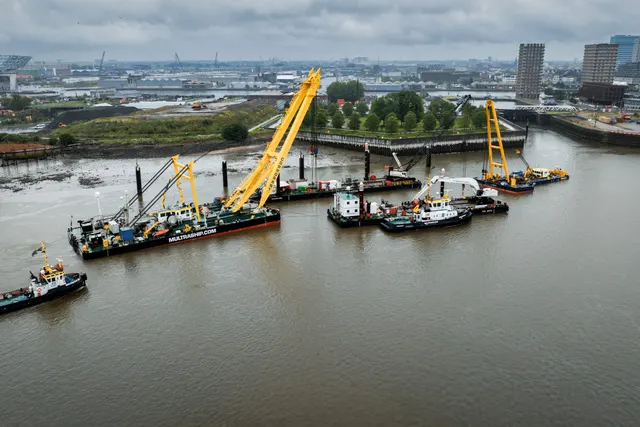
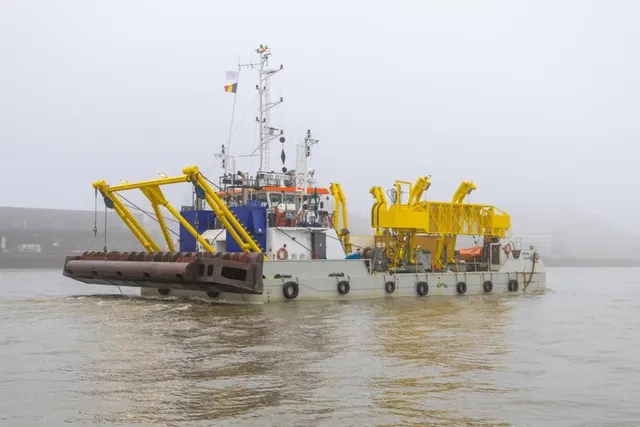
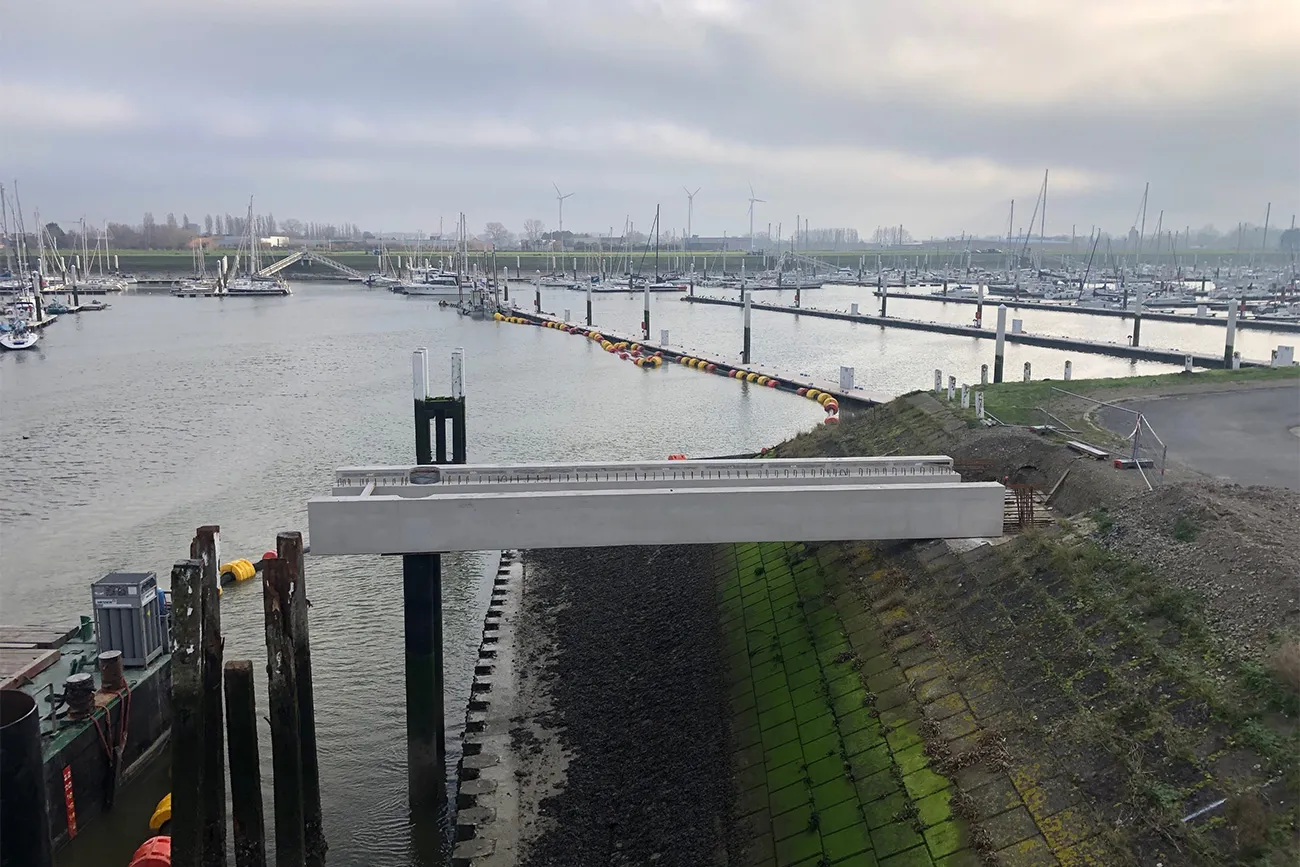
For this work, water engineering contractor Herbosch-Kiere is providing a large work pontoon equipped with a heavy-duty cable crane to carry out the various elements of the project. Geert Stellamans: “These include extracting and driving the tubular piles and demolishing old timber structures in the water, as well as designing, manufacturing and installing the new concrete jetties. These new concrete jetties are mostly located over the water, in the tidal zone. Because of their large dimensions and associated weight, they were partly designed using precast beams and precast floor slabs, combined with concrete cast in situ.”
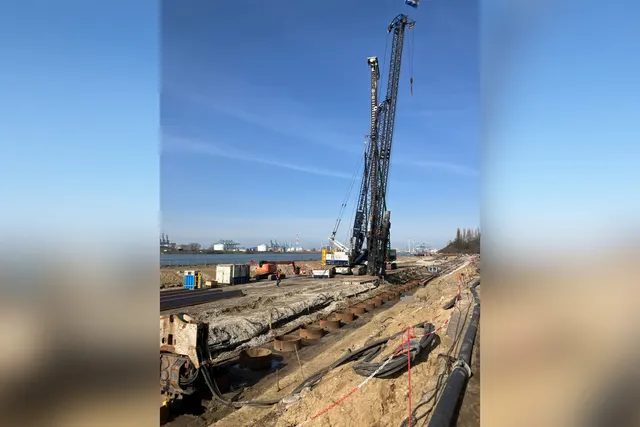
All the old floating pontoons have now been removed from both sites, a total of around 1,500 linear metres of pontoon. “The old tubular piles have been extracted and replaced with new ones,” explains Geert Stellamans. “The foundations for the new concrete access jetties have been completed. Screw piles were used for the landward foundations of the new jetties. On the seaward side, steel tubular piles were driven to form the foundations.
The replacement supporting structure for these jetties was built using precast beams. The deck slab will then be installed and cast together with the rear beam. Ducts have been incorporated along the length of the longitudinal beams so that, once installed, all utility services can be connected through to the gangways and, ultimately, the floating jetties. Stainless steel railings and gates will provide the finishing touches. A waterproof wearing course will then be applied to the concrete deck slab. Meanwhile, a large section of the new pontoons has already been floated into place and secured to the new tubular piles. If everything continues to go according to plan, the work should be completed by the end of April 2023.”
A challenge
Even for an experienced contractor like Herbosch-Kiere, the old tubular piles present a considerable challenge. They are filled with concrete and have 4 fins welded to the sides at the bottom of each tube. Geert Stellamans: “The concrete inside the tube not only makes it much heavier, it also restricts the transmission of energy from the vibratory hammer to the bottom of the tube. This energy is needed to vibrate the tube loose so it can be removed. The vertical fins, welded on and extending 7 m into the ground, also impede the extraction process. To grip the tubular pile with the vibratory hammer, some of the concrete was cut away at the top. The pile alone can weigh up to 23 tonnes, not including the vibratory hammer or the resistance from the soil. To avoid damaging the embankments and disturbing the seabed, water jetting to loosen these tubular piles was understandably not permitted.”
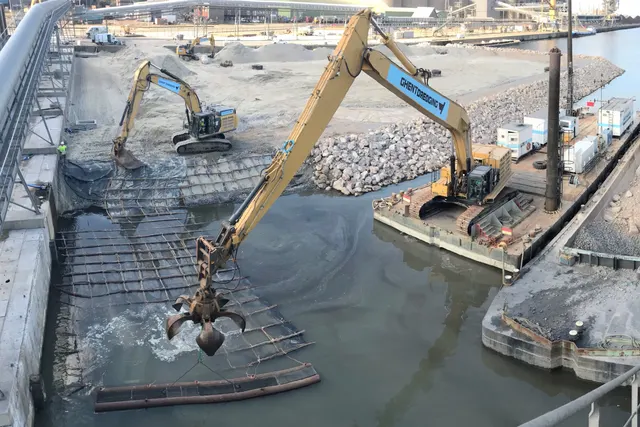
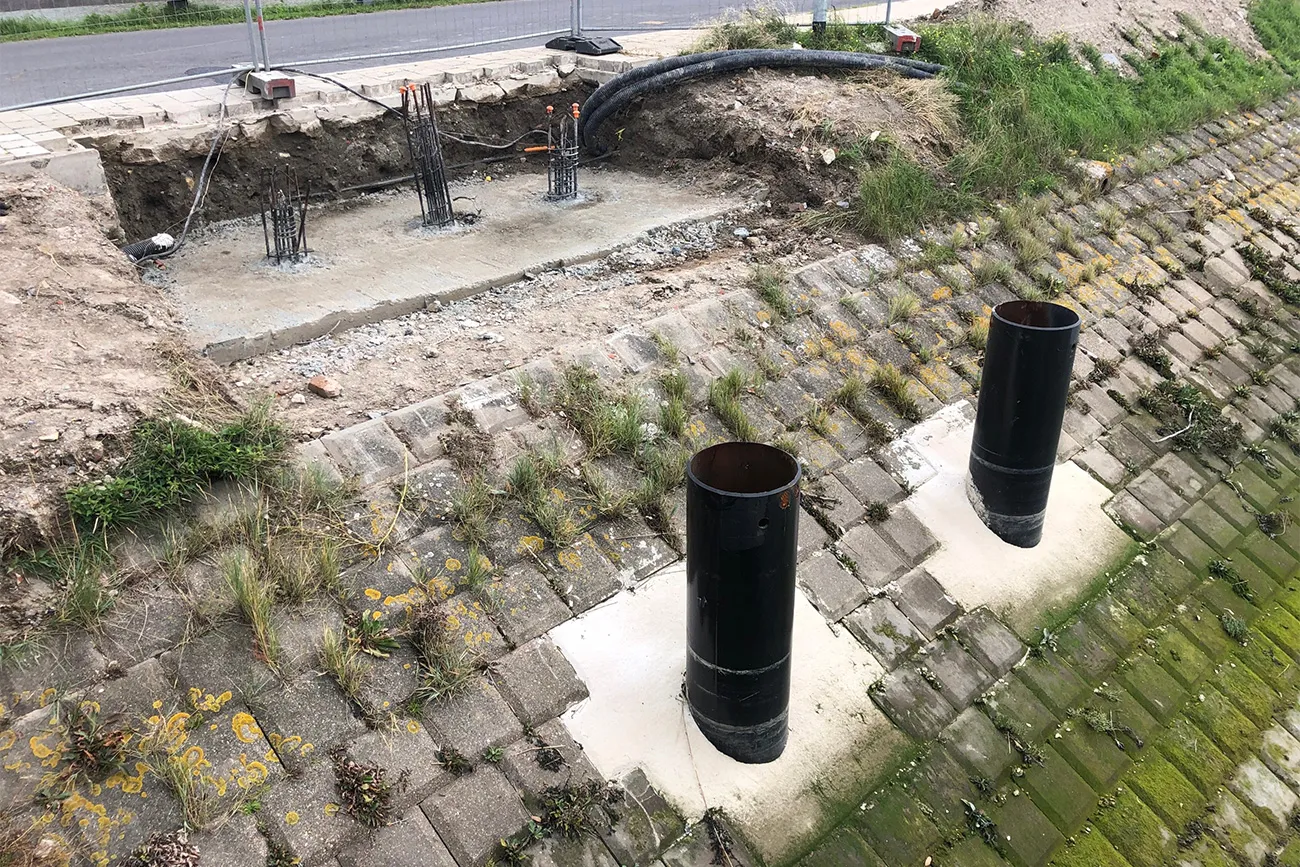
Several new tubes also had to be driven through the floor of an existing lock. “A hole had to be made in the floor each time. To avoid producing large quantities of rubble, we opted to mill holes into the old lock floor. A hydraulic excavator fitted with a milling cutter was brought onto the pontoon. The holes were made and the piles could then be driven. This project fully demonstrates Herbosch-Kiere’s versatility as a water engineering specialist. As well as extensive knowledge and experience, we have a large fleet of plant and equipment, which leaves us well equipped for complex projects.”
Een zakelijke vraag aan Herbosch-Kiere? Get in touch
Companies in this story

Keep following this
Get an email when a new story is published. No account needed.
- SubjectHydraulic engineering
- CompanyHerbosch-Kiere