Testing dike strength and repairs in Hedwige-Prosperpolder
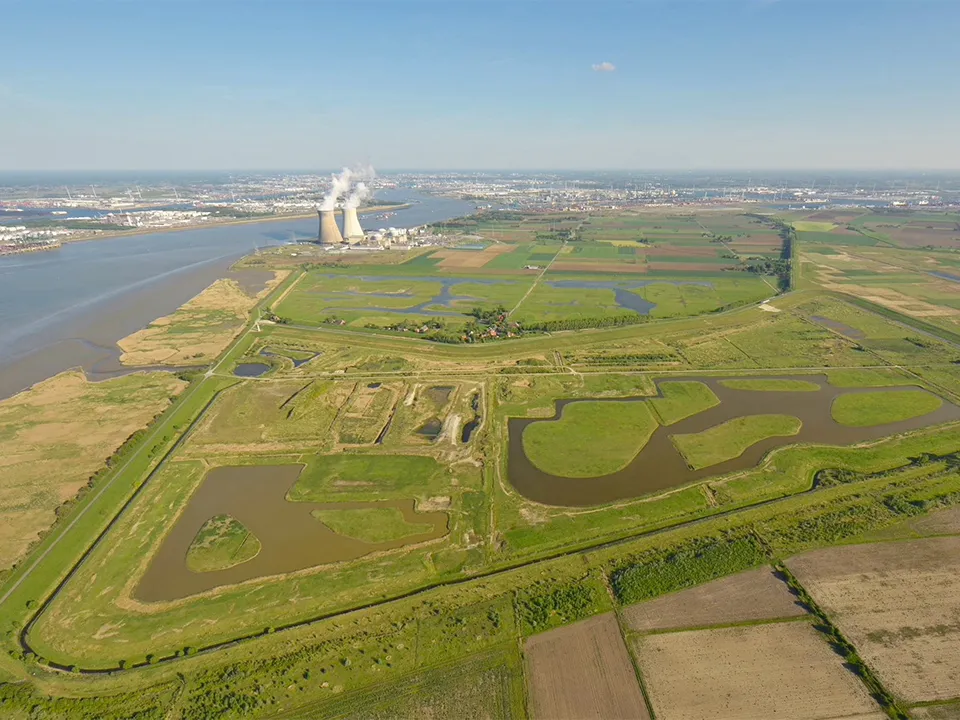
Rising sea levels and extreme weather events with high water pose a serious threat to the Netherlands, Belgium, France and the United Kingdom.
How strong are the dikes in this region? And what is the best way to repair dike damage? These are the questions the INTERREG Polder2C’s project aims to answer, in a truly unique way. Dike failure tests and damage repair exercises are being carried out under realistic conditions at the test site on the border between the Netherlands and Belgium, the Living Lab Hedwige-Prosperpolder.
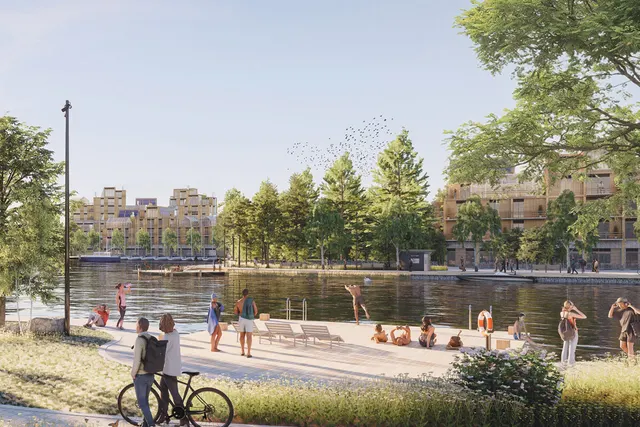
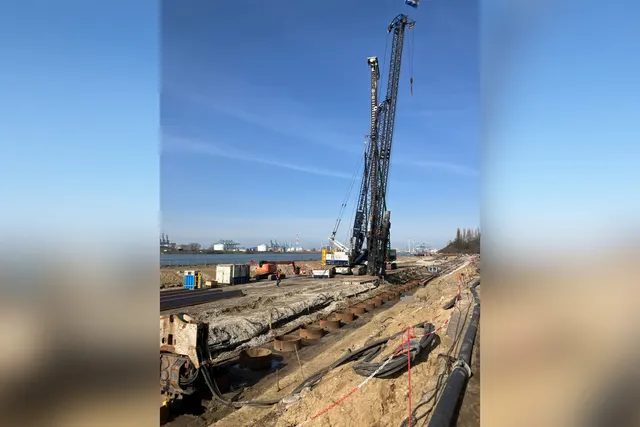
Over the coming years, the Hedwige-Prosperpolder will be depoldered as part of the updated Sigmaplan, transforming it into tidal wetlands. During this transformation, a new ring dike will be built and the Scheldedijk will then be excavated. Depoldering will be completed in 2024. Until then, the area offers a unique test site: the Living Lab. It is a testing ground with real dikes where trials can be conducted and innovative techniques tested.
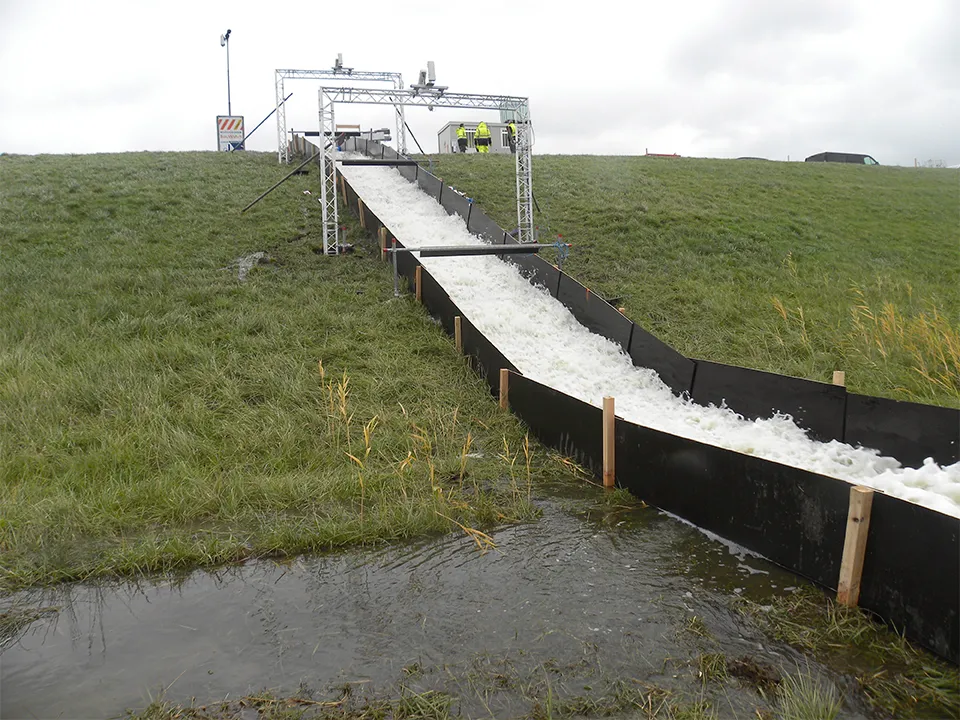
Overflow tests
The Living Lab has been in full use by the Polder2C’s project for some time. In November 2020, a range of field trials were carried out, primarily to assess the strength of the dikes and identify the factors that determine it. This was investigated through overflow tests, which simulate the river level rising above the crest of the dike. Water flows over the dike to determine the erosion resistance of the vegetation and cover layer. The tests examine the effect of the volume of water, as well as factors such as burrowing, the type of surface protection and the presence of a tree. An initial conclusion is that, as long as the dike covering remains intact, the dike can withstand a considerable flow of water. However, damage is severe when there are holes in the grass cover or the dike.
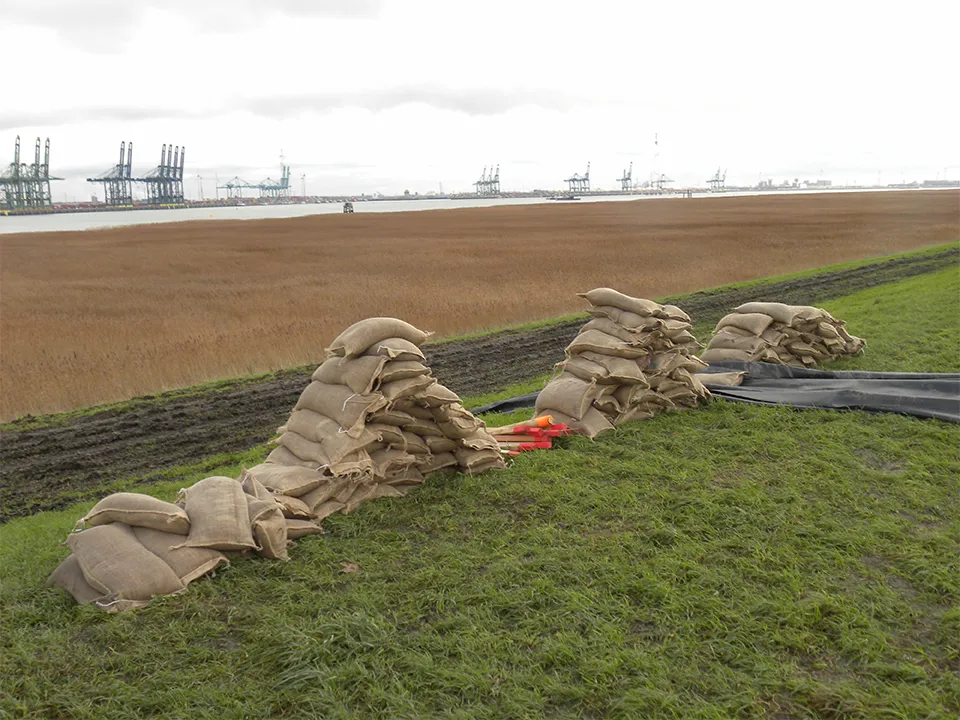
Repairing damage
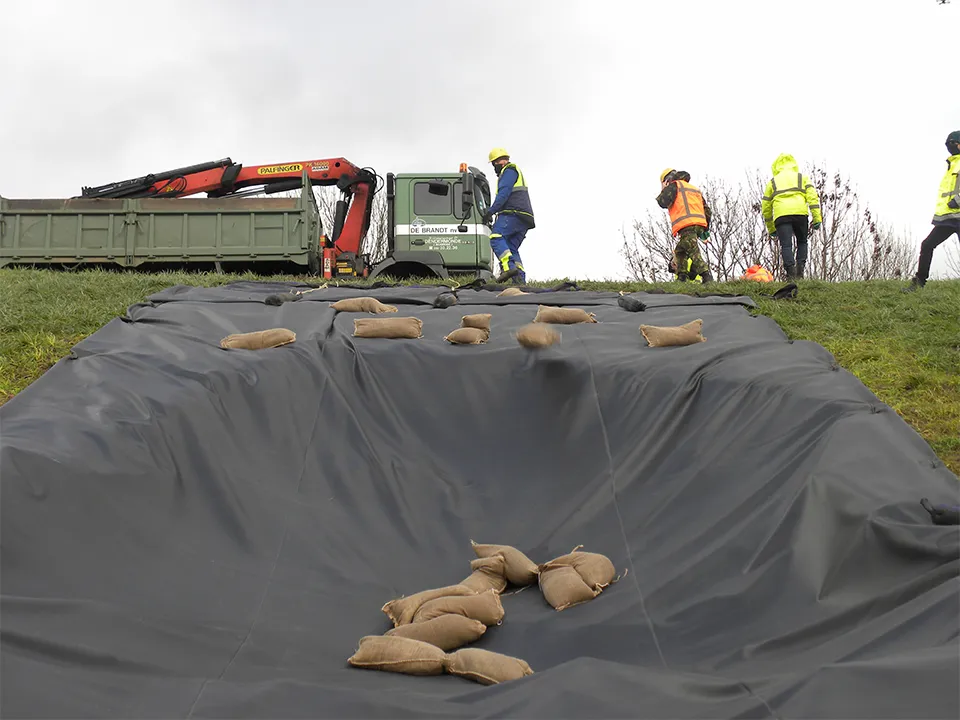
One interesting aspect of the Polder2C’s project is that damage caused at the Living Lab is being used to trial repair techniques. Two areas of damage caused by the overflow tests were substantial. They were repaired in mid-December using sheeting and sandbags. One damaged area was repaired by cutting into the turf with an excavator. The turf, stakes and sandbags were then used to anchor the sheeting. The other damaged area was covered with sheeting, secured with stakes, a ridge of sandbags on the dike and sandbags along the edges of the sheeting. Both methods produced solid repairs. Time will tell whether the two repairs are equally strong.
Research planned
In autumn 2021, wave overtopping will be simulated on the dike, and a breach test is planned. For this test, a section of the dike will be lowered, and the rate at which the gap grows will be observed as the tide comes in. The impact of the salt marsh on breach growth will also be investigated. Several other repair techniques are also on the programme. Want to know the latest? Visit www.polder2cs.eu.
Polder2C’s has received a contribution of 3.9 million euros from the European Interreg 2 Seas programme 2014-2020, co-financed by the European Regional Development Fund under grant contract No [2S07-023]. The total budget is 6.5 million euros. Interreg 2 Seas aims to make the coastal area along the Channel and North Sea more climate-resilient. For more information, visit www.interreg2seas.eu.
Polder2C’S Project
Polder2C’s is an international research project that aims to make the 2 Seas area more climate-resilient. Thirteen partners and a large number of associated partners from the region are working together to improve preparedness for the effects of climate change. The project is led by the Dutch STOWA, the knowledge centre for water boards, and Xperta, Department of Mobility and Public Works in Flanders. The project focuses on several areas: the strength of flood defences, emergency measures and engaging the workforce of the future. A distinctive feature of the project is the unique way in which research and practice are combined at the Living Lab Hedwige-Prosperpolder.
Question about this story? Ask your question
Keep following this
Get an email when a new story is published. No account needed.
- SubjectHydraulic engineering