









Make room for water
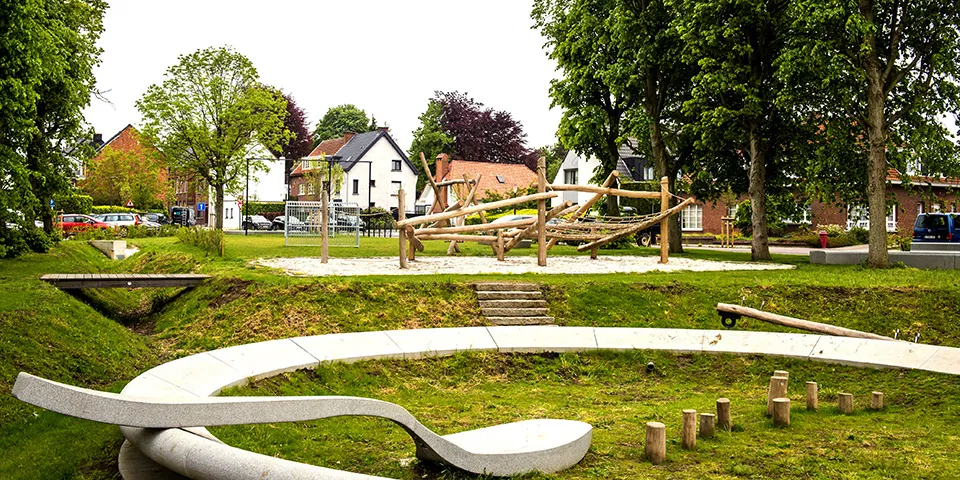
Making room for water is an important step towards managing water intelligently. New sewer systems are already being designed to allow for greater rainfall volumes caused by climate change. However, it is not economically, ecologically or technically realistic to install pipes everywhere that can cope with the most extreme downpours. What is more, draining rainwater away should be a last resort. It is far more sustainable to collect and use rainwater, or allow it to infiltrate into the soil.
Vlaanderen’s high population density means that water availability per person is very low. We should therefore see every raindrop as a gift from above and make the most of it. Removing unnecessary hard surfaces and redesigning spaces to include more greenery allows rainwater to infiltrate the soil. This makes public spaces much more attractive. More greenery also brings peace of mind, greater resilience to heat stress and increased biodiversity. It makes the local area much more pleasant to experience, something that standard underground infrastructure works cannot offer. What is more, it is the diversity of measures that best equips the area to cope with changing or more extreme weather conditions.
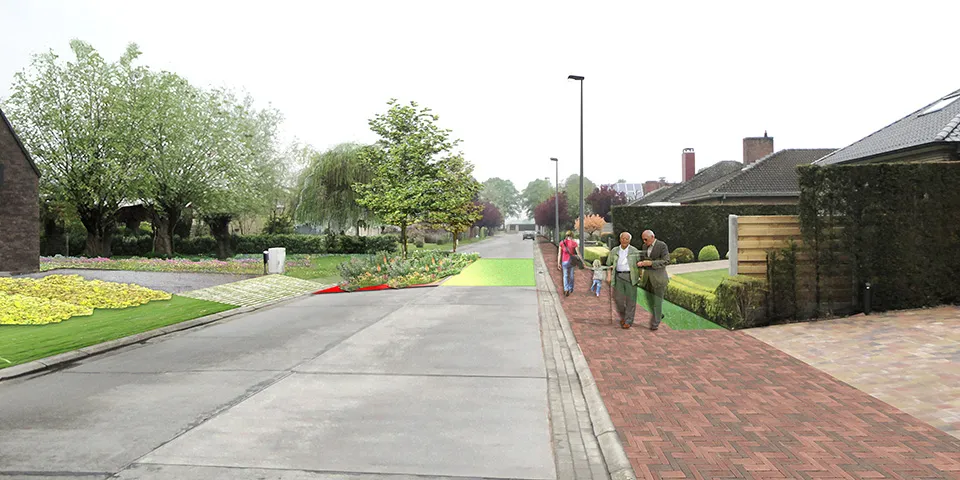
Oostkamp focused on projects that could be delivered quickly to make the municipality greener and more resilient to climate change.
Oostkamp encourages infiltration
There is no single solution. Every situation and location is different and calls for a tailored approach. But there are plenty of quick wins. It is the sum of small interventions that makes the whole, because every corner has the potential to be depaved. Managing rainwater wisely means collecting and storing as much of it as possible on site, and that need not be complicated. In fact, it can be done at every level within a neighbourhood or street, as in the West Flanders municipality of Oostkamp.
The municipality wanted to tackle flooding, remove hard surfaces and create more green spaces, while giving public areas a fresh new look, all on a limited budget. By involving residents from the outset and communicating clearly about the issues, principles and vision, it quickly built strong support among them. The municipality focused on small projects that could be delivered quickly: road narrowings to create safer, greener neighbourhoods, pavements on one side of the road instead of both, narrowed junctions and green driveways. These smart measures transformed public spaces into a resilient environment in a short time. Its expertise in water management was put to the fullest use to develop green solutions.
A clear vision makes the difference
Aquafin has evolved from ‘working towards clean water’ into a company with the broader ambition of creating ‘a living environment in harmony with water’. “We deliver the greatest benefit to society by developing solutions tailored to local policy and the specific situation,” says Els Liekens, vision engineer at Aquafin. “We are seeing growing demand from municipalities, businesses and property developers for projects that include green-blue solutions. We want to inspire them and help develop and implement innovative, future-oriented water concepts, as well as solutions for water reuse and the recovery of energy and raw materials.”
Continuing to manage rainwater sustainably, making our cities and municipalities as climate-resilient as possible, and challenging our partners to apply this thinking consistently: it sounds ambitious, but we are convinced it is the only way to give water a future. “We make the fullest use of our water-management expertise to develop bespoke water concepts centred on green and circular solutions. By managing every drop of water wisely, we can create flexible and resilient water systems,” concludes Els Liekens.
Question about this story? Ask your question
Keep following this
Get an email when a new story is published. No account needed.
- SubjectHydraulic engineering







