Huge stormwater storage basin prevents flooding in Boom
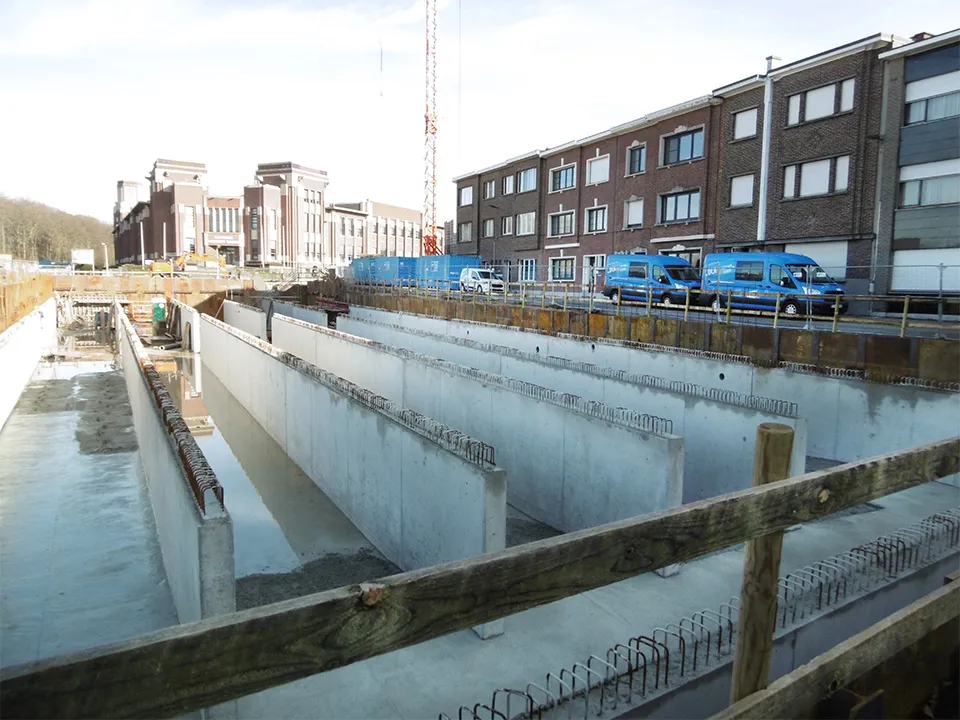
Boom-Noord is due for renewal. The municipality aims to create a climate-conscious, climate-resilient neighbourhood: a multifunctional green space where residents can live, work, go to school and meet.
The neighbourhood’s existing sewer system is also badly outdated. The municipality of Boom will therefore replace it in stages with a separate sewer system, in collaboration with engineering consultancy Antea Group and sewer manager Pidpa.
The aim is to disconnect as much stormwater as possible from the sewer system. Rainwater will be channelled separately to the Bosbeek watercourse, while wastewater will be carried via a new collector on Beukenlaan to Aquafin’s regional wastewater treatment plant, where the treatment process can be further optimised.
Flooding
The municipal park in Boom-Noord is a remnant of the Bosbeek valley, where the valley’s geomorphological form has been preserved and incorporated into the park’s layout. A pronounced landform and highly varied vegetation characterise the central and northern parts of the park. The meandering stream runs through a riparian woodland landscape and widens in places to form serpentine ponds. The park was laid out around 1928 to a design by Paul Hasaerts, with a French garden, woodland and ponds fed by the upstream Molenbeek watercourse. The polygonal ponds are finished with brick bridges, passageways and railings. Brick plinths bearing bronze statues of well-known artists stand in and around the ponds. The site is therefore of heritage value and is protected.
In the past, the Bosbeek regularly burst its banks in the valley, flooding the ponds in the municipal park. This flooding was caused in part by the sewer system’s inability to cope with stormwater inflows. Other factors included groundwater levels in the lower-lying parts of the area and the large volume of rainwater flowing in from higher ground. Recurrent flooding put the park’s heritage features at risk. Large volumes of diluted wastewater also ended up in the park ponds as a result of peak discharges from combined sewer overflows. As well as harming the environment, this caused considerable odour nuisance.
The storage basin
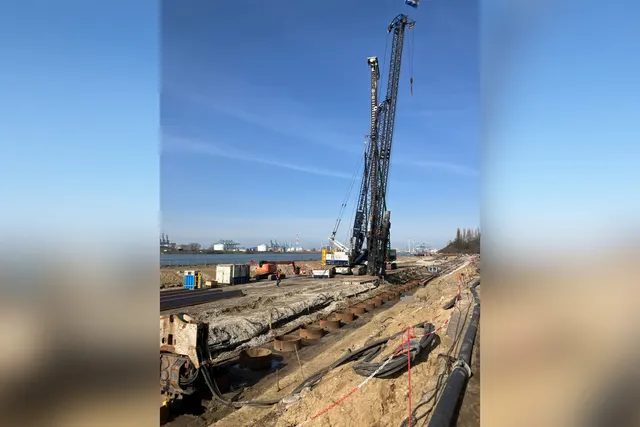
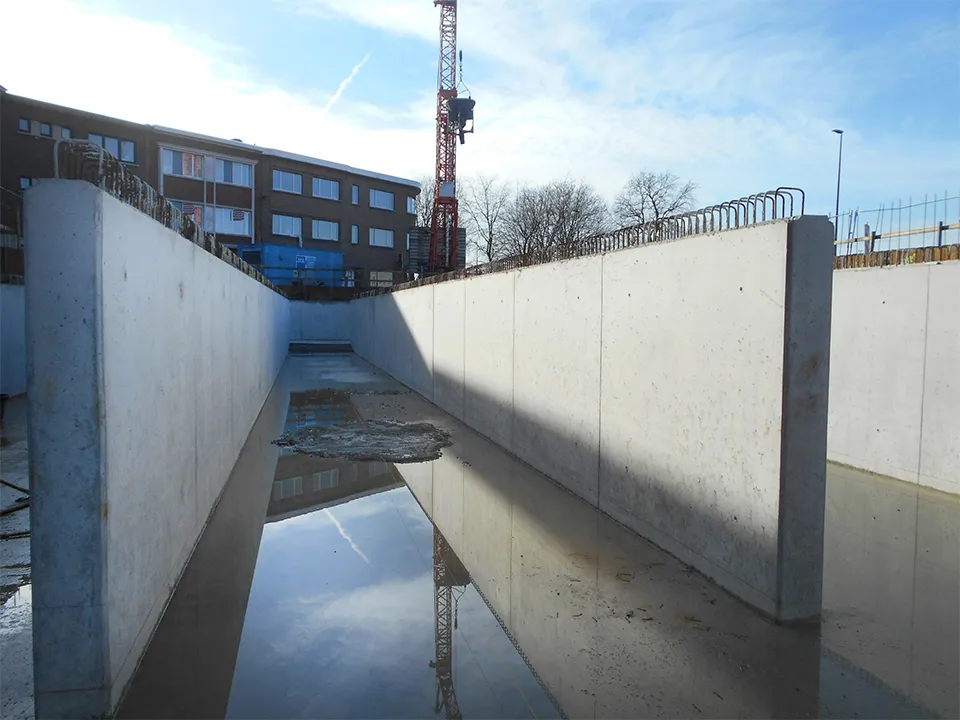
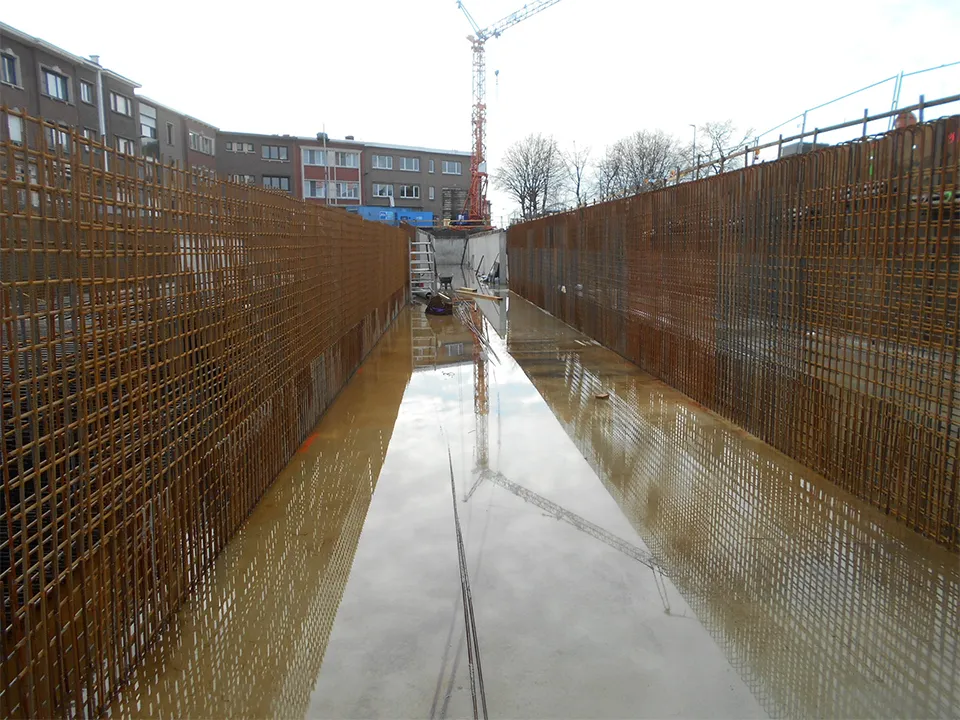
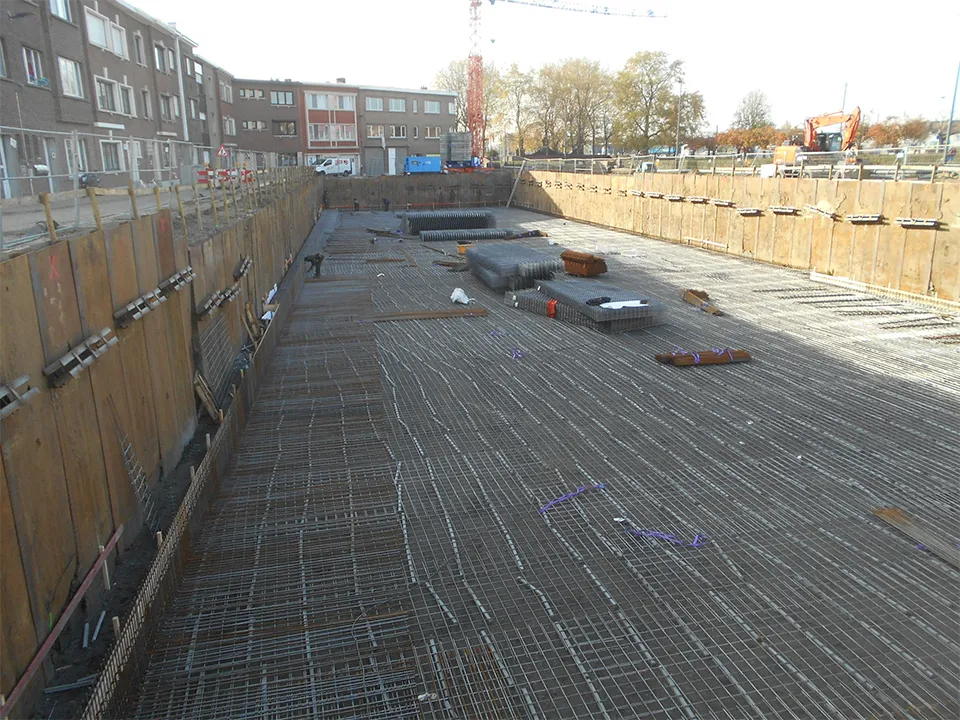
The project will create a major stormwater connection in Boom-Noord, carrying all the rainwater from the entire neighbourhood and areas upstream to surface water. It is important to attenuate peak flows and prevent very large volumes of stormwater from being discharged over too short a period. A number of structures will therefore be built into the drainage system to slow the flow and provide temporary stormwater storage. Ultimately, rainwater will flow into the watercourse via a huge underground basin beneath the square on Victor De Meyerestraat.
The square was the only place with enough space to store no less than 2,490 m³ of water, equivalent to the volume of an Olympic swimming pool. The basin’s capacity is sufficient to handle inflows during prolonged rainfall or intense downpours. Stormwater will be temporarily stored in the basin before being discharged into the watercourse at a controlled rate. Flooding will become a thing of the past.
Its generous dimensions will also allow the basin to be fully accessible to personnel. This is particularly important for cleaning and inspecting the wastewater discharged from the sewer system via upstream overflow structures during heavy rainfall. For these reasons, a concrete underground storage basin was chosen.
The climate-conscious neighbourhood
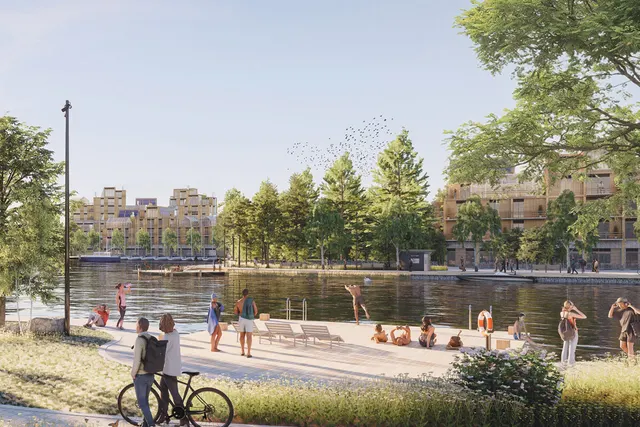
The space above the basin will be landscaped as a green park with many new trees. Local children will be able to play there, while students from nearby secondary schools can relax and enjoy the space. A pleasant link will also be created to the adjacent municipal park, with play mounds and an amphitheatre where residents can meet and unwind. The square will thus become an important green space in the residential neighbourhood, integrating stormwater management into the public realm. The additional greenery will also enhance ecology and biodiversity within the built-up area.
A 45,000 L reservoir will also be built alongside the storage basin. It will collect and store water from each rainfall event for use by the municipality’s parks department. This will allow the park and public flowerbeds to be watered during dry spells. The municipality is even considering giving neighbourhood residents access to water from the reservoir during prolonged droughts, for private use. Together with Pidpa, it hopes to encourage sustainable water use in this way. Finally, the municipality can use the project to raise awareness and build support for separating rainwater and wastewater as far as possible, promoting reuse and infiltration, and retaining water at source.
A future-proof outcome
Alongside the creation of a climate-conscious, climate-resilient neighbourhood, the area will remain primarily a place to live and spend time. The project’s main objective is therefore to develop a single multifunctional public space, bringing residential areas, the school environment and other public amenities into alignment as far as possible. The area is to become a recognisable centre and a safe, multicultural meeting place for a wide range of users. The result will be a green space where people can meet and unwind, giving the local economy a boost and strengthening public amenities in all their forms. In short, a new sustainable environment for future generations.
Question about this story? Ask your question
Keep following this
Get an email when a new story is published. No account needed.
- SubjectHydraulic engineering