Flanders steps up a gear to tackle water challenges
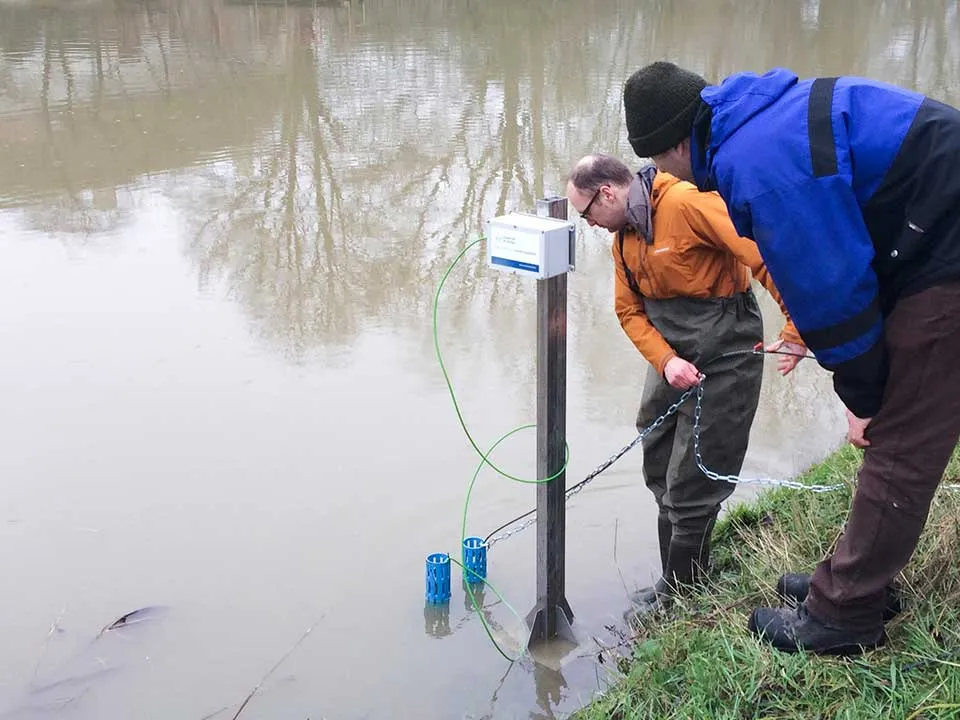
The Internet of Water Flanders (IoW) research project is creating a dense, high-frequency sensor network across Flanders. From 2023, it will continuously measure various parameters and transmit the data autonomously to help anticipate changes in water quality.
What makes the project innovative is its use of machine-learning algorithms and hydrological models to process the data and turn it into actionable information for policymakers. “In practical terms, this will enable us to tackle the major water challenges facing Flanders over the coming years more quickly and more effectively,” the project team says.
IoW is an ambitious innovation project carried out by research partners VITO, imec, Vlaamse Milieumaatschappij, VMM, De Watergroep, Aquafin NV and Vlakwa, with support from the business community and funding from Agentschap Innoveren & Ondernemen, VLAIO.
Water is a scarce resource, and its sustainable use is essential. Flanders also faces many challenges in this area: drought, water pollution and flooding all have a real impact on our lives. During periods of water scarcity, drinking water supplies, nature, agriculture, shipping, industry and recreation are all under pressure. Our water resources therefore need to be managed optimally. The real-time monitoring of water-quality indicators, combined with the intelligent algorithms and hydrological models enabled by Internet of Water Flanders, will make water management more dynamic and flexible.
A dense network of sensors
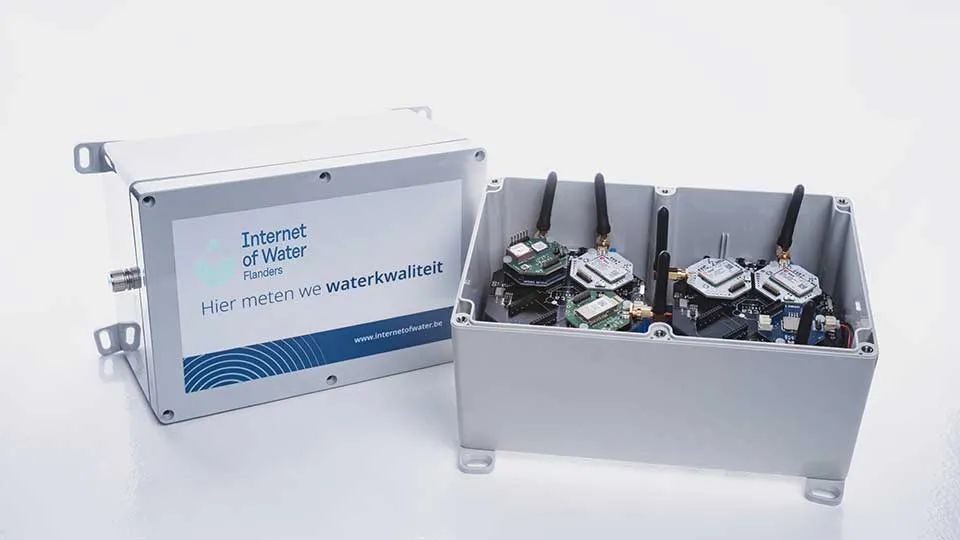
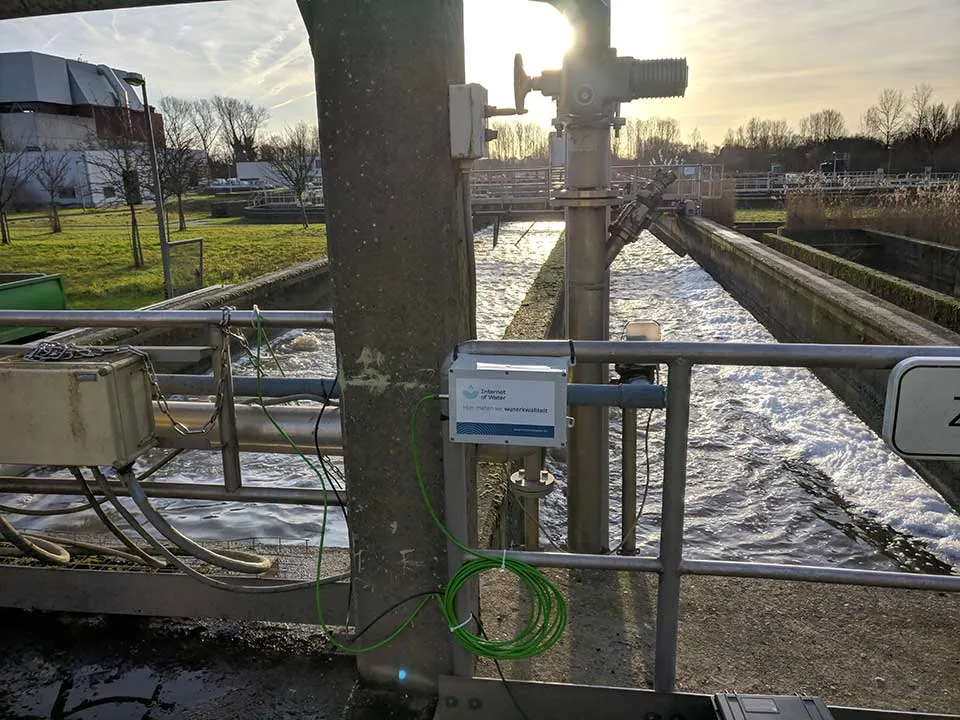
Small, energy-efficient wireless sensors will be installed at carefully selected locations across Flanders. The water managers involved will continuously monitor the data collected, enabling them to take appropriate action immediately when needed. The data streams from Internet of Water Flanders will complement the monitoring networks operated by the Vlaamse Milieumaatschappij (VMM), which already use field measurements and multiparameter probes. The additional real-time data from IoW sensors will open up opportunities for new applications and services. Sensors will be installed in streams, rivers and canals, as well as underground and at wastewater treatment plants.
Installing sensors at carefully selected locations will make it easier to address local water problems and challenges. “During the project, the practical value of IoW is most evident in the two current use cases being tackled by Internet of Water Flanders: salinisation of soil and surface water, and pollution caused by combined sewer overflows,” says Bert De Winter of De Watergroep. “The use cases are in the west of the country, where groundwater is often already too saline or simply in short supply. After heavy rain following a dry spell, we see large amounts of salt washed off fields and farmland into surface water and then into our storage reservoirs. A dense, real-time monitoring network can make a real difference here. With detailed, up-to-date information on the quality of the water we abstract, we can better match our production to the quality available.”
Different types of water
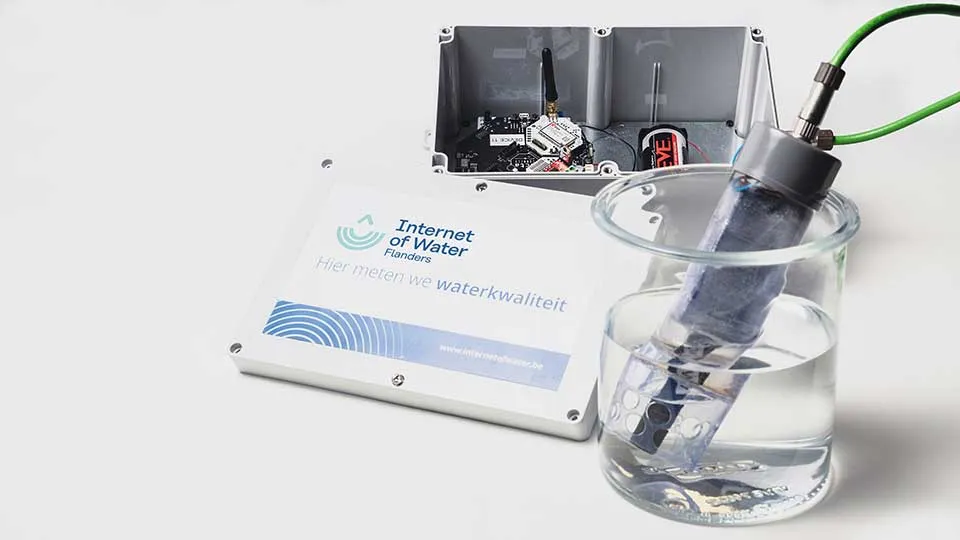
The water sensors will be strategically deployed across Flanders. They will measure key water-quality indicators in surface water, groundwater and wastewater. Imec’s liquid sensor is central to the development of the network. It measures acidity (pH), salinity (conductivity) and temperature. The sensor itself consists of a silicon chip carrying various sensing elements. The expected cost per sensor is at least 10 times lower than that of comparable sensors.
The large-scale sensor infrastructure and continuous data streams open up unprecedented opportunities for intelligent applications. Innovative algorithms and hydrological models will process the vast amounts of data to monitor salinisation and combined sewer overflows in real time, followed at a later stage by other challenges in our water system. At the same time, future trends will become easier to predict. This will provide practically useful information for policymakers to support more sustainable water management.
Part of the solution
Internet of Water Flanders is a four-year research project. Sensors and measurement systems will be developed and tested during the first two years. The sensor network will then be rolled out in 2022 and 2023, alongside the development of intelligent software.
“Internet of Water Flanders will give all water managers real-time monitoring of specific indicators of water quality. This will provide new insights and greater flexibility, ultimately leading to more effective management,” the project team says confidently. “Managers of our water resources will be able to use the data stream to inform decisions on water abstraction, the supply and reuse of treated wastewater and rainwater, the reuse of effluent for irrigation, pumping water into canals, and the construction of new storage reservoirs … In practical terms, this will enable us to tackle the major water challenges facing Flanders over the coming years more quickly and more effectively: salinisation and discharges into surface water.”
For more information, visit www.internetofwater.be.
Question about this story? Ask your question
Keep following this
Get an email when a new story is published. No account needed.
- SubjectHydraulic engineering