









De Vlaamse Waterweg continues to invest: “Bringing water, nature and public space together in multidimensional projects”
Text Niels RouvroisImage De Vlaamse Waterweg
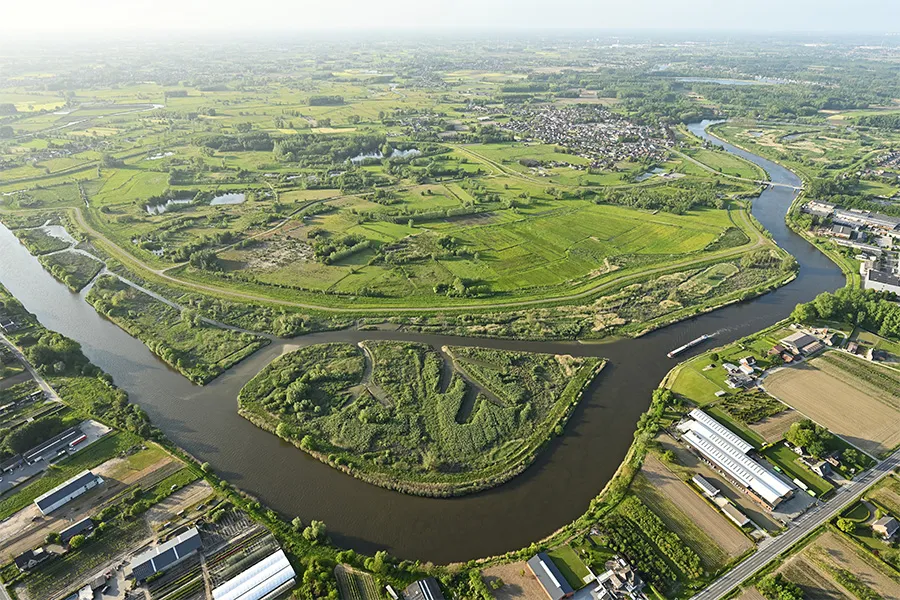
Investing in sustainable mobility, water management and strong, reliable, future-proof waterways, and thereby significantly increasing inland waterway transport’s modal share. In a nutshell, these are the challenges facing De Vlaamse Waterweg today. “And we are taking on these challenges not alone, but together with partners in multidimensional projects that also give a leading role to public space and nature,” says Chris Danckaerts, managing director of De Vlaamse Waterweg.
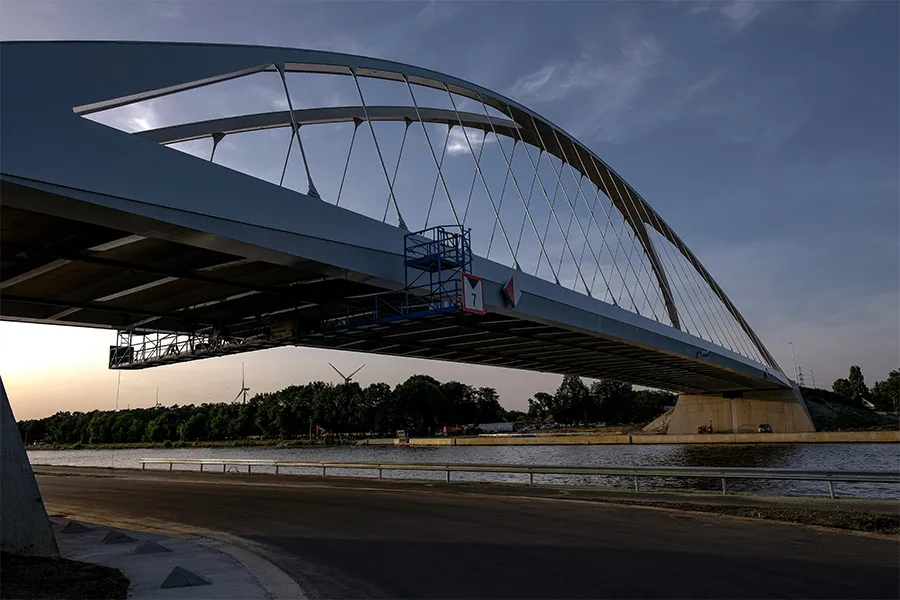
The Sigmaplan, the bridges over the Albertkanaal, an asset management master plan, automation … De Vlaamse Waterweg is never idle when it comes to projects. “Many of our projects are part of a bigger picture, with a clear ambition and deadline,” says Chris Danckaerts. “At De Vlaamse Waterweg, we never look at our own projects in isolation. Take, for example, the upgrading of Kortrijk city centre following the lowering of the banks of the Leie. Or the transformation of the Scheldekaaien. On the one hand, we want to give cities and municipalities better protection against rising sea levels, but on the other, we take a broader approach and work with local authorities to improve public space, create nature, boost tourism, improve overall mobility … These multidimensional projects are a common thread running through everything we do.”
De Vlaamse Waterweg’s ambitions span four areas. Chris Danckaerts: “We must continue investing in strong, reliable and increasingly future-proof waterways. Of course, we also need to maintain what is working well, but a long-term vision for a better future is essential. Secondly, we must remain focused on increasing inland waterway transport’s modal share. We have seen a welcome rise in recent years, but it now seems to be levelling off a little. We do expect another strong boost once the final bridge over the Albertkanaal has been raised. Thirdly, we continue to invest heavily in water management. Making Flanders resilient to water is a priority the government has focused strongly on in recent years, and De Vlaamse Waterweg is playing its part. Finally, continued investment in sustainable mobility and waterways remains particularly important.”
Strong, reliable and future-proof waterways
Strong, reliable and future-proof are three key words for De Vlaamse Waterweg as it seeks to take our waterways to the next level. The development of the Ten-T waterway network is a good example. Chris Danckaerts: “As regards raising the bridges over the Albertkanaal, we will reach a milestone in January 2024, when work begins on the final bridge. Seine Schelde Vlaanderen is a major inland waterway project that plays an important role in developing inland waterway transport as a fully-fledged alternative to road freight. Another good example is the planned work on the Bocholt-Herentals Canal, where three small locks will be replaced by one large lock, improving the connection between the Albertkanaal and North Limburg.”
De Vlaamse Waterweg is equally active in automation. Chris Danckaerts: “From 2032, all Flemish bridges and locks will be operated from 3 remote control centres. One of these centres, in Hasselt, will already be operating the eastern part of Flanders from 2025. This is an important process for us, as it also calls for flexibility and a ‘new’ mindset among our people. Then there is EuRIS, River Information Services, which maps all the information about our waterways that skippers need. The ‘Eu’ in EuRIS reflects the fact that our system has now been adopted by all European member states with significant waterways. We are particularly proud of that.”
As far as reliability is concerned, guaranteed operational reliability is crucial for De Vlaamse Waterweg. “A report in 2019 was a wake-up call in that respect,” says Chris Danckaerts. “A lot of infrastructure, including bridges and locks, dates from the 1960s and 1970s. That is why we developed an asset management master plan, with the aim of systematically tackling the maintenance backlog. We invest around 100 million euros in maintenance each year. That is a lot, but actually not enough.
The aim is to tackle around 50 fixed bridges and around 30 movable bridges by 2030.
Increasing inland waterway transport
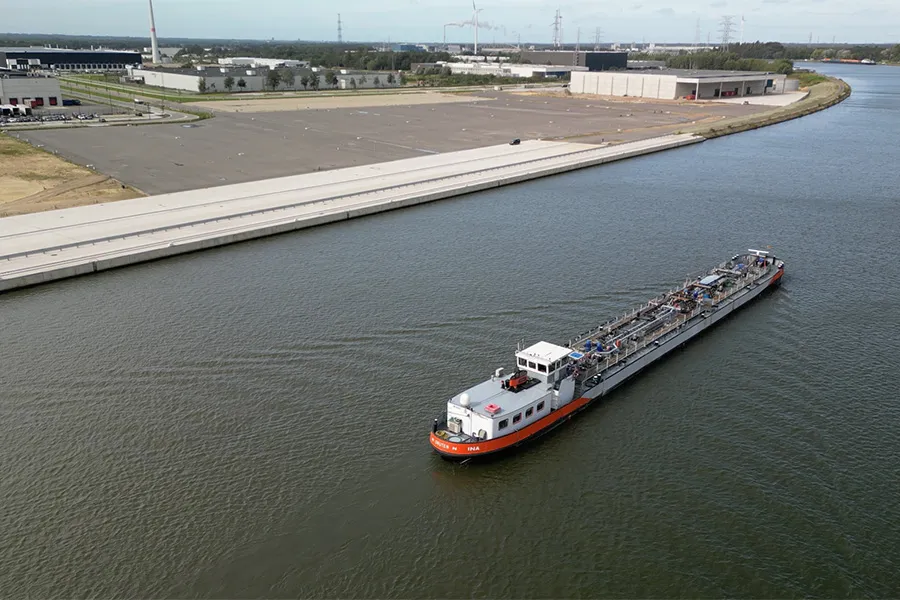
All of De Vlaamse Waterweg’s projects, developments and initiatives are aimed at increasing inland waterway transport’s modal share. Chris Danckaerts: “Our waterways need to be attractive and offer opportunities. Since 1998, we have been working on public-private partnership (PPP) projects to build quay walls, together with companies located along a waterway or looking to establish themselves there. We cover 80 percent of the project costs, and the companies commit to making the best possible use of inland waterway transport. We also invest in water-connected business parks, such as the development of Logistics Valley Flanders (the former Ford site), ENA and eNES. We are not just creating opportunities for water-connected businesses, but also want to market them effectively through calls published in trade journals and on social media. To make inland waterway transport even more attractive, De Vlaamse Waterweg is increasingly focusing on communicating about our projects and raising their profile.”
Water management
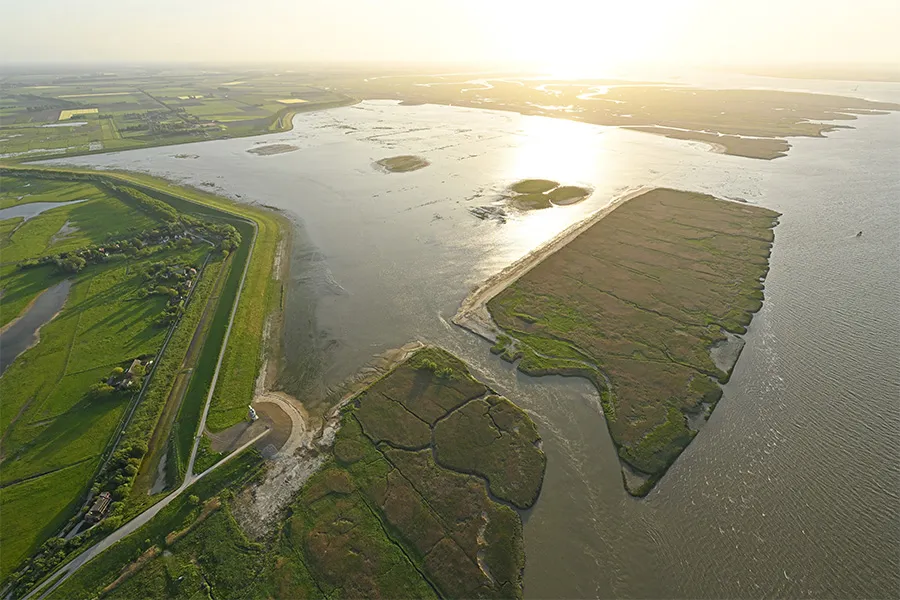
Since the 2021 floods, water management has been high on the agenda for everyone involved. Chris Danckaerts: “The effects of climate change are being felt more and more acutely. De Vlaamse Waterweg is on constant alert to prevent both flooding and water shortages. For example, 40 % of Flanders gets its drinking water from treated water from the Albertkanaal, and all the water in the Albertkanaal comes from the Maas. When the flow rate of the Maas
starts to fall, that is a real problem. Following the 2021 floods, the government produced a report with 10 recommendations for making Flanders more resilient to water. So, action is certainly being taken.”
Multifunctionality
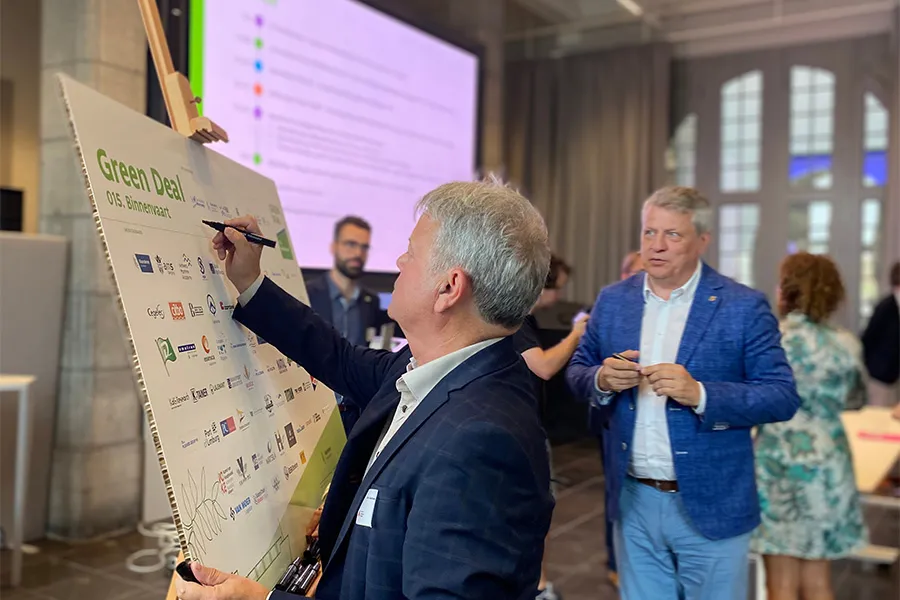
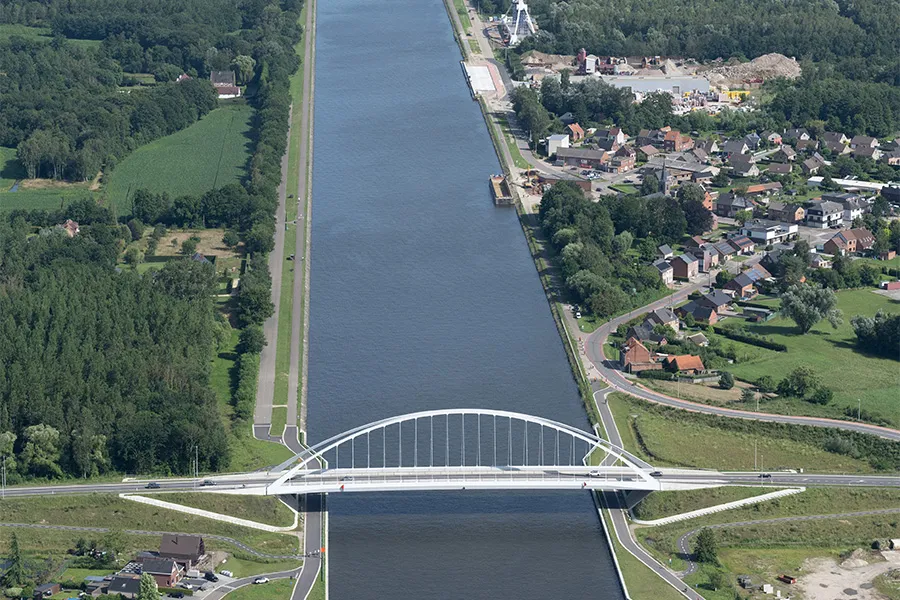
Until further notice, inland waterway transport remains a sustainable and environmentally friendly mode of transport. That sustainability must not only be maintained, but enhanced. “And there is certainly more we need to do in that respect. Ships have a long service life, so their engines are not always up to date. That is why, together with the ports and the inland waterway transport sector, we drew up the Green Deal Binnenvaart Vlaanderen to develop a blueprint of the opportunities for making inland waterway transport an even more environmentally friendly and sustainable mode of transport. Technology, regulation, innovation, funding … it is an ambitious plan and a difficult puzzle to solve, but we have to rise to the challenge. Sustainable design is also part of that picture, and these criteria will play an increasingly prominent role in tendering. Alongside waterborne transport, these designs must also focus on pedestrians and cyclists, nature and wildlife. That is why De Vlaamse Waterweg is keen to help improve cycling infrastructure. Bridge projects are designed to be cycle- and pedestrian-friendly, and substantial investment is being made in towpaths. By taking this multifunctional approach to our waterways, De Vlaamse Waterweg can play a leading role in improving overall mobility,” concludes Chris Danckaerts.
Question about this story? Ask your question
Keep following this
Get an email when a new story is published. No account needed.
- ThemeSpace for water and green infrastructure
- SubjectHydraulic engineering







