









Sewerage & underground infrastructure
Trenchless techniques slash CO2 emissions
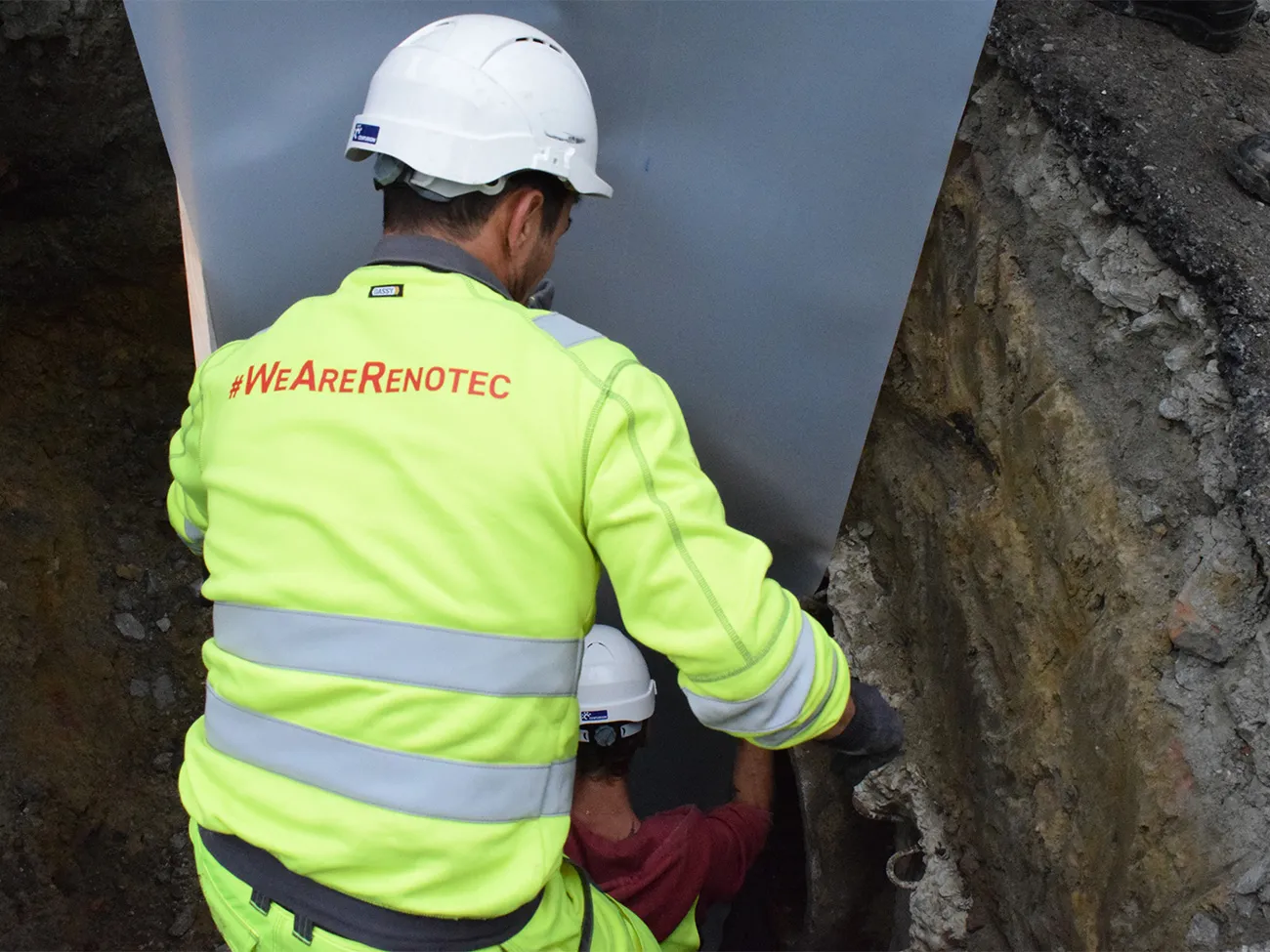
Minimising disruption is a point of honour on every project for Renotec’s Pipeline Techniques division. The specialist contractor’s range of innovative trenchless techniques keeps inconvenience for local residents to a minimum. Techniques such as pipe bursting and relining are also a breath of fresh air for the environment. “We commissioned an independent firm to investigate the positive impact our trenchless techniques have on CO2 emissions. The results are very good,” says divisional director Karel Janssen.
Pipeline renovation in urban areas is becoming more challenging by the day. Keeping a road surface open for days or weeks is a thing of the past. Minimising disruption is a priority on every project. With a range of trenchless pipeline techniques, Renotec limits disruption for local residents and passers-by. And it is not just disruption that is reduced significantly compared with traditional open-trench techniques: CO2 emissions are too. This is the finding of a study commissioned by Renotec from DVdB Consulting.
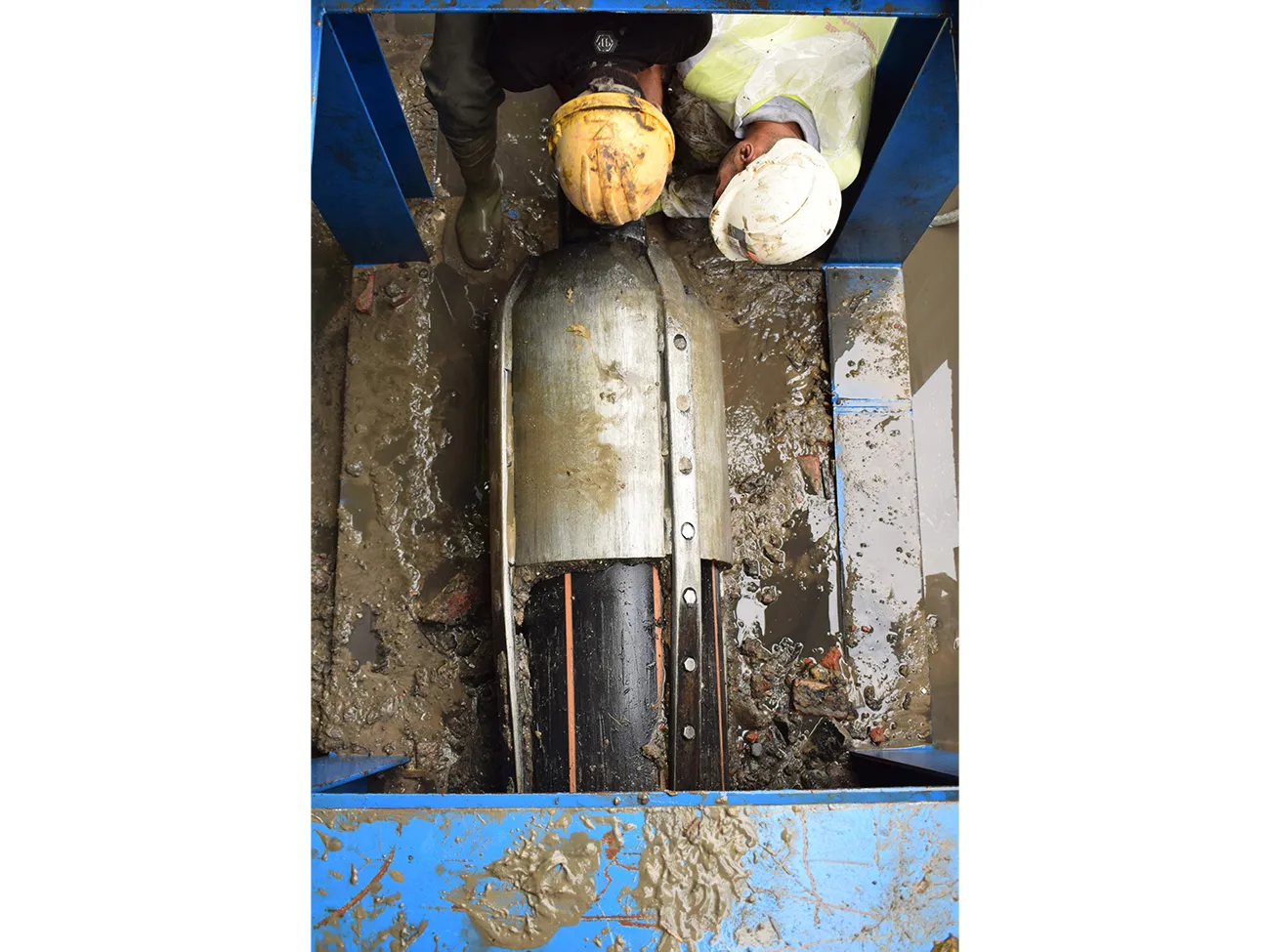
Karel Janssen: “As part of its sustainability policy, Renotec aims to reduce greenhouse gas emissions associated with sewer repairs. Specifically, Renotec wants to promote the use of new, environmentally friendly repair techniques such as pipe bursting and relining. The final report summarises the results of a calculation of the environmental footprint of repairing 100 m of sewer with a diameter of 500 mm and no connections, using the following methods: sewer replacement, repair by pipe bursting and repair by relining.”
Positive results
The study’s findings are particularly positive. They clearly show that innovative techniques such as pipe bursting and relining can reduce the environmental footprint of sewer repairs. Pipe bursting cuts greenhouse gas emissions by 18%, while relining can achieve a reduction of as much as 63%. The calculated emissions are accurate to within 15 to 20%.
The biggest savings are achieved in excavation work. Karel Janssen: “Working trenchlessly drastically reduces excavation and earthworks. Excavation itself generates CO2 emissions, and then there are the lorries transporting soil to and from the site. Those emissions were also included in the calculation, as was the impact of manufacturing new sewer pipes. The study took into account all parameters that affect the environment.”
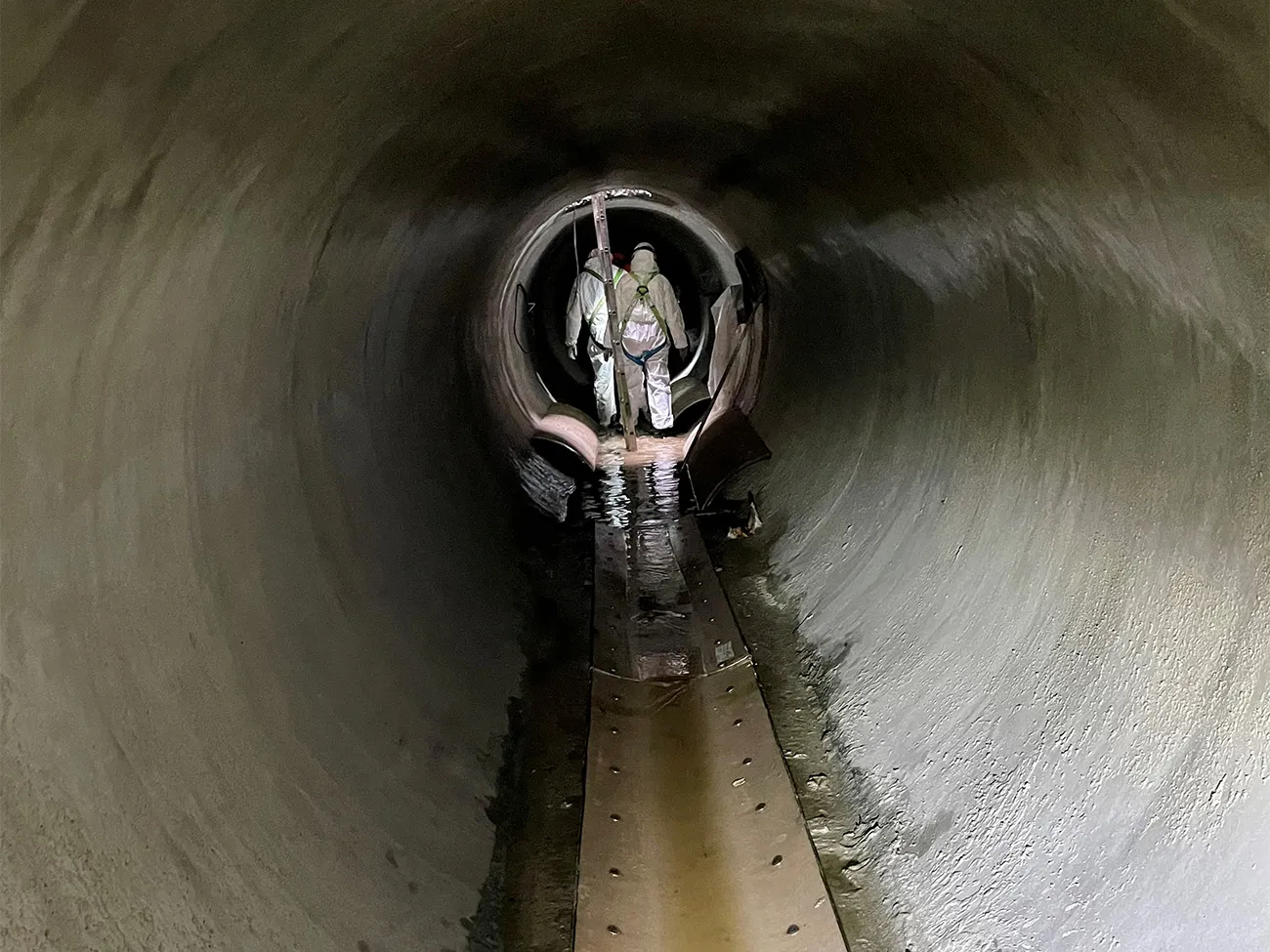
Relining
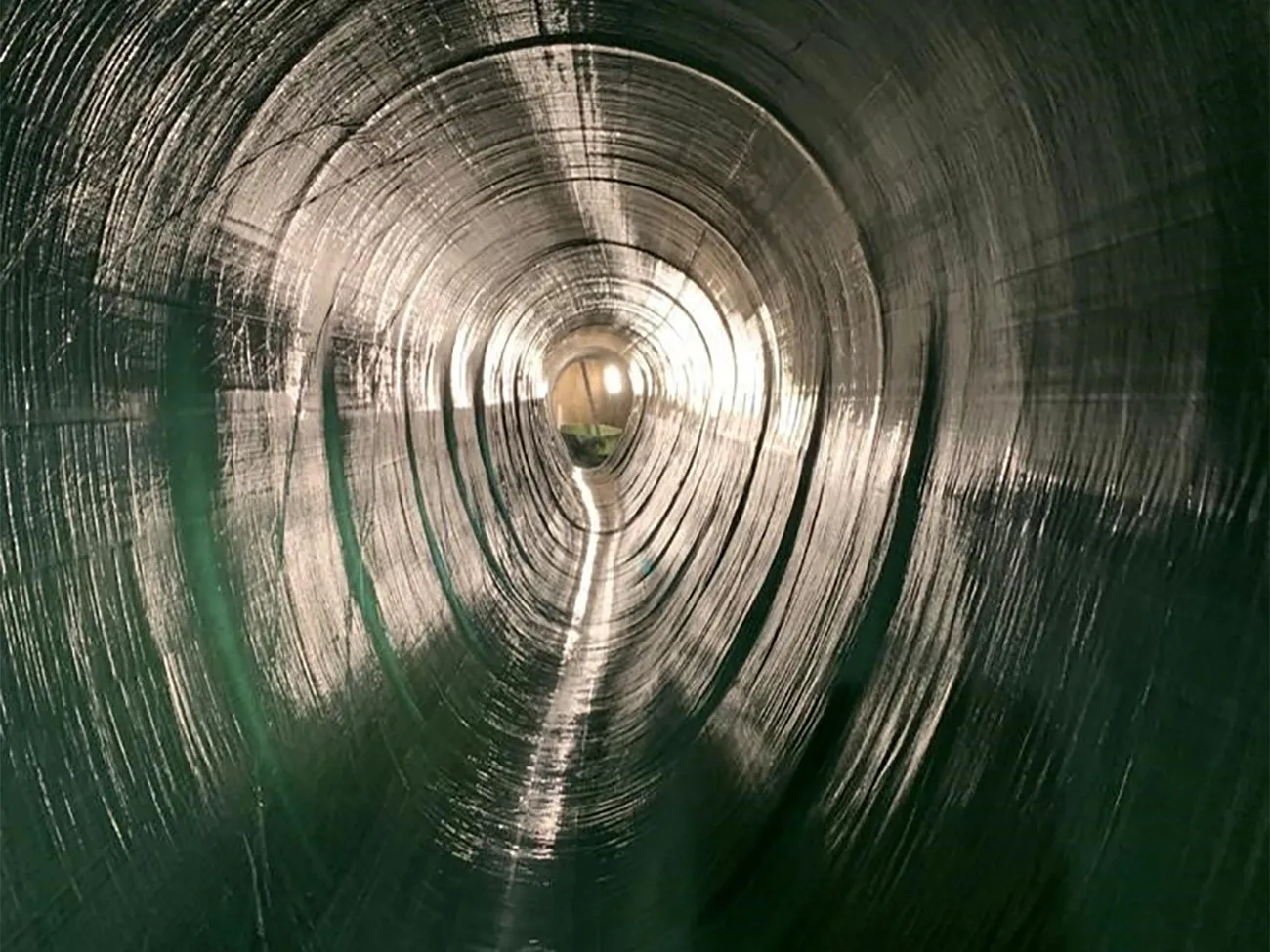
The savings achieved with relining are particularly striking. “This technique requires no excavation, and that makes all the difference,” says Karel Janssen. “Cured-in-place pipe (CIPP) relining is one of the most widely used trenchless sewer renovation techniques. With CIPP relining, using needle-felt or textile liners, a resin-impregnated liner is inverted into an existing pipe. It is cured using steam, hot water or UV light. This creates a new, seamless pipe inside the sewer that takes on the loads borne by the original sewer. In this way, the existing pipe is structurally renovated, with guaranteed watertightness and durability. The absence of excavation and earthworks is not the only factor that has a positive effect on CO2 emissions: the manufacturing process does too. Compared with the manufacture of traditional sewer pipes, producing the liner has a lower impact.”
“Corporate social responsibility and sustainable business practices are very important to us,” Karel Janssen continues. “If you can cut CO2 emissions so significantly by using appropriate techniques, that is a valuable contribution to society. This study also fits in well with our commitment to minimising disruption. Minimising disruption during the works is very important for the surrounding area, but reducing CO2 emissions matters too. The two go hand in hand, and we see them as part of the same whole. Sustainability is also becoming increasingly important to clients and project owners. In that respect, too, this report is valuable to us.”
Developing and monitoring
Is there scope for further CO2 reductions? “Of course, we continue to develop and monitor our techniques. For example, we are also looking at trenchless options for renovating household connections. But our impact as a contractor is not unlimited. There is still scope to make savings in the manufacture of products such as relining liners, so we are looking to the manufacturers for that. Other resins or materials could perhaps produce lighter, thinner liners, which would in turn have a positive effect on transport,” concludes Karel Janssen.
Question about this story? Ask your question
Keep following this
Get an email when a new story is published. No account needed.
- SubjectSewerage & underground infrastructure







