









Sewerage & underground infrastructure
Transformation of Brussels’ oldest metro station well underway
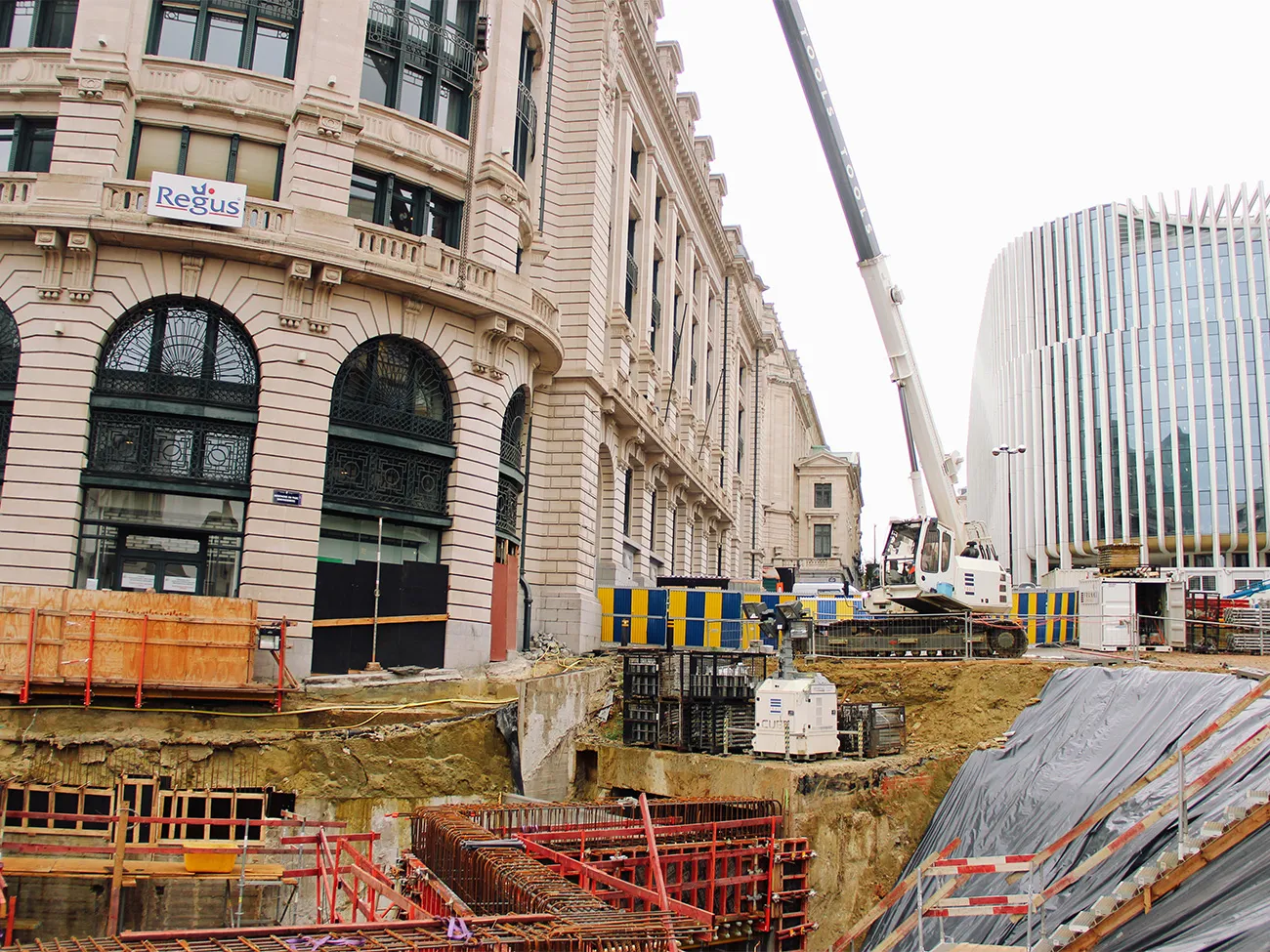
Commissioned by MIVB, Franki Construct and Willemen Infra, both part of Willemen Groep, are currently carrying out a comprehensive renovation and extension of Brussels-Central metro station. The station will be larger, better lit, more accessible and more comfortable. To minimise disruption and keep metro services running, the work is being carried out in several phases. “Being able to tackle this complex project with two companies from the same group is a huge advantage,” says Niels Ringoot, project manager at Franki Construct.
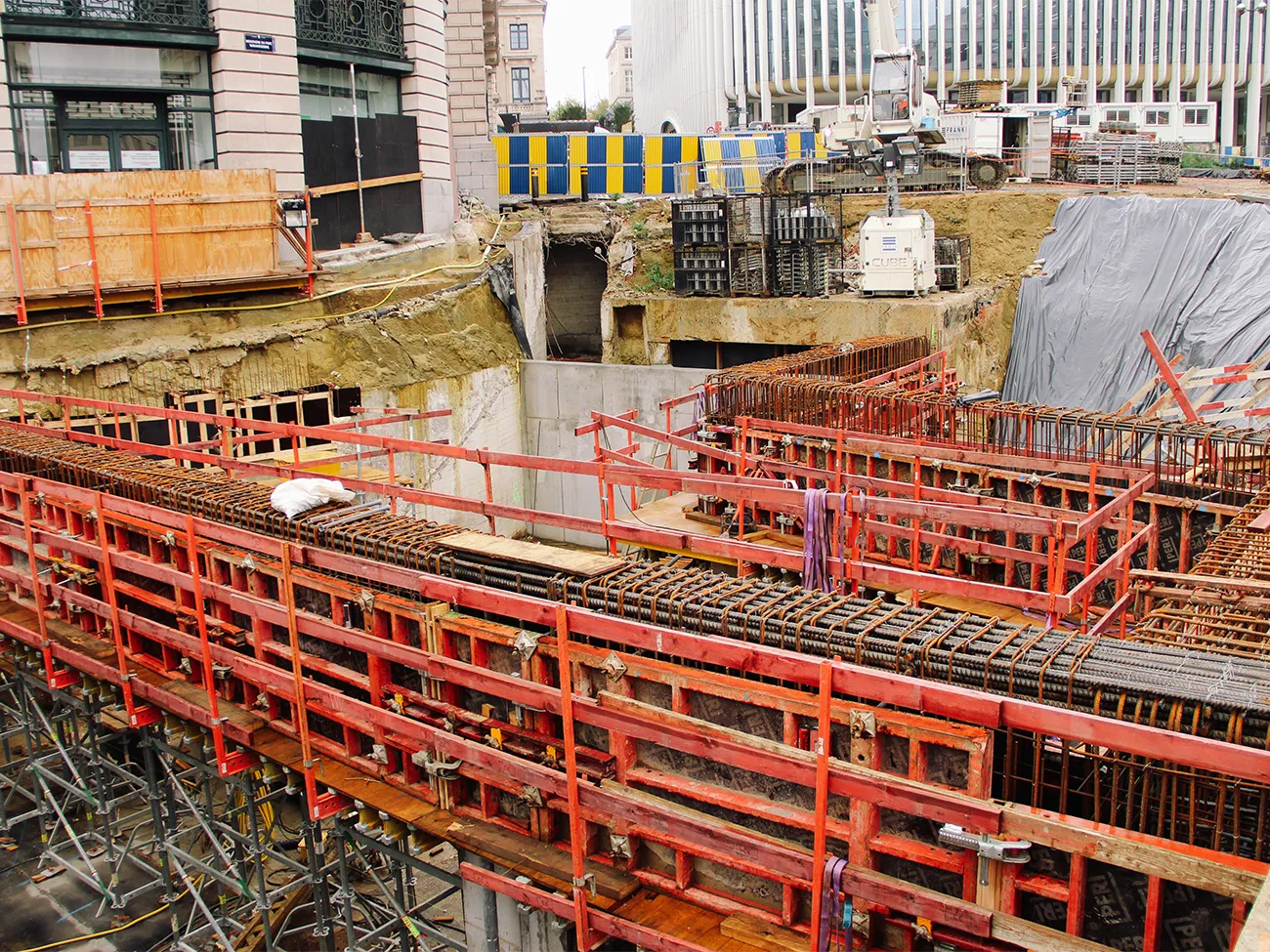
Brussels-Central metro station opened in 1969, making it one of the oldest stations on the MIVB network. More than 50 years later, a major renovation is needed. The station must become more accessible, including for people with reduced mobility. The existing escalators and lifts are being replaced, and new stairs, escalators and a lift are being built. Changing from the metro to the train must also become easier. The station is also being significantly enlarged to make journeys more comfortable for the 53,000 people who pass through it every day.
Phasing
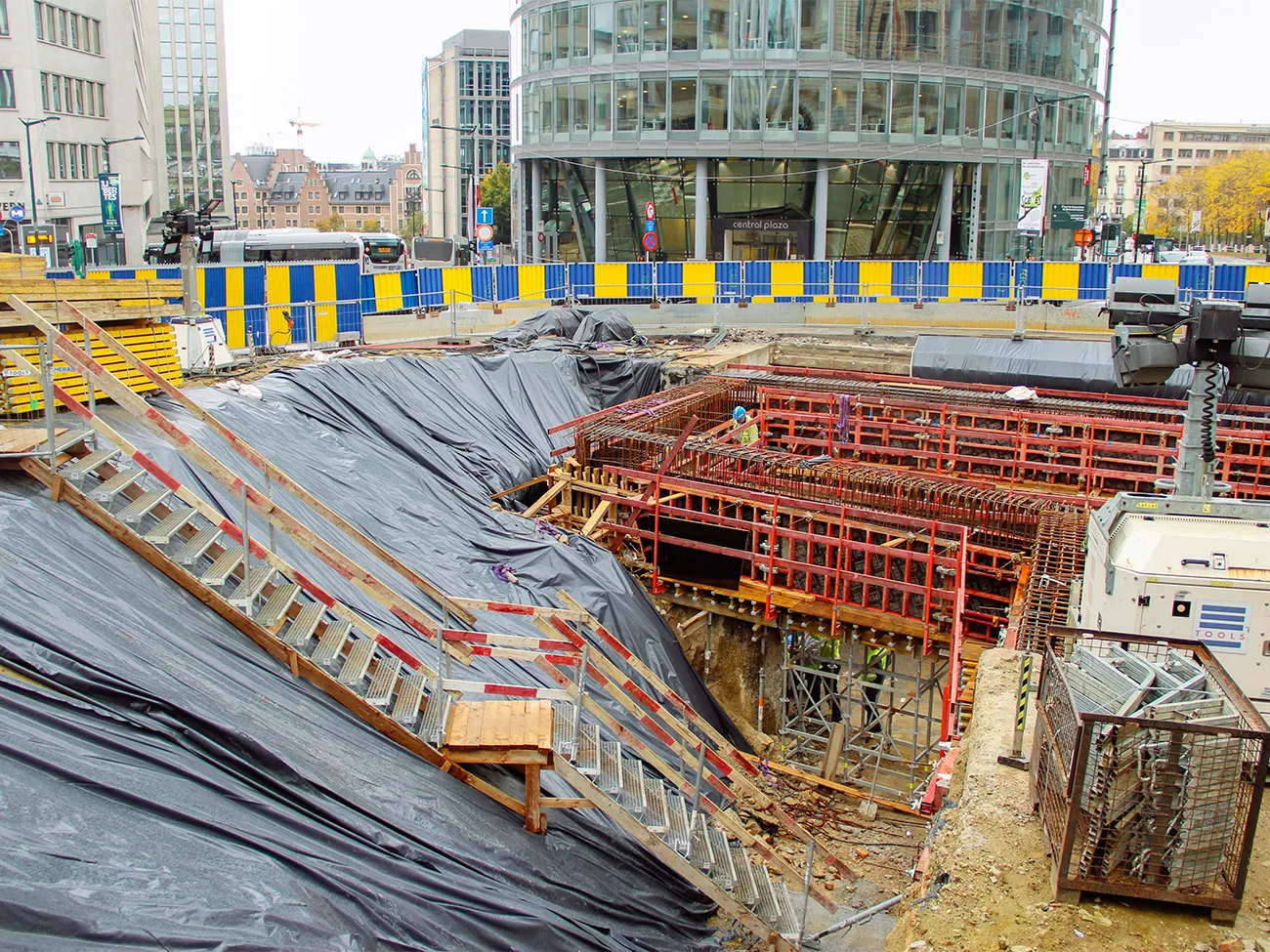
During phase A, the reception area on level -1 at the junction of Koloniënstraat and Warandeberg will be lowered. In phase B, the station will be enlarged on the Ravensteinstraat side. Phase C will see the station extended on the Putterijstraat side, with the new structure connected to the existing station. The station interior will be renovated and the platforms widened during phase D. Niels Ringoot says: “The project is worth more than €17 million in total, excluding VAT. Franki Construct and Willemen Infra are carrying out the work as a temporary joint venture. Franki Construct is focusing on all the underground renovation and new-build works, while Willemen Infra is responsible for traffic management, drainage and roadworks in every phase.”
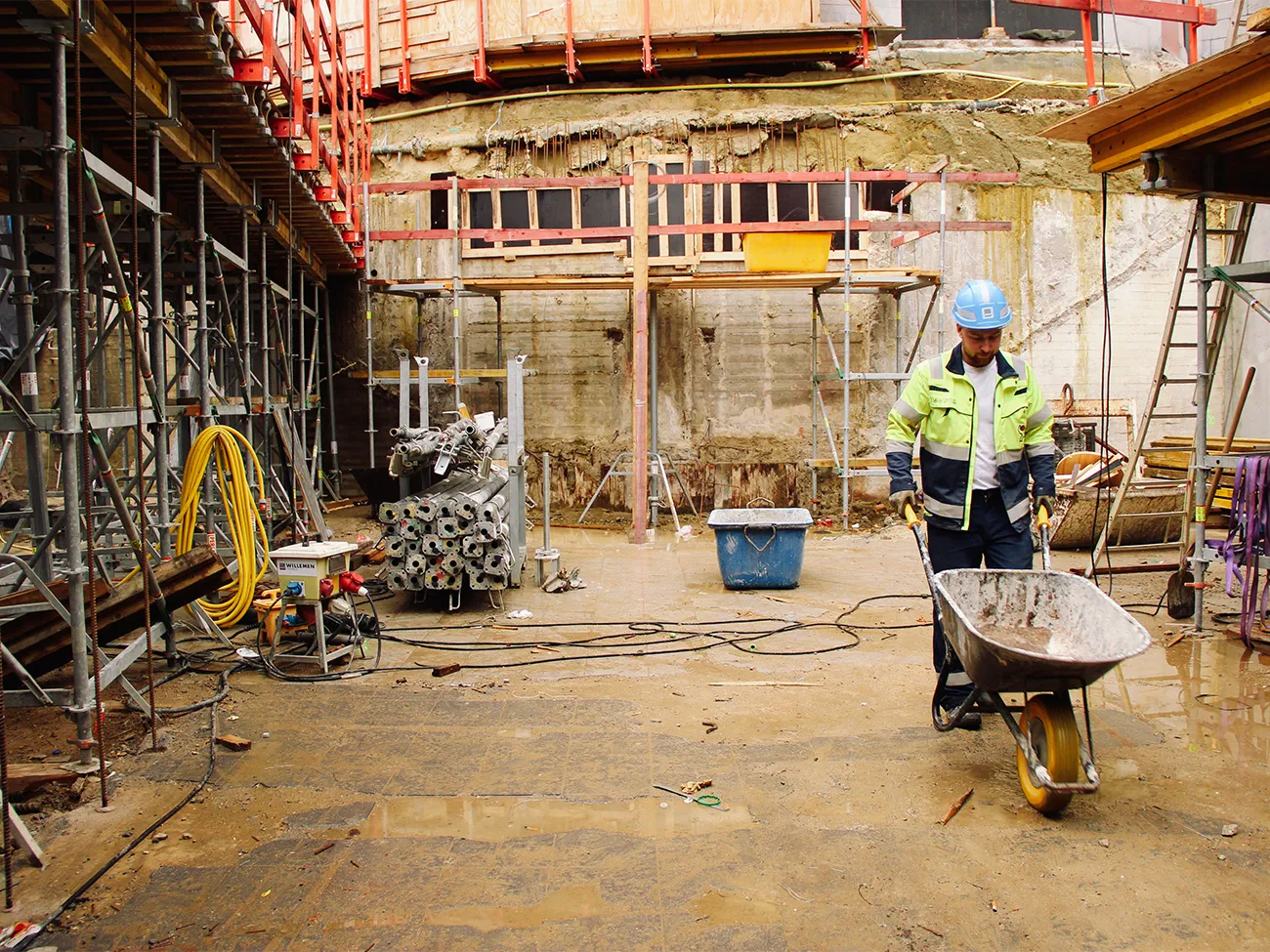
The project is therefore divided into three major phases and one finishing phase. Niels Ringoot says: “The first phase began in March and involves the partial demolition and renovation of the existing metro station.
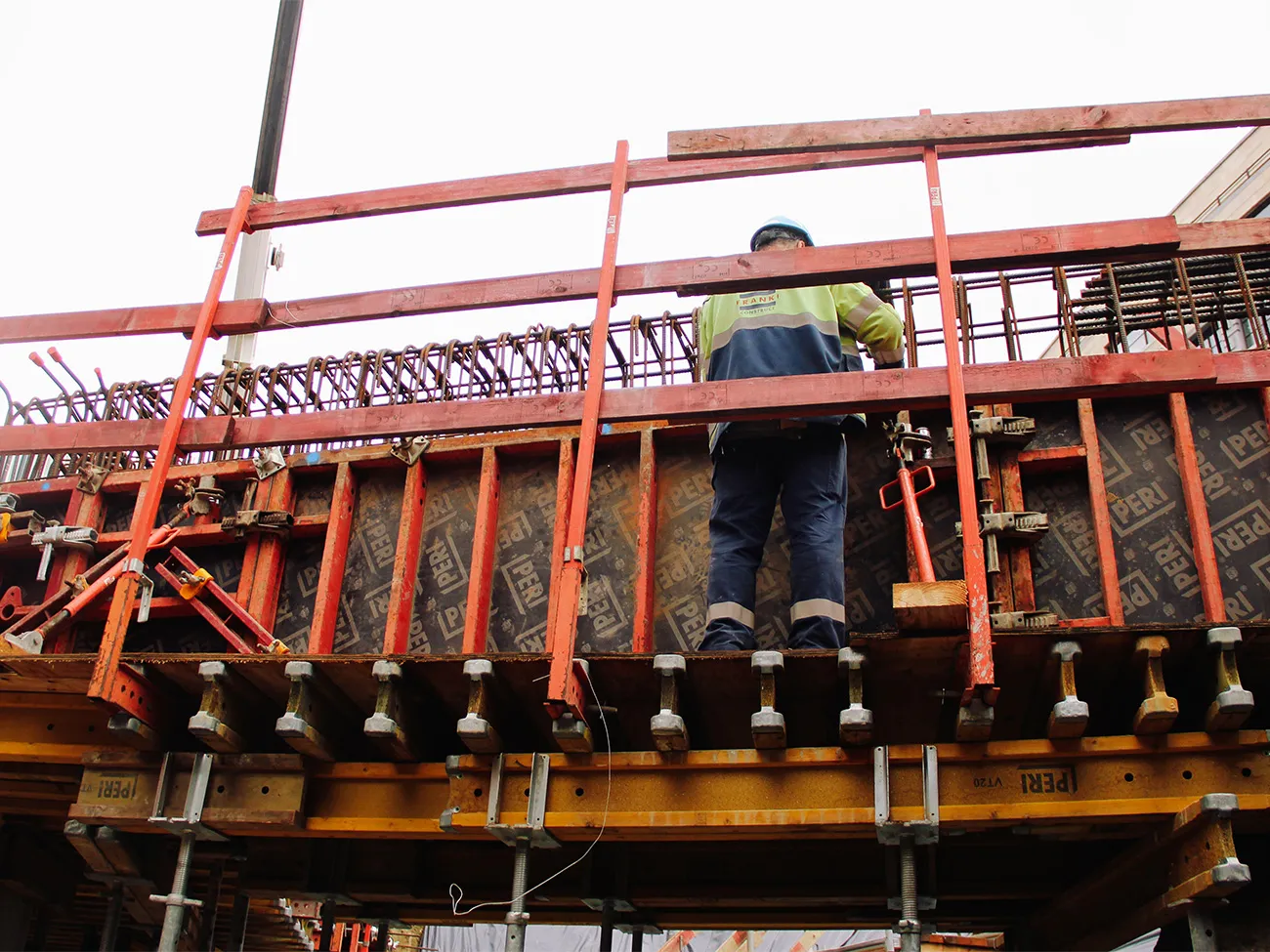
Phase A will take about a year. We are excavating down to the metro’s roof slab on level -2. The intermediate slab on level -1 is being reduced to half its thickness to align with the future levels. The new structure is then built, including a new roof slab and roadworks. This is necessary because a diversion must be put in place above ground before we can start phase B.”
Good Move
Willemen Infra comes on board to deliver the diversion and roadworks. In short, all above-ground works fall within the remit of the renowned infrastructure contractor. “That means all roadworks, diversions and traffic management,” says Vincent Godderis, project manager at Willemen Infra. “Both the temporary diversion and the new traffic arrangement. We also have to take account of ‘Good Move’, the Regional Mobility Plan for the Brussels-Capital Region. The plan aims to improve the living environment for people in Brussels while supporting the region’s demographic and economic development. Brussels-Central metro station is an important location in this context. But, of course, we also have to consider other work taking place nearby, such as the redevelopment of Place Royale, close to Mont des Arts.”
Tailored techniques
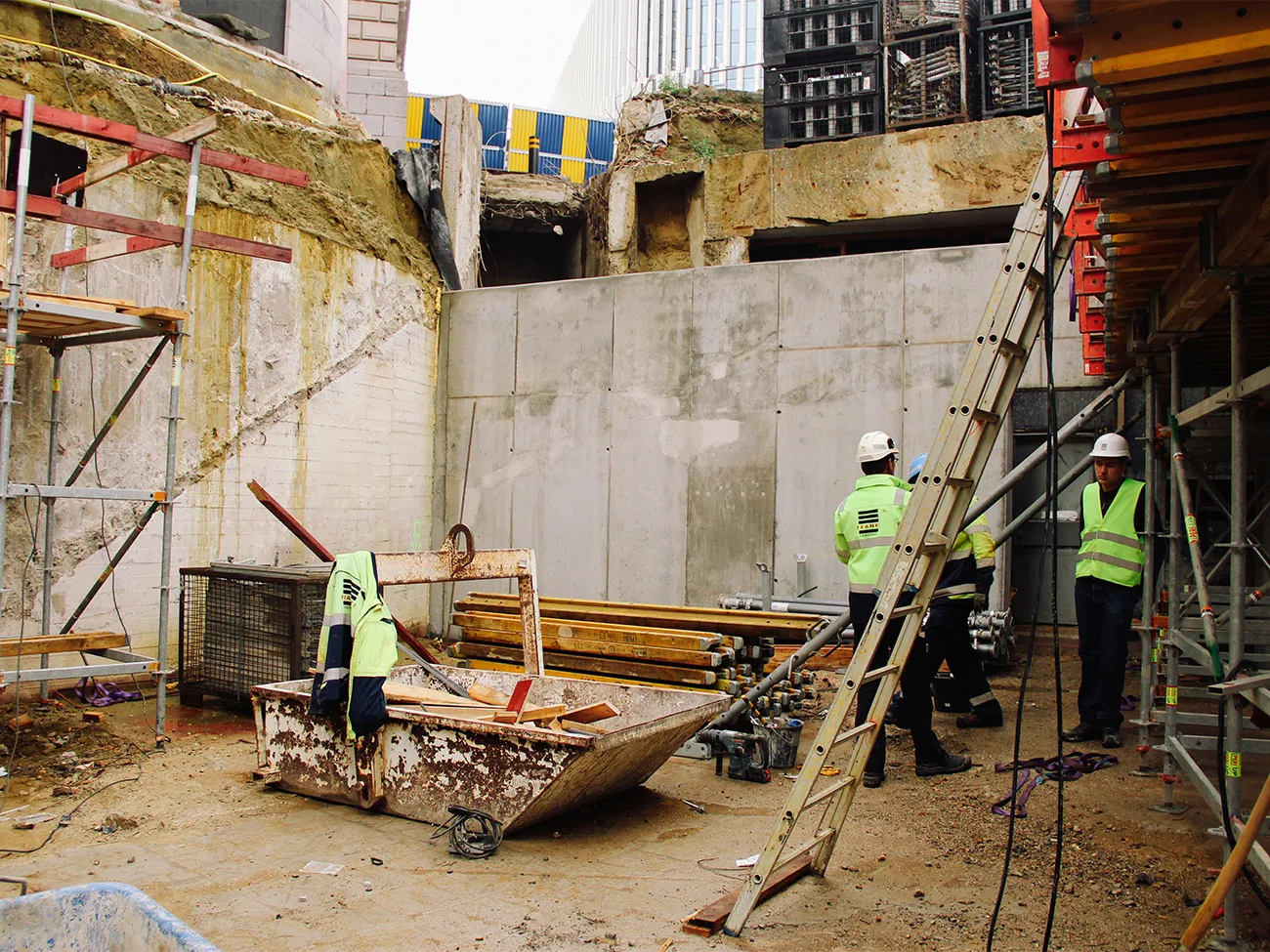
The large-scale project is taking shape in an area where numerous modes of transport intersect. The station lies beneath a junction with seven branches, making the job particularly complex. Highly specialised techniques are therefore being used. First, the vertical perimeter walls, formed by secant piles, and the station’s roof slab are constructed, after which excavation can take place beneath them using the top-down method. This keeps the above-ground construction area as small as possible, limiting the impact on surrounding buildings and road traffic. Niels Ringoot says: “Metro services will also continue throughout the works. In principle, we have a 3-hour window in the tunnel at night when there is no interaction with metro traffic, but we are trying to limit night work regardless by looking for alternative methods. Secant piles, Kelly piles, galleries, Berlin walls, shored trenches … almost every established excavation support and foundation technique is being used on this project. And all the while, traffic above and below ground continues to run. That makes the project complex, but also fascinating.”
Phases B and C involve extending the station on the Ravensteinstraat side and on the side of the railway station, respectively. “These phases will be carried out one after the other so that road traffic can be maintained at all times and disruption kept to a minimum,” explains Niels Ringoot. “The metro extension does not mean that more metro lines will be added. It is intended to improve comfort for passengers and passers-by. The station’s capacity will increase significantly, making passenger flows easier to manage. The platforms will be renovated and widened to improve comfort and safety. The technical rooms, which are currently spread out, will be brought together in a single space. The extension will also include commercial units to make the station more attractive. The existing metro structure was built between two diaphragm walls. Using a secant pile wall, we can create a new zone on either side between this new wall and the existing diaphragm wall.”
A complex puzzle
While Franki Construct is busy underground, Willemen Infra is managing everything above ground. Coordinating the various traffic flows during the works is a considerable feat and a particularly complex puzzle, especially alongside other projects in the area. Vincent Godderis says: “We also have pedestrian flows both above and below ground, and 24 buses pass through every hour, serving 13 bus routes. From a purely technical point of view, this is a fairly conventional roadworks, drainage and traffic management project for Willemen Infra. The real challenge lies in logistics and administration. There are a great many factors and stakeholders to consider: vulnerable road users, motor traffic, local cafés and restaurants, shops … It is a tangle of activity in the heart of Brussels, but that is exactly where Willemen Infra, together with Franki Construct, can make a difference. Our organisational skills are very useful on a project like this.”
Niels Ringoot agrees: “Being able to tackle a project like this with two companies from the same group is undoubtedly one of Willemen Groep’s strengths. The collaboration is running very smoothly. There is no sense of competition, and we are also used to working in the same way, both in terms of internal and administrative processes and site methods and working practices. The work is also still nicely on schedule. Where possible, we are looking for ways to optimise it. For example, construction of the drainage starting pit was brought forward from phase B to phase A. By carrying out the work in fully defined phases, the project will take about 6 years in total, while through traffic, including metro services, is guaranteed throughout. This was a deliberate choice by the client.”
Question about this story? Ask your question
Keep following this
Get an email when a new story is published. No account needed.
- SubjectSewerage & underground infrastructure







