









Sewerage & underground infrastructure
The power of a stormwater management plan
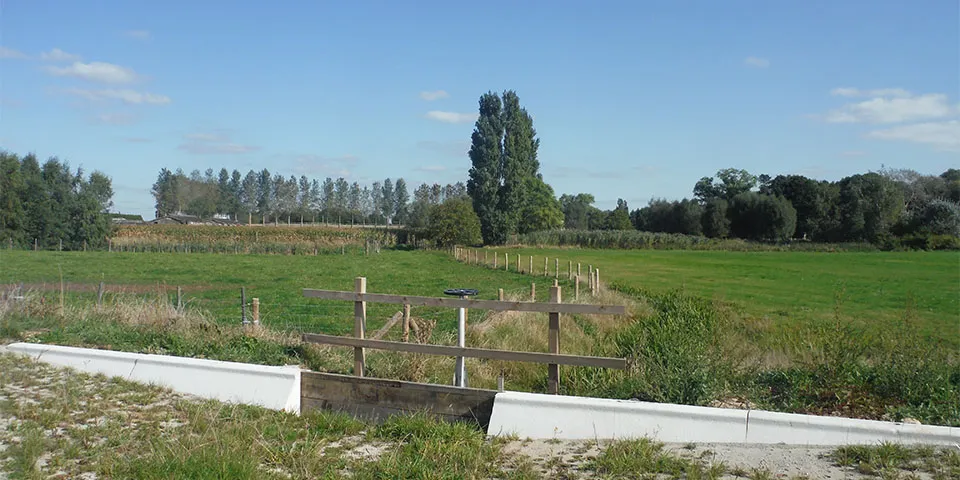
Longer periods of summer drought and much more intense downpours. The effects of climate change have been making themselves felt for several years now. Grid operator Fluvius highlights the importance of a bespoke stormwater management plan and supports local authorities in responding to these challenges. This was also the case in Lichtervelde, where, following a few carefully considered interventions, they can now rely on three controlled flood areas during extreme weather events.
In the past, watercourses and ditches were straightened, culverted, filled in and built over. Together with the construction and expansion of sewerage systems, increasing urbanisation and the scaling-up of agriculture, this created a situation in which flow speeds and peak discharges in watercourses continued to rise, while the capacity of watercourses and the scope for water storage declined. The original watercourses and existing sewerage systems can no longer cope with the water. On top of this, ongoing climate change is having an increasingly negative impact on water management. This means we must once again strive to create ‘Room for water’.
Today, around 15% of Flanders’ surface area is paved. As a result, rainwater cannot infiltrate the ground, groundwater reserves are not replenished and large volumes of rainwater flow into sewers, which can lead to flooding. This is a problem that Lichtervelde also frequently faces. The municipality regularly suffers from flooding in the centre, mainly because of its downstream location, the natural slope of the land and the increasingly densely built-up residential core. More and more water flows towards the lower-lying centre, and the existing sewer system was no longer adequate.
A bespoke stormwater management plan
A bespoke stormwater management plan was drawn up for Lichtervelde, setting out a spatial vision to limit the economic, social and ecological impacts of flooding and make the municipality resilient to the effects of climate change. A stormwater management plan therefore addresses how water can be stored, infiltrated, used and discharged, both now and in the future. In this context, preparing a stormwater management plan can be seen as a tool for developing an integrated spatial vision. It sets out how we want to manage rainwater in the future and provides the basis for all spatial development. Our first priority is reuse, followed by infiltration, then storage and, finally, controlled discharge,” says Katrien Vanhove, stormwater management plan coordinator at Fluvius.
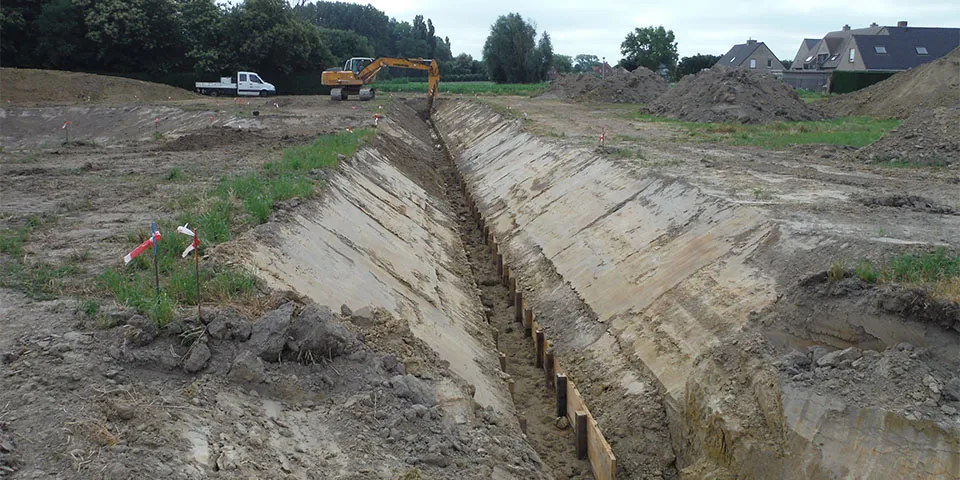
Construction of a relief channel on a watercourse that runs through the centre of Lichtervelde.
A sense of urgency
At Dag van de Openbare Ruimte on 6 February, Katrien Vanhove explained the importance of a stormwater management plan. “Fluvius looks beyond the technical content: there needs to be a clear, structured plan behind it. Which partners are needed for a particular area, and how do we get everyone pulling in the same direction? A platform needs to be created that takes account of the interests and priorities of everyone involved. There is a clear sense of urgency, and the climate has given us enough warnings by now. It is therefore crucial to develop a vision in advance, so that the available resources are used to do the right things. Fluvius is keen to give local authorities its full support in this.”
Lichtervelde’s local authority aims to have completed all the action points in the stormwater management plan by 2030. “Three watercourses flow towards our centre,” says Jos Goethals, alderman for public works in Lichtervelde. “The first has already been disconnected from the sewer system and diverted via the Ringbeek. The second watercourse has a controlled flood area, and the third, the largest, can now rely on two retention basins. Our stormwater management plan shows that pooling the knowledge and efforts of different parties can lead to a carefully considered plan, sometimes with surprising ideas. The plan will continue to be implemented over the coming years, with many actions involving the municipality, developers and residents of Lichtervelde.”
Question about this story? Ask your question
Keep following this
Get an email when a new story is published. No account needed.
- ThemeSpace for water and green infrastructure
- SubjectSewerage & underground infrastructure







