









Sewerage & underground infrastructure
Sustainable, cost-effective heating with sewer heat recovery gets a boost from industry collaboration
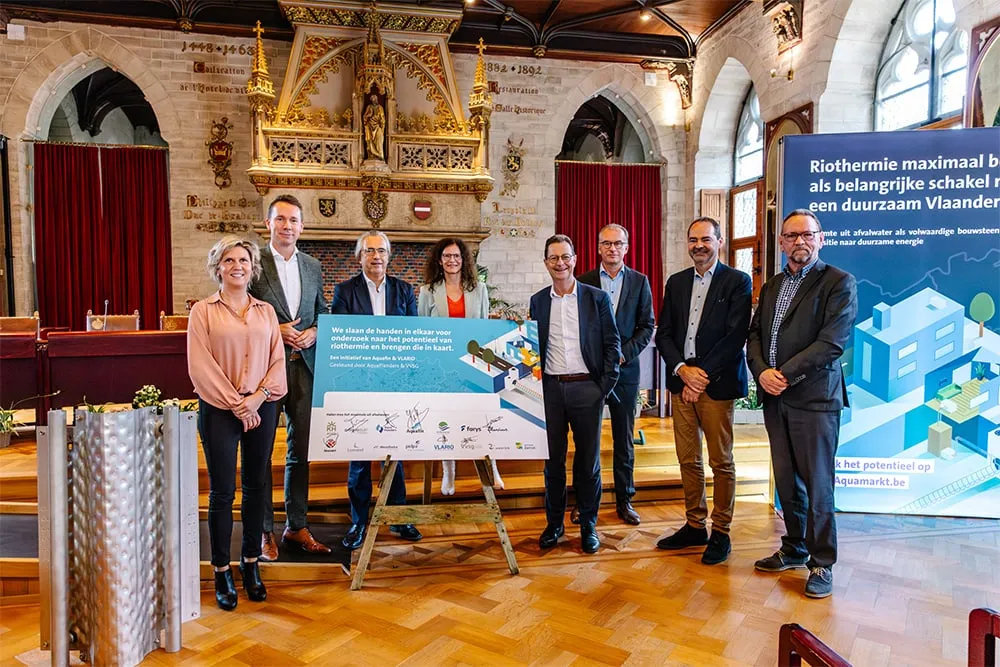
On 22 October, World Energy Day, Flemish sewer managers are positioning sewer heat recovery as a fully fledged sustainable heat source. They have committed to bringing together all sewer sections suitable for heat extraction on www.aquamarkt.be by January 2025. This will make this energy source much more accessible to property developers and public authorities. Thanks to this collaboration, an estimated 400 projects could benefit from this renewable heat source. This would also mean an annual reduction in CO2 emissions of 40,000 tonnes.
As Flanders moves away from fossil fuels, the market is looking for sustainable, cost-effective alternatives to heating oil and natural gas. In many cases, extracting heat from wastewater is an excellent alternative. Until now, it has been unclear whether this was possible, both for the market and for sewer managers themselves. “According to calculations by Aquafin, the sewers in Flanders carry enough heat to make the heating supply of up to 400 large buildings, such as swimming pools or apartment blocks, more sustainable. An average construction project using sewer heat recovery for heating saves 100 tonnes of CO2 a year,” says Marjolein Weemaes, Director of Business Development and Innovation at Aquafin.
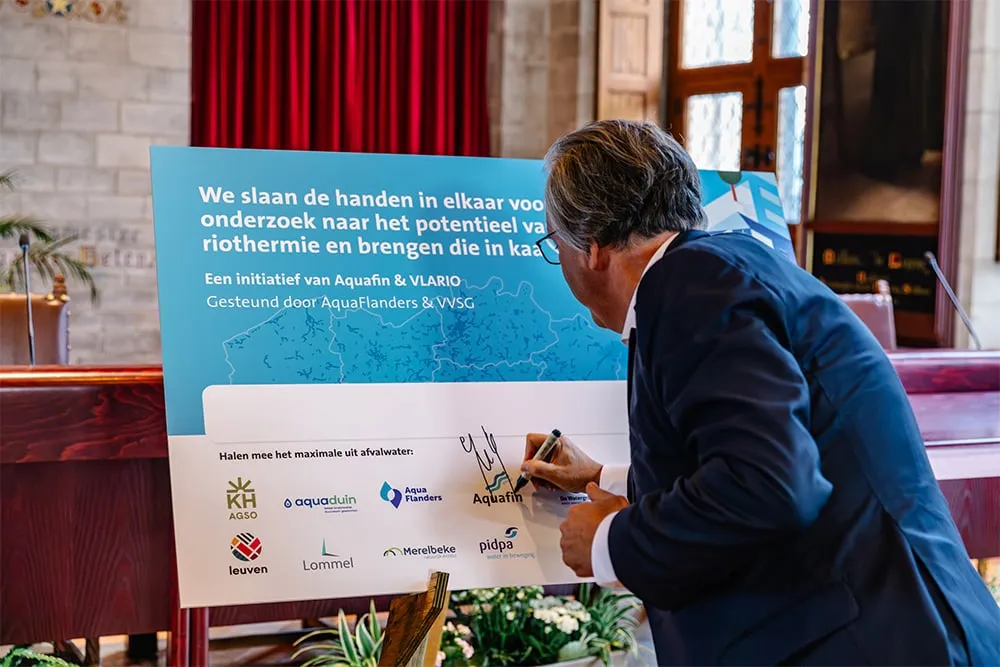
AquaMarkt brings all available heat together on one platform
“Aquafin and industry organisation VLARIO are driving a clear framework of agreements that will finally get sewer heat recovery off the ground,” explains Wendy Francken, Director of VLARIO. “Based on objective criteria, the available heat will ultimately be allocated to the project that can deliver the greatest positive and sustainable impact.”
Flemish Minister for the Environment and Agriculture Jo Brouns supports this initiative by sewer managers to develop green energy. “Sewer heat recovery shows us that solutions to our future energy needs are often literally beneath our feet. By making use of heat from wastewater, we can heat large buildings sustainably and cost-effectively while significantly reducing our CO2 emissions. With this innovative initiative, we are taking an important step towards a greener, more independent Flemish energy landscape. Together, we are continuing to build a future in which renewable energy sources such as sewer heat recovery play a fundamental role.”
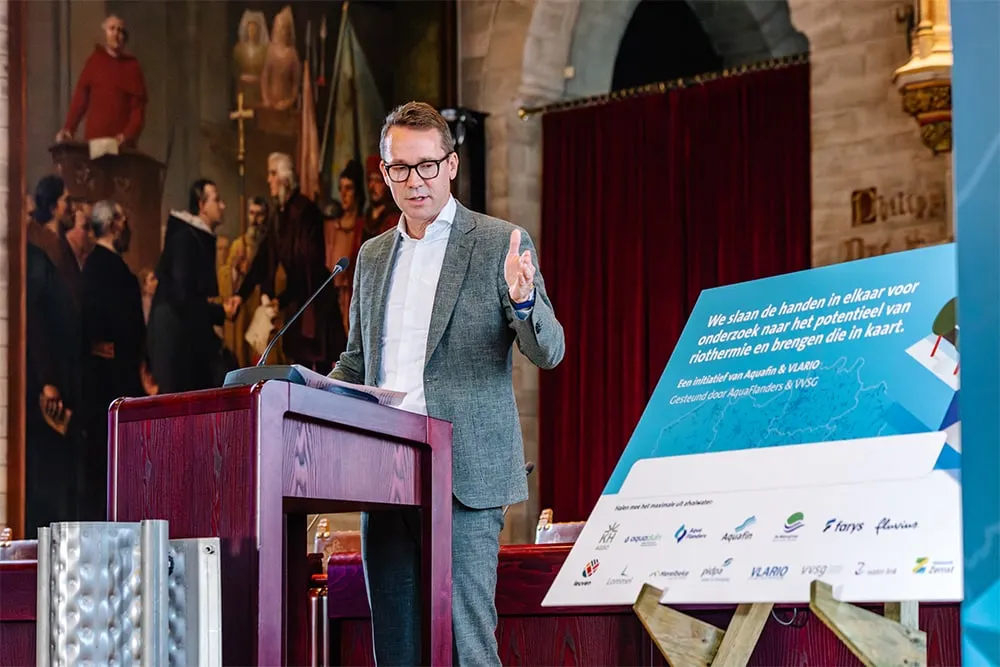
“From January, anyone planning a major construction or renovation project will be able to use the fully developed potential map on Aquamarkt.be to see at a glance whether sewer heat recovery is an option for their project,” says Carl Heyrman, Managing Director of Aquaflanders. “All Flemish sewer managers have agreed on which locations will be added to the current map, so that new projects do not compete with one another. Heat can only be extracted from each pipe once.” The initiative also has strong support from VVSG: “High-quality data on the potential of all possible sustainable heat sources are essential for cities and municipalities to implement their local heat plans. Aquafin already makes a great deal of useful information available on sewer heat recovery, but municipal sewer networks may also offer interesting opportunities. We therefore welcome the decision to make this data available too,” says Wim Dries, President of the Association of Flemish Cities and Municipalities (VVSG).
Sustainable and cost-effective
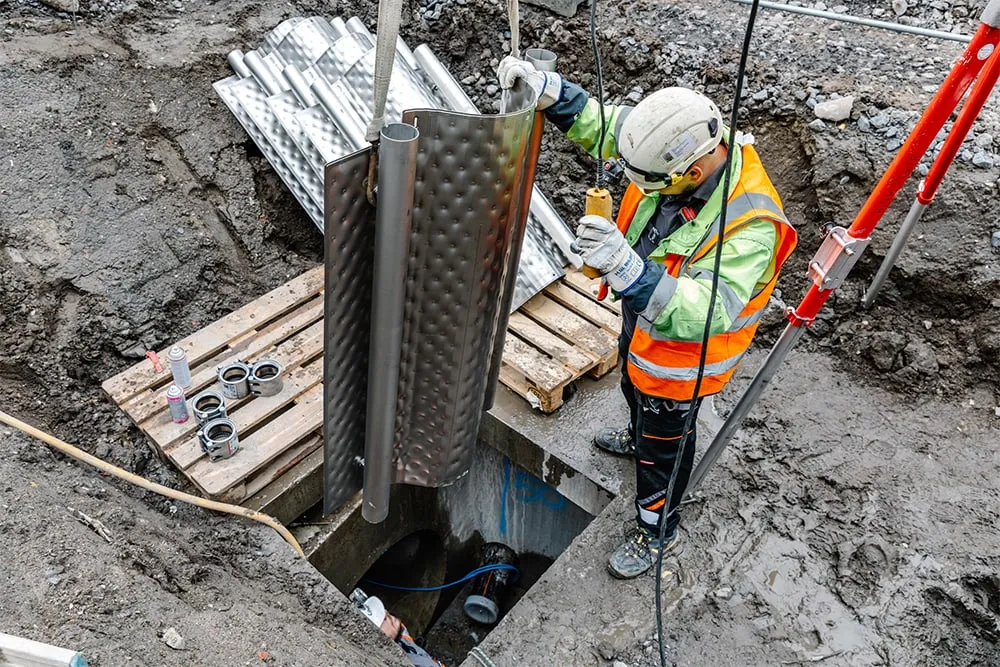
Because wastewater flows continuously, sewer heat recovery is a reliable heat source, recognised as renewable energy by the Flemish Energy and Climate Agency (VEKA). This means construction projects that incorporate the technology can qualify for a subsidy of up to 65%. “The investment cost of sewer heat recovery is comparable to that of geothermal energy,” explains Marjolein Weemaes. “Both technologies have the major advantage that energy for cooling or heating buildings is always available, even when it is very hot outside in summer or very cold in winter. However, installing a geothermal system is a much more disruptive process. Rolling out sewer heat recovery requires no space on site and no extra time in the construction schedule, because the heat exchanger is installed directly in the sewer. This makes it an interesting technology for urban areas.”
Question about this story? Ask your question
Keep following this
Get an email when a new story is published. No account needed.
- SubjectSewerage & underground infrastructure







