









Sewerage & underground infrastructure
Renowned vitrified clay pipe manufacturer puts sustainability firmly on the agenda
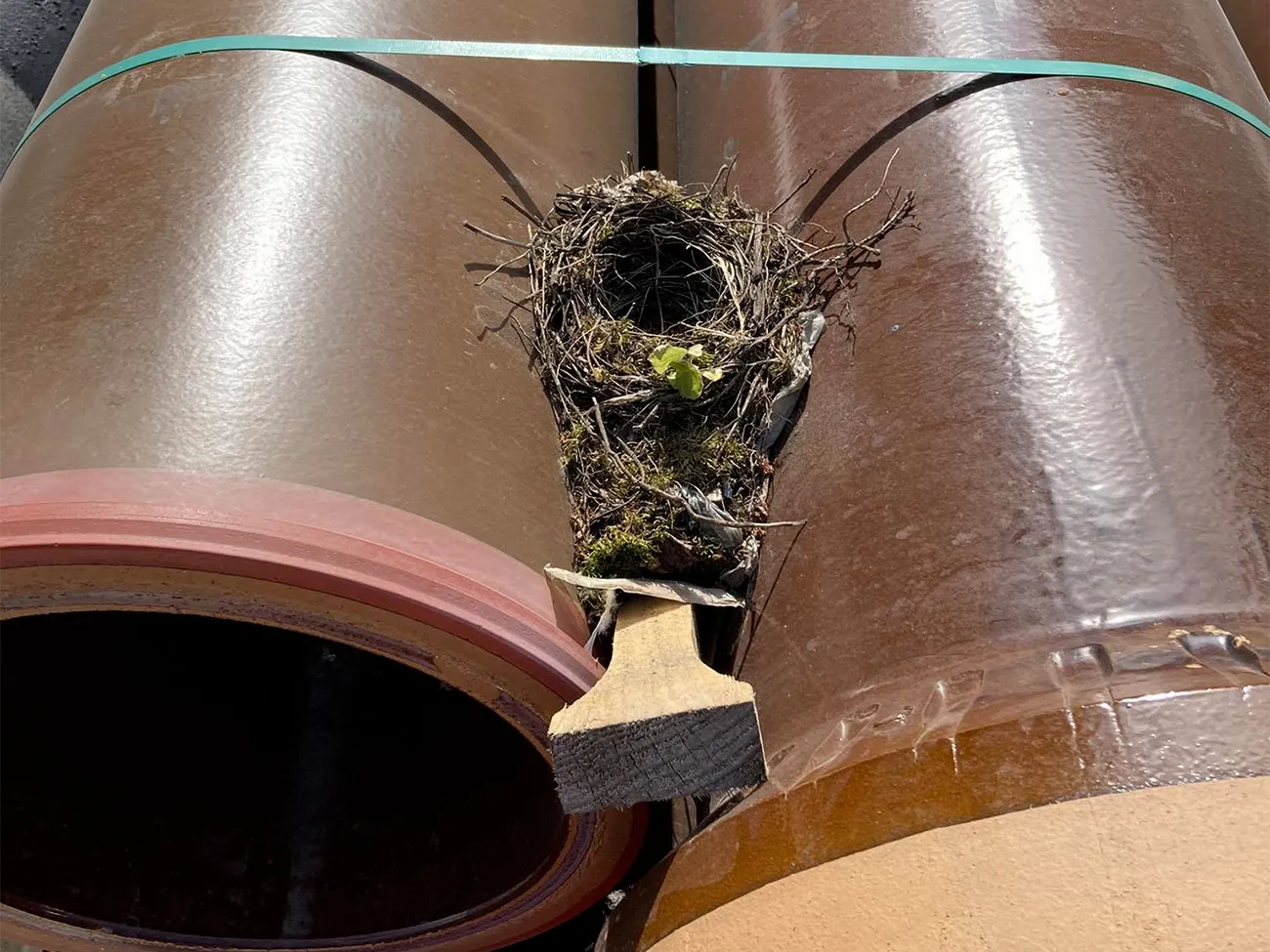
At Steinzeug-Keramo, a specialist in sustainable wastewater management and manufacturer of vitrified clay sewer systems, sustainability and social responsibility are part of the company’s DNA. “Our end product, made entirely from locally sourced raw materials, is among the most sustainable in its class, and we are also working intensively to make the production process more sustainable,” says Dieter Schreurs, sales engineer at Steinzeug-Keramo.
“Local roots and reliability will remain our priorities, alongside a strong focus on sustainability and circularity,” Dieter Schreurs said in a previous edition of GWW. These are all priorities that remain high on the agenda of the well-known vitrified clay manufacturer today. Vitrified clay is made from local raw materials: clay, water and grog. Dieter Schreurs: “Local, recyclable raw materials that contain no additives and suffer no loss of quality are simply the solution for building a sustainable society.”
Steinzeug-Keramo focuses on every aspect of the ecological chain: a natural product with local roots, easy recycling without downcycling, exceptional resistance and performance, and an unsurpassed service life. Dieter Schreurs: “Our products can be recycled indefinitely without any loss of quality. Vitrified clay also has a proven track record and can be used for a range of applications. We also give vitrified clay a second life. For example, high-quality ceramic waste is purchased and incorporated into our production process.”
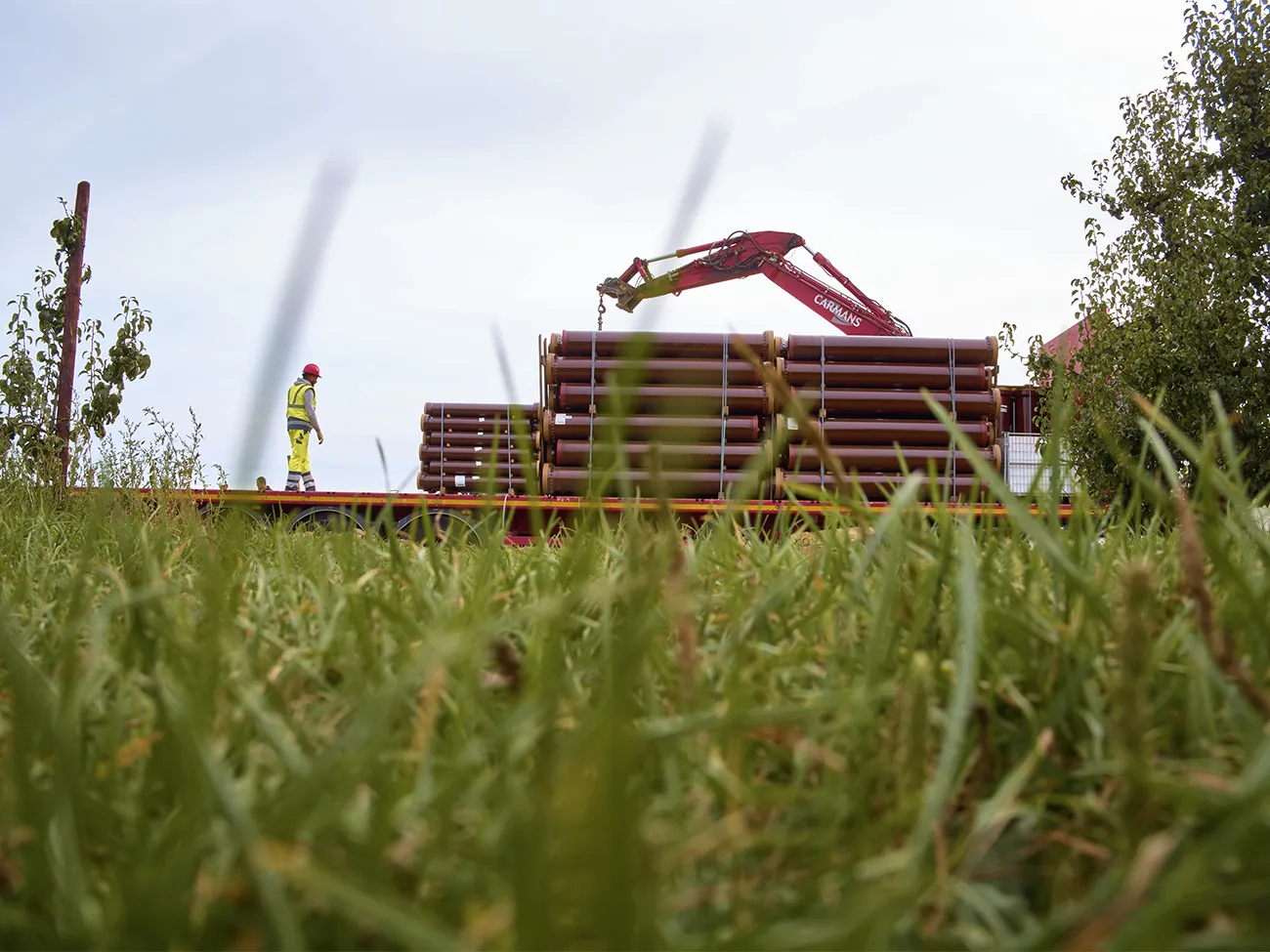
Cradle to Cradle
Vitrified clay scores very highly on maximising reuse at the end of its service life, one of the key pillars of circularity. When vitrified clay pipes are excavated at the end of their service life, the material can be reused or recycled very easily and sustainably, even on site. Steinzeug-Keramo therefore holds Cradle to Cradle certification, which considers not only the impact of the material on health and the environment, but also water and energy management. This covers everything from CO2 emissions to the impact on the aquatic environment. In short, sustainability in the broadest sense. Dieter Schreurs: “Thanks to its local roots and a very compact production chain, Steinzeug-Keramo is able to keep its ecological footprint small.
The fact that vitrified clay is an exceptionally sustainable product in its own right, both in terms of its composition and service life, does not mean that Steinzeug-Keramo is resting on its laurels when it comes to sustainability. Dieters Schreurs: “First of all, everything we do in relation to energy policy and sustainability is subject to third-party oversight. This undoubtedly gives us much greater leverage and credibility. We also focus heavily on optimising our production processes at our factories. For example, we have been working to reduce our CO2 emissions for several years. We already use 100 % green electricity, for instance, and in future we aim to switch partly or even entirely to biogas for the firing process. Most of the wastewater from the production process is already recycled.”
Energy policy framed by ISO 50001
Steinzeug-Keramo’s energy policy follows ISO 50001, an international standard for organisations in all sectors that want to use energy more efficiently by implementing an energy management system. Dieter Schreurs: “These efforts are, of course, also subject to audits. We have a clear roadmap setting out our goals for sustainability and energy policy. With Belgium’s Blue Deal, the European Green Deal and the alarming IPCC report in mind, we have no choice but to do our bit. We are aiming to reduce our CO2 emissions by 15.5 % compared with 2020 by the end of 2023. We are also actively working to optimise heat recovery and our drying and firing processes.”
It is vital for Steinzeug-Keramo not to fall behind. Taking a leading role is therefore a deliberate choice. “For example, we are involved in several VLARIO working groups. It is important to contribute the right level of service and expertise there. That is only possible if you, as a company, keep your finger on the pulse. It is also very much a matter of principle. Selling a sustainable product after a polluting production process is inconsistent. That is why we consider sustainability and environmentally responsible business across the company, in its full breadth and depth. The fact that we are going to replace all our diesel forklifts with electric ones is another good example,” concludes Dieter Schreurs.
Question about this story? Ask your question
Keep following this
Get an email when a new story is published. No account needed.
- SubjectSewerage & underground infrastructure







