









Sewerage & underground infrastructure
Prevent flooding with the right channel drains
Text Niels Rouvrois / ACO Beeld ACO

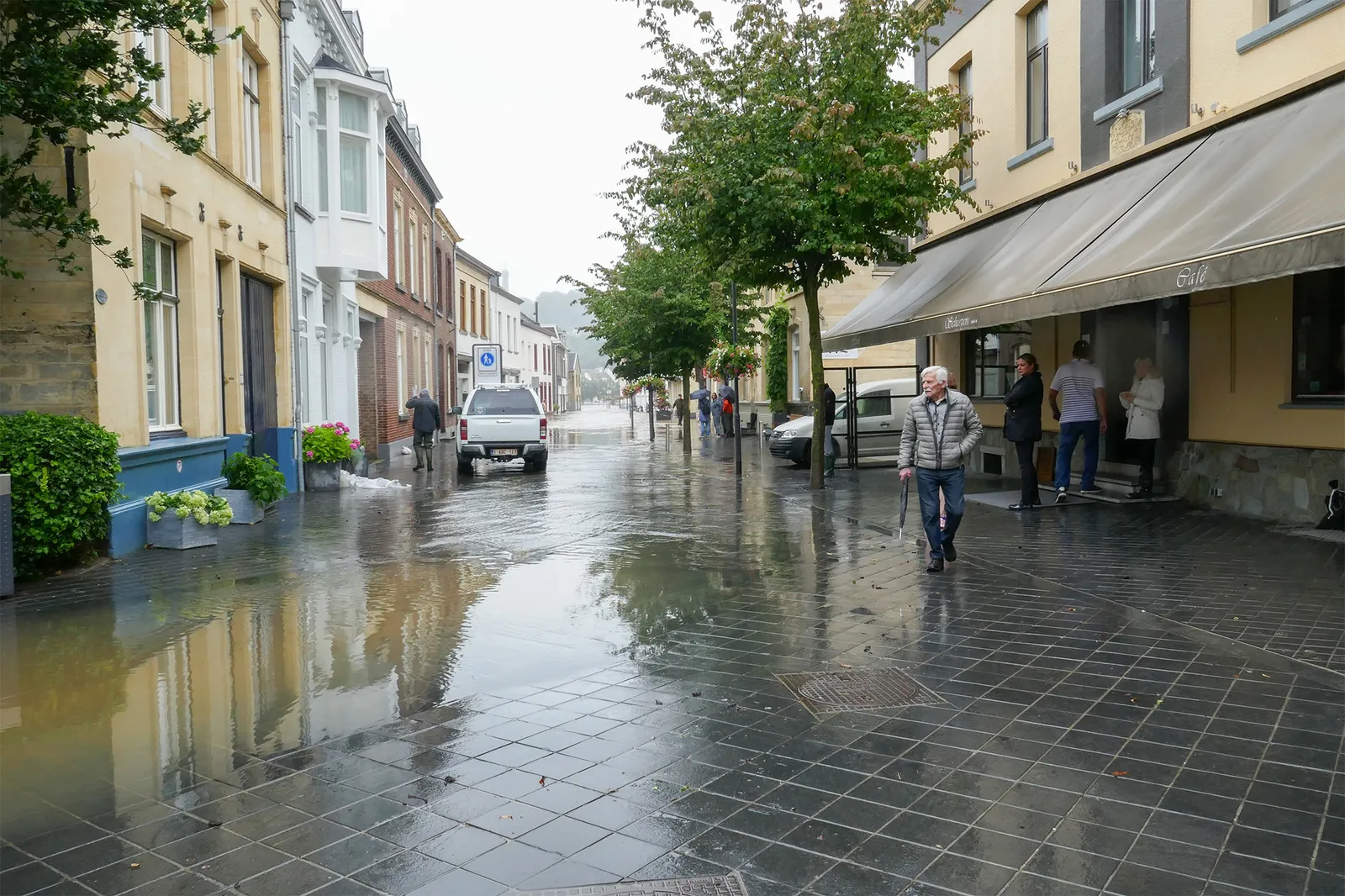
Rainfall is becoming more intense, the area of hard surfacing is growing and the consequences of poorly designed drainage are becoming increasingly clear. But why do some channel drains fail to do their job, even when they appear to be correctly installed? More importantly, how can this be avoided? GWW spoke to Dries Aerts, Product Manager at ACO.
What common mistake is still made when calculating channel capacity?
Dries Aerts: “Many designers and engineers still rely on traditional formulae such as Manning’s to calculate channel capacity. However, these assume ‘uniform flow’, which is rarely found in practice. In reality, flow in a channel drain is often ‘non-uniform’, with flow rates and velocities varying as water enters through the grates along the full length of the channel.”
How does ACO address this?
“ACO’s technical department rightly highlights the importance of empirically tested solutions. Don’t guess: measure and simulate based on real-life conditions. ACO has developed hydraulic calculation software that can simulate drainage tailored to your project. In short, anyone choosing channel drains today on the basis of rules of thumb or outdated models risks undersizing the system or installing equipment that is unnecessarily expensive. The right choice is a channel and grate system that has been tested and tailored to the actual conditions on your site.”
How much influence do the outlets of linear drainage channels have on drainage capacity?
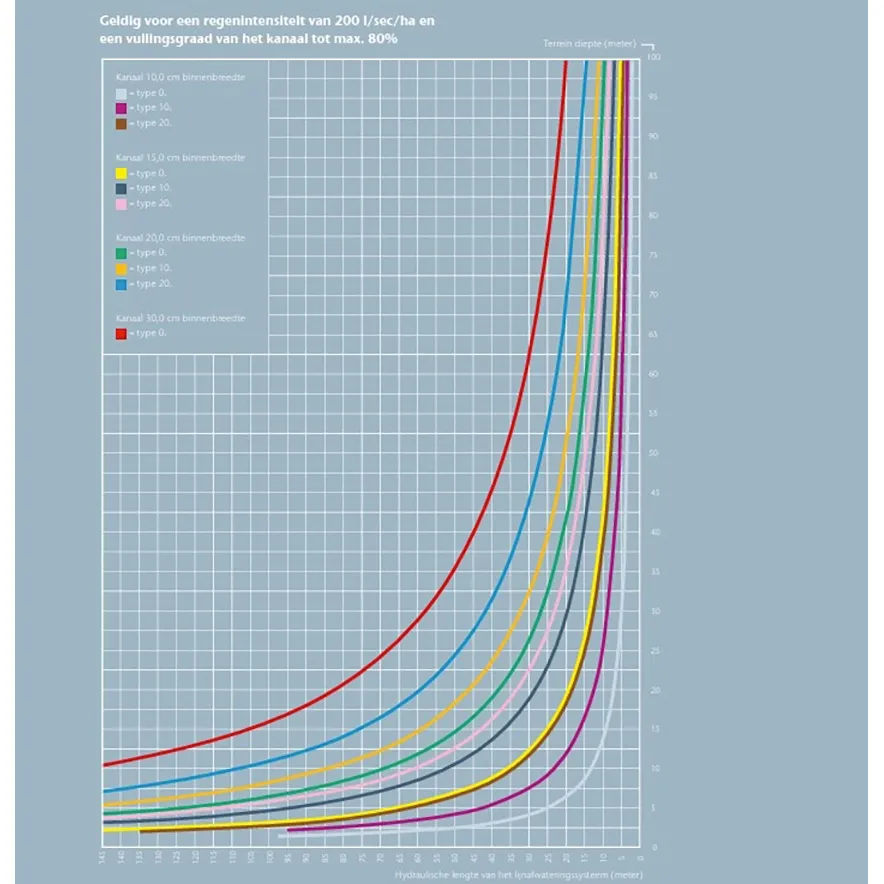
“As well as the characteristics of the area to be drained, the outlets of linear drainage channels also affect drainage capacity. This factor is included in the capacity calculation to determine the right choice of channel. An indicative graph was prepared to give an idea during the design stage of the width and depth required for the drainage channel (see image, ed.). The vertical axis shows the depth of the area (D), or the width of the area that drains into the channel. The horizontal axis shows the maximum distance the water must travel through the channel to the discharge point (the hydraulic length Lhy). The curve above the point where these two lines intersect determines the type of channel required. For example, with an area depth of 20 m and a hydraulic length of 40 m, the curve for a channel with an internal width of 20 cm (type 10.0) determines the required channel.”
And what about the grate?
“Choosing the right grate is crucial. Not all grates capture water equally efficiently. Depending on the slope of the hard surface, the type of grate openings and even temporary blockages, such as leaves or debris, water can simply flow over the grate. We call this ‘bypass flow’, and it can have serious consequences.”
Which parties can turn to ACO?
“Architects, consultants and contractors can all turn to ACO to work together on finding the most suitable solution to the drainage problem at hand. This saves them a great deal of time and money. We provide comprehensive support from design through to installation. To achieve optimum drainage capacity, we determine the required channel width and height and the number of outlets, taking into account the characteristics of the area to be drained.”
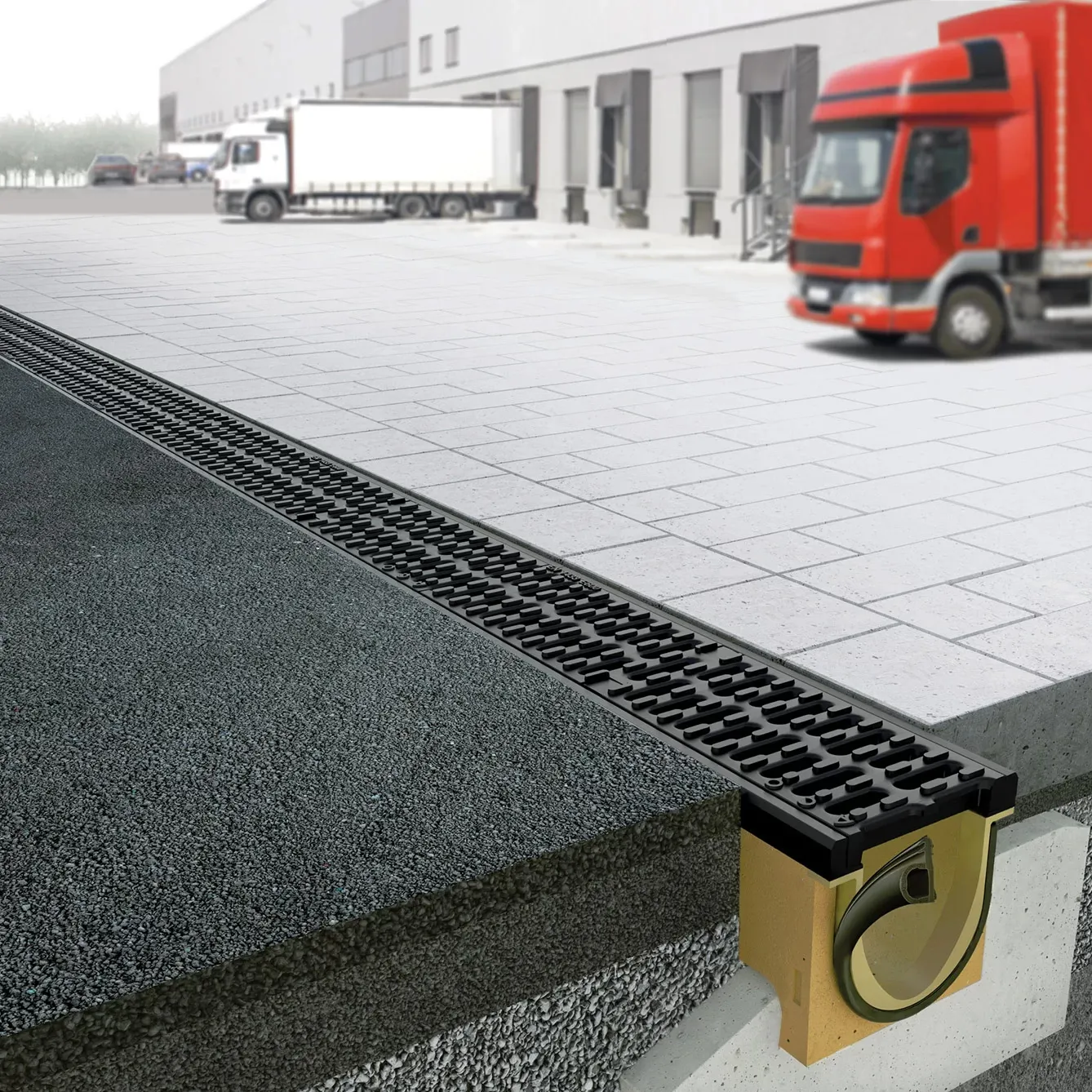
ACO continually brings innovative, high-quality products to market. Multiline Seal in is a good example. “The V-shaped channel profile not only improves drainage capacity, but also enhances the self-cleaning effect along the channel. The self-cleaning action is particularly important during light rainfall, so that the full cross-section of the channel is available when heavy rain follows. Multiline Seal in, which has an integrated seal, features a modified drainage principle whose efficiency has been proven over many years by the so-called V-profiles used in drainage technology. For small volumes of water, this shape is more effective than a circular profile because the water depth is greater for the same flow cross-section.”
In summary, the importance of accurate calculations cannot be stressed enough. “Absolutely. This is especially true given increasingly extreme weather conditions, which often bring very heavy rainfall. The issue is highly relevant, and it is crucial that channel drains are properly sized for the flow rate to be drained.”
Een zakelijke vraag aan ACO? Get in touch
Companies in this story

Keep following this
Get an email when a new story is published. No account needed.
- SubjectSewerage & underground infrastructure
- CompanyACO







