









Sewerage & underground infrastructure
New grass paver is stronger and easier to install
Text Jeroen SchreursImage Deschacht
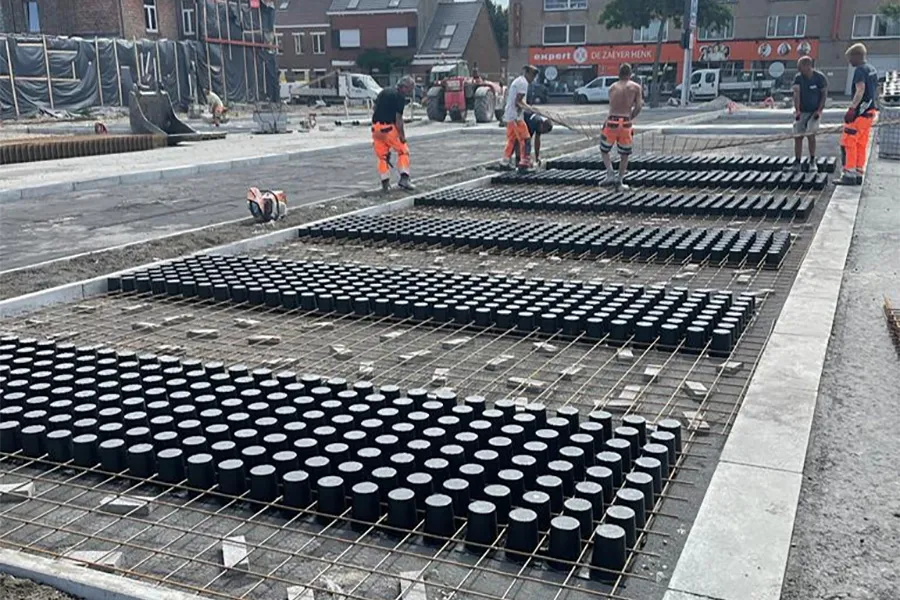
Ghent-based company Deschacht recently developed Drainix, a durable, permeable paving system: a cast-in-situ reinforced grass paver made from polypropylene. Brecht De Meyer, customer service manager at Deschacht: “Drainix is a response to increasingly stringent building requirements.”
With Drainix, Deschacht is meeting a demand from the construction industry. It has long been looking for a durable alternative to the plastic grass grids currently available, which are damaged by intensive use, such as when trucks manoeuvre over them. Concrete grass pavers, meanwhile, are not reinforced.
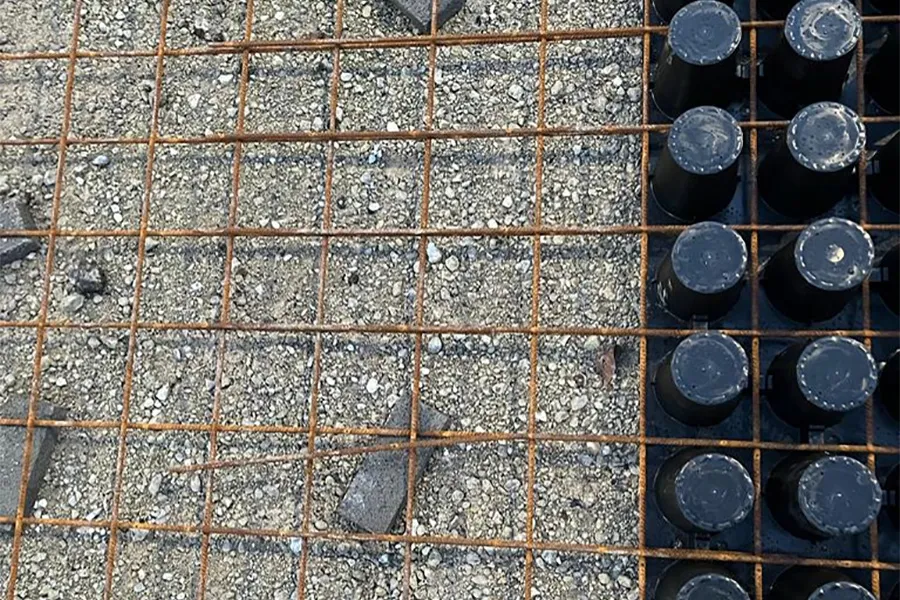
Spacers
Deschacht believes Drainix can tackle these problems. Brecht De Meyer: “What makes Drainix so unique is that the stay-in-place formwork has spacers that fit a 15 by 15 reinforcement mesh perfectly. Install Drainix, lay the reinforcement mesh on top, pour concrete over it, and you have a cast-in-situ grass paver. It is also seamless. That is important too, because the market currently offers solutions made up of separate sections joined together to create a permeable surface. But because they consist of several puzzle pieces, potholes and subsidence also develop over time. Drainix forms one attractive concrete surface that is permeable and can be planted with grass.” Another benefit is the range of visual finishes available. The concrete can be polished, exposed aggregate or brushed.
Aldi
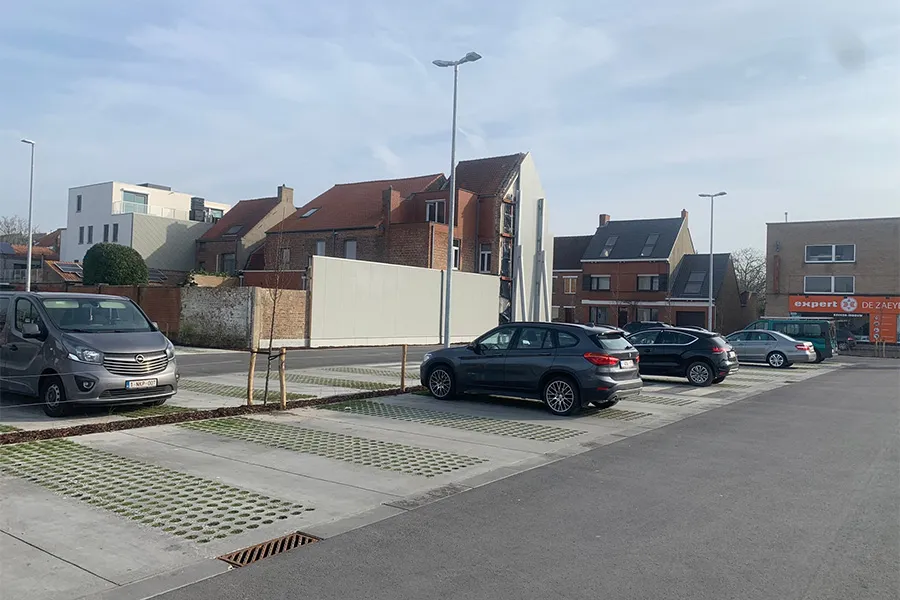
Group De Brabandere has already used the product on three sites. Its first trial was at the Aldi car park in Veurne, where the company installed Drainix in the parking bays. According to Brecht De Meyer, the project also demonstrated the efficiency gains. “The car park had to be cast in concrete anyway. If you can ensure permeability in the same operation, you can work twice as fast. It also helps that if you want to pour a reinforced floor, you have to install spacers for the reinforcement in any case. Drainix has these integrated, making that separate operation unnecessary too.”
From idea to patent
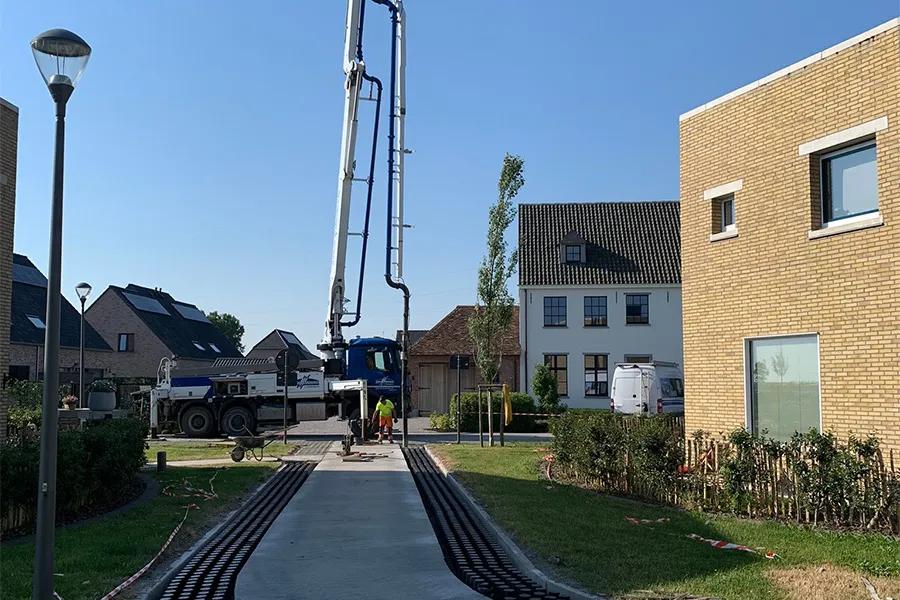
Deschacht has been working on this innovation since 2020. The company held its first discussions with partners then and mapped out the existing problems. “Flow simulations, determining the dimensions, having a mould made in China, applying for a patent... it takes about three years from idea to finished product,” says Brecht De Meyer.
“There was also a practical testing phase. We laid a small area of Drainix in our car park and used what we learned to develop the final product. That showed us how thin the surface could be without losing strength. The raised edges, by contrast, are very thick. This means installers can walk over them easily, carrying reinforcement mesh, for example, without losing their balance. After the testing phase, we also added small holes to the underside of the slab. This allows rainwater to drain away easily if it rains just before the contractor is due to pour the concrete.
Passing bay
Brecht De Meyer is now receiving many enquiries from the sector, and not all are for an application matching the original idea, a grass paver. The municipality of Maarkedal wants to use Drainix for passing bays on agricultural roads. Existing solutions subside over time under heavy tractor traffic. De Meyer has also received enquiries about using Drainix to reinforce verges. He expects more similar requests. “Over the years, we have seen requirements for paved surfaces become increasingly stringent. Building projects are no longer granted permits without sufficient permeable paving. That is why we started thinking more broadly: how can we pave an entire area while ensuring permeability? Drainix was the answer.” ■
Een zakelijke vraag aan Deschacht? Get in touch
Companies in this story
Keep following this
Get an email when a new story is published. No account needed.
- ThemeSpace for water and green infrastructure
- SubjectSewerage & underground infrastructure
- CompanyDeschacht







