









Sewerage & underground infrastructure
Innovative pilot project to remediate contaminated sediments in a nature reserve is ready to get under way
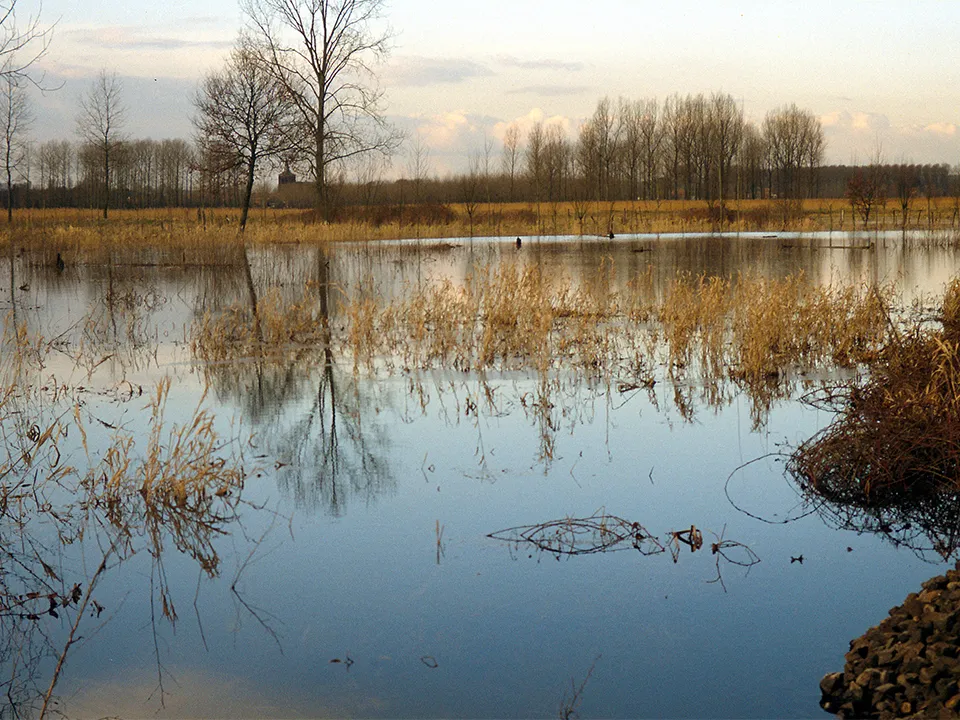
Contaminated sediments require a specific remediation approach, particularly when they are located in sensitive natural areas.
ABO nv, an accredited soil remediation expert, is working with several specialist partners on a pilot project to test innovative nature-based remediation techniques in three Flemish waterways. The research is part of the European LIFE NARMENA project. Specifically, the techniques of constructed wetlands and phytostabilisation will be used to address metal contamination in the Winterbeek, Grote Calie and Grote Laak. The aim is to enable these waterways and the nature reserves through which they flow to make full use of their climate adaptation potential.
LIFE NARMENA is a project run by the Flemish government, with support from Europe through the LIFE programme, which aims to promote European environmental and nature policies. The Public Waste Agency of Flanders (OVAM) is coordinating the project in collaboration with the Agency for Nature and Forests (ANB), Natuurpunt and the Flemish Environment Agency (VMM). ABO nv, part of ABO-Group, has been appointed as the soil investigation and remediation expert. Bio2Clean bvba and ARCHE Consulting cvba are leading the research into phytostabilisation and eco-modelling respectively.
“Many waterways in Flanders have historical heavy metal contamination caused by industry,” says Jan De Vos, project coordinator at ABO nv. “Over the years, this contamination has found its way into the sediment and onto the banks. What makes the NARMENA project distinctive is that all three waterways are located in highly valuable nature reserves, which play an important role in climate adaptation, including water storage and biodiversity. NARMENA aims to demonstrate a range of gentle, non-intrusive, nature-based techniques that are compatible with sensitive natural areas, as an alternative to ‘conventional’ remediation, which involves excavating the contaminated soil.”
Constructed wetland
ABO nv is using the constructed wetland technique on the Grote Laak and Winterbeek. Jan De Vos explains: “Literally, this technique involves creating a wetland. In this case, it is a particularly low-impact form of constructed wetland, in which we increase the amount of surface water in the system through measures including river remeandering and the construction of weirs and breaches. By keeping these areas wet throughout the year, we create a range of positive effects. First and foremost, we reduce the bioavailability of the polluting metals by improving the biochemical conditions in the top layer of the sediment. In addition, keeping these areas wet also offers many benefits in terms of water storage, drought mitigation, ecology and biodiversity.”
Phytostabilisation
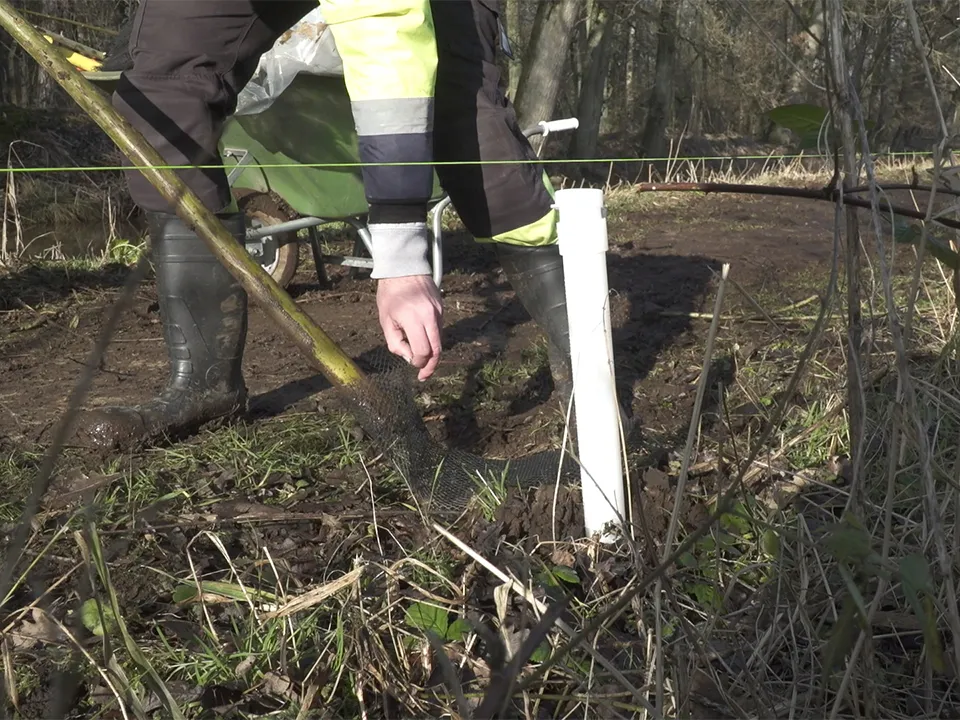
Phytostabilisation is being used on the Grote Calie, where plants are being planted along the banks to immobilise metal contamination in the top layer. “It is important to understand that metals are not easy to break down. At best, you can make them less available to the environment. Phytostabilisation allows us to convert the metals into another form, greatly reducing their bioavailability,” explains Jan De Vos.
Environmental benefits
These nature-based remediation techniques have a much lower environmental impact than conventional remediation techniques, making them highly suitable for use in sensitive natural areas. “We are using in situ remediation techniques, which are far more cost-effective than a conventional method involving excavation of the contaminated material and treatment elsewhere,” adds Froukje Kuijk, LIFE NARMENA project coordinator at OVAM. “They also produce far fewer CO2 emissions. We don’t need excavators or transport to a treatment centre, and the treatment process does not release greenhouse gases into the atmosphere. What’s more, we retain more biomass within the nature reserve itself. So these techniques deliver nothing but environmental benefits.”
Building expertise
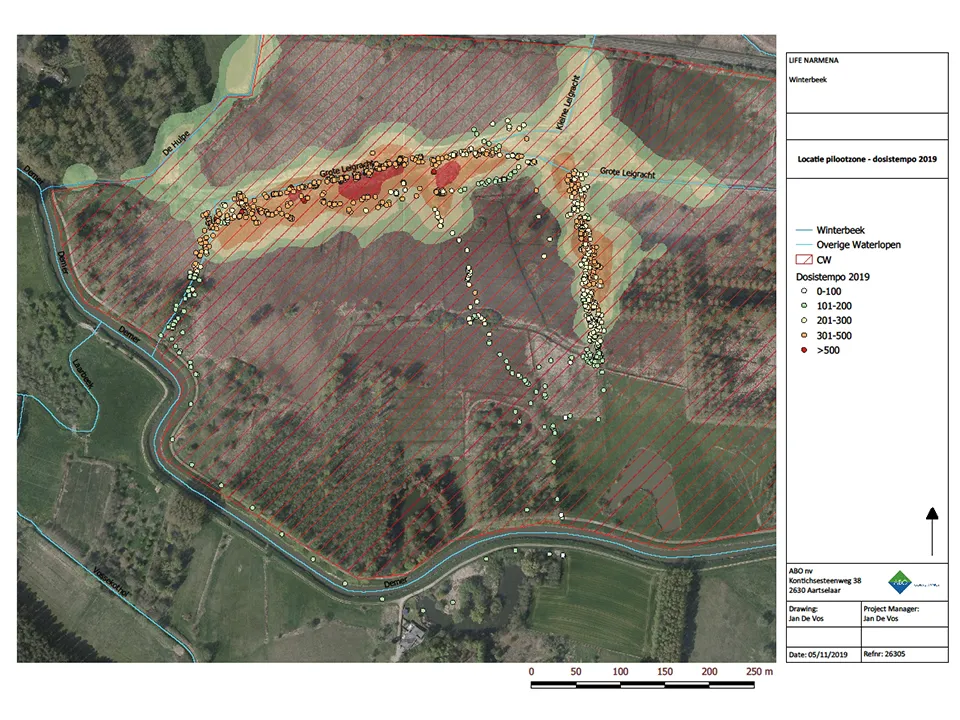
In recent years, ABO nv has built up extensive expertise in sediment remediation, including in the Port of Antwerp. “Even so, these are innovative techniques for us too, and they have never before been applied on this scale,” says Jan De Vos. “NARMENA will allow us to further develop our expertise. We are responsible for a carefully designed soil remediation plan and will remain closely involved over the coming years in supervising the work and monitoring the research results. The three projects are intended to be carried out in sequence so that we can learn from the results and adjust our designs if necessary. The design for the Grote Calie is now complete, and the first work on site has begun. We are finalising the design for the Winterbeek so that we can start the permitting process by the summer. For the Grote Laak, we will first wait for the results from the Winterbeek.”
If the results of this research project are as hoped, OVAM intends to roll out these techniques across Flanders and Europe. “Soil policy has been on track for a quarter of a century and is working well. Projects such as NARMENA allow us to further enrich our soil policy with climate adaptation, environmental management and other aspects. Flanders is a world leader in soil investigation and remediation. These projects are a way to further develop and consolidate that Flemish expertise,” says Jan Verheyen, spokesperson for OVAM.
Een zakelijke vraag aan OVAM? Get in touch
Companies in this story
Keep following this
Get an email when a new story is published. No account needed.
- SubjectSewerage & underground infrastructure
- CompanyOVAM







