









Sewerage & underground infrastructure
First: new water treatment plant removes micropollutants
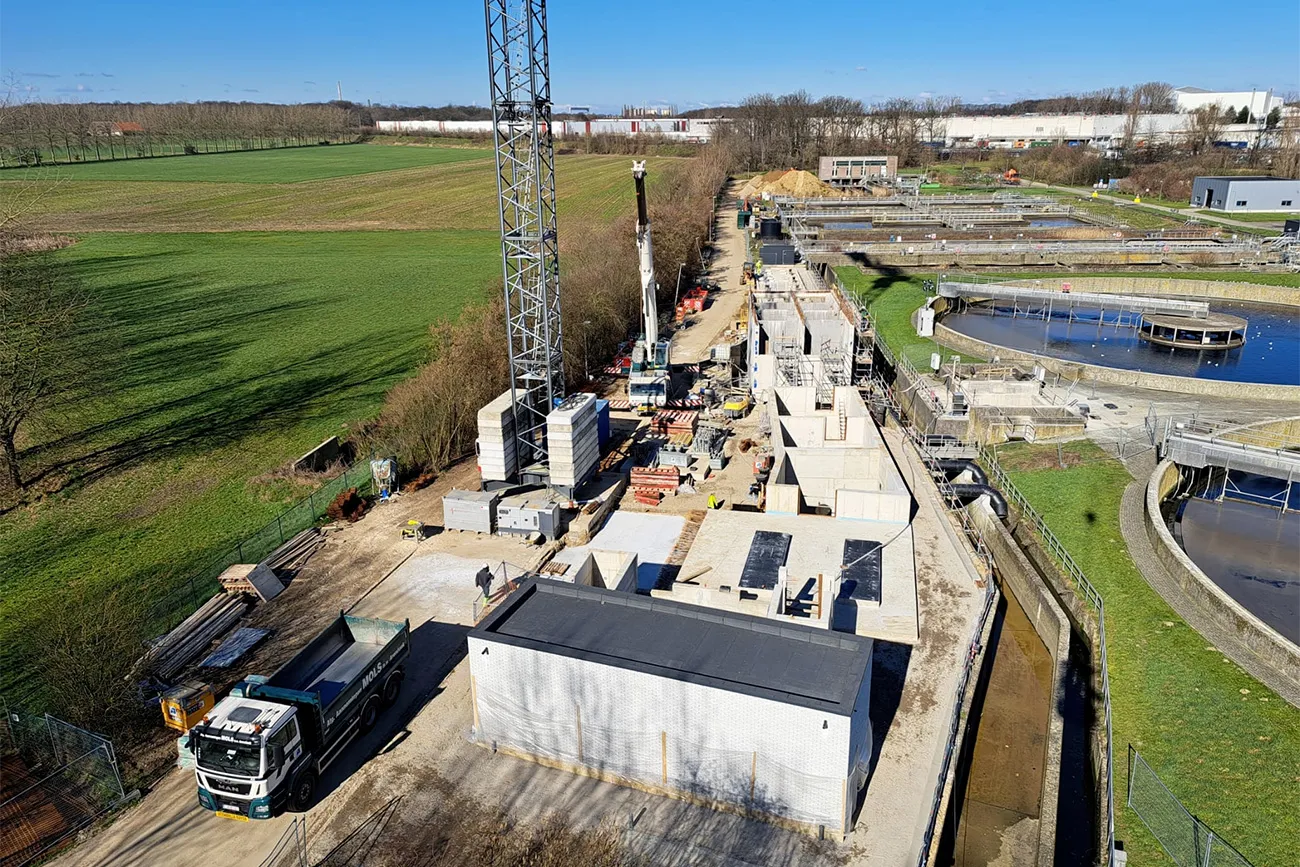
Aquafin is building a brand-new water treatment plant in Aartselaar. For the first time, the plant will also remove micropollutants from the water. This is a first in Flanders. Deschacht’s HDPE pipes transport the treated water between the various structures at the plant. “The newly built facility provides additional treatment for wastewater that has already undergone the usual treatment,” says Jan Dickens, project manager at main contractor Mols.
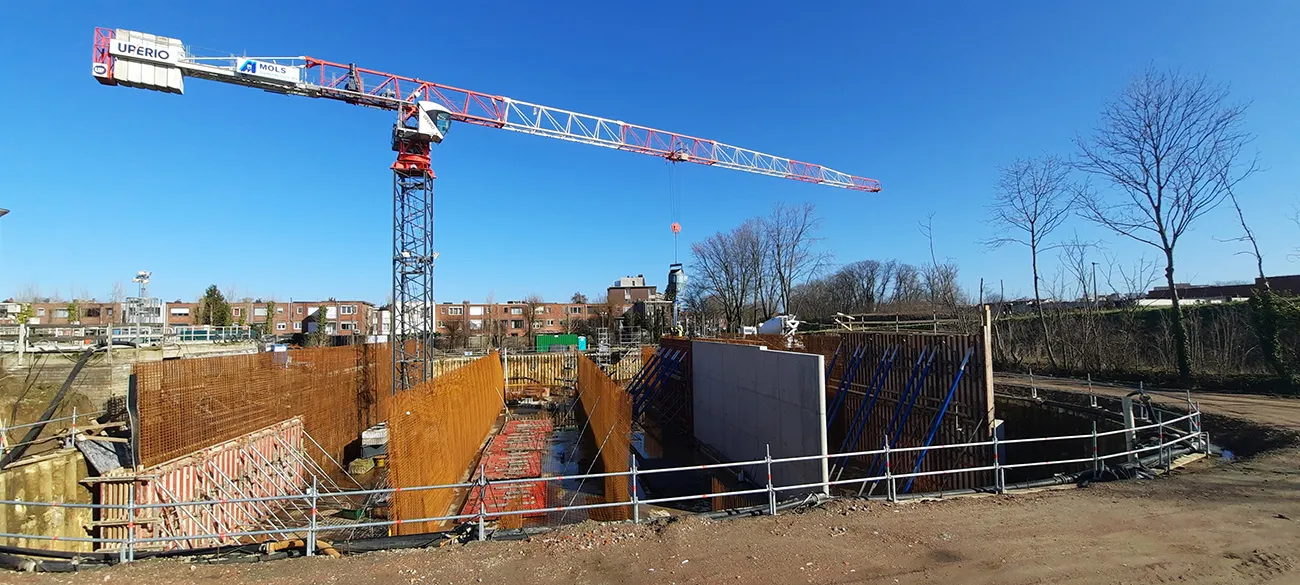
Flanders needs a full-scale facility for micropollutant removal. The aim is to gain experience with different techniques for removing hazardous substances. Three technologies will be tested at full scale for the first time on effluent from a water treatment plant. “Aquafin wants to gain a better understanding of these new techniques and investigate how they can be integrated into our water treatment plants,” says Jan Dickens. “We started installing the pile foundations and carrying out the earthworks in June 2022. Construction of the various concrete structures then began in August. Once these structures are complete, we will move on to installing the process pipes. We are currently in the final stages of building the ozone reactor and installing the last process pipes.”
What is micropollutant removal?
Micropollutant removal involves three technologies: disc filters, ozone and granular activated carbon (GAC). The disc filters pre-treat the effluent from the wastewater treatment plant (WWTP) before it flows to the micropollutant removal facility, ensuring that almost no suspended solids pass through to the rest of the tertiary treatment process. “The lower the concentration of suspended solids entering the downstream treatment, the higher the performance of the subsequent treatment technologies,” says Willy De Schagt of Deschacht.
The facility consists of an ozone system followed by pressure filters containing granular activated carbon. Two ozone generators produce ozone gas on site, which is introduced into the wastewater through ceramic diffusers. “Ozone breaks down some of the micropollutants. All the water then flows from the ozone reactor tank to six pressure filters. The activated carbon adsorbs both micropollutants and their breakdown products in its pores,” says Willy De Schagt. “By combining the two technologies, micropollutants can be removed from WWTP effluent as efficiently and completely as possible. Around 75% of the water discharged from the Aartselaar WWTP will be treated by the micropollutant removal process.”
Limited space
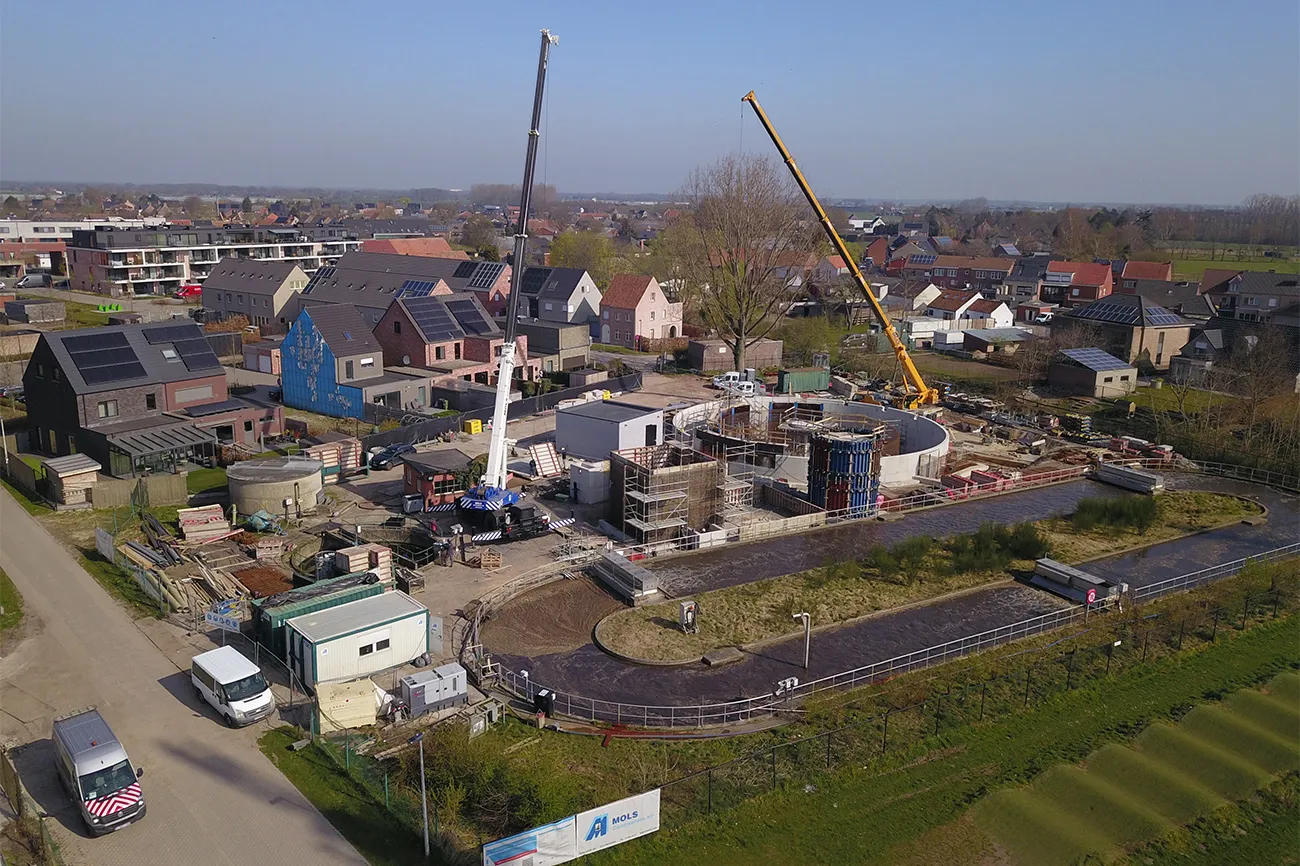
Mols is known as a leading player in civil engineering works. On this project, the company is responsible for building a low-voltage building and the concrete structures for the disc filters, pump sumps, ozone reactor and activated carbon filters, as well as installing HDPE process pipes, site drainage and the foundations and paved surfaces around the structures. Jan Dickens: “The biggest challenge is undoubtedly the limited space on site. All the structures are also closely connected, and building the ozone reactor is far from straightforward because it is relatively tall and has limited space inside.
We also have to comply with specific safety requirements for building this structure. Installing the process pipes at different levels while constructing the various concrete structures is another key consideration.
Need for new technology
The Aartselaar project will help Aquafin identify which micropollutants can be used as indicator substances and which techniques are useful for monitoring effluent quality and the health of the watercourse over the long term. In addition, the effluent flow from the Aartselaar WWTP accounts for a large proportion of the flow in the receiving watercourse. The reduction in discharged micropollutants and its impact on water quality should therefore be significant and easy to monitor. The results can serve as a guide when deciding where other micropollutant removal facilities would be most cost-effective.
“The newly built facility provides additional treatment for wastewater that has already undergone the usual treatment,” explains Jan Dickens. “It is a first, a new facility that has not been used anywhere else before. Mols’s experience is certainly playing an important role in this unusual project. It also means we can be flexible and respond quickly to unforeseen circumstances. We are carrying out almost all the work ourselves, from the earthworks and concrete work to installing the process pipes, drainage and paved surfaces. That is a major benefit for the client.”
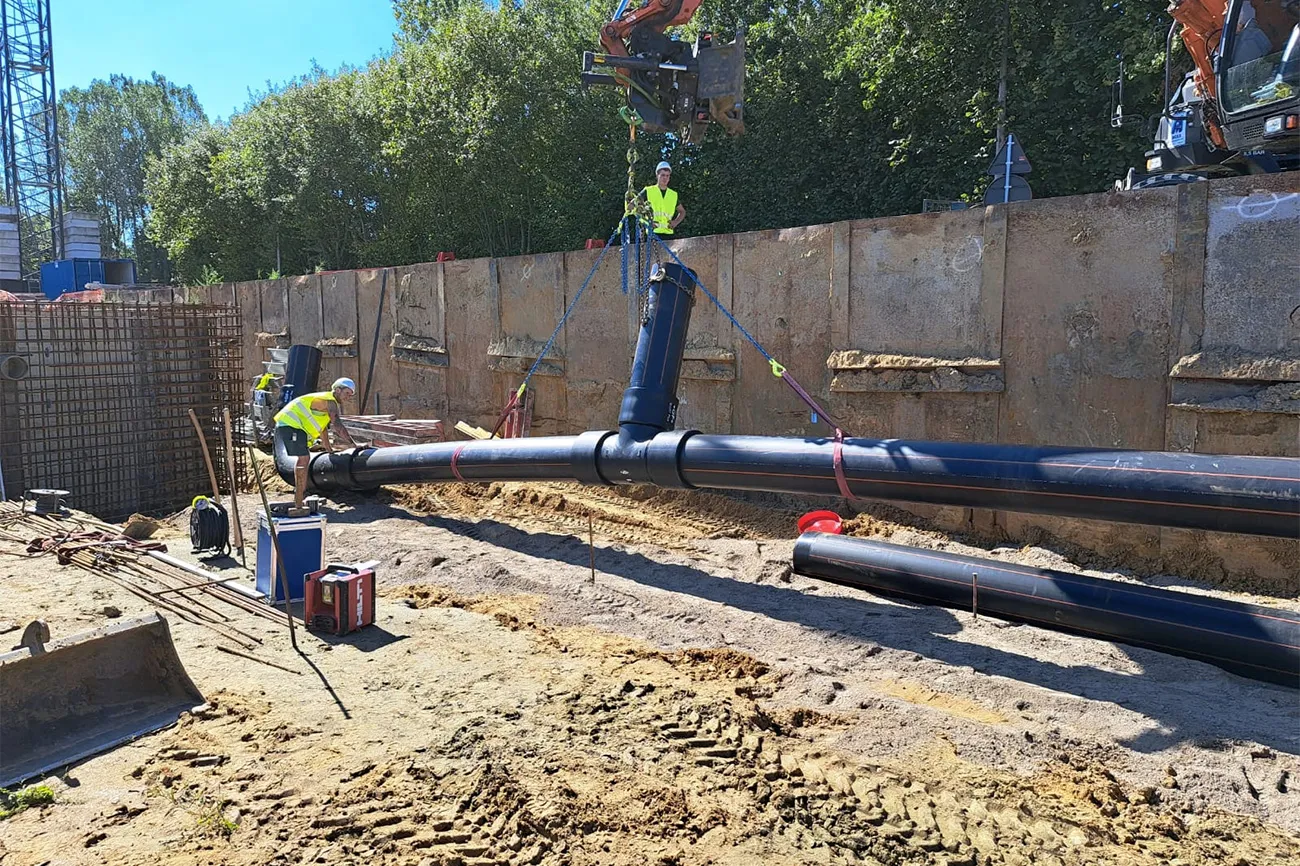
Deschacht HDPE pipes
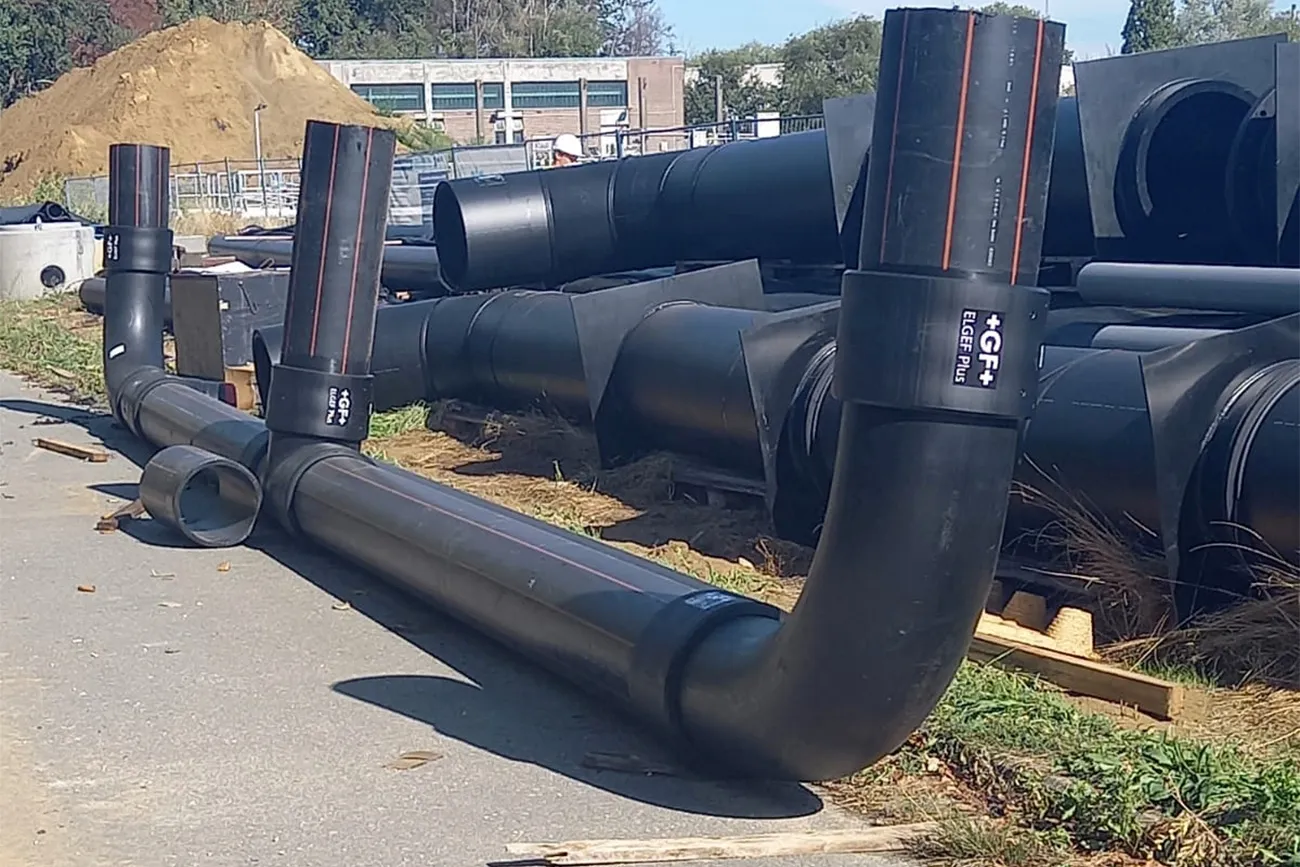
Deschacht’s HDPE pipes play an important role in this project. They transport the water to be treated between the various structures, either by pumping or by gravity. “The site covers just 1,500 m². Fitting the entire facility into that space is a challenge. But Deschacht’s design office reworked the engineering consultant’s outline plan into a construction plan, giving us a well-prepared and detailed design to work from. Installation is therefore progressing very smoothly,” concludes Willy De Schagt.
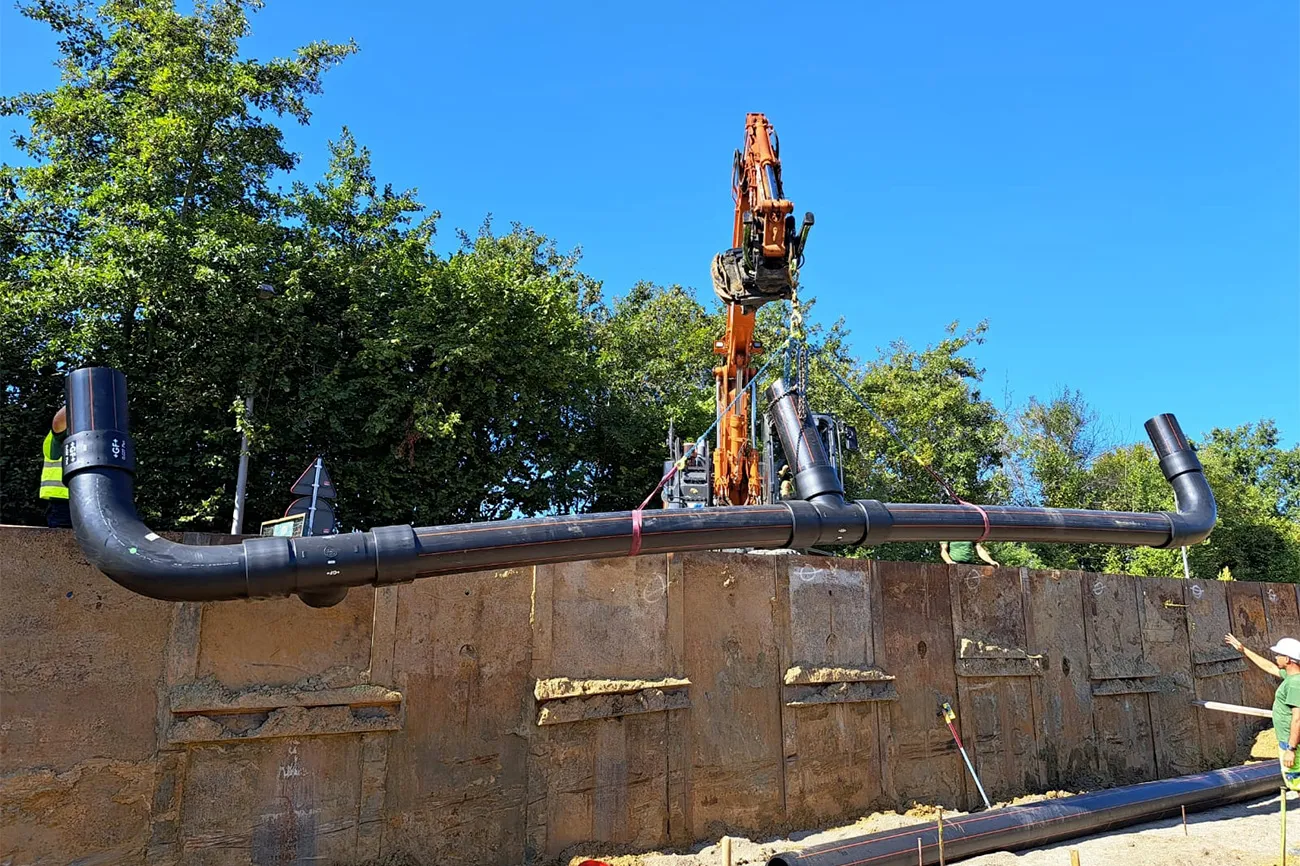
About Deschacht
Deschacht is a specialist and reputable wholesaler of drainage and sewerage products, roofing and façade materials, and insulation. It also has specialist teams whose expertise enables them to support every construction project, from underground to rooftop. With ten branches, 210 employees and more than 20,000 products, Deschacht is a leading player in its segment. Its regional presence in Flanders and Wallonia means it is close to its customers in every sense. “Together, we generate annual turnover of more than 140 million euros,” the company says.
About Mols
Mobility & infrastructure are the common thread running through Mols’s operations. The company is helping shape the mobility of tomorrow by building cycle highways, viaducts … with a focus on the long term: high-quality infrastructure that people can look back on with pride for many years to come. As a family business, Mols values a personal approach, clear lines of communication and listening to colleagues’ advice. At Mols, you can continue to grow, both personally and professionally. A range of internal and external training courses is available, and a pleasant working atmosphere is a priority. Safety is also at the top of the priority list. “Every year, we organise several safety training courses, invest in new equipment and get together to identify and prevent risks. Prevention is better than cure,” the company says firmly.
Een zakelijke vraag aan Deschacht? Get in touch
Who worked on it
Waterzuiveringsstation Aquafin Aartselaar in Aartselaar
- HDPE-leidingen
 Deschacht
- main contractorMols
Keep following this
Get an email when a new story is published. No account needed.
- ProjectWaterzuiveringsstation Aquafin Aartselaar
- SubjectSewerage & underground infrastructure
- CompanyDeschacht
- CompanyMols







